How to ship a tarot deck (packaging and cost)
To ship tarot decks, pad each one in a rigid or bubble mailer, protect the corners, weigh the packed parcel, and pick the cheapest tracked class that covers it. A boxed deck runs 5 to 8 ounces; domestic tracked postage is roughly $4 to $8. Build that into your price, because postage eats margin fast.
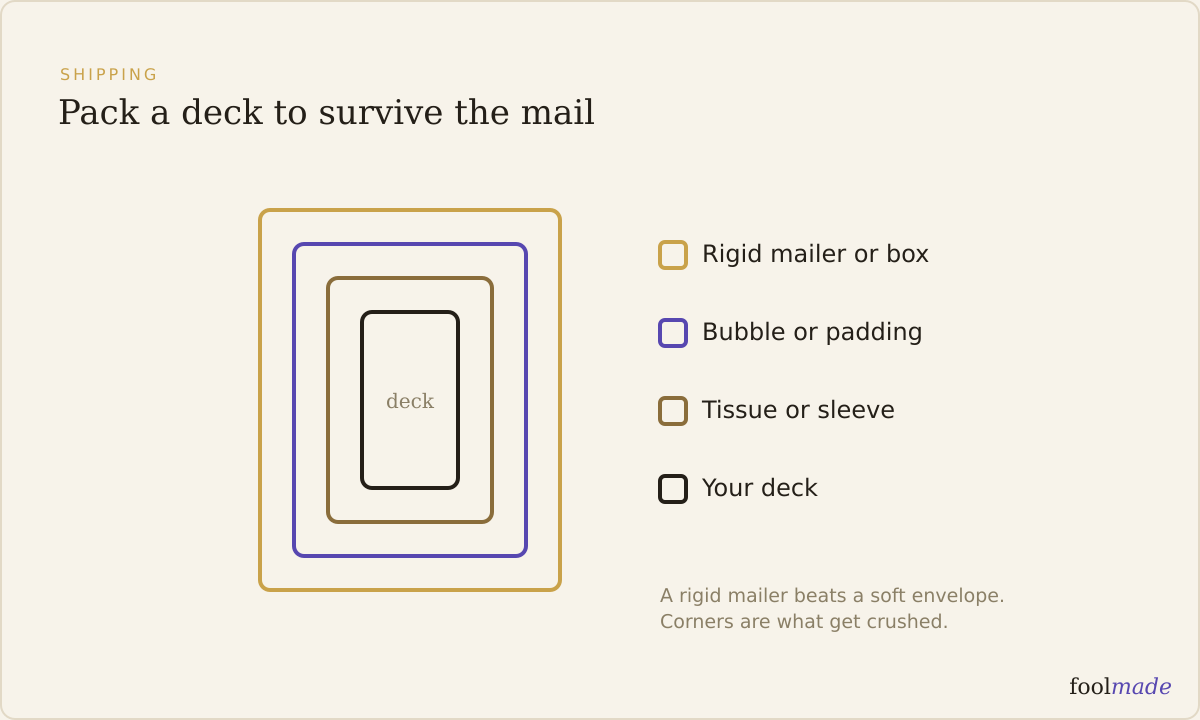
What packaging protects a deck in the mail?
A tarot deck is heavy, dense, and all corners. Those corners are what get crushed, and a bent corner on a $50 deck triggers a refund request. Your packaging job is simple: stop the box from moving and stop anything from folding a corner.
Two formats cover almost every indie maker. A rigid mailer (chipboard or corrugated stiffener) keeps the parcel flat so nothing bends. A small shipping box gives the deck room for a thin cushion on every side. Skip flat poly mailers. They offer zero corner protection and are the single most common cause of arrival damage.
| Option | Cost per unit | Corner protection | Best for |
|---|---|---|---|
| Padded bubble mailer | $0.30 to $0.60 | Medium | Single deck, tuck box, budget shipping |
| Rigid stay-flat mailer | $0.50 to $1.00 | High for flat crush | One or two decks, keeping it flat |
| Small shipping box + filler | $0.60 to $1.50 | Highest all-around | Rigid-box decks, premium feel, fragile edges |
| Flat poly mailer | $0.10 | None | Nothing. Do not use for decks |
Prices are 2026 planning estimates and drop when you buy mailers in packs of 100 or more. Whatever you pick, wrap the deck in a slip of tissue or a cello sleeve first, then add a stiffener or a little filler so it cannot slide. A deck that rattles is a deck that arrives dinged.
How much does a deck weigh, and which postage class is cheapest?
Weight decides everything, so weigh a fully packed deck before you set a shipping price. A standard 78-card deck on 310gsm to 350gsm stock, in a box, lands around 5 to 8 ounces. Add the guidebook and mailer and many decks tip just over the half-pound line, which can bump you into the next rate.
In the US, the cheapest tracked options for a single packed deck are usually USPS Ground Advantage or a first-class package rate, running about $4 to $8 depending on weight and distance. A padded mailer under one pound almost always beats any box-rate service on price. Buy postage through a platform (Pirate Ship, Etsy labels, your shop backend) rather than at the counter, because the commercial rates are meaningfully lower than retail.
Round your listed shipping up to the worst realistic case. If most orders cost you $6 but a cross-country parcel hits $8.50, charge closer to $8 or offer free shipping and fold the full $8 into the deck price. Undercharging on postage is a quiet way to lose a dollar or two on every sale.
How is shipping tarot decks internationally different?
International shipping is where indie makers lose the most money and patience. A deck that costs $6 to send across the country can cost $18 to $35 to send overseas, and you may not know the exact figure until you weigh the parcel and pick a service. Always quote international at full tracked cost, never a flat guess.
Every international parcel needs a customs form (a CN22 for small packets, a CN23 for larger ones). You declare the contents ("printed playing cards" or "tarot cards"), the value, and the country of origin. Declare it honestly. Under-declaring to dodge duty is fraud and gets parcels seized.
Duties and taxes are the buyer's responsibility in most cases, but they are also the buyer's surprise. A customer hit with a $12 import charge on delivery feels ambushed, so say plainly in your listing that international buyers may owe local import fees. For the wider 2026 tariff picture and who pays what, read tariffs and international shipping for deck creators.
Do you need tracking and insurance?
Yes to tracking, almost always. A tracked label costs pennies more than untracked and it is your only proof of delivery when a buyer says the deck never arrived. Without tracking, a marketplace or payment dispute defaults to the buyer and you refund the sale and eat the postage.
Insurance is a judgement call by value. Many tracked services include a small amount of coverage (often around $100 in the US), which already covers a single indie deck. Buy extra insurance only for high-value orders, signed limited editions, or a box of decks going to a con or a stockist, where a lost parcel would actually hurt.
Keep it simple:
- Always buy a tracked label, domestic and international.
- Save the tracking number against the order until it is delivered.
- Add extra insurance only above roughly $100 of contents.
- Photograph the packed parcel for higher-value or wholesale orders.
How do you avoid losing money shipping tarot decks?
Flat-rate shipping is a promise you make at checkout, and it only works if the number is honest. The trap is charging one low shipping fee to everyone, then quietly overpaying on the orders that go farthest or weigh most. A single deck rarely benefits from postal flat-rate boxes anyway, because those boxes are priced for heavy items and a light mailer beats them.
Two things save your margin. First, weigh a real packed order and price your shipping off the highest zone you actually ship to, not the cheapest. Second, remember that selling fees apply to shipping too. Etsy, Shopify payments, and PayPal all charge their percentage on the full amount a buyer pays, postage included, so a $6 shipping charge costs you roughly $0.40 in fees before the carrier is paid.
Because postage and its fees come straight out of your margin, they belong in your pricing math from the start, not as an afterthought. See how the numbers stack in how to price your tarot deck, and if packing every order yourself sounds like a second job, fulfillment and shipping for a self-published deck covers letting a printer ship for you.
Frequently asked questions
How much does it cost to ship a tarot deck?
Domestically in the US, a single boxed deck in a padded mailer costs about $4 to $8 tracked in 2026, depending on weight and distance. International shipping usually runs $18 to $35. Always weigh a packed deck and buy commercial-rate labels to get the real figure.
Can you ship a tarot deck in a padded envelope?
Yes, a padded bubble mailer is fine for a single deck as long as you add a stiffener or wrap so the corners cannot bend. Avoid thin flat poly mailers, which give no protection and are the top cause of crushed-corner refunds.
Do I have to fill out a customs form to ship a deck overseas?
Yes. Every international parcel needs a customs declaration (CN22 or CN23) stating the contents, value, and country of origin. Declare "tarot cards" and the honest value; under-declaring to avoid duty is fraud.
Who pays import duties on an international deck order?
The buyer almost always pays any import duty or local tax on delivery. Say so clearly in your listing so overseas customers are not surprised by a fee, which is a common cause of complaints and refused parcels.
Should I offer free shipping on my deck?
Free shipping often converts better, but it is never actually free. Fold your full worst-case postage into the deck price so a distant order does not wipe out your margin. Price it in deliberately rather than absorbing it by accident.
The bottom line
Shipping a deck well is unglamorous and it decides whether a buyer keeps their $50 deck or asks for their money back. Pad the corners, weigh the packed parcel, buy tracked commercial-rate labels, and quote international at real cost with a customs form. Then bake every cent of postage and its fees into your price before you list.
If you want the shipping and fee lines already sitting in your cost math, the Foolmade margin planner lets you enter your packaging and postage and see the true cost per deck, so you price with the full picture instead of guessing. It never prints or generates art. It just runs the math that keeps your work sustainable.