The Visconti-Sforza Tarot
Painted and gilded for the dukes of Milan around the 1450s, this is the oldest tarot that survives nearly whole, and the pattern five centuries of decks descend from.
Workshop of Bonifacio Bembo, Cremona and Milan; six trumps by a later hand, perhaps Antonio Cicognara · Milan, for the Sforza court; now divided between the Morgan Library in New York, the Accademia Carrara in Bergamo, and the Colleoni family collection · c. 1450s
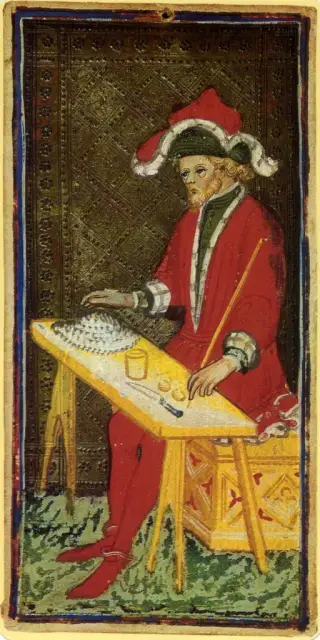
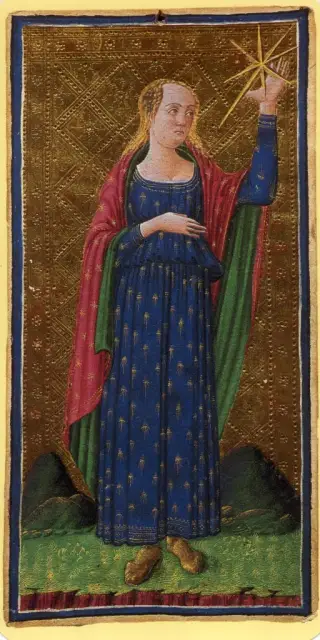
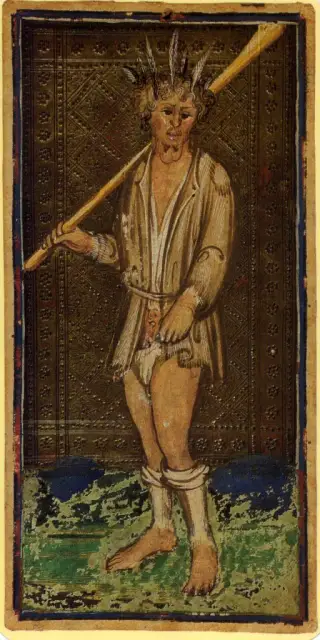
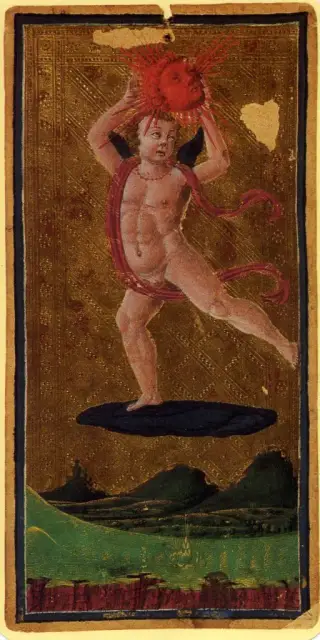
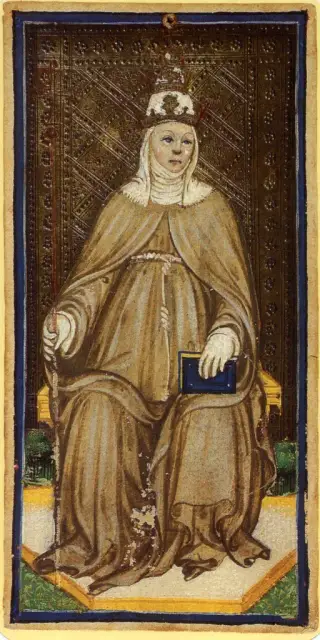
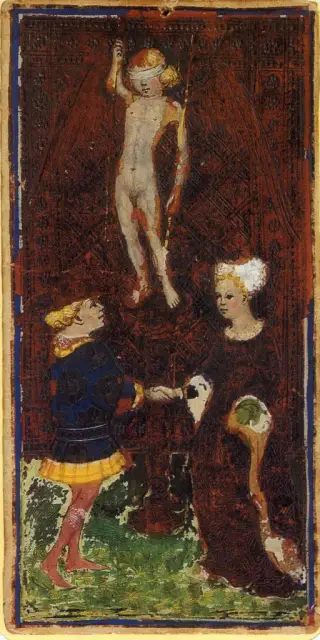
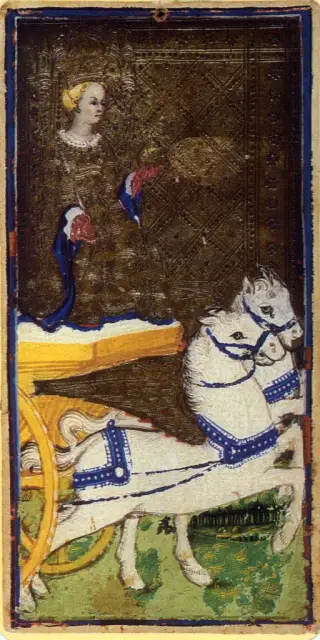
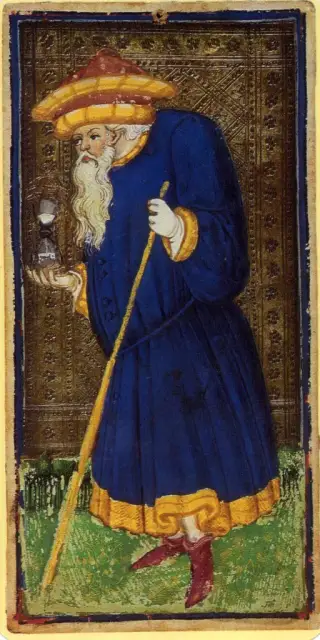
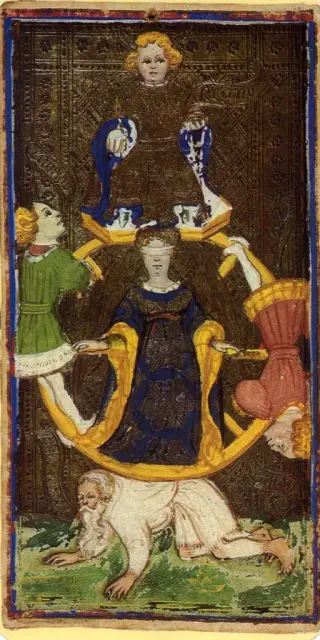
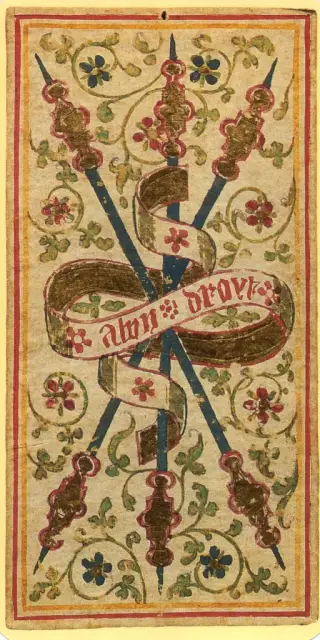
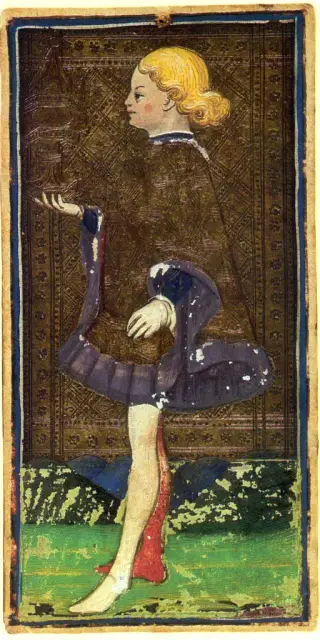
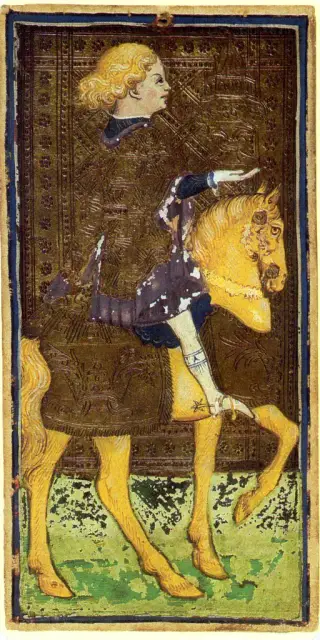
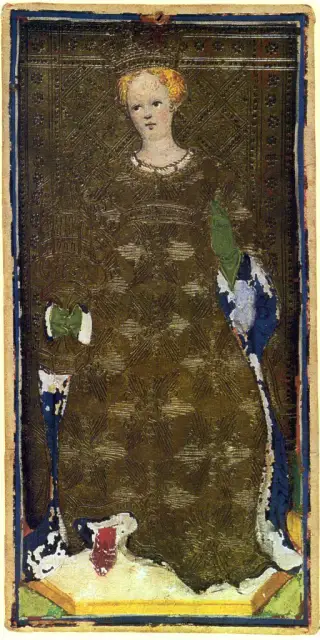
Seventy-four cards survive of the seventy-eight painted in Milan around the 1450s, almost certainly for Francesco Sforza and his wife Bianca Maria Visconti, whose families give the deck its name. The workshop was that of Bonifacio Bembo of Cremona, painter to the Sforza court. No older tarot comes this close to complete. Today the deck is split three ways: thirty-five cards at the Morgan Library in New York, twenty-six at the Accademia Carrara in Bergamo, and thirteen still with the Colleoni family, whose ancestors owned the whole deck. Four cards are gone, the Devil, the Tower, the Three of Swords and the Knight of Coins, and this gallery shows them as lost.
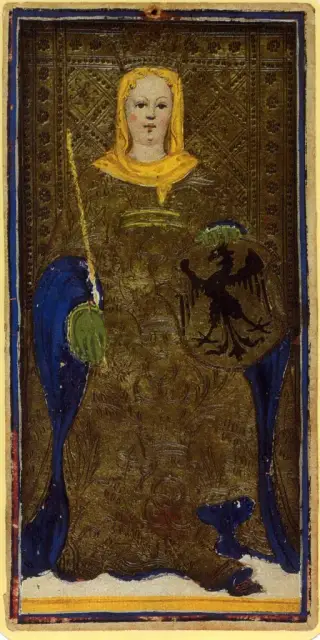
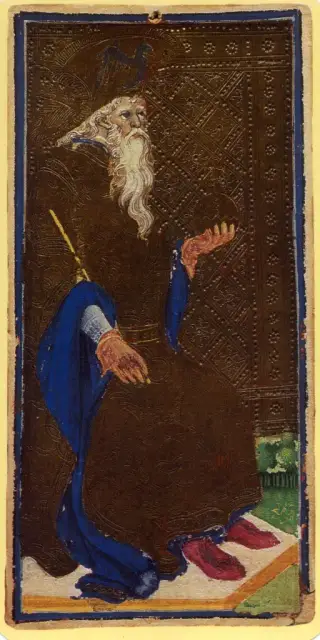
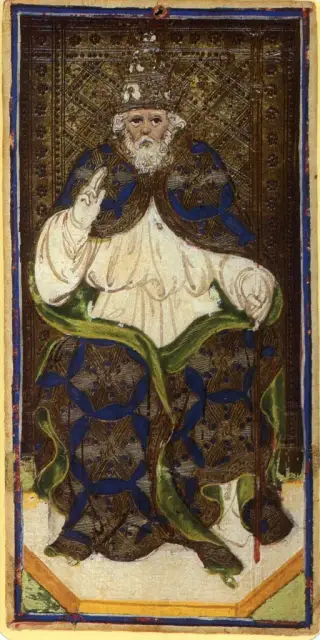
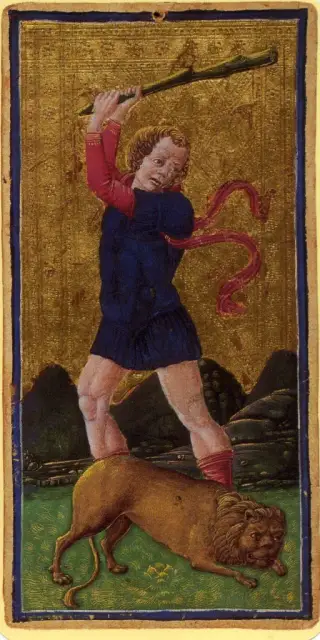
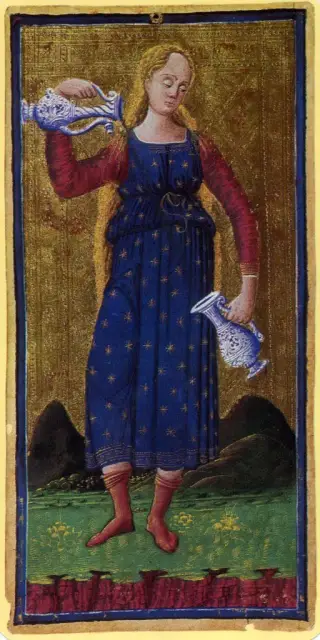
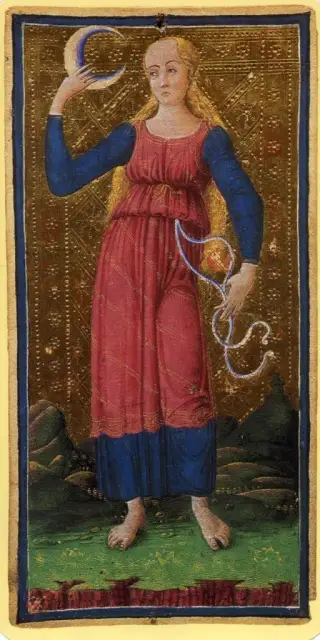
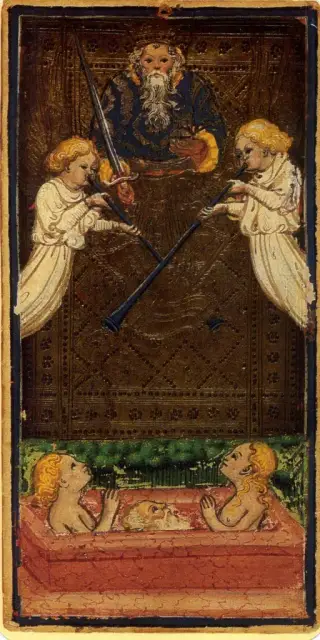
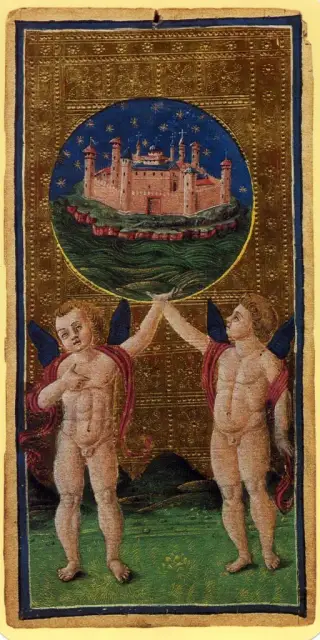
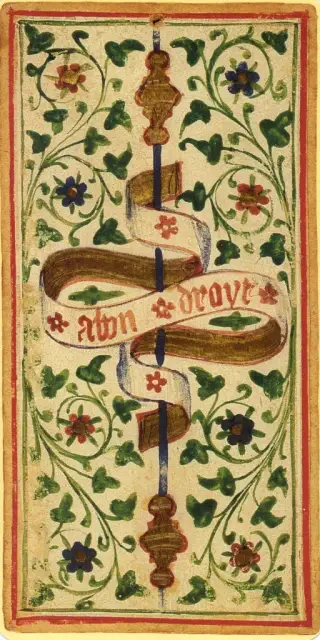
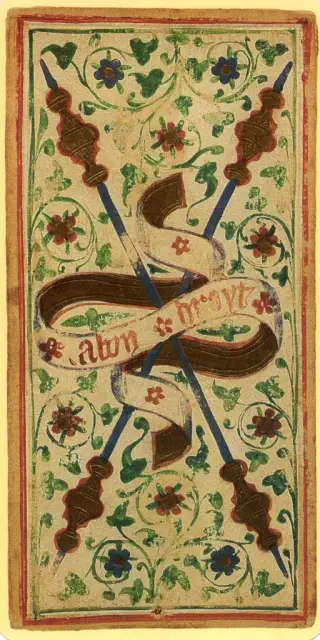
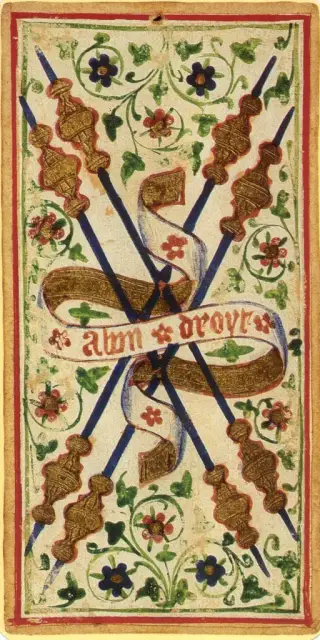
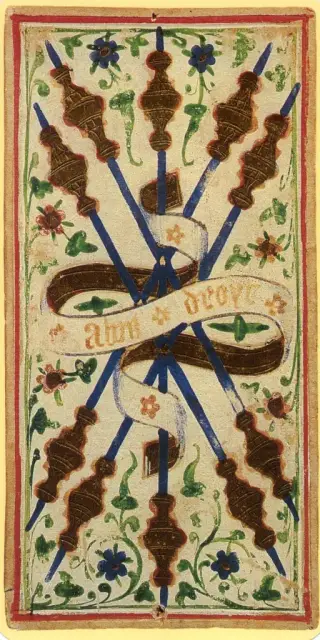
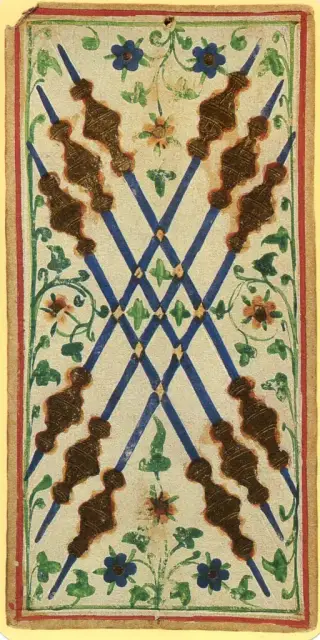
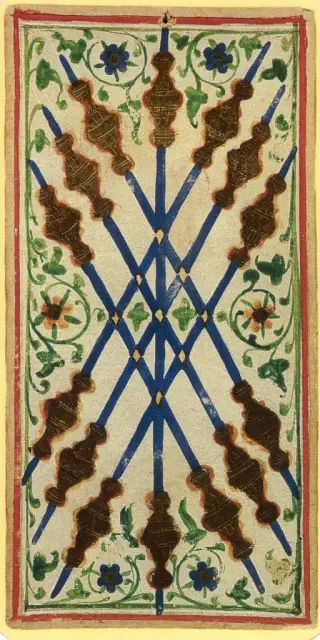
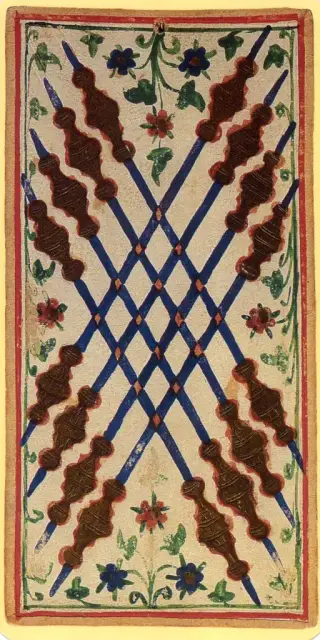
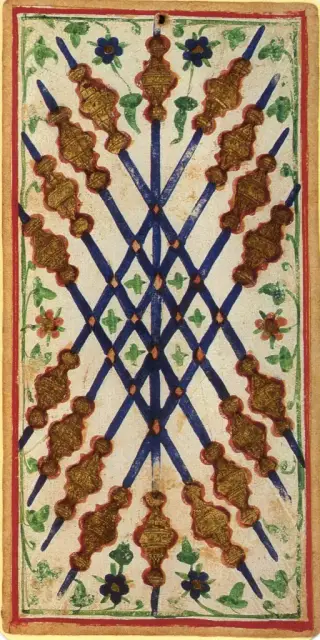
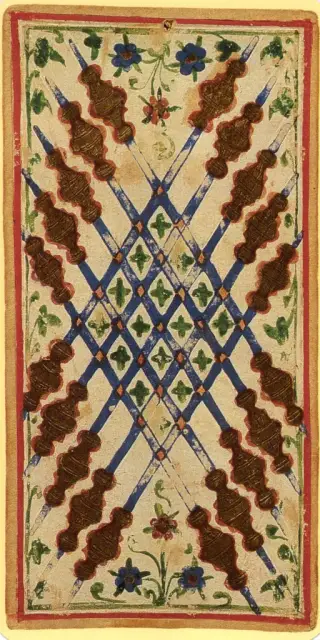
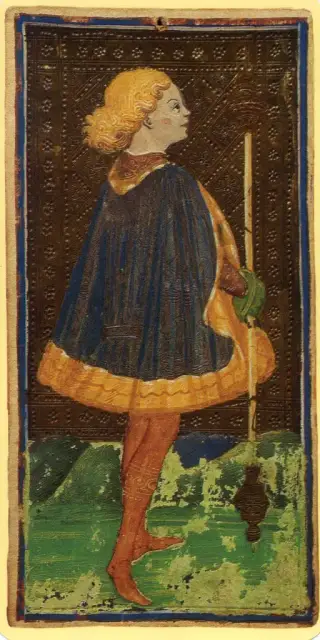
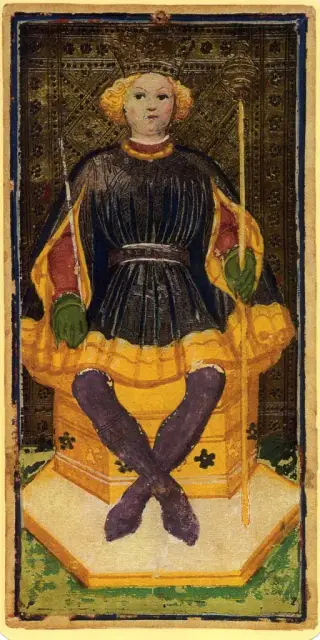
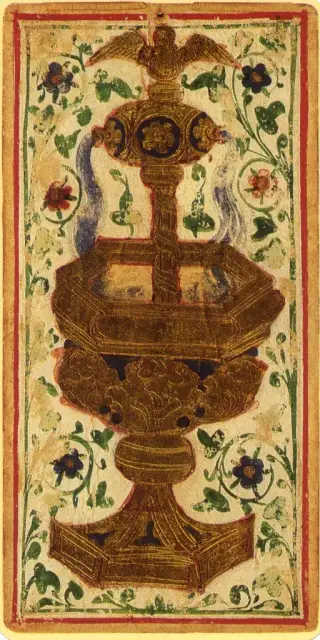
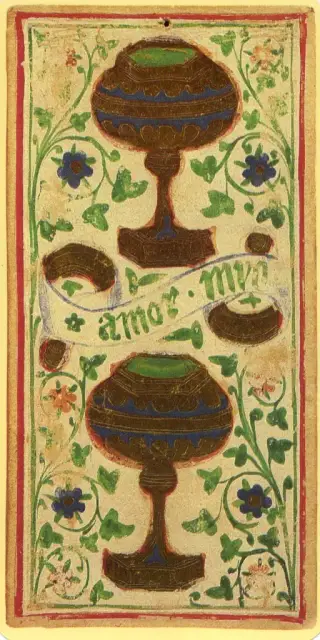
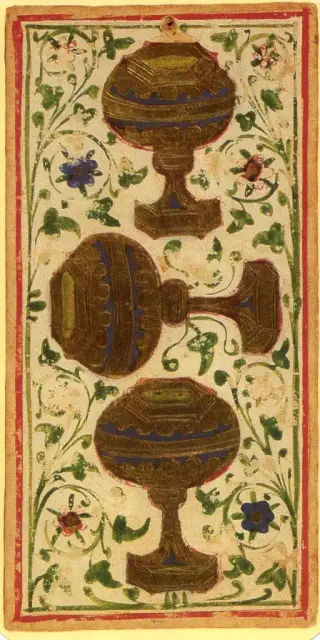
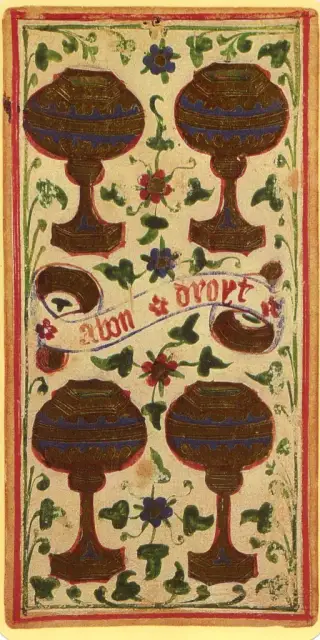
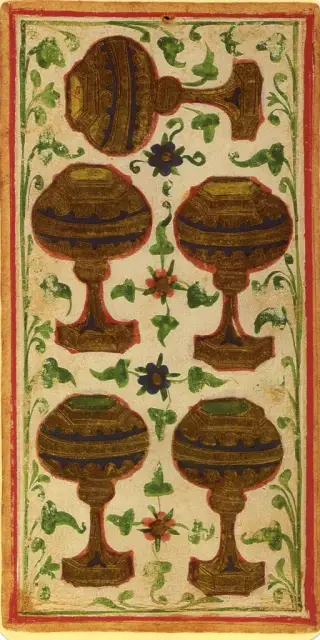
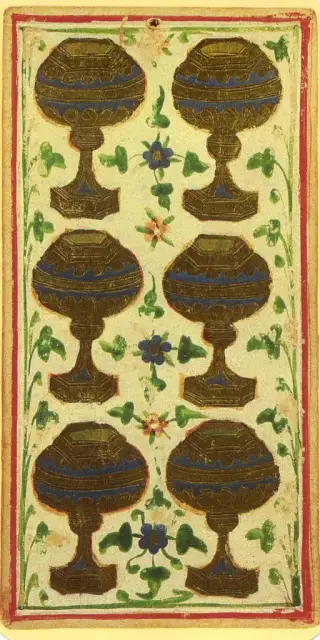
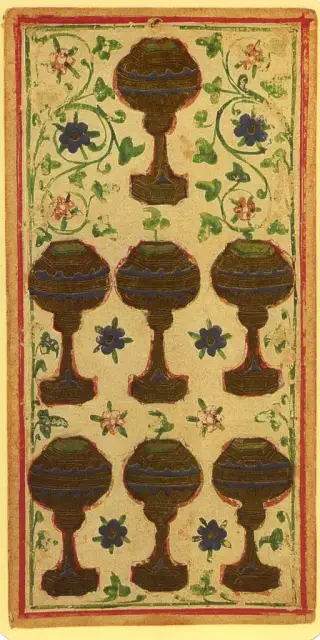
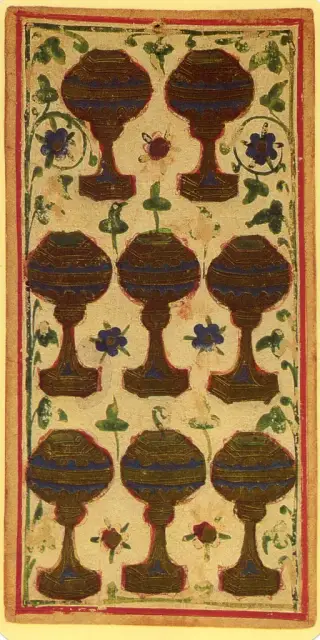
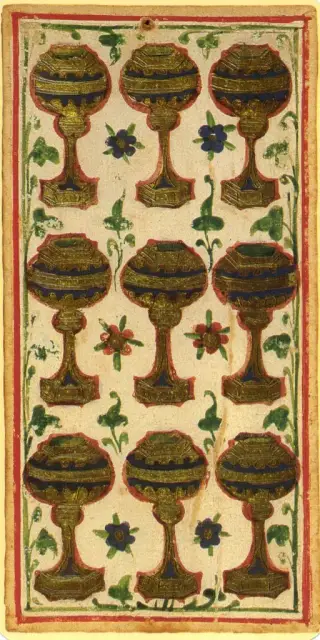
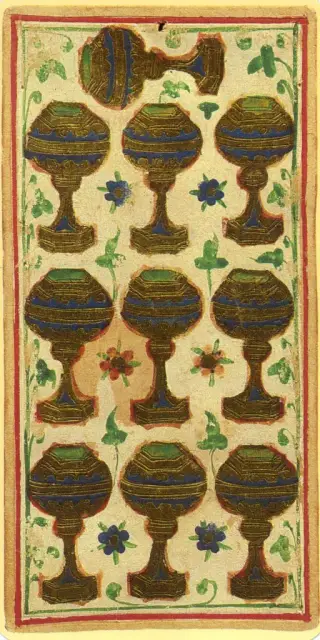
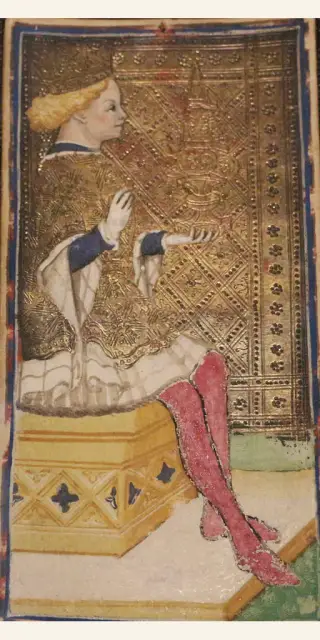
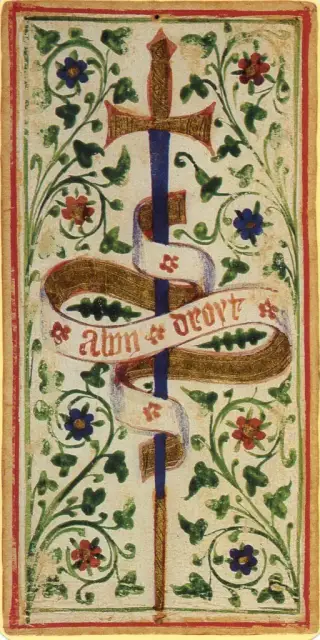
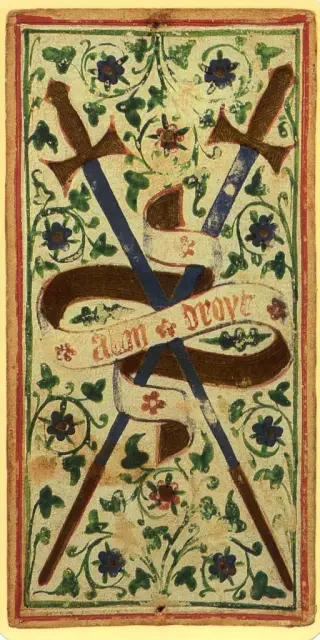
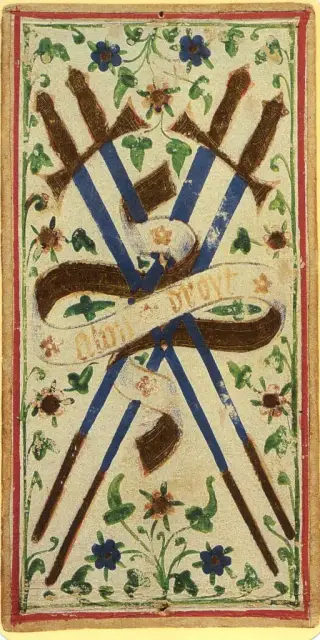
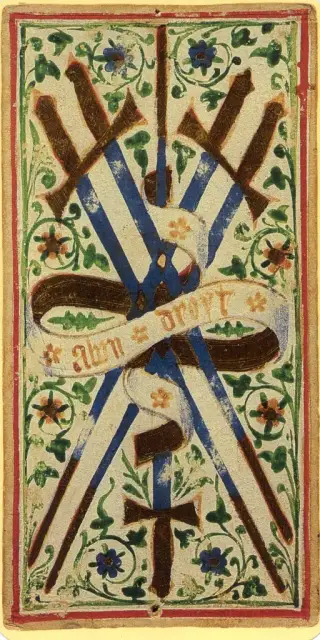
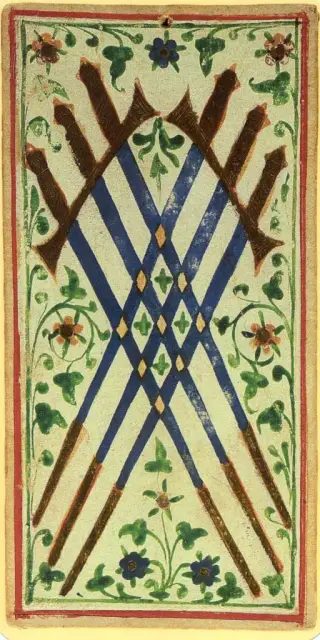
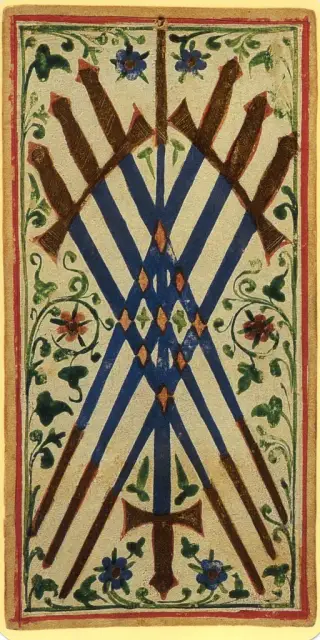
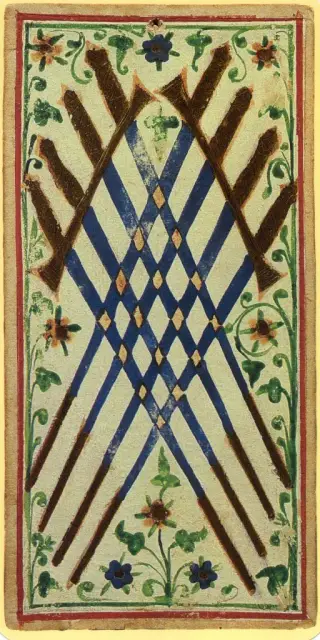
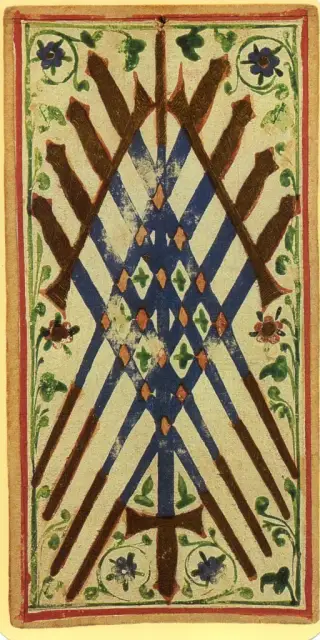
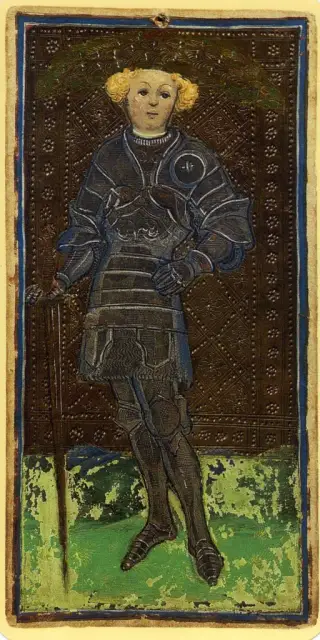
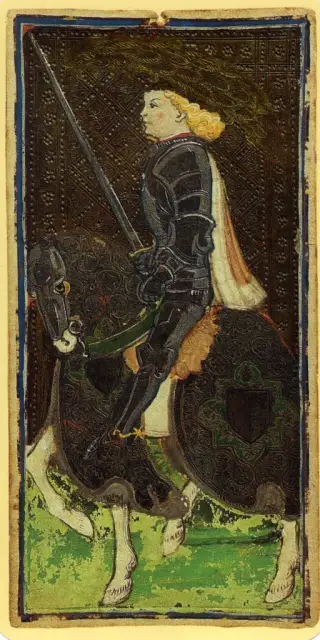
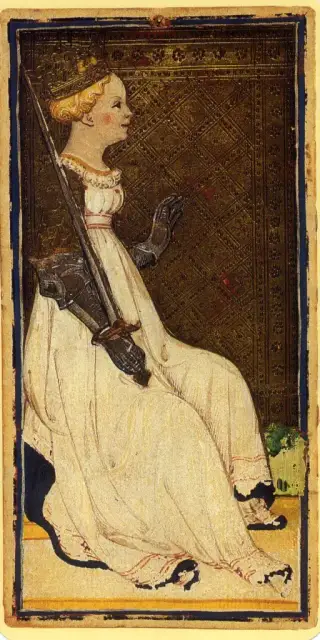
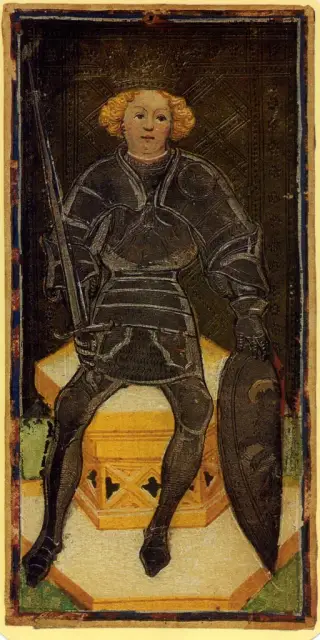
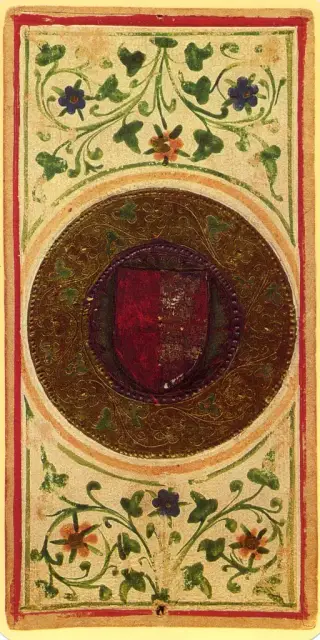
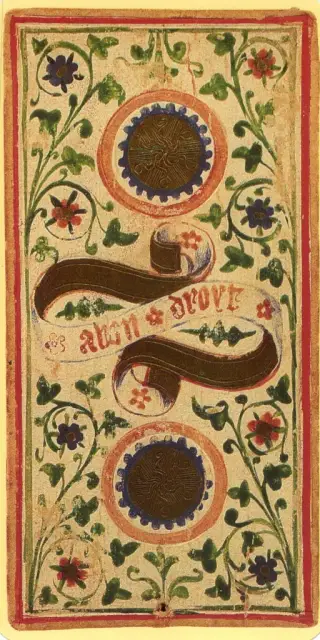
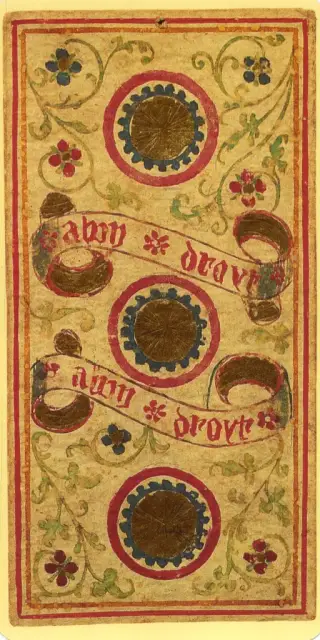
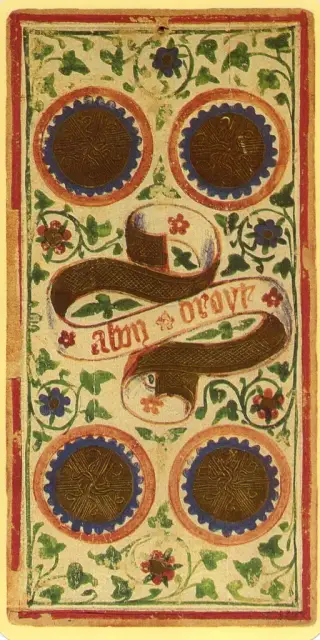
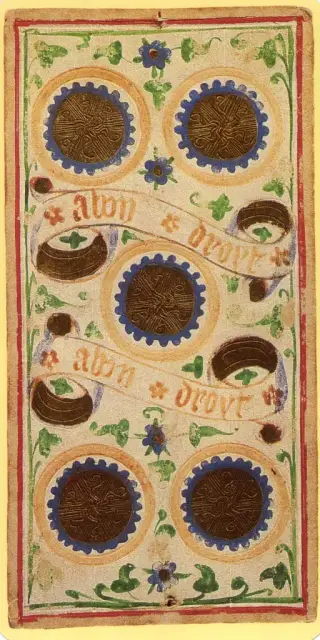
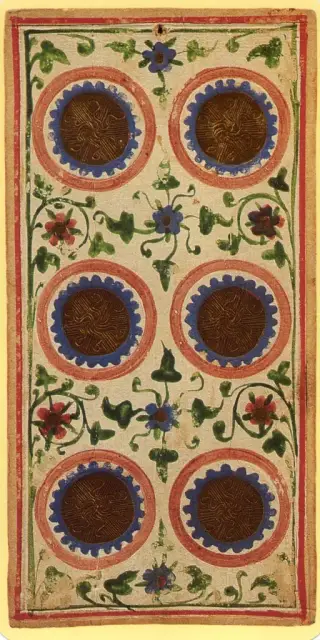
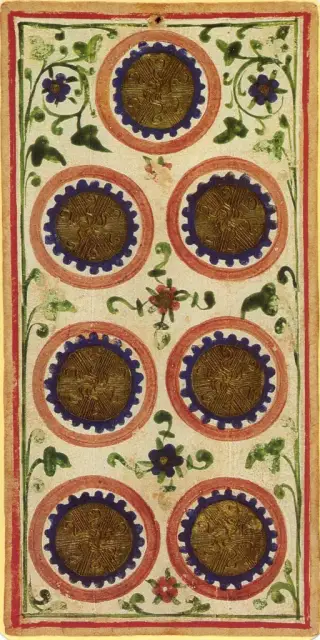
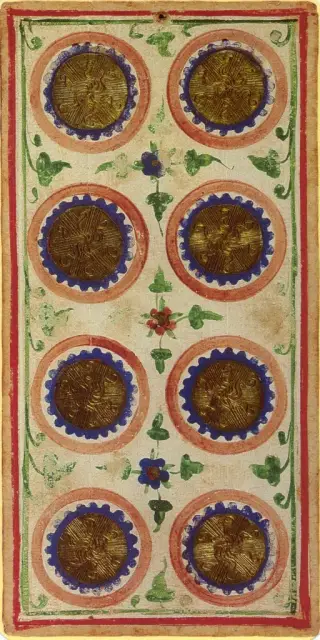
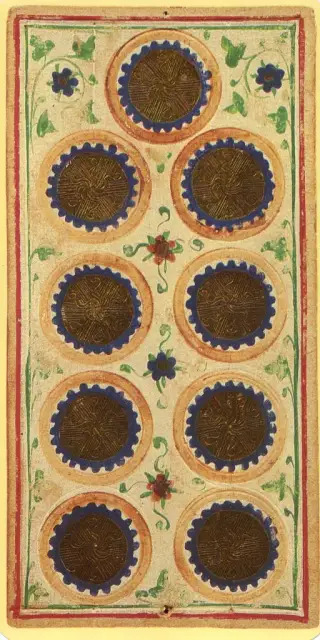
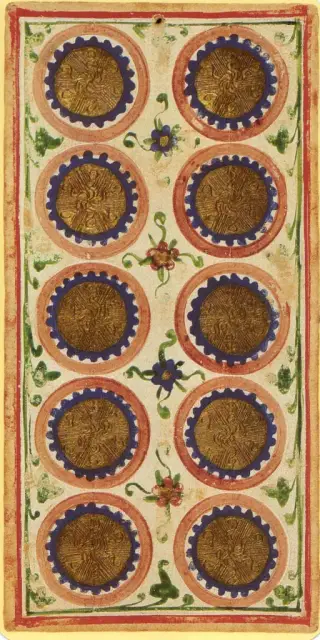
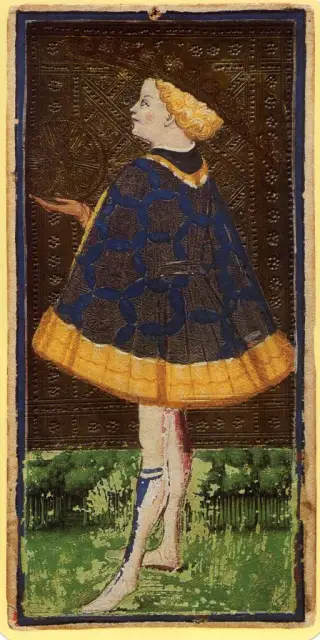
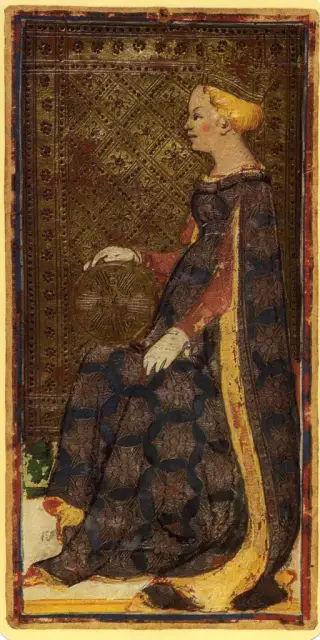
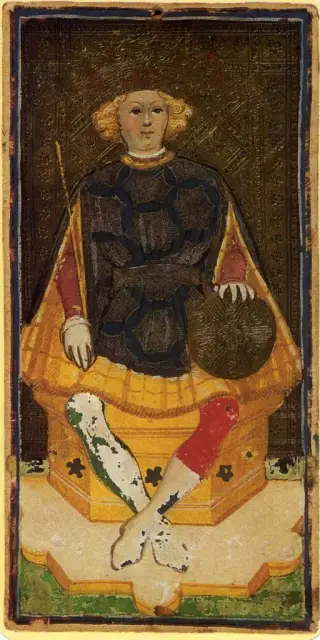
Every trump and court figure stands against a ground of real gold leaf, punched and tooled in diaper patterns the way binders worked leather. The pips are courtlier still: swords are dark scimitars woven into lattices, batons are gilded ceremonial staffs, cups are lidded banquet goblets, coins are stamped gold discs that all but pass for florins. Ribbons on the low cards carry the Visconti motto a bon droyt, with good right, and one, on the Two of Cups, says amor myo instead. The trumps have no names and no numbers; players were expected to hold the order in their heads, and scholars still argue about what that order was. Six trumps, Fortitude, Temperance, the Star, the Moon, the Sun and the World, are in a flatter style painted a generation later, perhaps by Antonio Cicognara, apparently replacing lost originals.
The cards are large, about seventeen by nine centimeters, pasteboard meant for slow, ceremonious play. The images here are scans of a modern facsimile edition of the deck; the King of Cups, absent from that set, is a photograph of the original card in Bergamo.






- The Cary-Yale Visconti Tarotolder, stranger, and probably the same workshop
- The Charles VI Tarotits closest cousin in punched gold
- The Cary Sheetthe cheap printed tarot circulating in the same city
- Gilded edges on tarot cardsgold on cards, then and now
- Anatomy of a 78 card tarot deckwhat the 78 settled into