☾ ✶ ☽
The Archive
Old decks, kept here for looking and talking. Who made them, where they live now, and what each card is doing. The makers are long gone; their cards are not.
Fifteenth century
No. 01 · Tarot · 67 cards
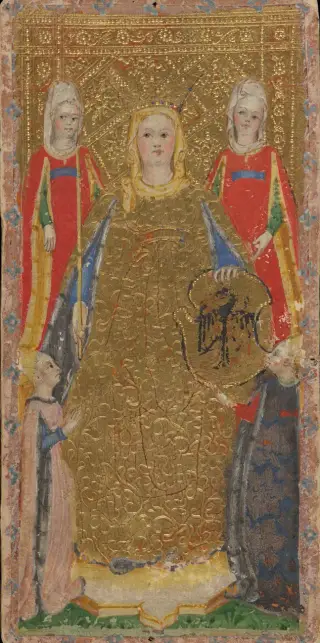
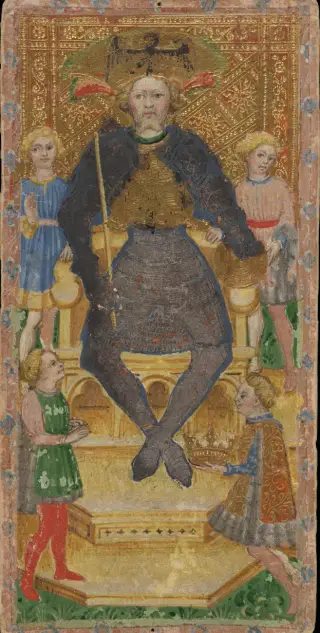
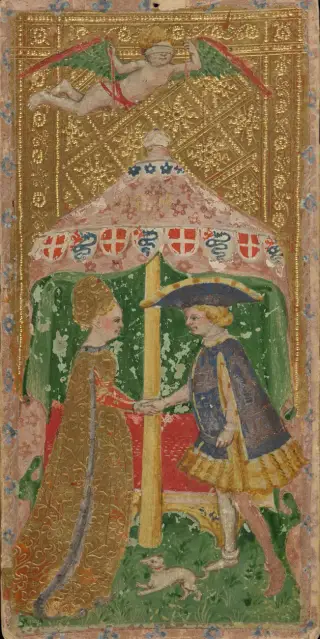
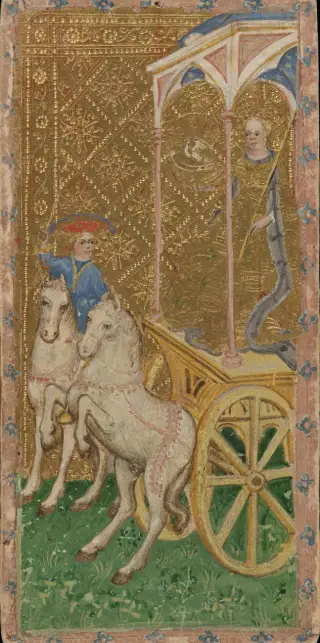
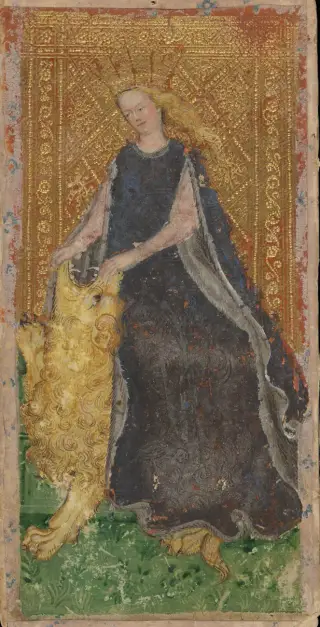
The Cary-Yale Visconti Tarot
Very likely the oldest tarot cards in existence: sixty-seven gilded giants from the Visconti court, with female knights in the suits and three virtues no later deck kept.
View the deck →
No. 02 · Tarot · 74 cards
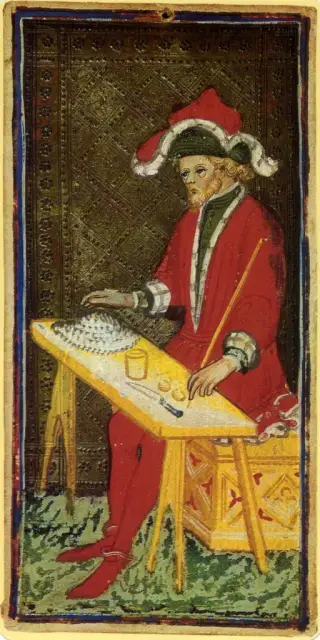
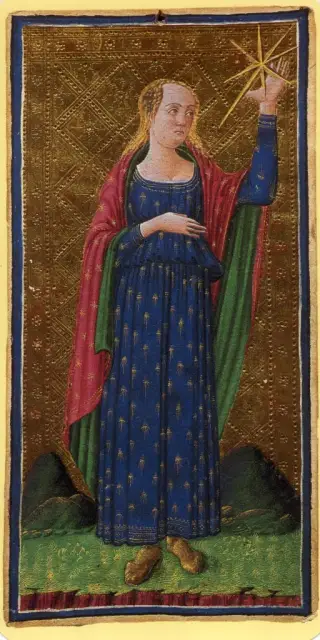
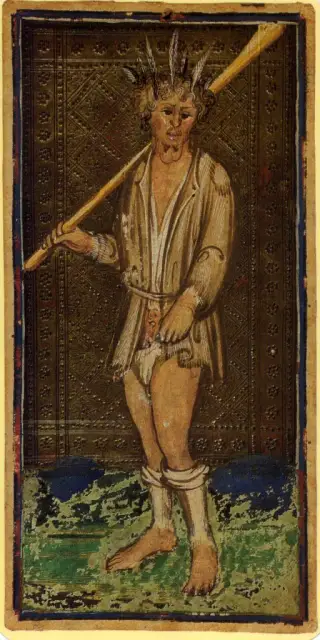
The Visconti-Sforza Tarot
Painted and gilded for the dukes of Milan around the 1450s, this is the oldest tarot that survives nearly whole, and the pattern five centuries of decks descend from.
View the deck →
No. 03 · Tarot · 17 cards
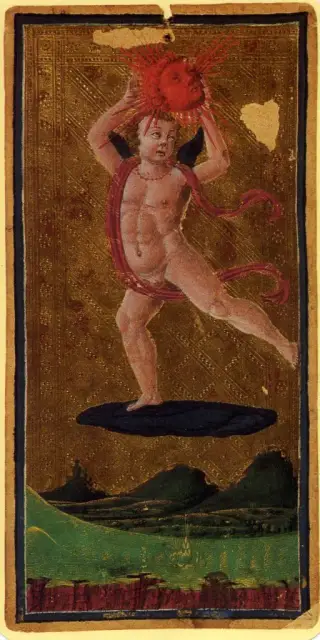
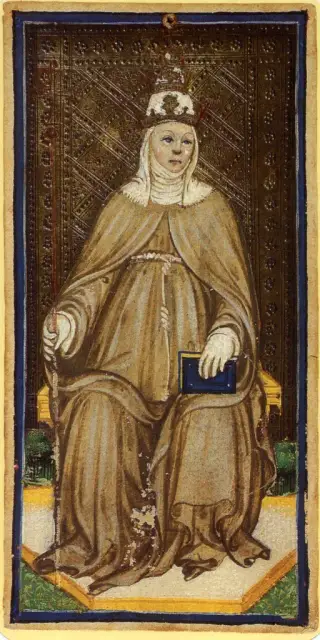
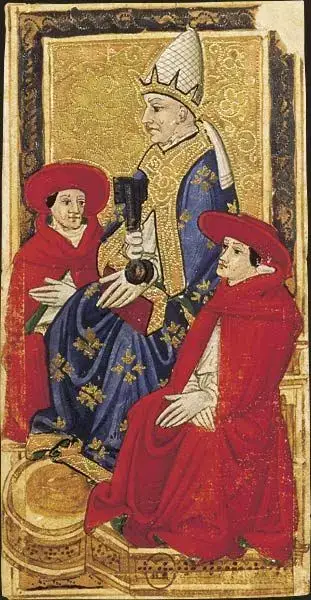
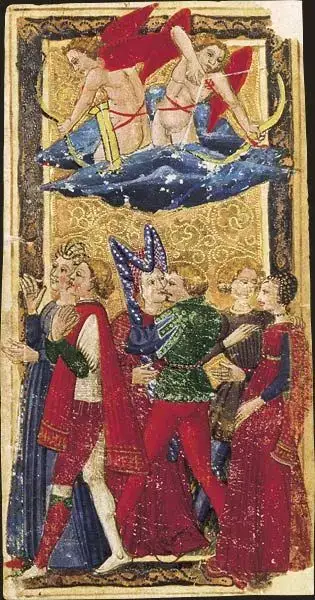
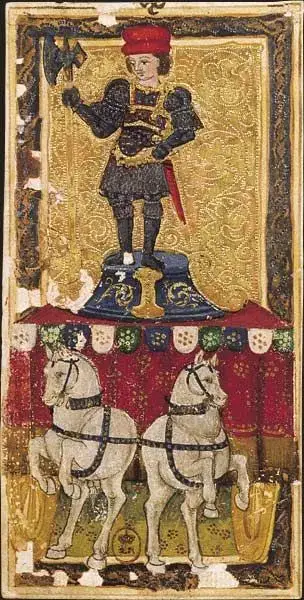
The Charles VI Tarot
Seventeen gilded cards once sold to history as the first tarot ever painted, for a mad king in 1392; the truth is later, Italian, and no less splendid.
View the deck →
No. 04 · Engravings · 50 cards
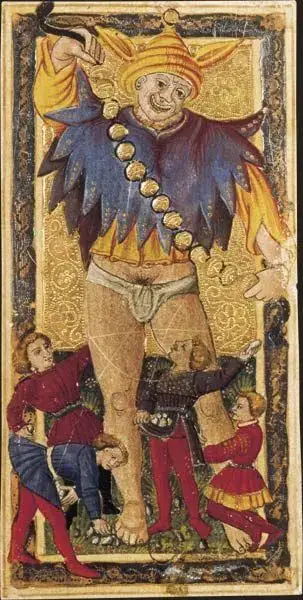
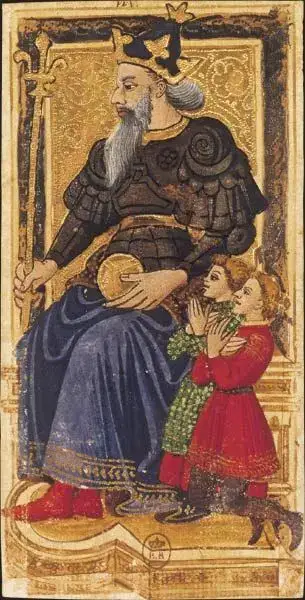
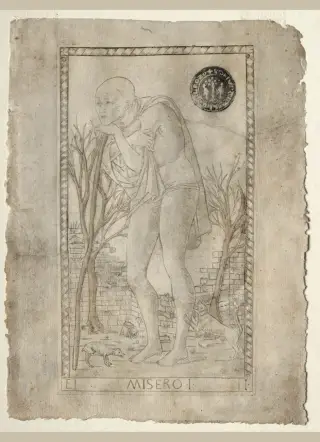
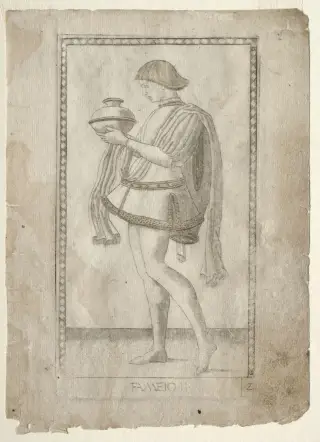
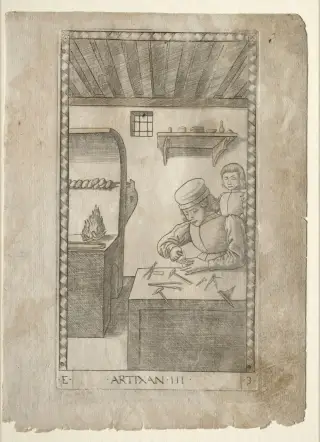
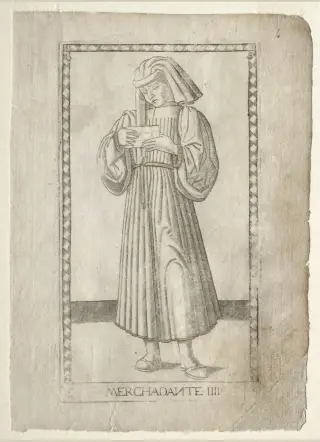
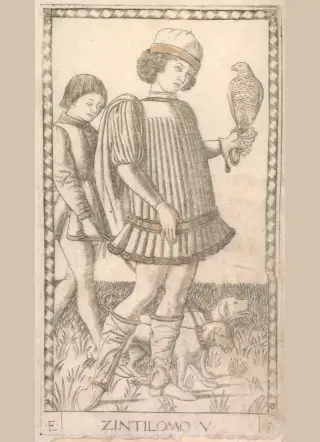
The Mantegna Tarocchi
Fifty engravings from Ferrara around 1465 that are not by Mantegna and were never a tarot: a printed ladder from the beggar to God, with the Muses, the liberal arts, the virtues and the planets in between.
View the deck →
No. 05 · Tarot · 16 cards
The Este Tarot
Sixteen gilded survivors of a Ferrarese court tarot from about 1473: eight trumps and eight courts on punched gold, with the century's cruelest Fool.
View the deck →
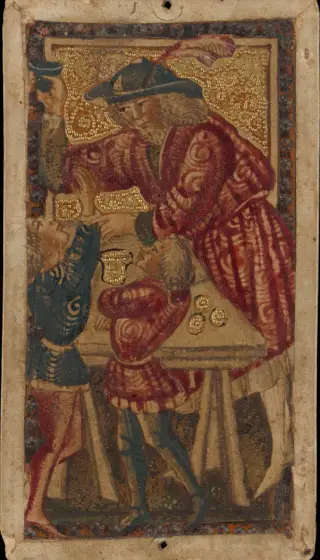
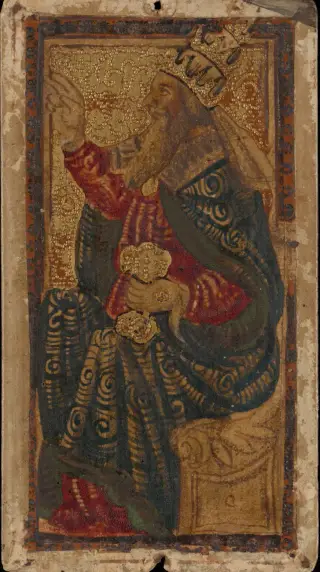
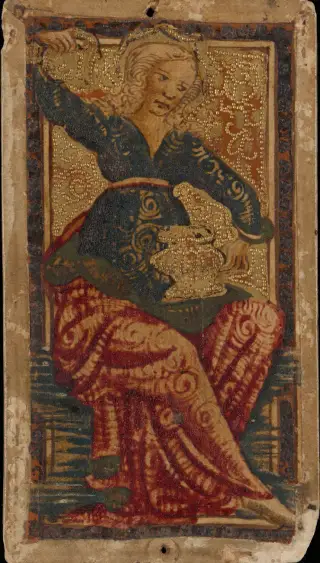
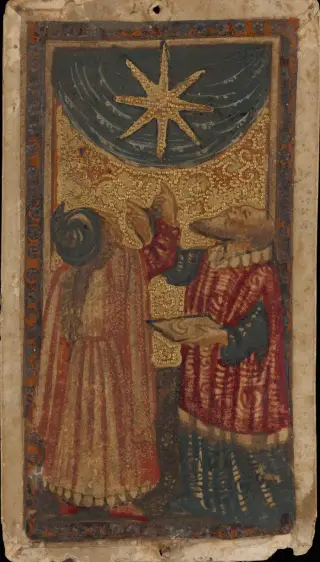
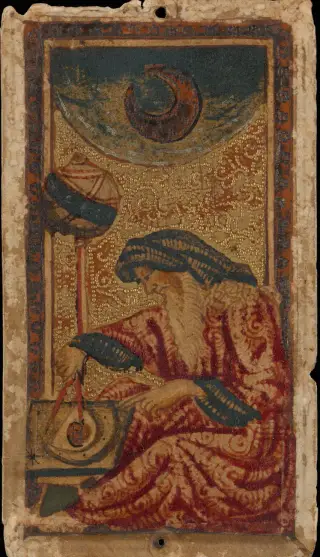
No. 06 · Tarot · 78 cards
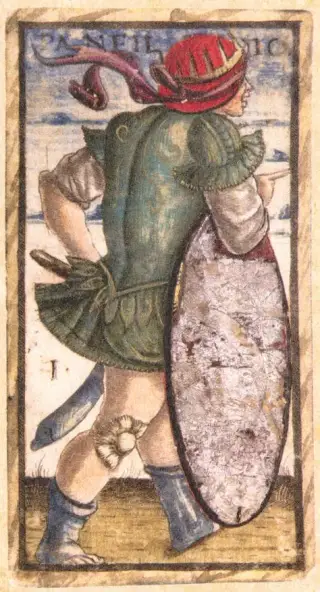
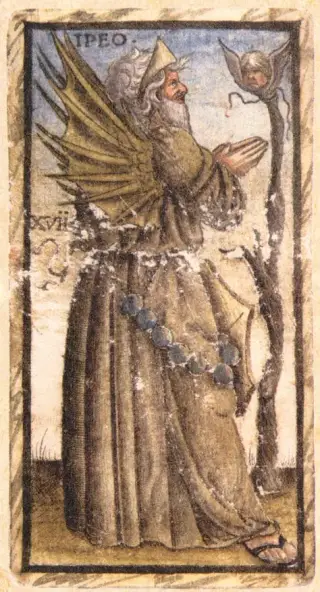
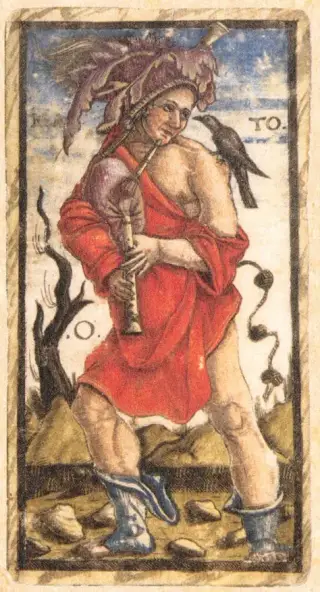
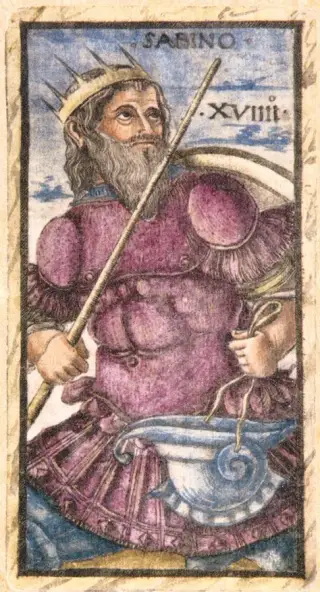
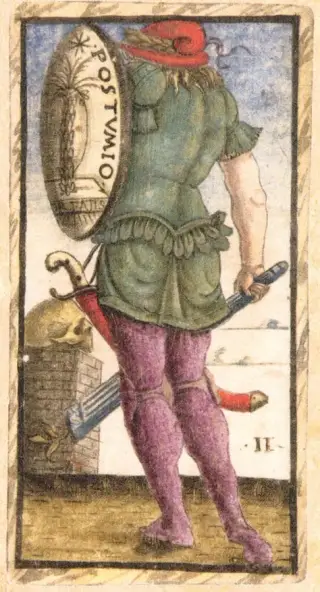
The Sola Busca Tarot
The oldest complete tarot deck in the world, and the first with a picture on every card. Its trumps are Roman soldiers with names, its minors are scenes, and one of them became the most copied card in tarot.
View the deck →
Sixteenth century
No. 07 · Tarot · 7 cards
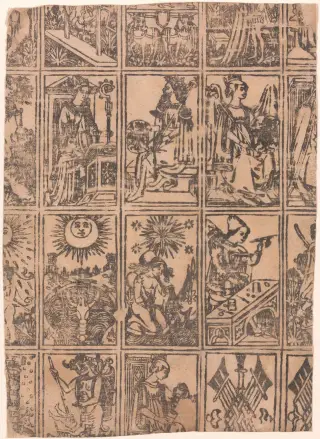
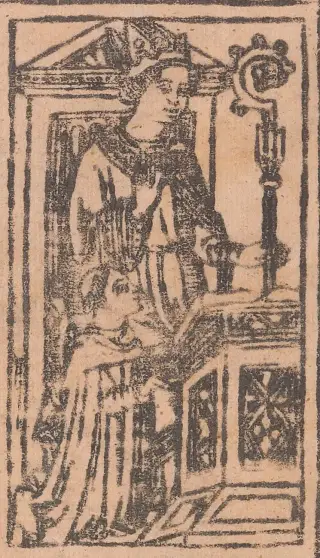
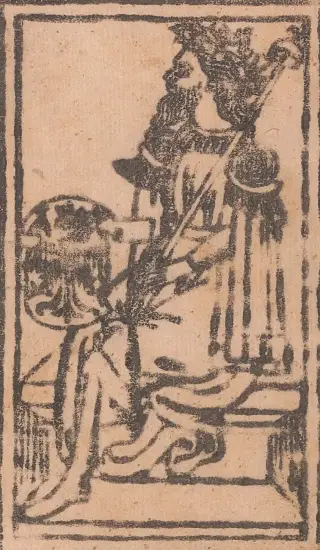
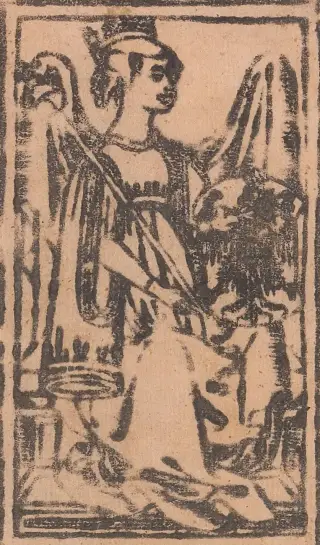
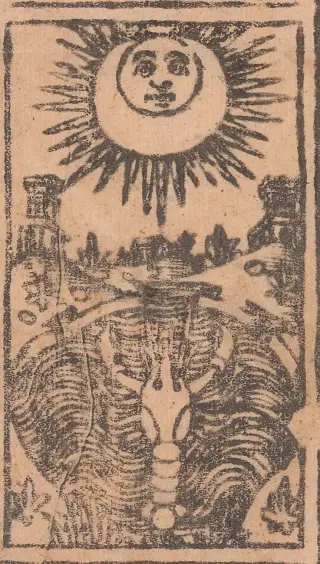
The Cary Sheet
One uncut sheet from Milan, about 1500, and on it the Marseille tarot being born: the oldest known ancestor of the pattern, crayfish and all.
View the deck →
Seventeenth century
No. 08 · Tarot · 78 cards
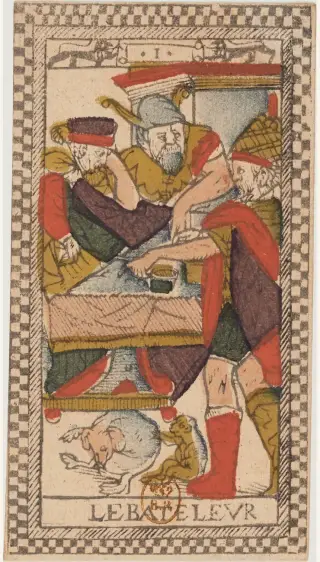
The Tarot de Paris
The oldest complete French tarot, and the strangest: an early 1600s Paris pack whose maker signed FAICT A PARIS PAR and never filled in his name.
View the deck →
No. 09 · Tarot · 78 cards
The Jacques Viéville Tarot
Noblet's Paris contemporary and his opposite: the same city, the same years, and a wholly different tarot, with an upright Hanged Man and rhymes printed in the pips.
View the deck →
No. 10 · Tarot · 73 cards
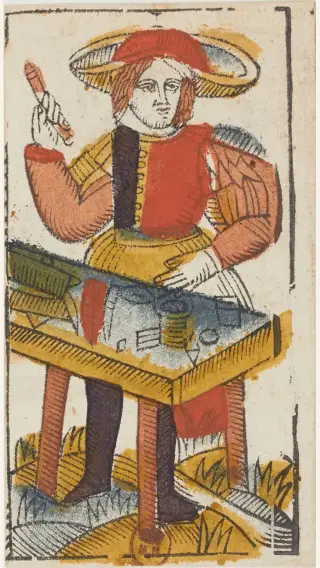
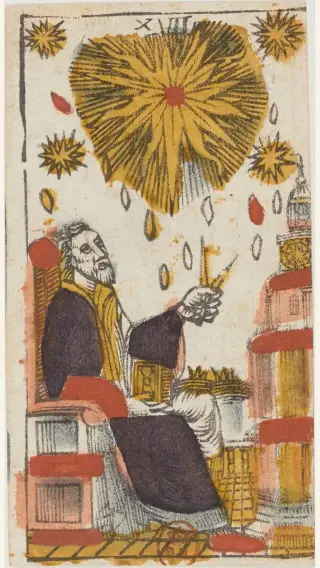
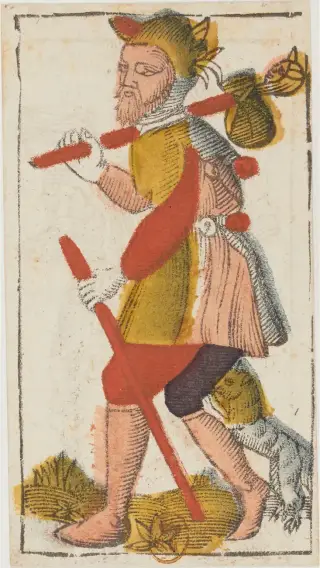
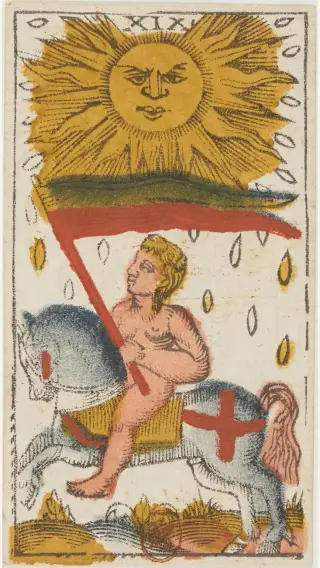
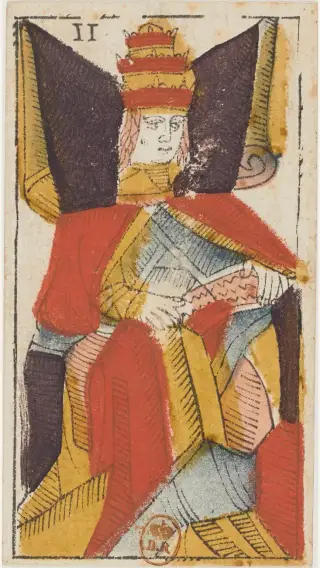
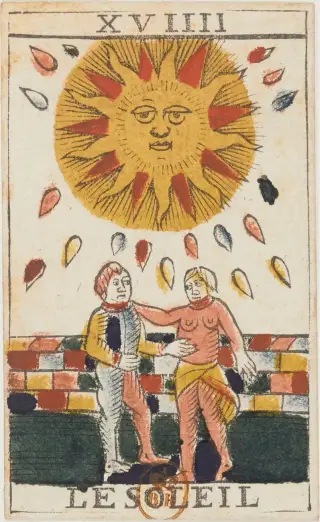
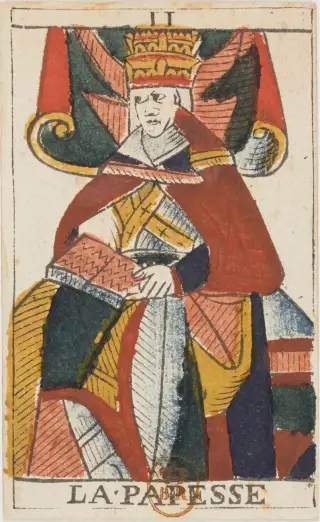
The Jean Noblet Tarot
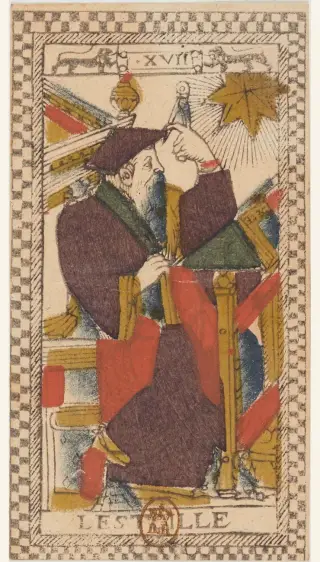
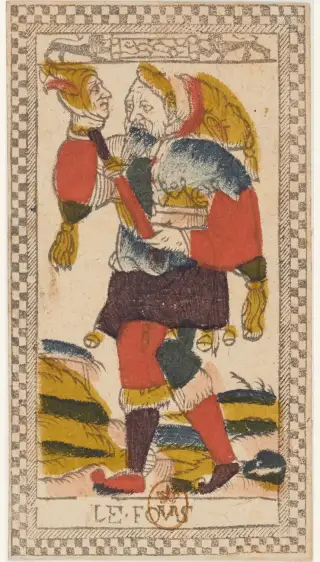
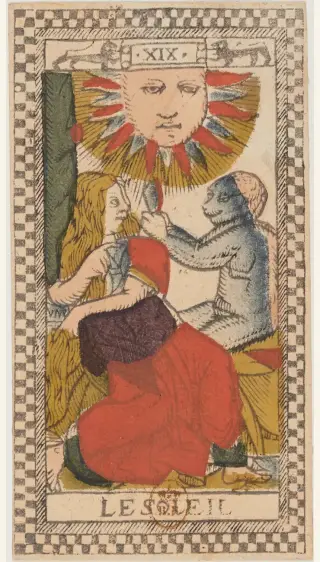
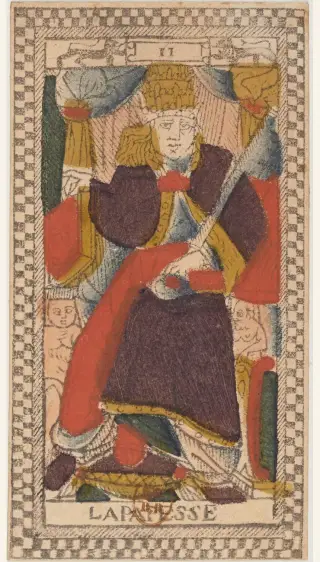
The oldest surviving Tarot de Marseille, printed in Paris around 1650: nine centimeters of bold woodcut line, stencil color, and a Fool caught with his breeches down.
View the deck →
No. 11 · Tarot · 62 cards
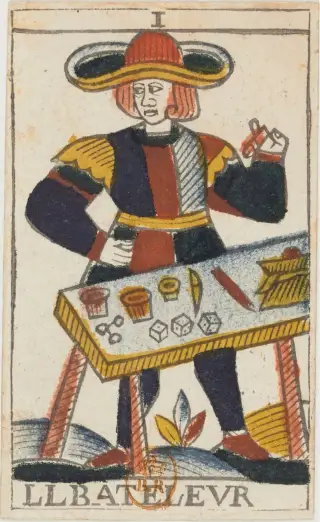
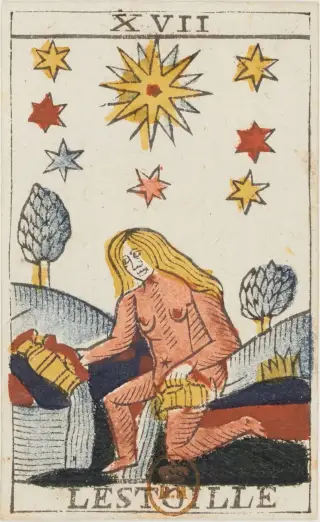
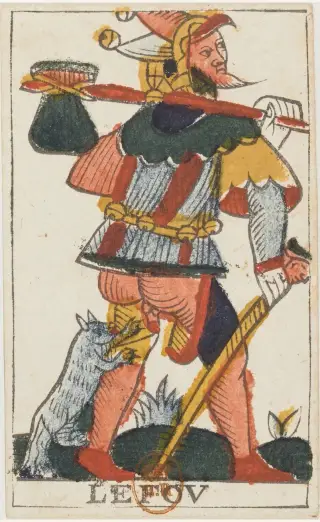
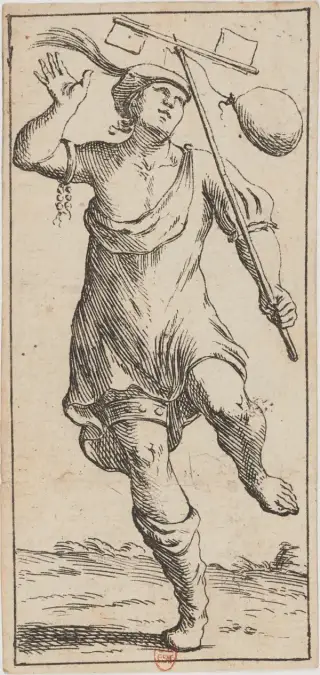
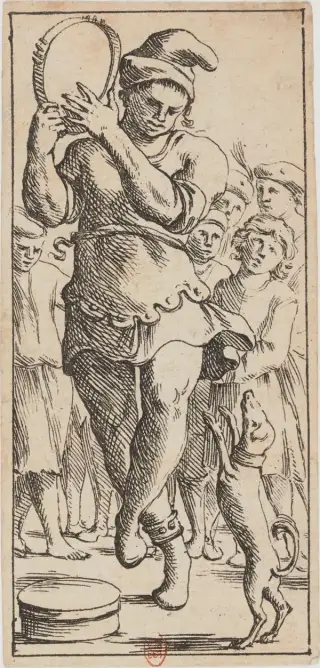
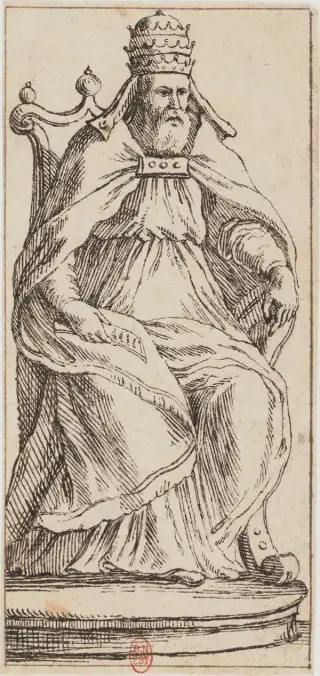
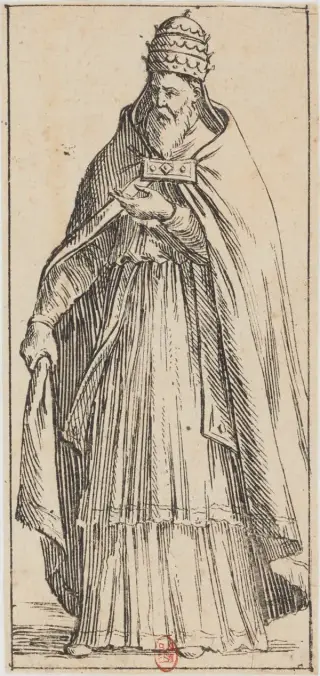
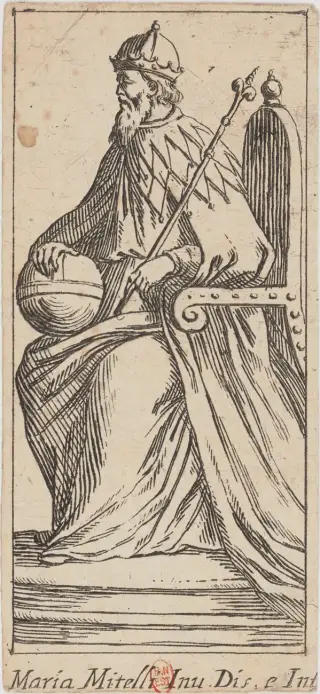
The Mitelli Tarocchino
The one Baroque master's tarot: Mitelli redraws Bologna's 62-card tarocchino as pure etched theater, Atlas for a World and a lantern-bearer for a Star.
View the deck →
Eighteenth century
No. 12 · Tarot · 78 cards
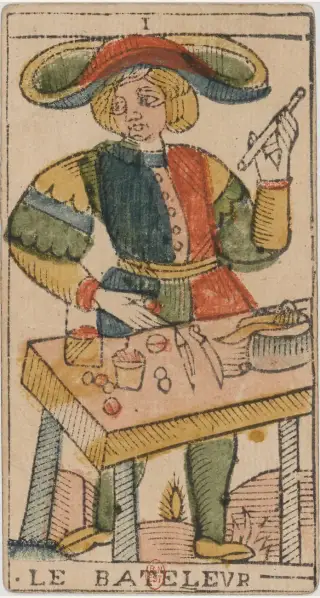
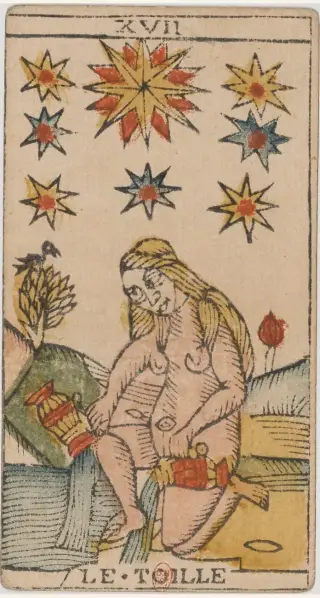
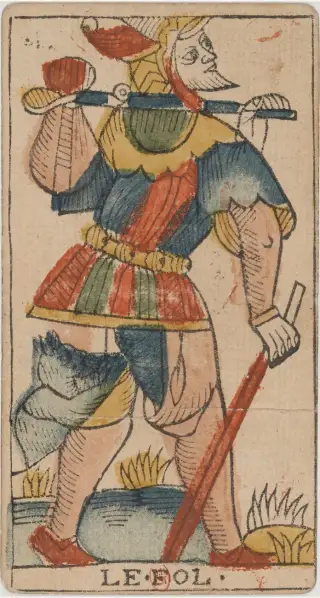
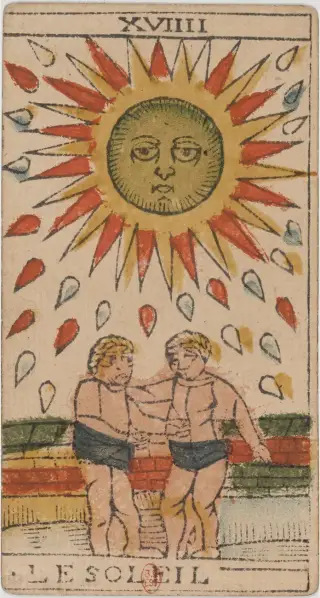
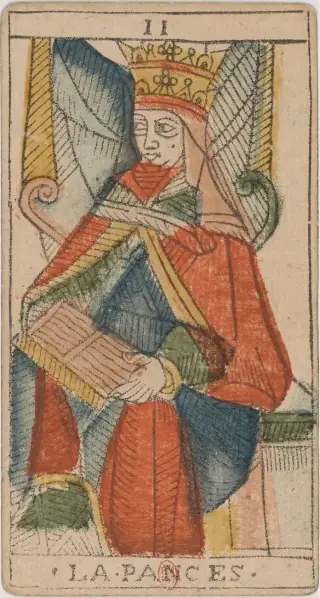
The Jean Dodal Tarot
A Lyon workshop's export tarot from around 1701, the oldest complete deck of the Marseille pattern's Type I line, with "made for abroad" stamped right on the cards.
View the deck →
No. 13 · Tarot · 77 cards
The Besançon Tarot
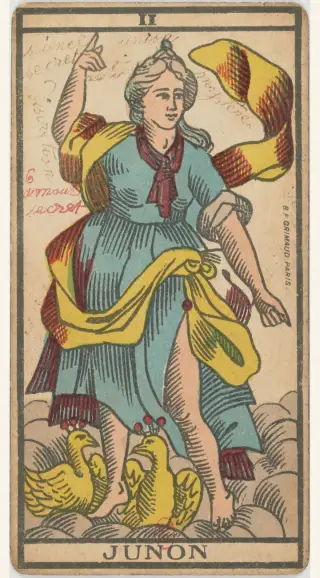
The Marseille tarot with its clergy swapped out: Juno and her peacock for the Popess, Jupiter for the Pope, the pattern the border towns printed for careful markets.
View the deck →
No. 14 · Tarot · 78 cards
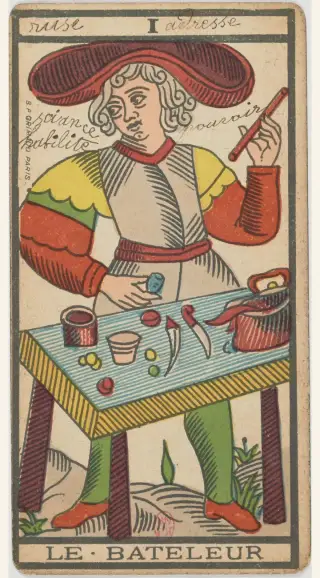
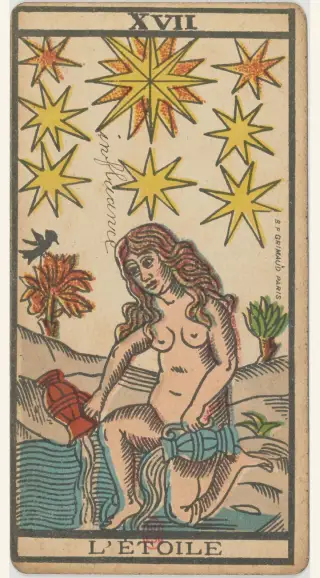
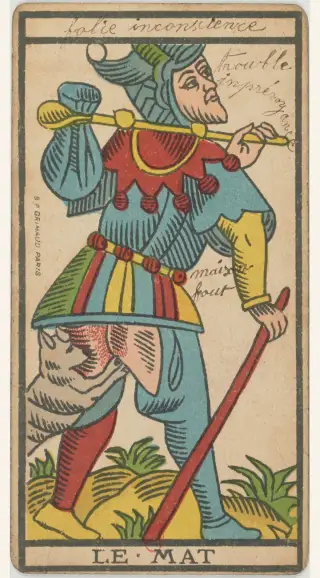
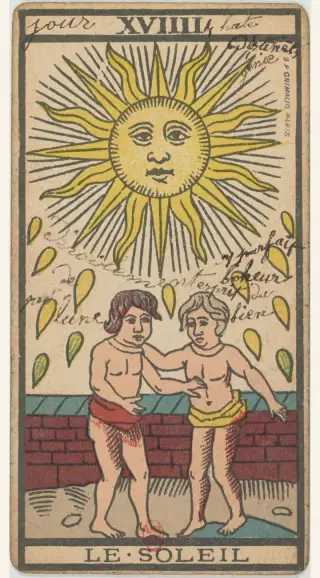
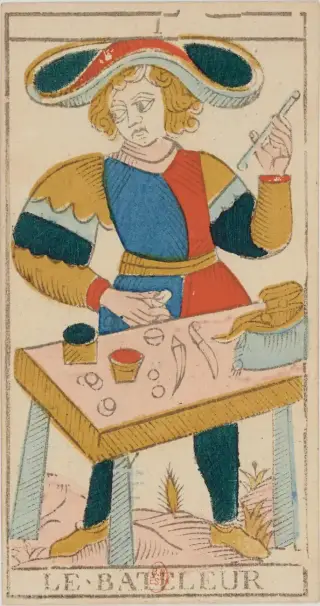
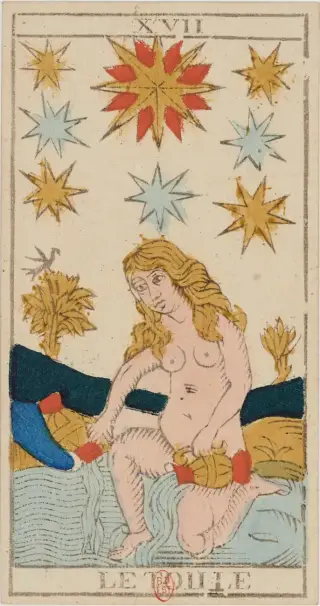
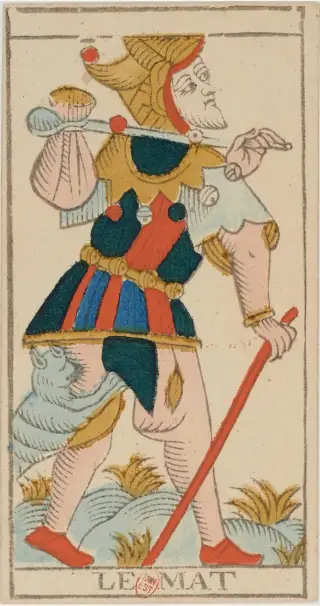
The Conver Tarot de Marseille
Nicolas Conver's Marseille blocks of 1760, the deck behind Grimaud's Ancien Tarot de Marseille and nearly every Marseille restoration since.
View the deck →
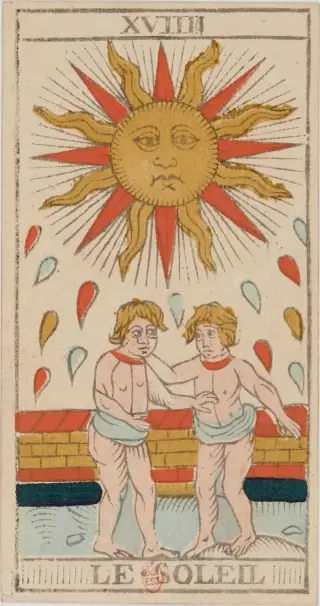
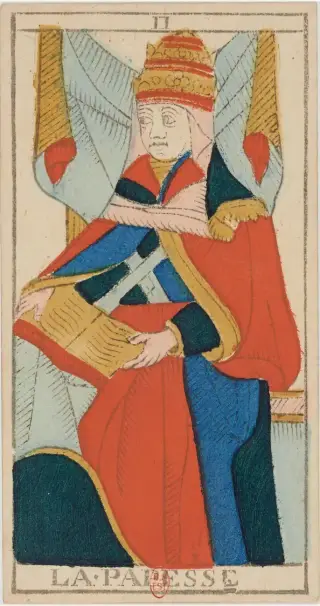
No. 15 · Oracle · 33 cards
The Petit Etteilla
Etteilla's first invention, older than his tarot: thirty-two ordinary playing cards wrapped in printed meanings, plus the card that bears his name.
View the deck →
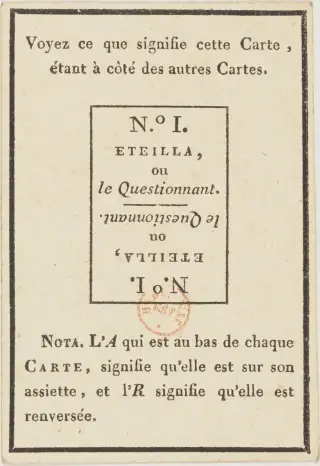
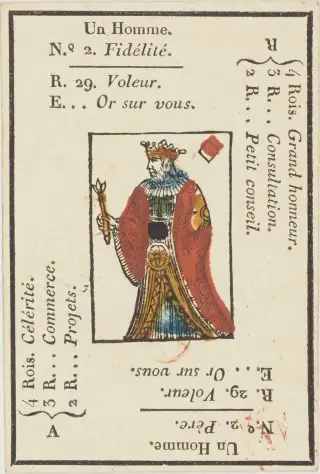
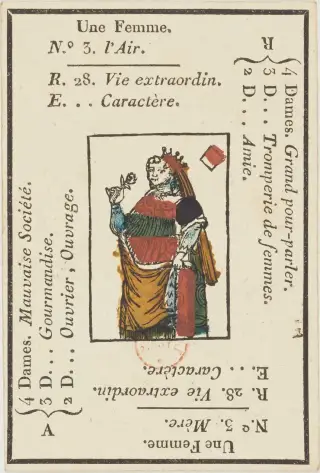
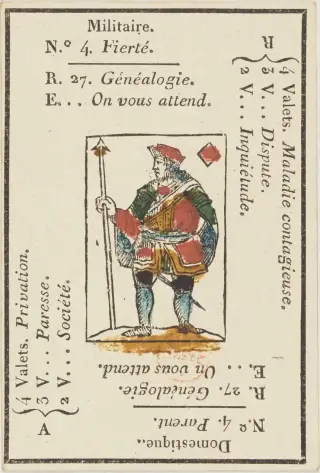
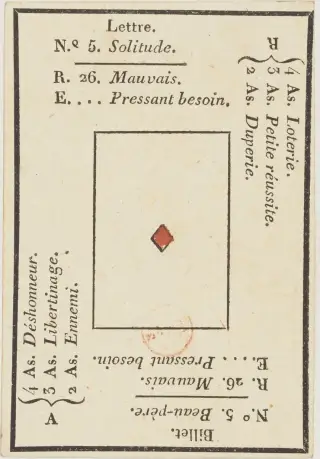
No. 16 · Oracle · 66 cards
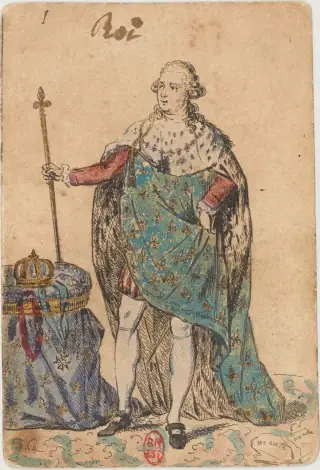
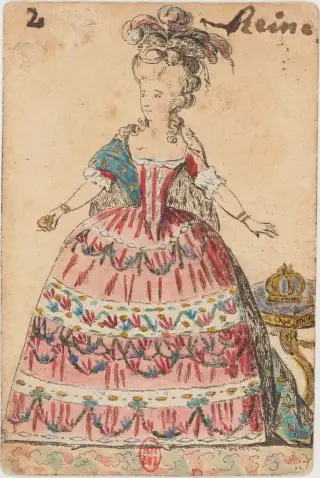
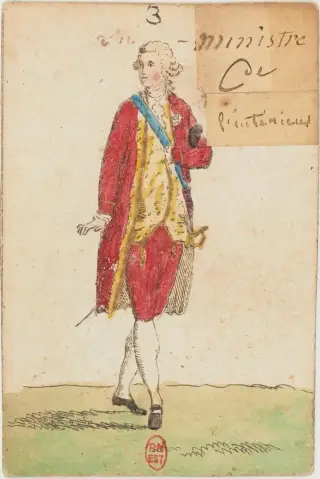
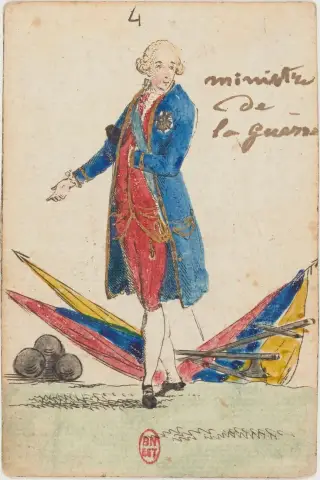
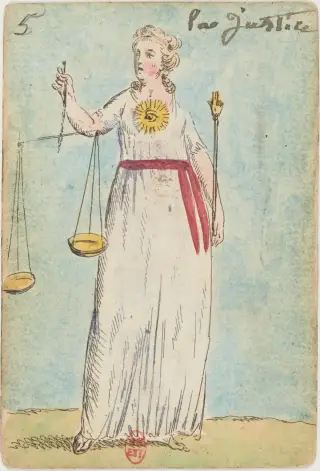
The Cartomancie of 1788
A fortune-telling deck that exists in exactly one copy, drawn by hand in 1788: Louis XVI for a king card, Liberty with her cap, and the Revolution one year away.
View the deck →
No. 17 · Tarot · 78 cards
The Livre de Thot Etteilla
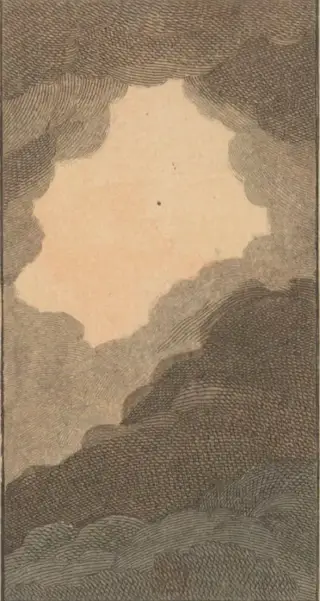
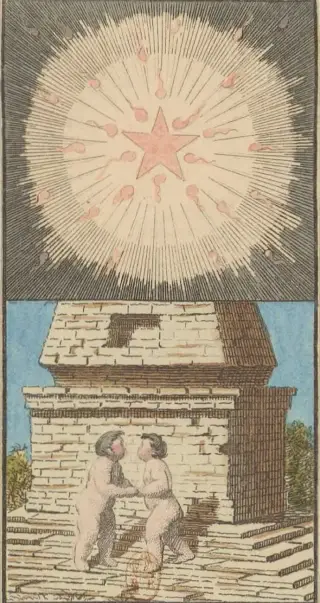
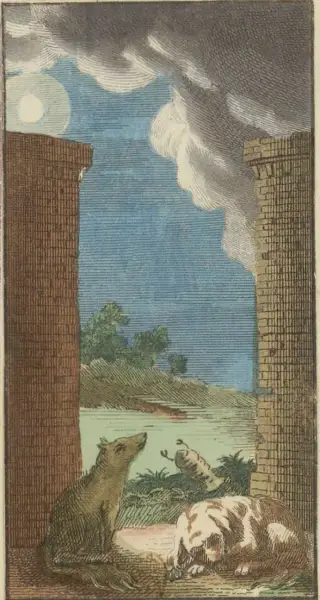
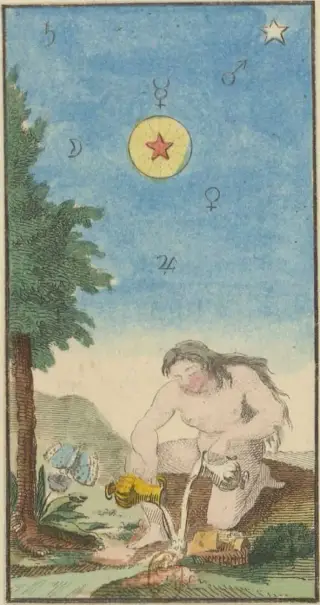
The first tarot designed for fortune-telling, printed by Etteilla himself in 1789: the world remade in seventy-eight cards, beginning with Chaos.
View the deck →
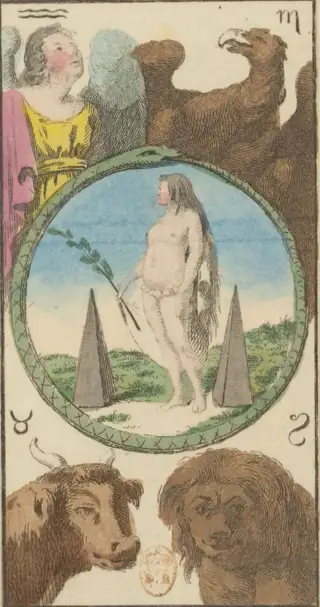
No. 18 · Oracle · 42 cards
The Petit Oracle des Dames
Forty-two double-ended cards from post-Revolution Paris: turn the card and the fortune turns with it, Love one way, Desire the other.
View the deck →
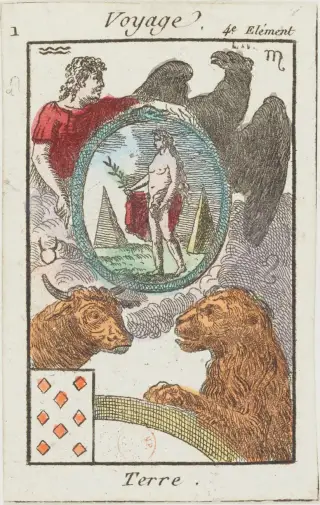
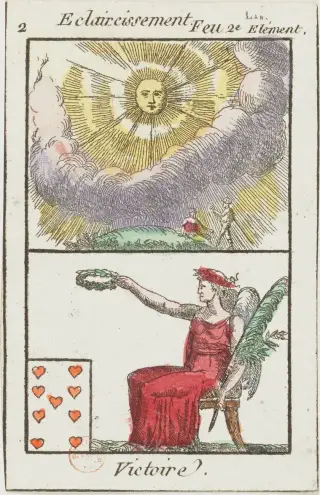
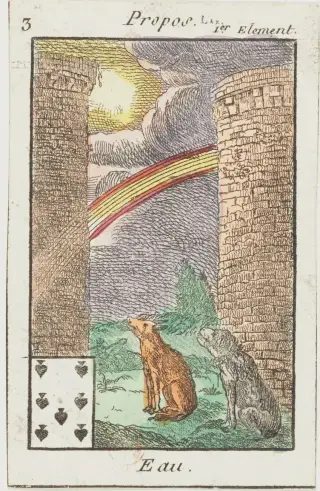
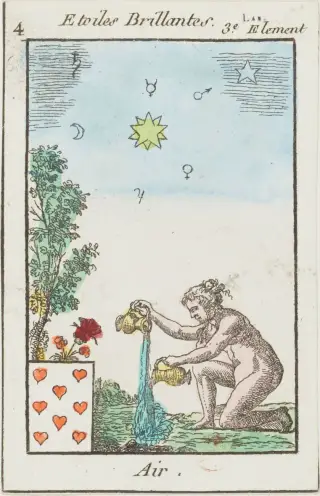
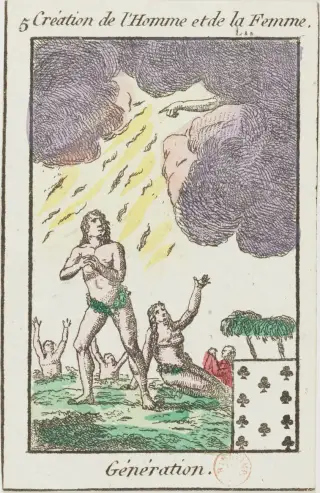
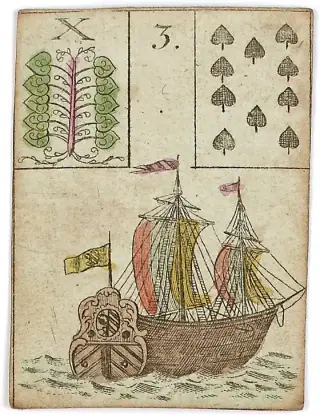
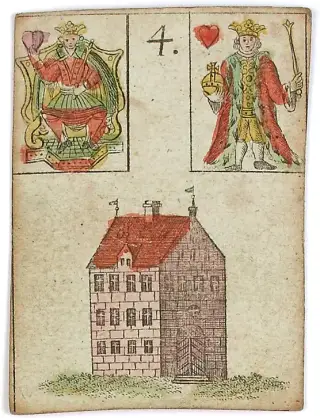
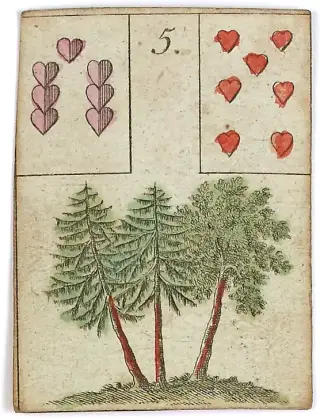
No. 19 · Oracle · 36 cards
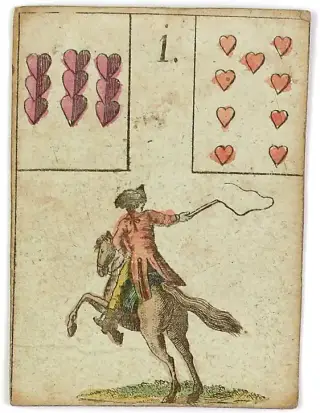
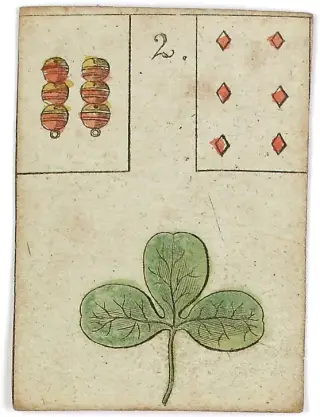
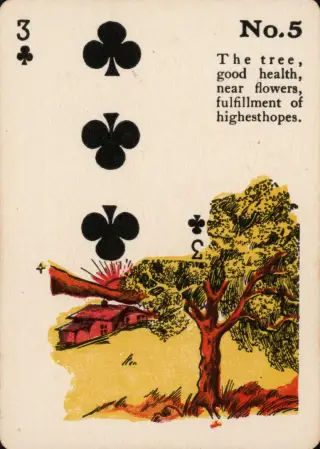
The Game of Hope
Thirty-six numbered cards from a Nuremberg parlor game of 1799 that, half a century later and under a famous fortune teller's borrowed name, became the Lenormand oracle.
View the deck →
Nineteenth century
No. 20 · Tarot · no open scans yet
The Tarocco Soprafino
Milan's answer to the Marseille woodcut: the whole tarot re-engraved in fine line and dressed for the opera, the most elegant deck of its century.
Read its story →
No. 21 · Oracle · 52 cards
The Sibylle des Salons
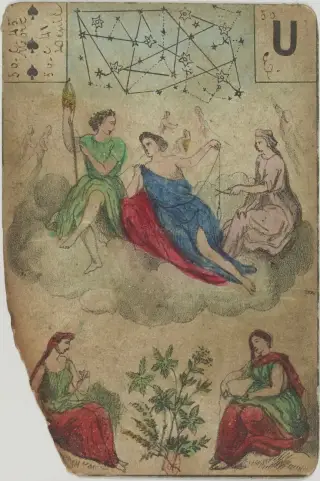
The prettiest fortune pack of the Paris salons: fifty-two little genre scenes said to be Grandville's, from Cupid to winged Victory, with Death in a shroud at number twenty-one.
View the deck →
No. 22 · Oracle · 54 cards
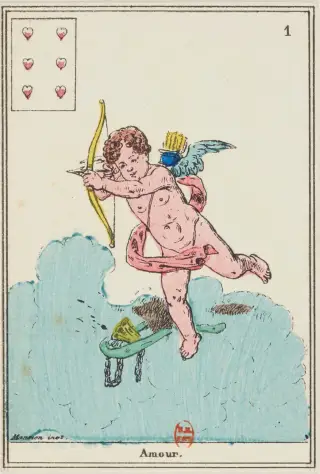
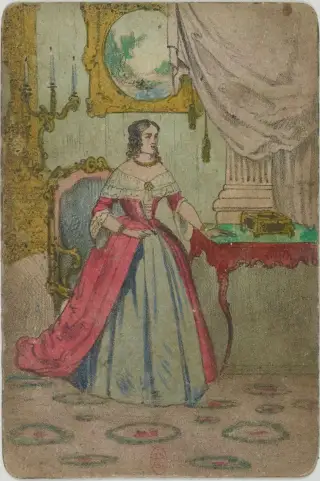
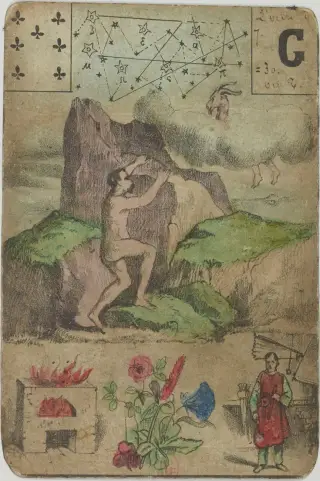
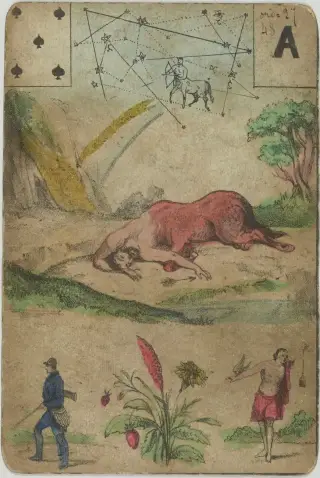
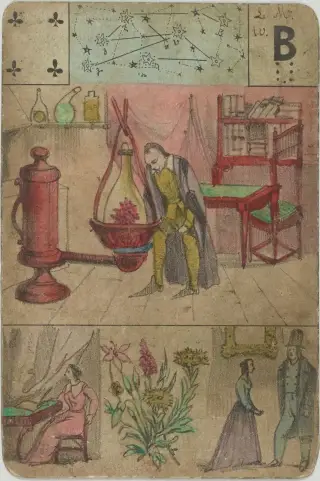
The Grand Jeu de Mlle Lenormand
Five oracles printed on one card: a myth, a constellation, a playing card, a letter and a flower, sold under a dead fortune teller's name.
View the deck →
No. 23 · Tarot · 97 cards
The Minchiate Fiorentine
Tarot was not big enough for Florence, so the city added Prudence, the four elements and the whole zodiac and dealt ninety-seven cards instead.
View the deck →
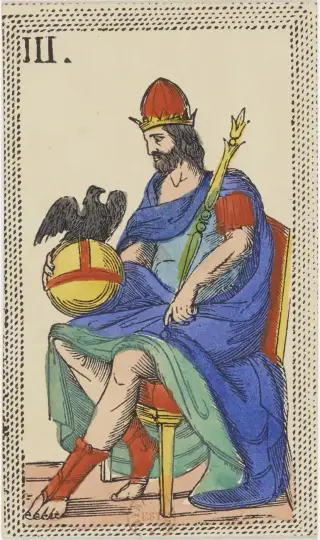
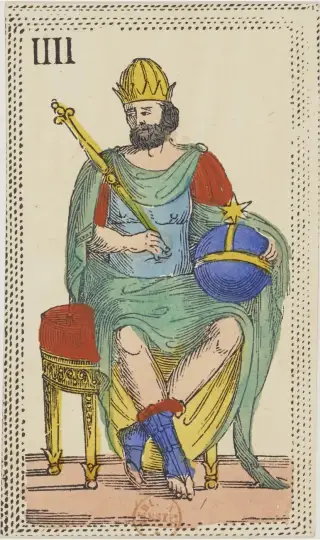
No. 24 · Oracle · 32 cards
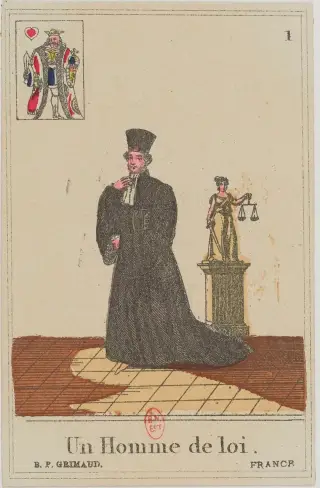
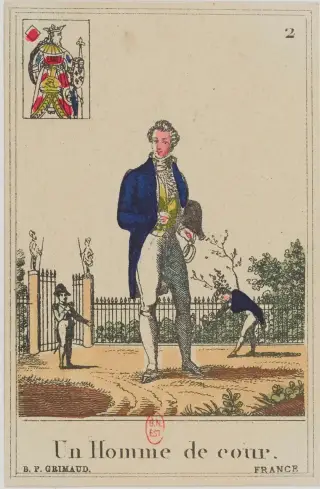
The Livre du Destin
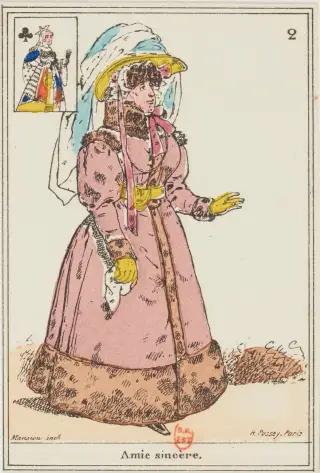
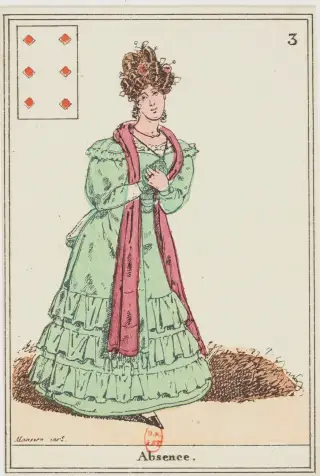
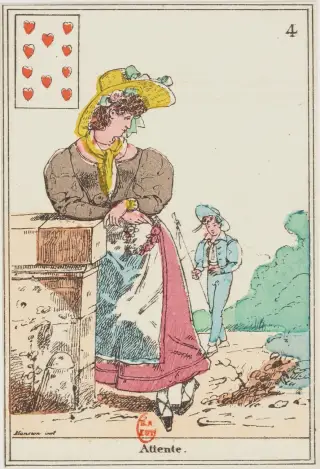
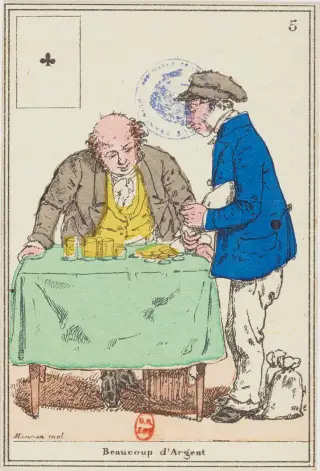
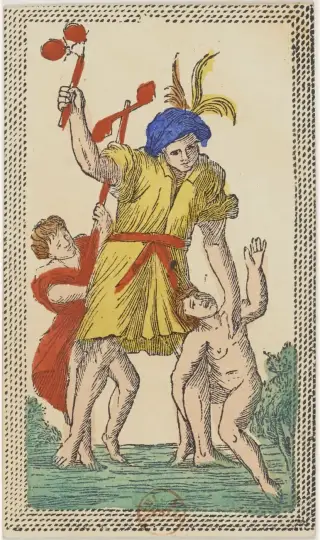
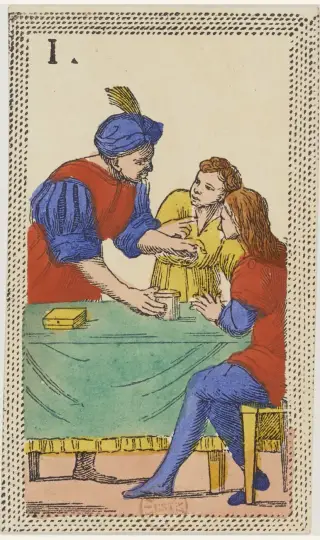
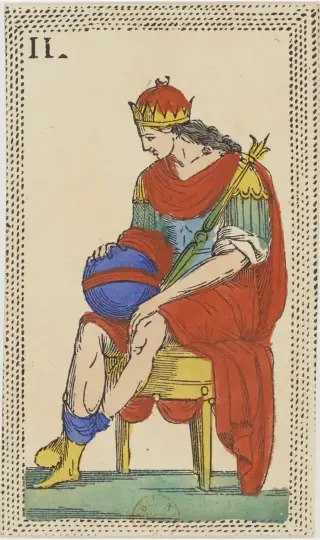
The Book of Fate as thirty-two cards: lawyers, widows, merchants and lovers in Second-Empire dress, with the fortune printed in the picture.
View the deck →
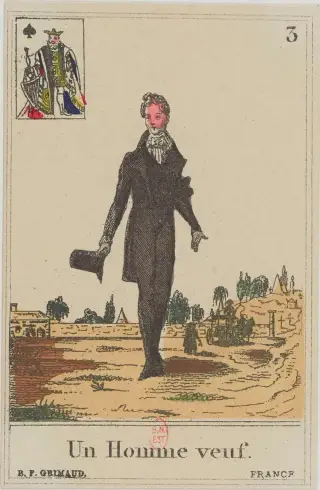
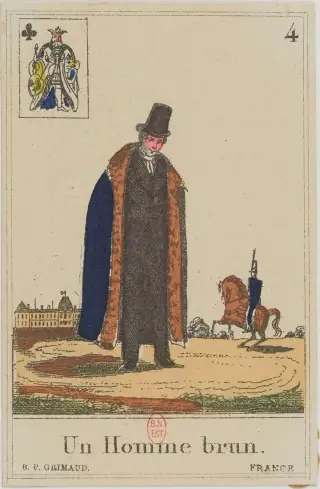
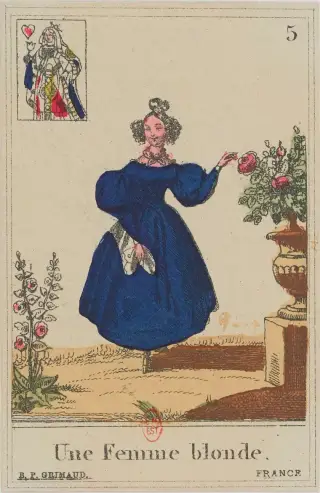
No. 25 · Tarot · 78 cards
The Grand Etteilla
Etteilla's fortune-telling tarot as the shops sold it for a century: his 1788 system in a stencil-colored Grimaud printing, a meaning stamped on each end of every card.
View the deck →
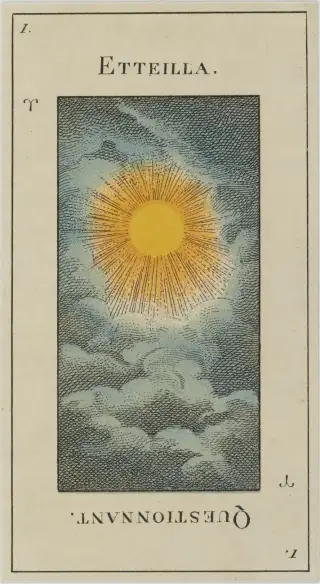
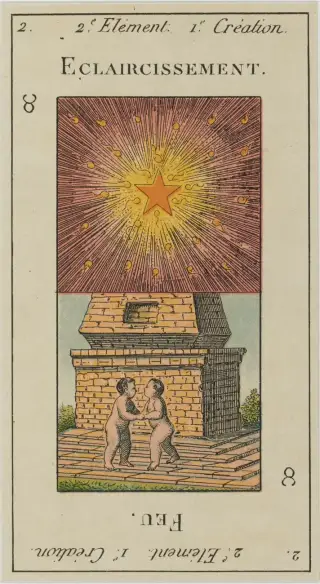
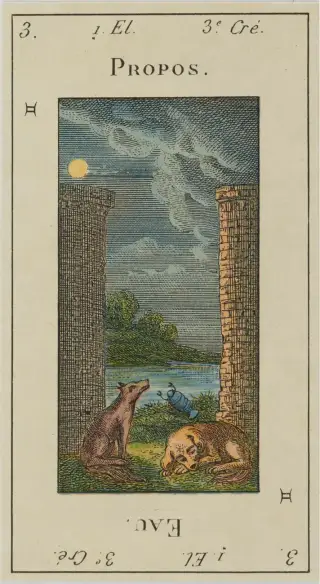
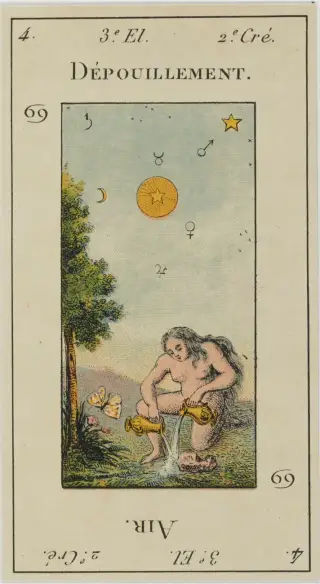
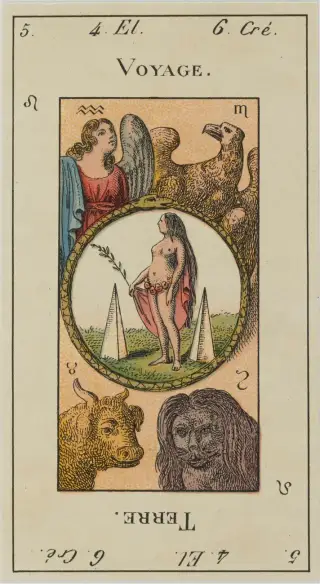
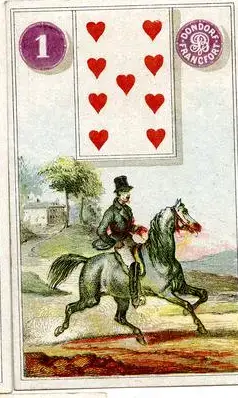
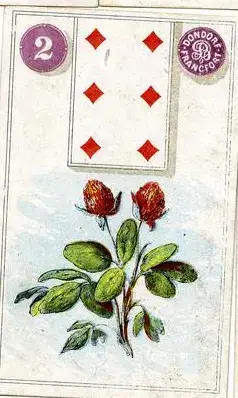
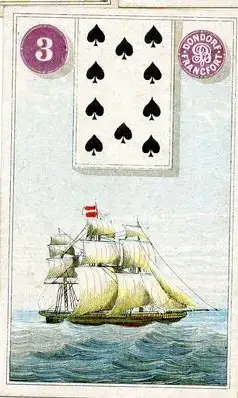
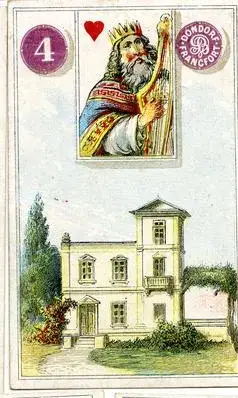
No. 26 · Oracle · 36 cards
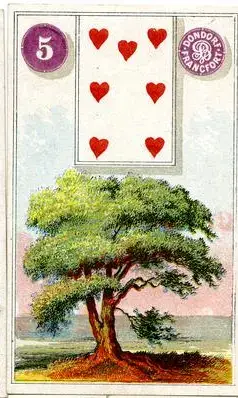
The Dondorf Lenormand
Thirty-six small pictures with a playing card tucked into the corner of each: the German fortune-telling pack that most modern Lenormand decks are still quietly copying.
View the deck →
No. 27 · Oracle · no open scans yet
The Vera Sibilla
Italy's kitchen-table oracle: fifty-two blunt little scenes, Death and the Enemy dealt out beside the Great Lord and the Merry Company.
Read its story →
No. 28 · Tarot · 22 cards
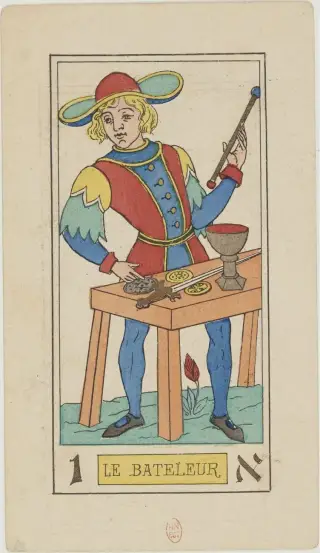
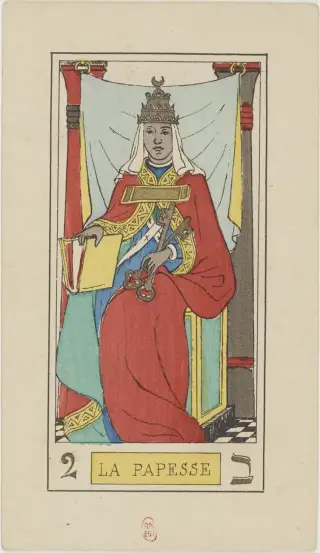
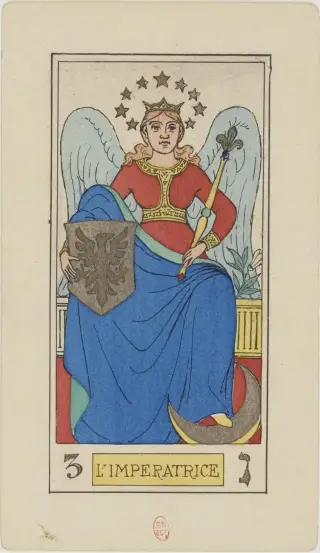
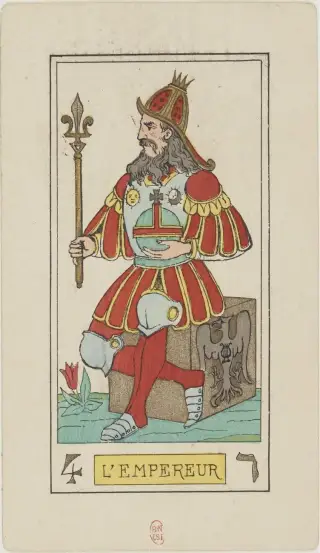
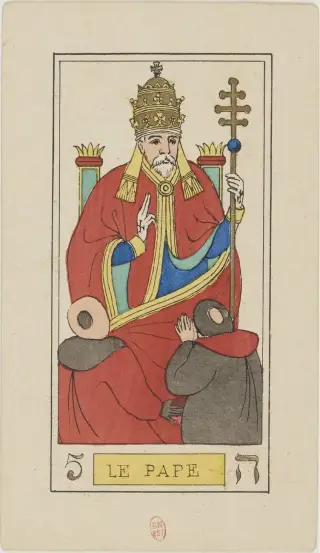
The Oswald Wirth Tarot
Twenty-two trumps drawn in Paris in 1889 for the occultists, the old Marseille images corrected until they said what Eliphas Levi taught.
View the deck →
No. 29 · Oracle · no open scans yet
The Kipper Cards
Munich's people-first fortune pack: thirty-six little Biedermeier scenes where the cards are not symbols but neighbors, lovers, rivals and rooms.
Read its story →
No. 30 · Tarot · 22 cards
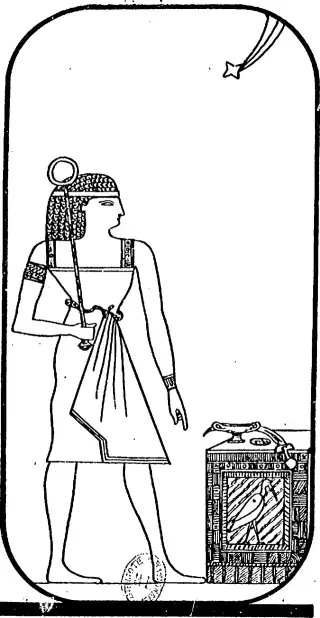
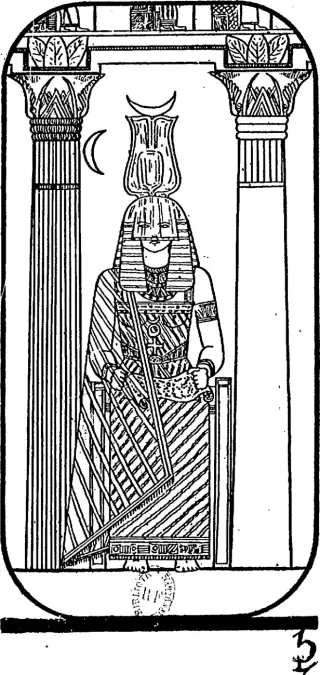
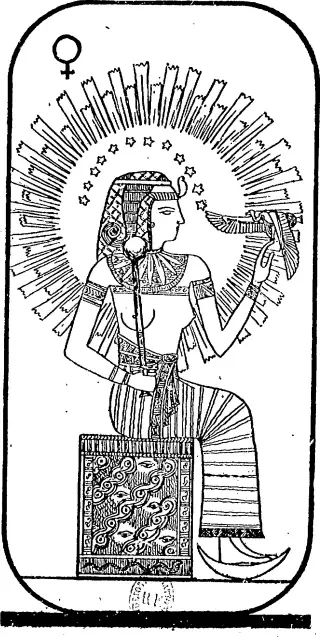
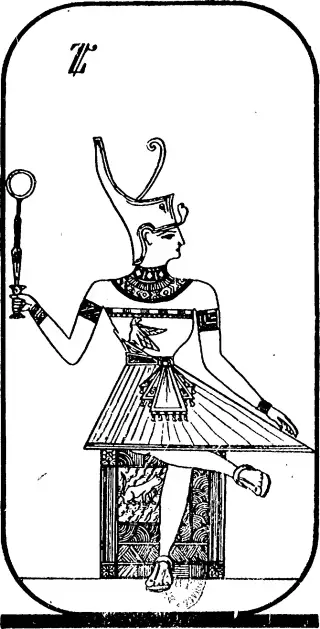
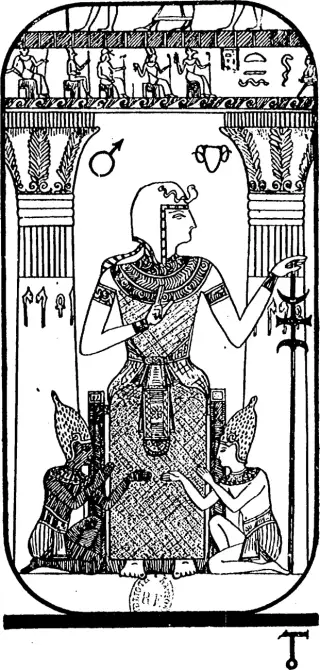
The Falconnier Egyptian Tarot
The tarot rebuilt as ancient Egypt in 1896: an actor and an illustrator turned Paul Christian's imagined temple arcana into printed plates, and every Egyptian deck since has copied them.
View the deck →
Twentieth century
No. 31 · Tarot · 78 cards
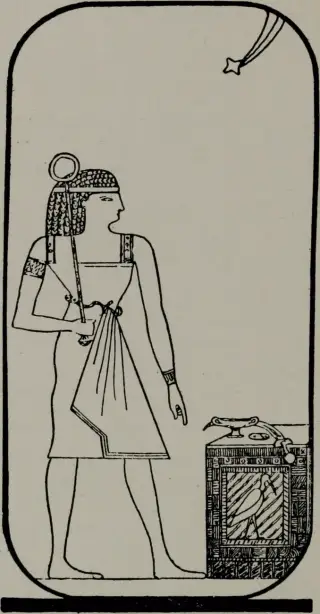
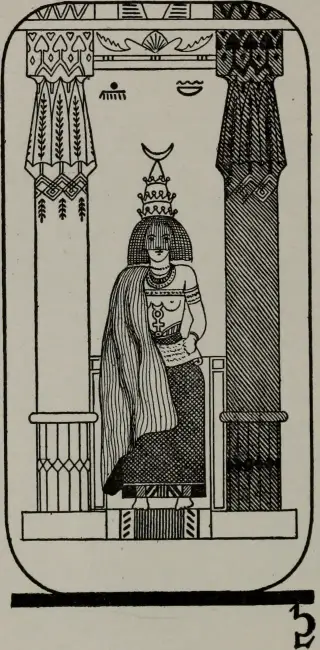
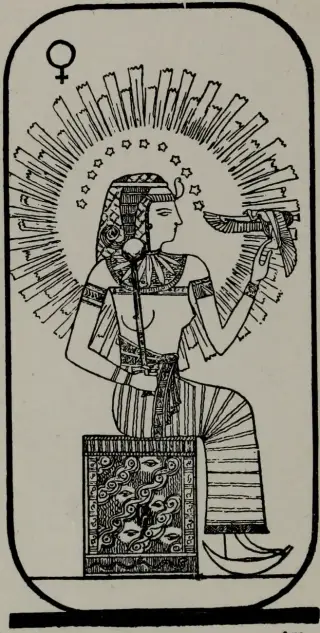
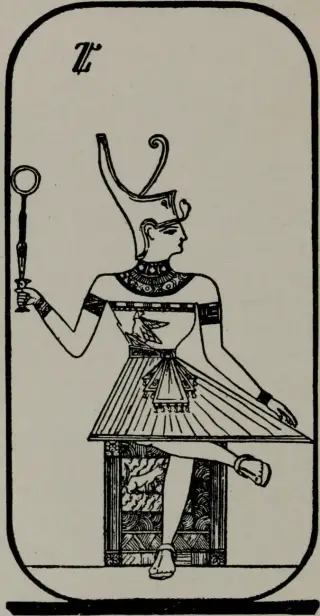
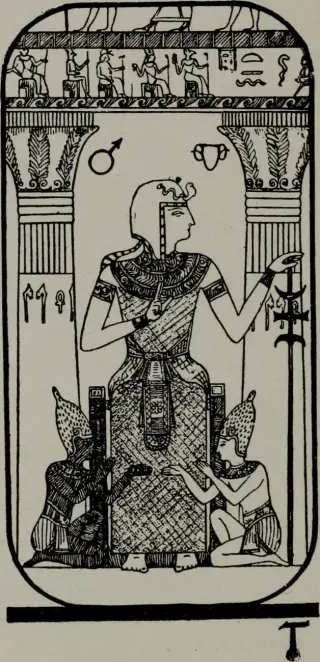
The Practical Astrology Tarot
The first complete 78-card Egyptian tarot, printed in a Chicago astrology manual in 1901: Wegener's temple arcana finished at last with suits of scepters, cups, swords and pentacles.
View the deck →
No. 32 · Oracle · 52 cards
The Gypsy Witch Cards
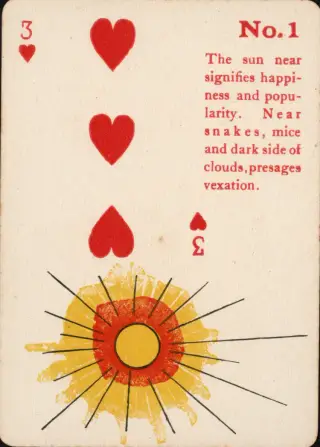
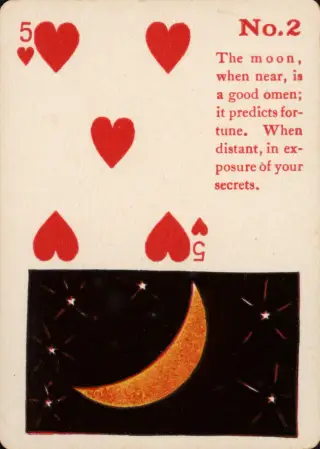
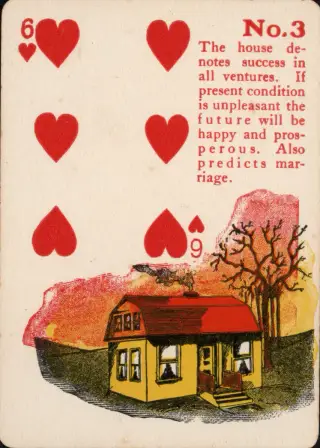
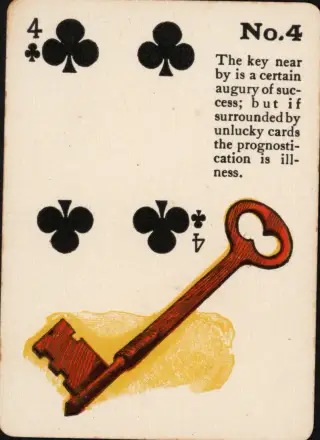
America's kitchen-table oracle of 1903: the German fortune emblems dealt onto a poker deck, with a dead French fortune teller's name on the box.
View the deck →
No. 33 · Tarot · 78 cards
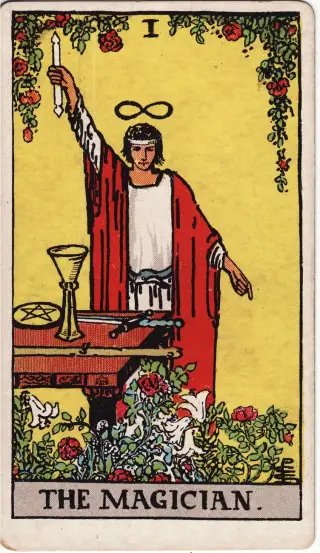
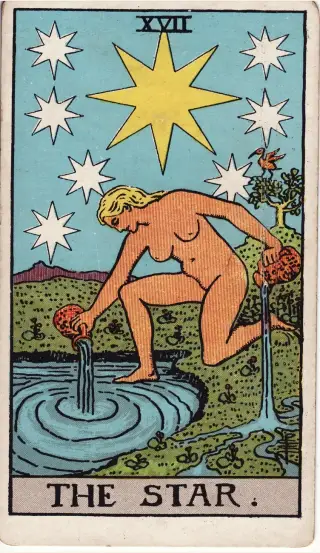
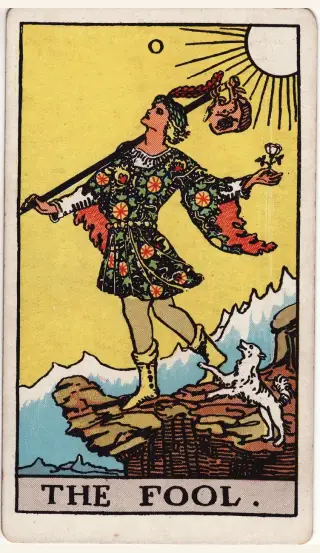
The Rider-Waite-Smith Tarot
The deck most of the world pictures when it hears the word tarot, drawn in about six months in 1909 by an artist whose name was left off it for eighty years.
View the deck →
No. 34 · Tarot · 78 cards
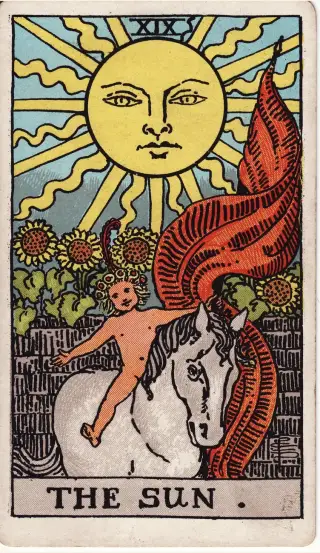
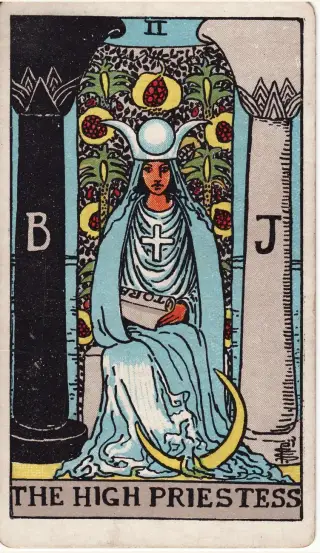
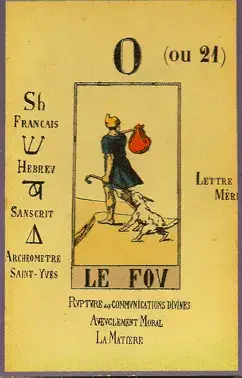
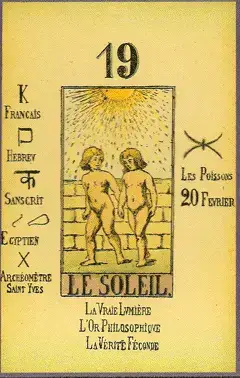
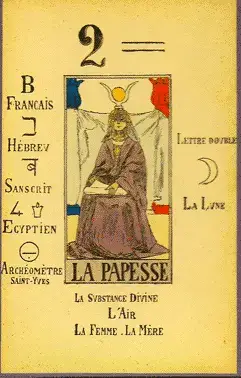
The Tarot of Papus
The 78-card Egyptian tarot Papus commissioned for his 1909 book, drawn by a young painter who went on to run the restoration studio of France's national museums, with five alphabets, the zodiac, and Etteilla's keywords packed into the margins.
View the deck →
No. 35 · Tarot · 78 cards
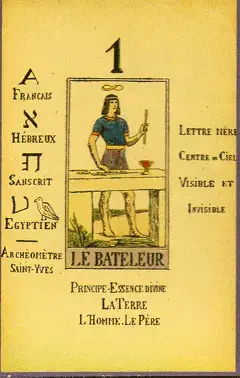
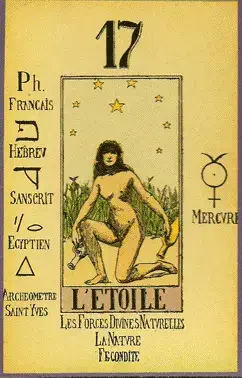
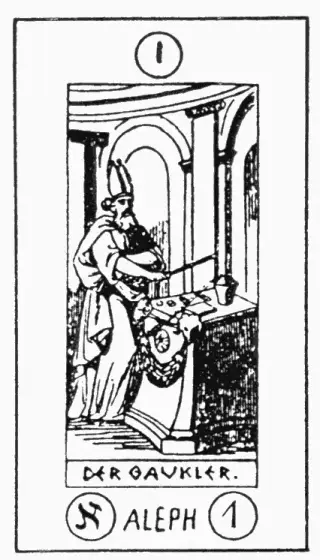
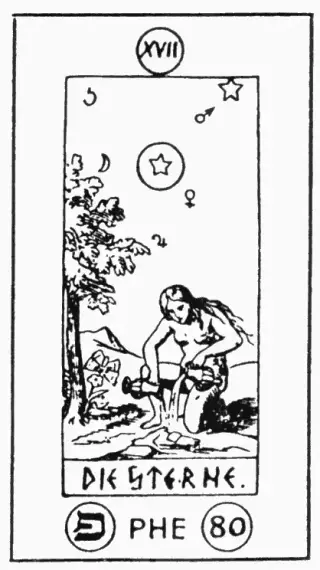
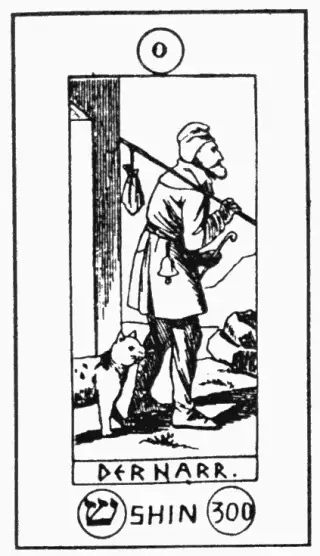
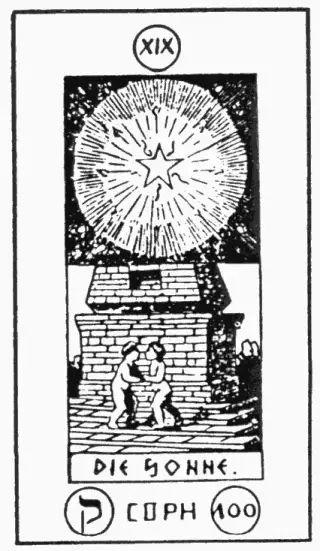
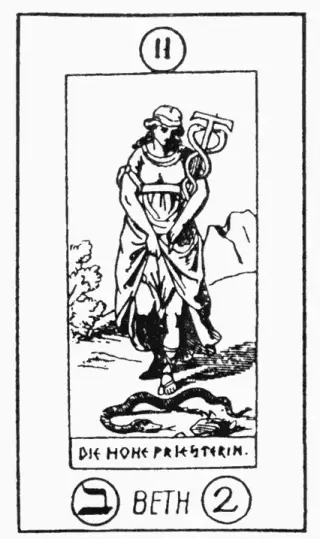
The Kurtzahn Tarot
Germany's first tarot, 1920: a wartime engineer's spare pen-line deck, each card keyed to a Hebrew letter, with room left blank for the reader's own notes.
View the deck →
This catalogue is also a free dataset, as CSV and JSON. Have a deck in progress of your own? Give it a page.