The Dondorf Lenormand
Thirty-six small pictures with a playing card tucked into the corner of each: the German fortune-telling pack that most modern Lenormand decks are still quietly copying.
B. Dondorf, Frankfurt am Main (firm active 1833 to 1933); chromolithograph · Frankfurt am Main, export edition marked Francfort; this pack in the British Museum, London, from Lady Charlotte Schreiber's collection · c. 1880 to 1895
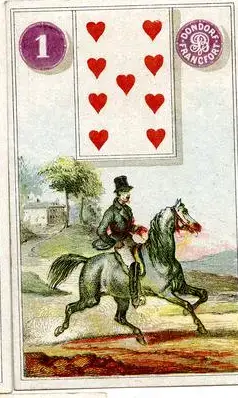
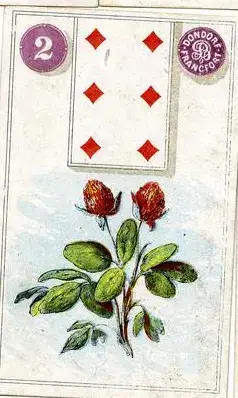
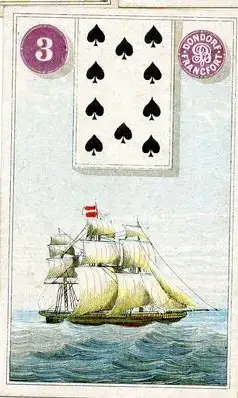
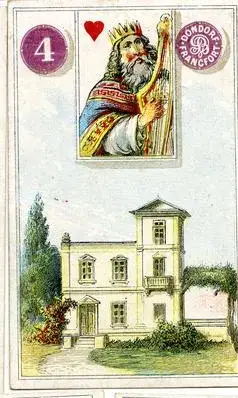
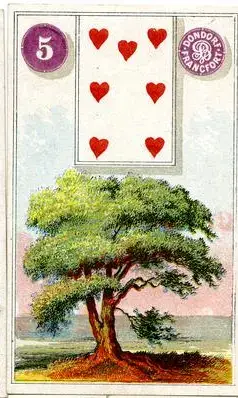
The Lenormand pack has nothing to do with Marie Anne Lenormand, the Paris fortune-teller who read cards for Napoleon's circle. The thirty-six images, Rider, Clover, Ship, House and the rest, come from the Game of Hope, a race game with a fortune-telling appendix published in Nuremberg by Johann Kaspar Hechtel around 1799. Lenormand died in 1843 and publishers promptly put her name on the game, which sold better as a famous sibyl's secret than as a parlour amusement. By the 1850s it was simply the Petit Lenormand.
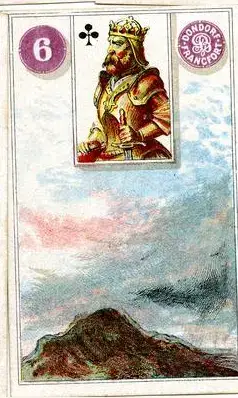
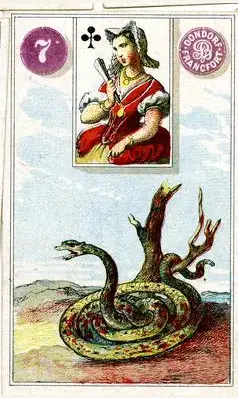
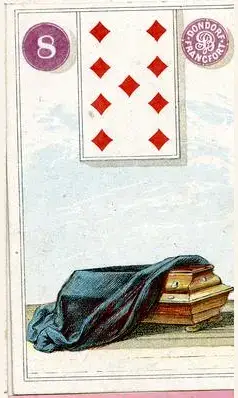
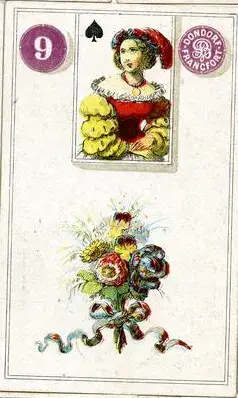
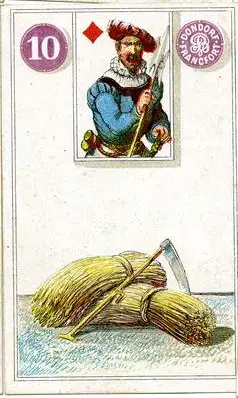
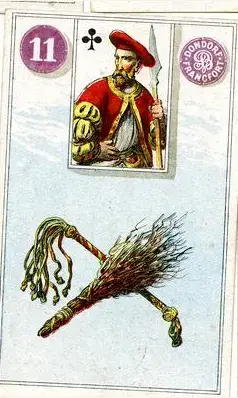
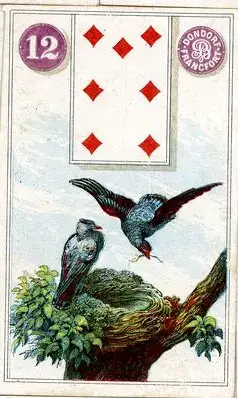
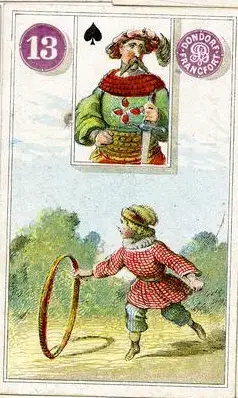
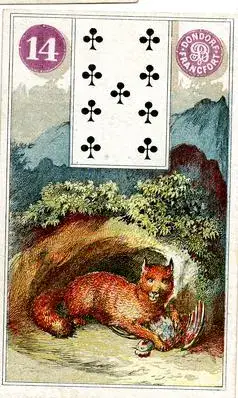
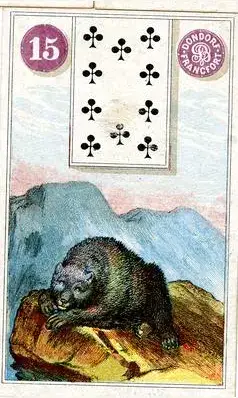
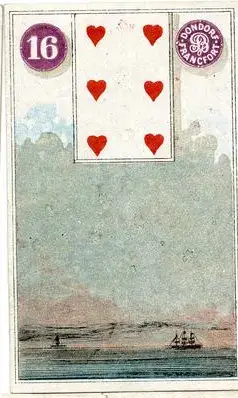
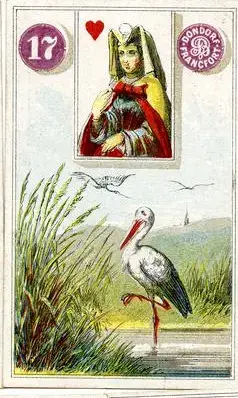
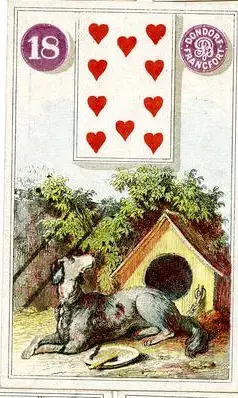
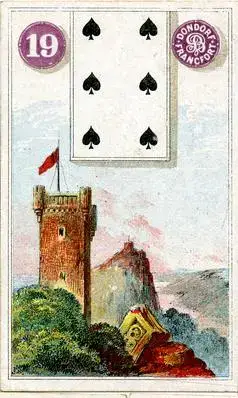
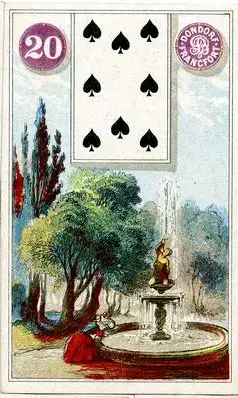
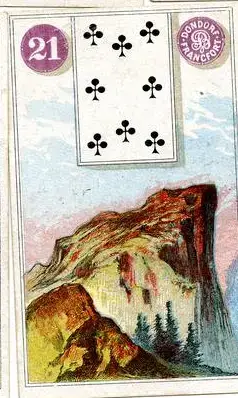
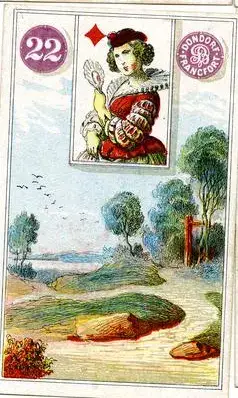
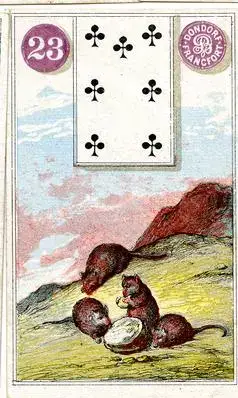
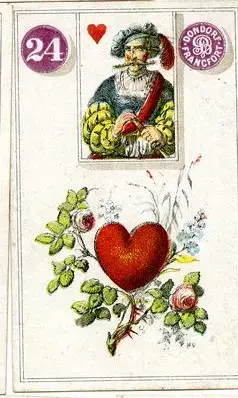
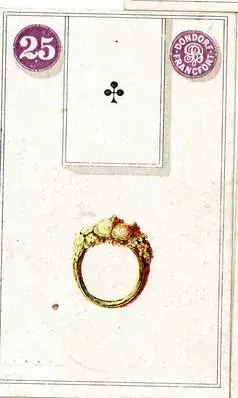
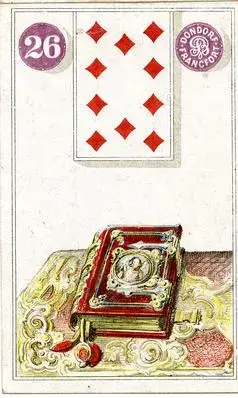
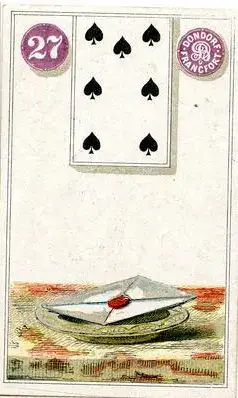
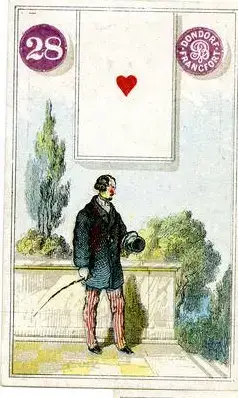
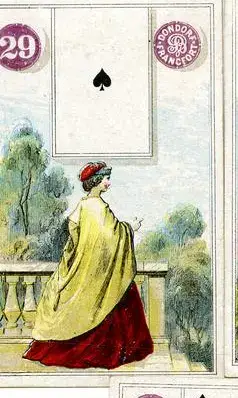
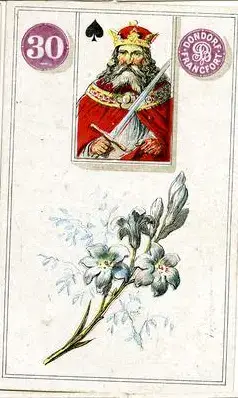
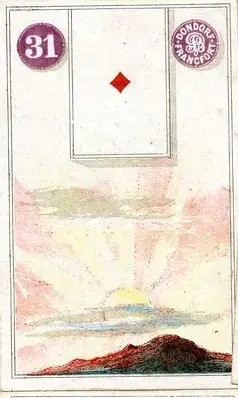
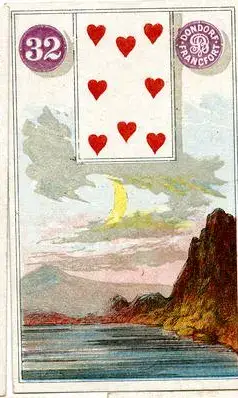
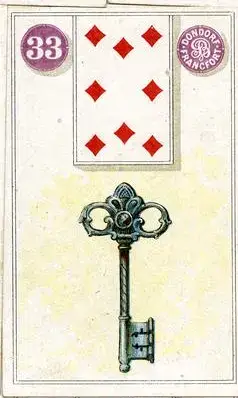
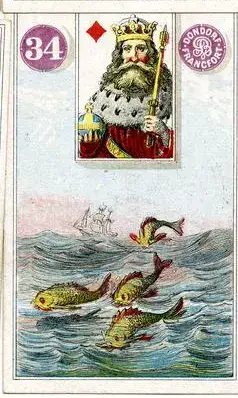
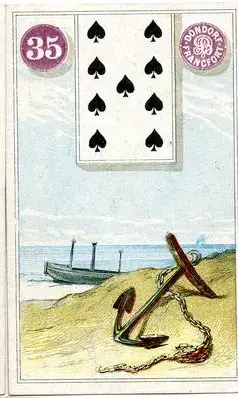
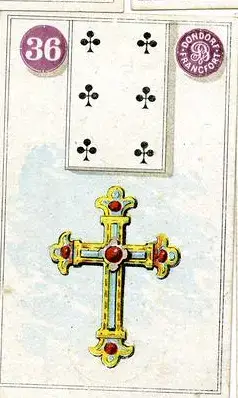
Bernhard Dondorf opened his printing works in Frankfurt in 1833 and by the 1870s the firm was the most admired maker of chromolithographed playing cards in Germany, exporting across Europe and to South America. Its Lenormand pack, printed in several editions with German, French and multilingual labelling, set the look the pack has kept ever since: a landscape or still life in soft greens and pinks, a purple numbered disc in one corner, the maker's seal in the other, and a miniature French-suited playing card floating above the scene. That inset is not decoration. Hechtel's original game assigned each picture a card from a thirty-six-card Skat-style pack, and readers still use the suits and courts as a second layer of meaning. This copy is stamped Francfort rather than Frankfurt, so it was made for French-speaking buyers; it came to the British Museum in 1896 with Lady Charlotte Schreiber's great collection of playing cards.
The museum photographed the pack as two sheets of eighteen cards each, and the cards here are cut from those sheets, which is why they are small and why the odd edge shows a neighbour. The cards are complete, thirty-six of thirty-six, and every one carries its number and its inset so the order can be checked at a glance. The Dondorf firm closed in 1933; its Lenormand has been redrawn, traced and reissued so many times since that most people who own a Lenormand deck own a descendant of this one.
- The Game of Hopethe parlor game it came from
- The Gypsy Witch Cardsthe American cousin
- The Grand Jeu de Mlle Lenormandthe large deck sold under the same name
- Anatomy of a 78 card tarot deckthirty-six instead of seventy-eight
- Designing your tarot card backthe corner inset as an index