The Grand Jeu de Mlle Lenormand
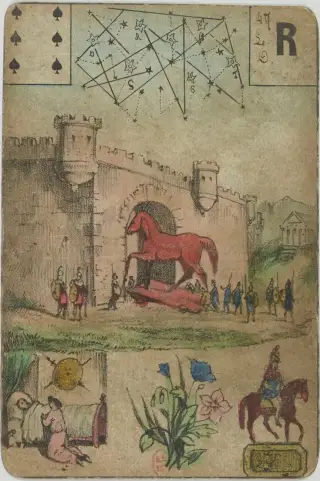
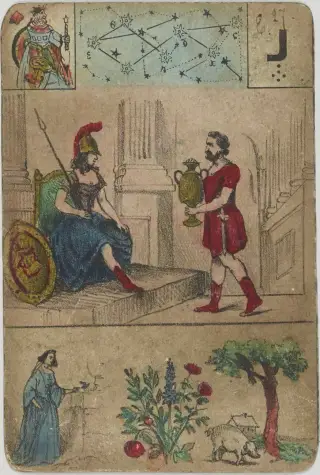
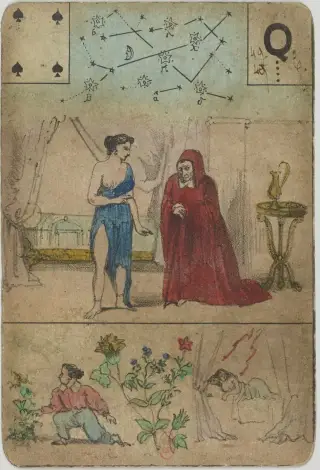
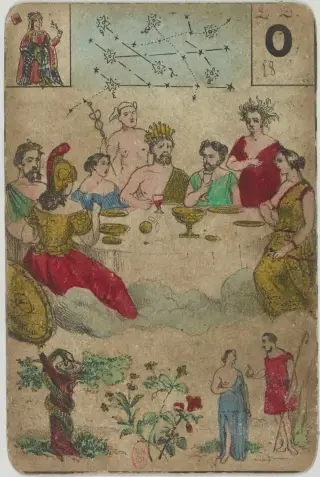
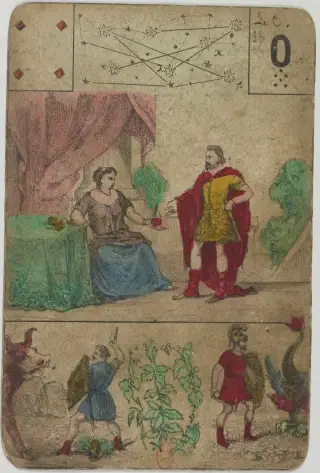
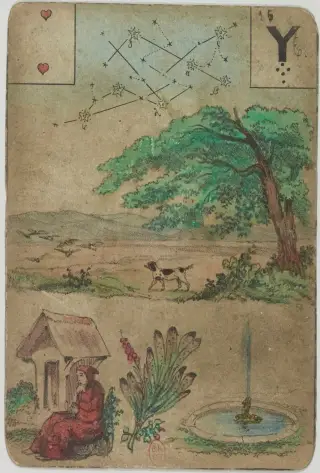
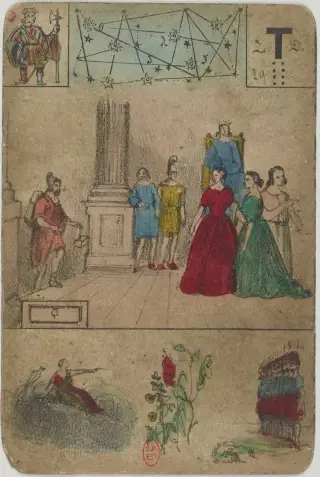
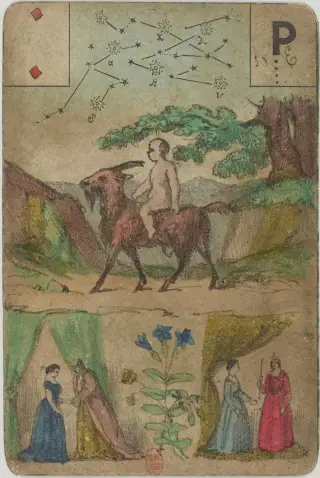
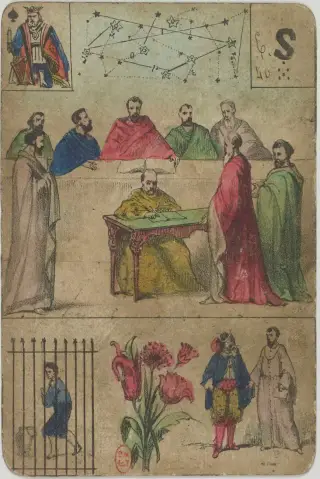
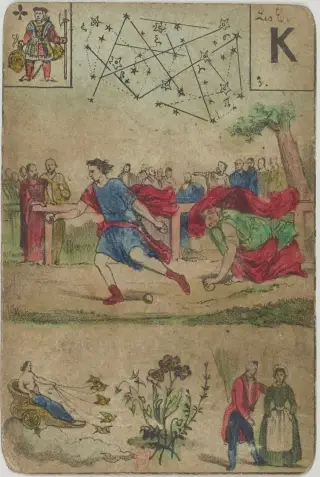
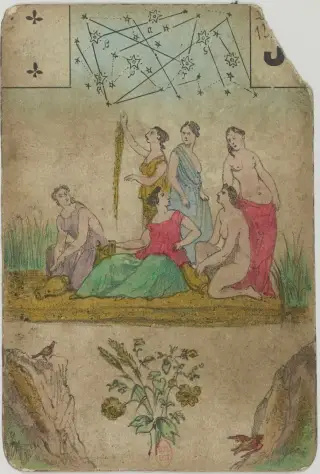
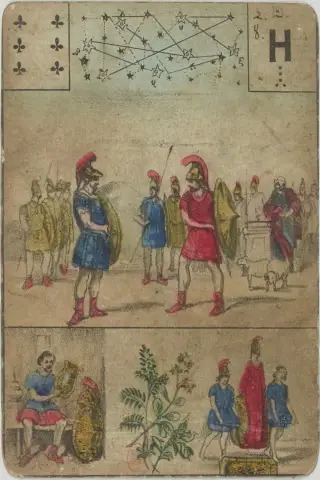
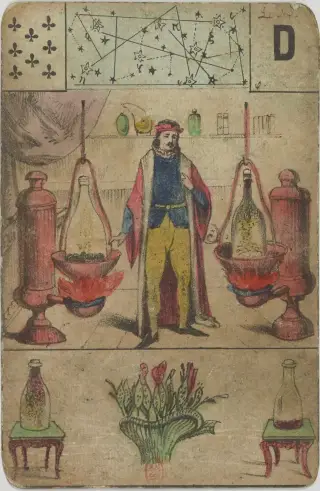
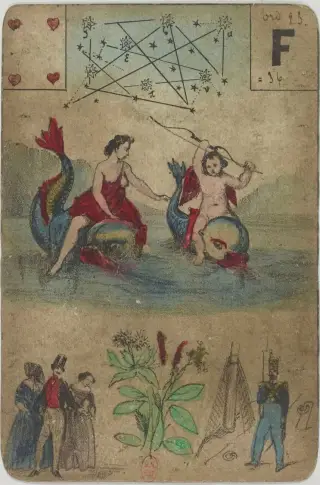
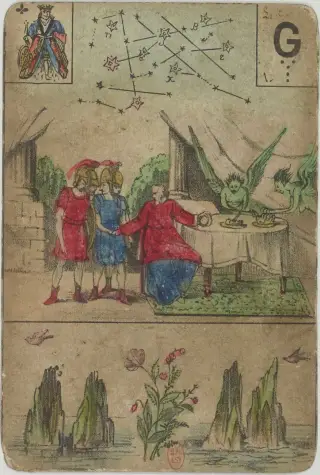
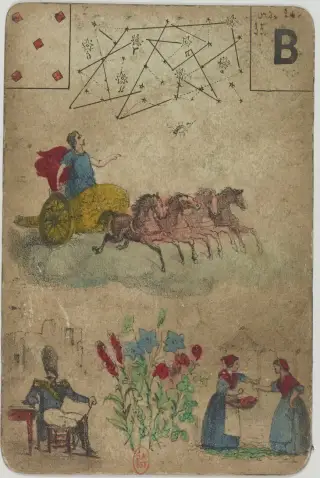
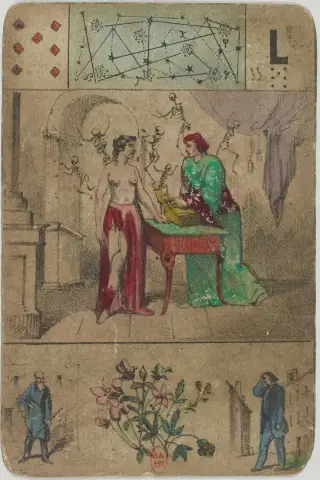
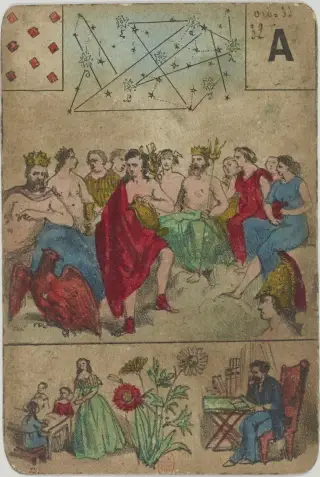
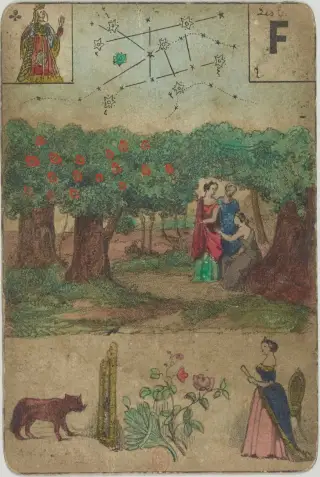
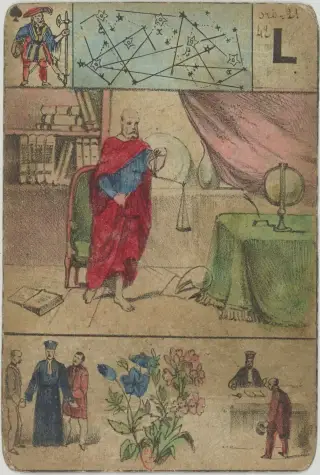
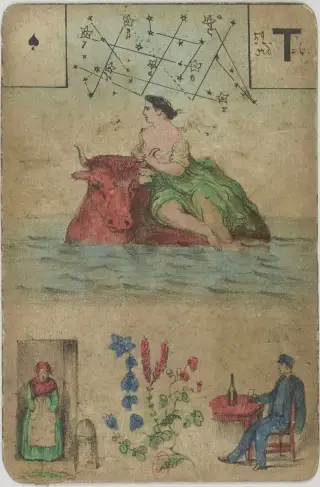
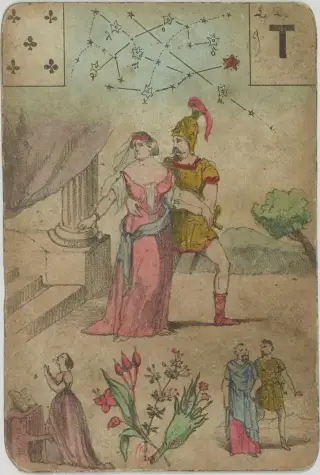
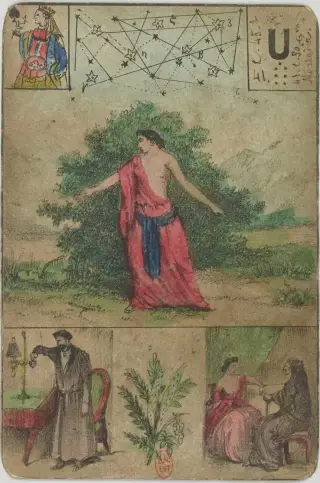
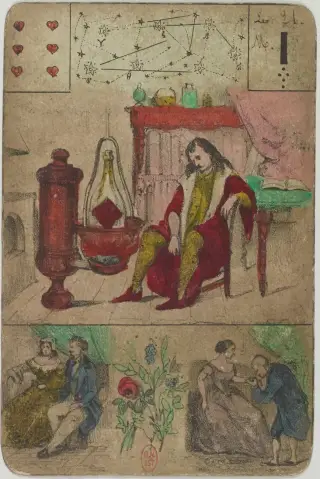
Five oracles printed on one card: a myth, a constellation, a playing card, a letter and a flower, sold under a dead fortune teller's name.
Published in Paris under Mlle Lenormand's name, two years after her death · Paris; at the Bibliothèque nationale de France · first issued 1845; this printing c. 1850-1880
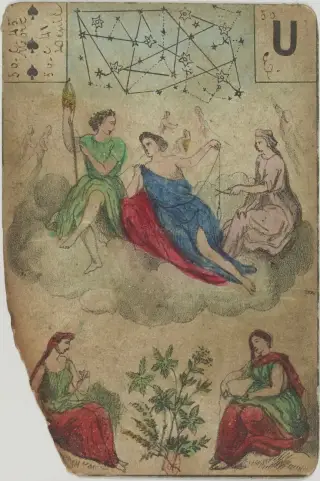
Marie-Anne Lenormand read cards for Paris through the Revolution and the Empire, was consulted by Josephine, jailed by Robespierre and by Napoleon in turn, and died in 1843 leaving no deck behind. Two years later Parisian publishers issued this one under her name and called it the Grand Jeu, the great pack, to distinguish it from the little thirty-six-card Lenormand that also traded on her reputation. She had nothing to do with either.
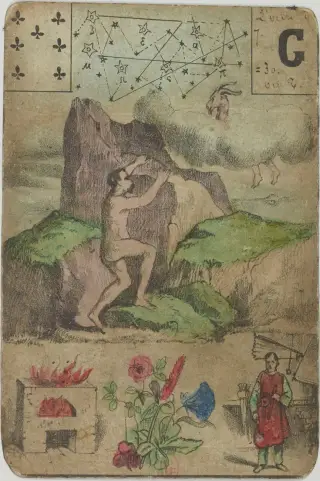
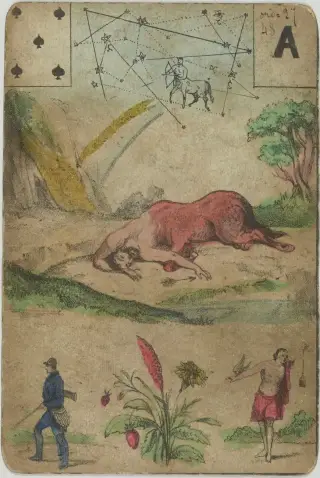
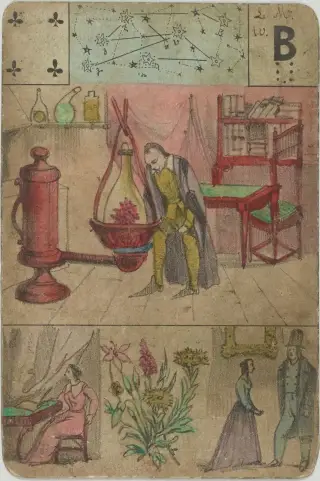
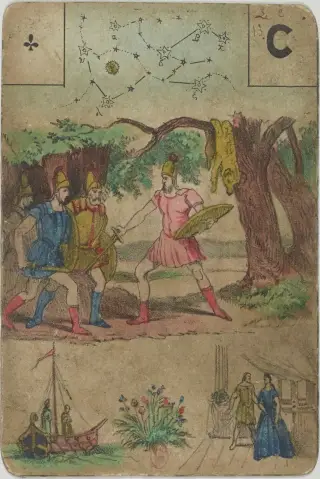
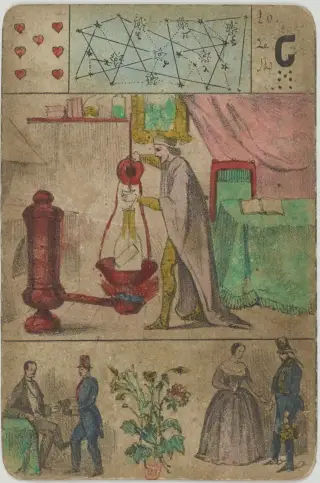
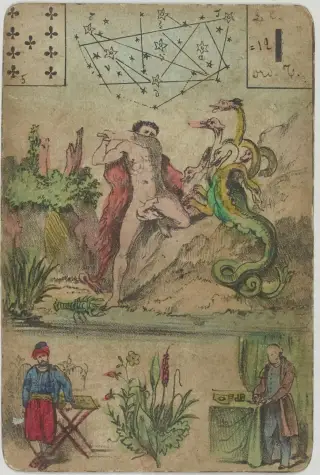
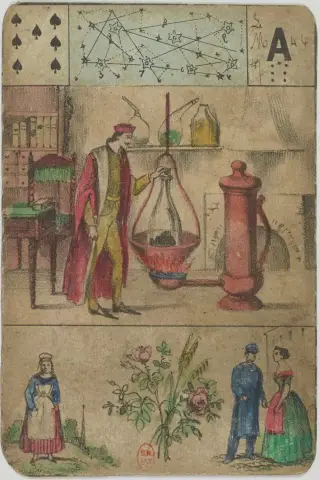
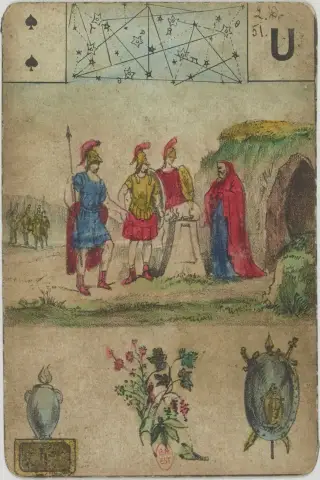
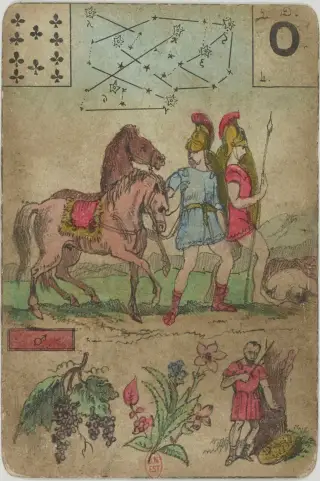
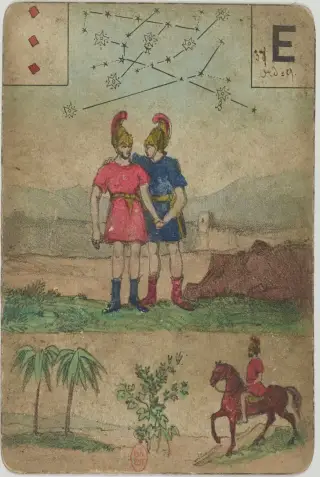
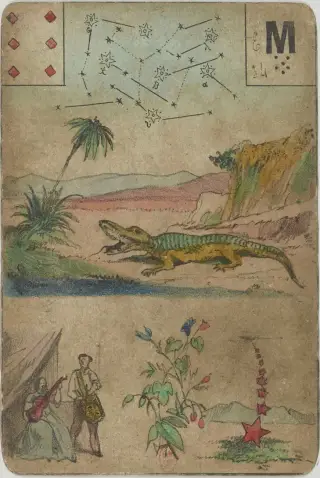
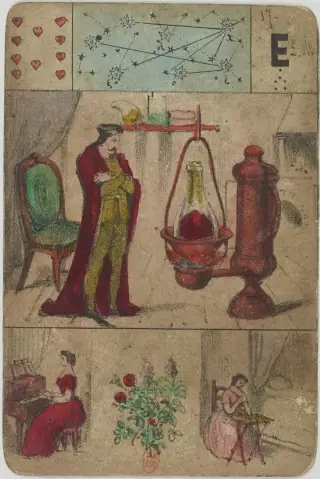
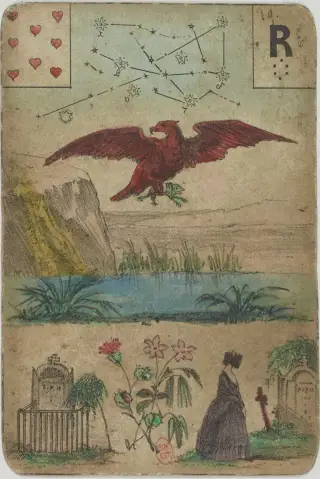
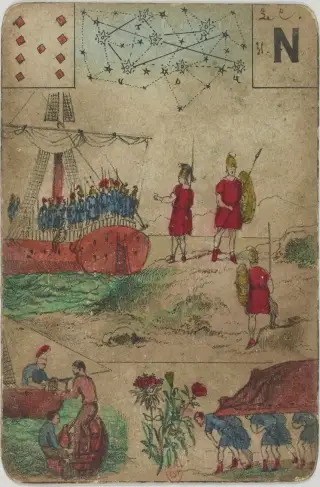
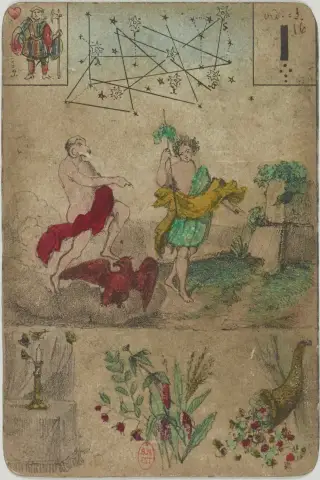
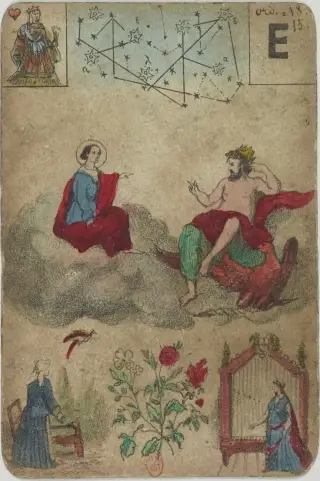
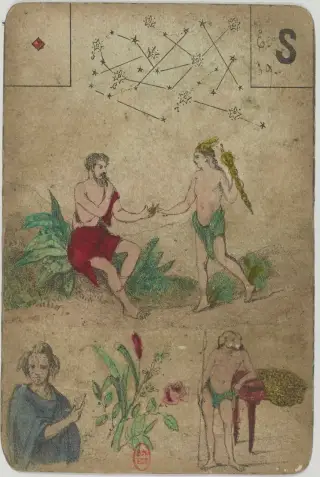
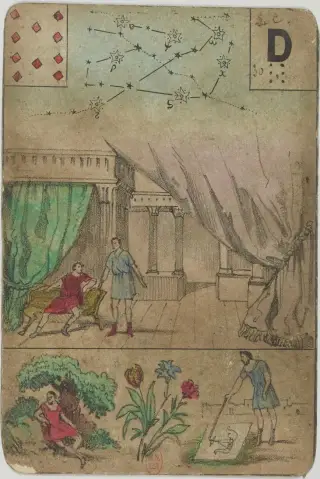
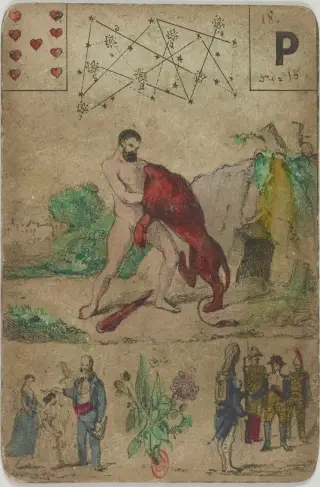
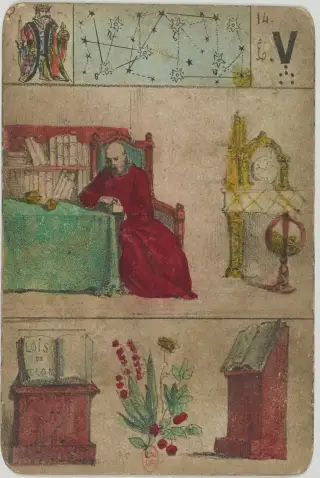
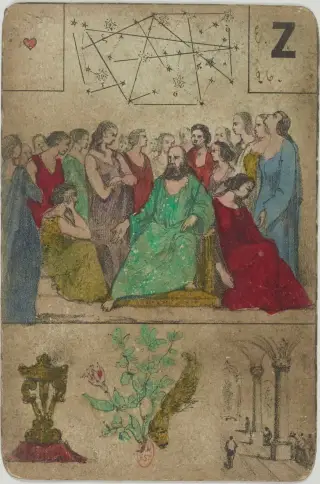
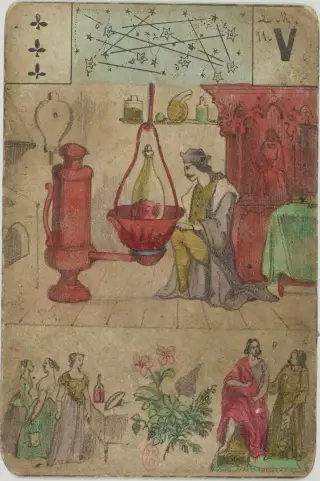
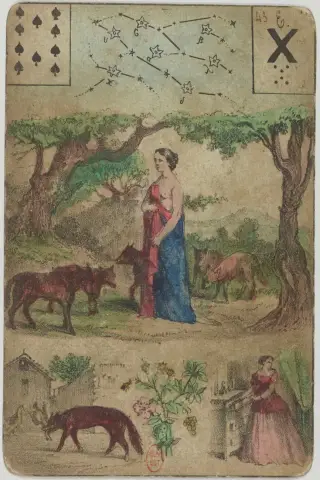
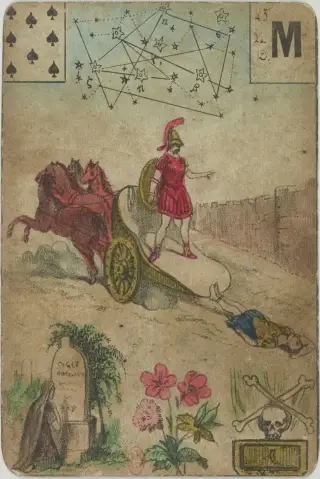
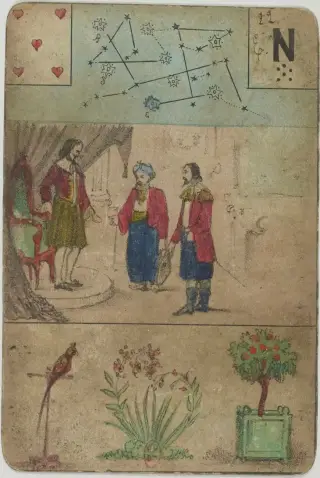
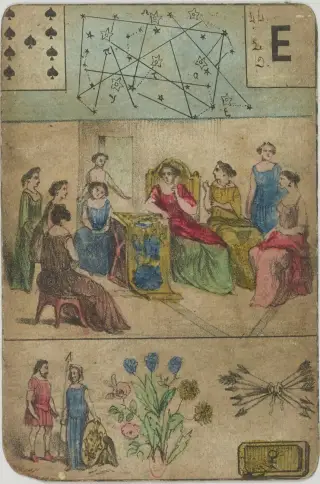
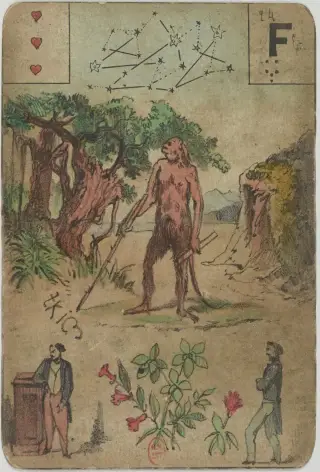
What the Grand Jeu does have is ambition. Each of its fifty-four cards is a small encyclopedia: a mythological or classical scene in the middle, and around it a playing card for ordinary cartomancy, a constellation for astrology, a capital letter for divination by name, a flower for floromancy, and two little genre figures for the everyday reading. A reader could work any of the five systems, or all of them at once. The scenes run from the Fates and the fall of Icarus to Achilles dragging Hector and Europa on the bull, with alchemists at their furnaces threaded through the deck like a second story.
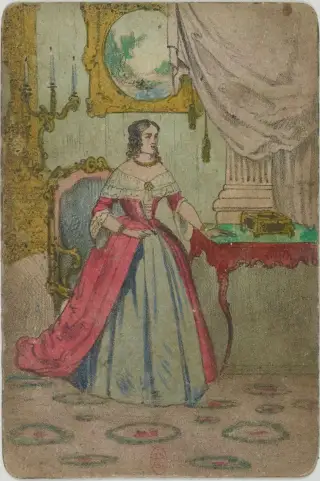
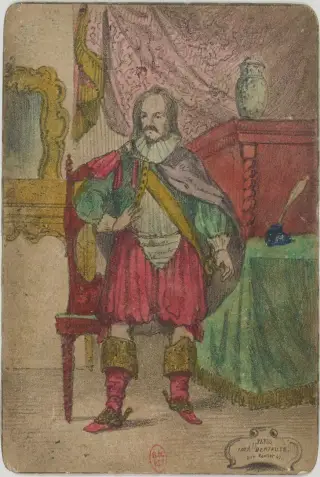
Two cards stand outside the machinery: the Lady and the Gentleman, plain portraits with no letter, no star map and no suit, laid down to stand for whoever is asking. The deck stayed in print in France for the rest of the century, and its descendants are still sold; this hand-colored copy, worn at the corners and annotated in pencil, is the Bibliothèque nationale's.
- The Dondorf Lenormandthe little pack that shares the borrowed name
- The Game of Hopewhere the Lenormand name got attached
- The Sibylle des Salonsthe other great Paris oracle of the period
- Can you copyright a tarot decka deck sold under a dead woman’s name
- How to market an indie tarot deckborrowed authority as marketing