The Game of Hope
Thirty-six numbered cards from a Nuremberg parlor game of 1799 that, half a century later and under a famous fortune teller's borrowed name, became the Lenormand oracle.
Johann Kaspar Hechtel, Nuremberg; etched and hand-colored · Nuremberg; this pack in the British Museum, London, from Lady Charlotte Schreiber's collection · c. 1799
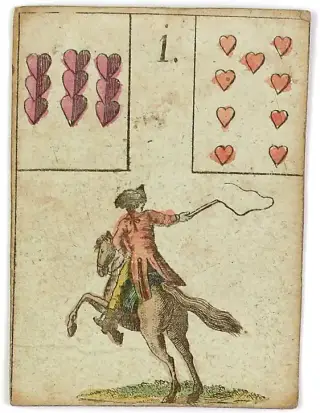
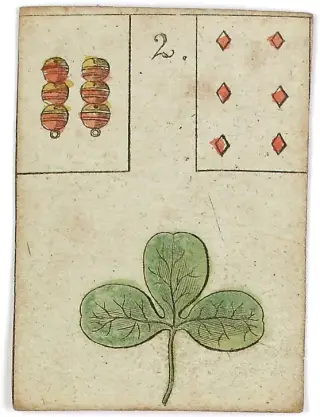
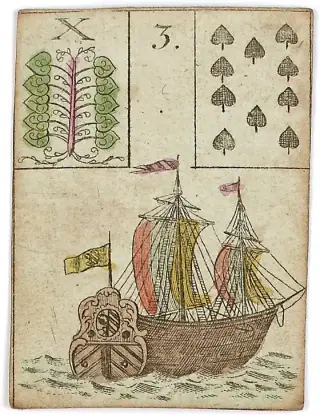
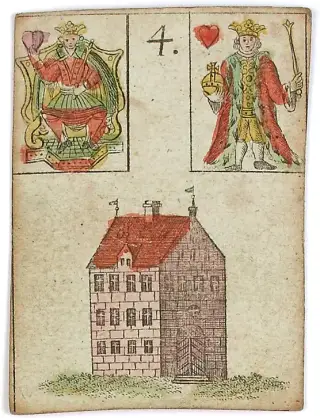
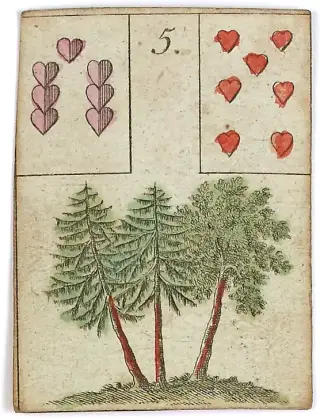
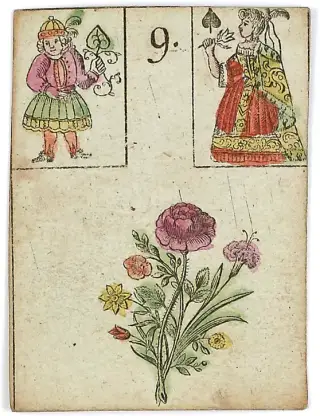
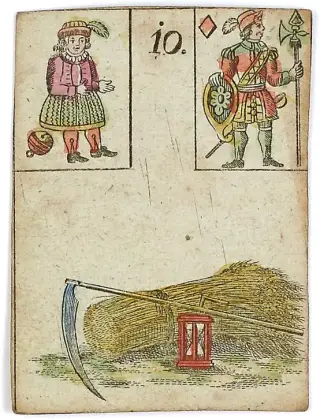
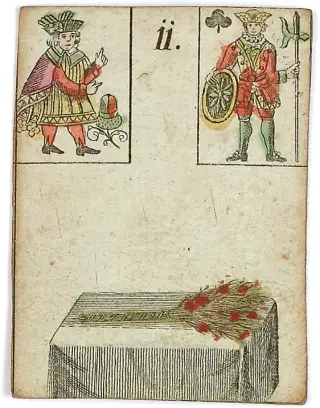
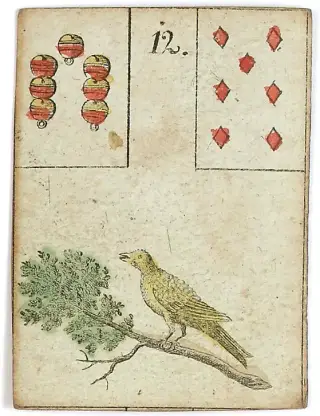
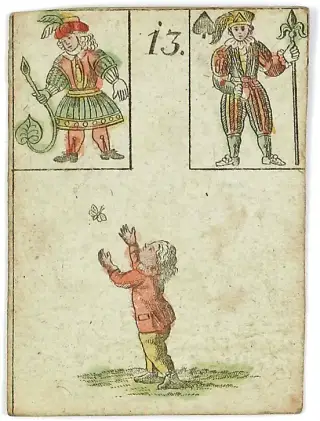
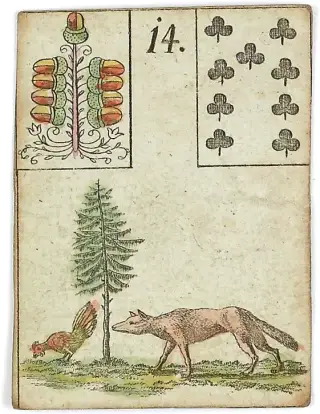
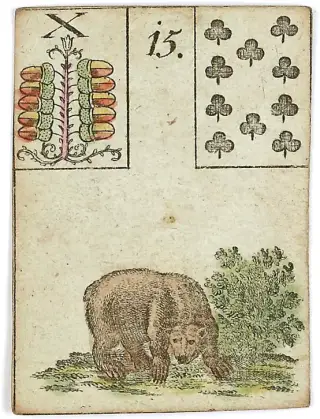
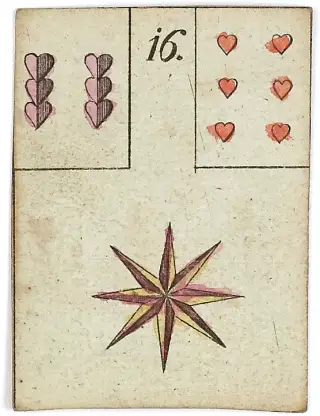
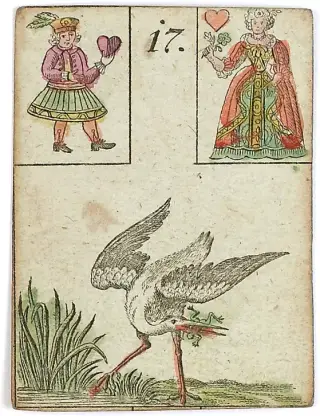
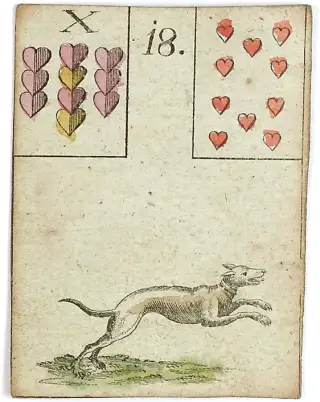
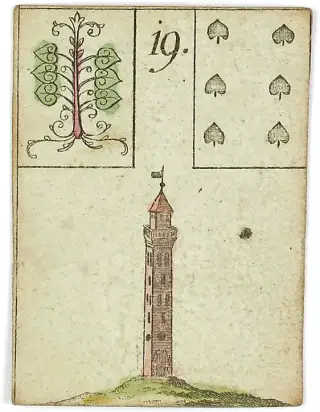
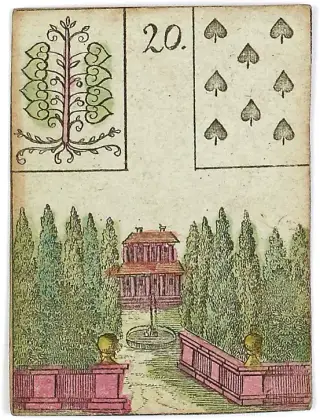
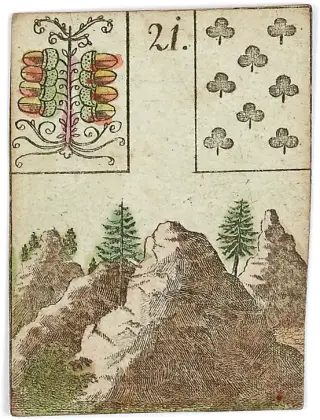
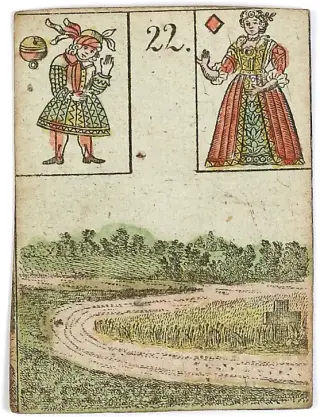
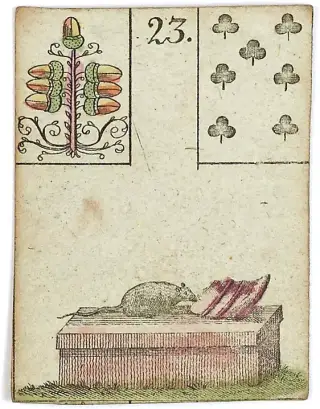
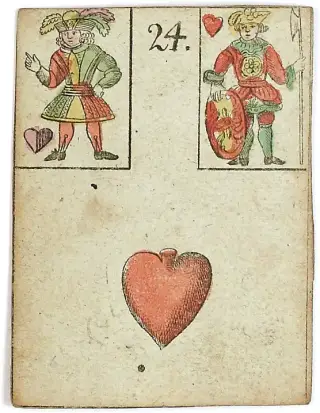
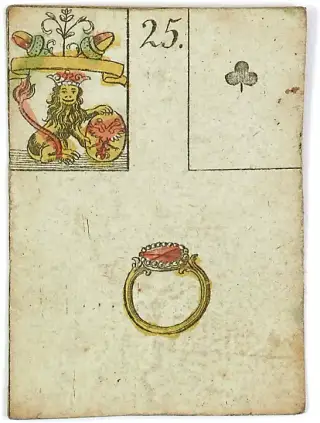
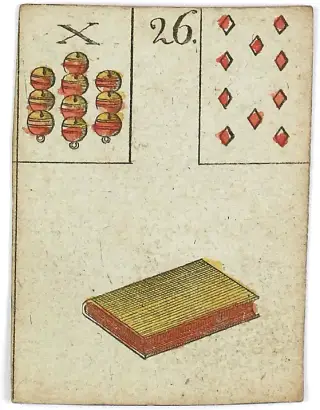
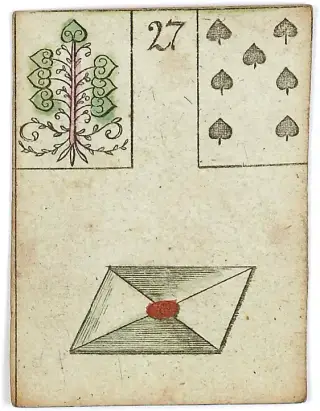
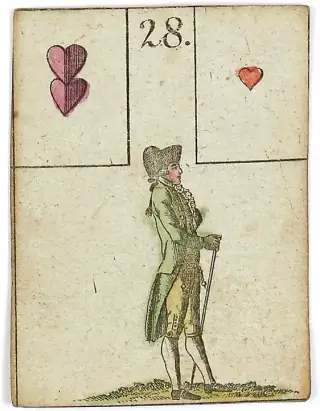
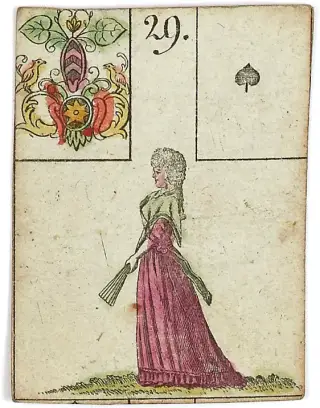
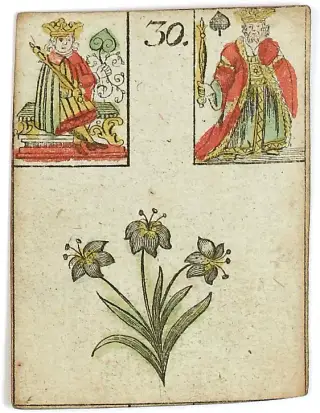
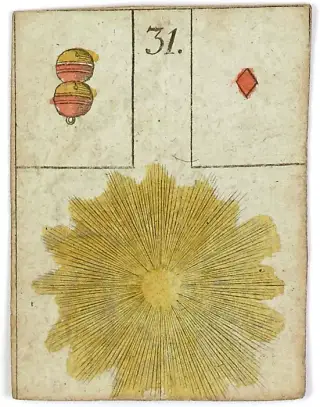
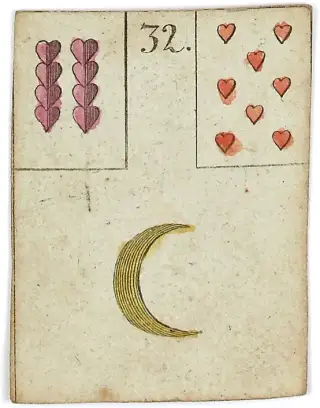
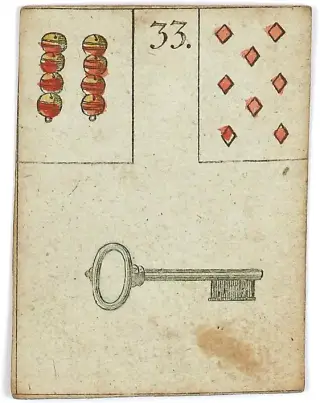
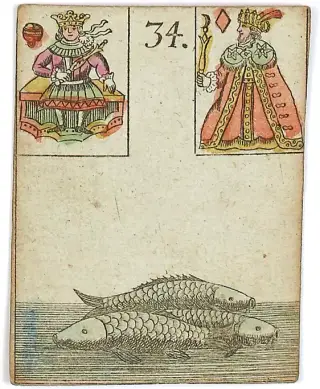
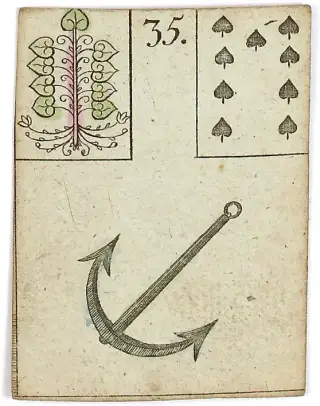
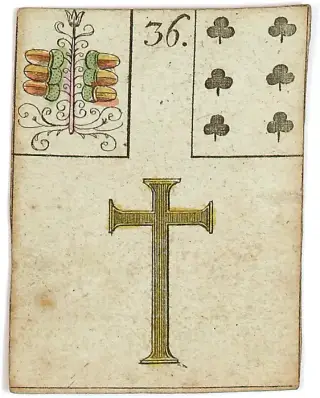
Das Spiel der Hofnung, the Game of Hope, was published in Nuremberg around 1799 by Johann Kaspar Hechtel, a young factory owner who devised parlor games and books of amusements on the side; he died that same year, not yet thirty. The thirty-six etched and hand-colored cards were laid out in a six by six grid to make a race track. Players rolled dice and moved tokens across the numbered squares, sped along or set back by what they landed on, and the winner was the player who reached card 35, the Anchor, the old emblem of hope that gives the game its name. Overshoot it and you could end on the Cross. By most accounts the booklet sold with the pack already suggested the cards could be used for other card games and for fortune telling.
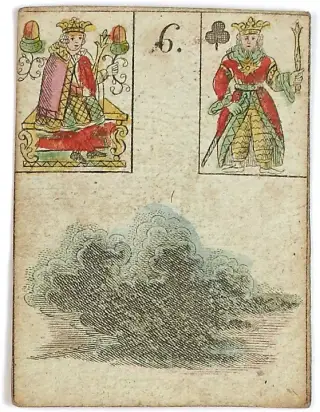
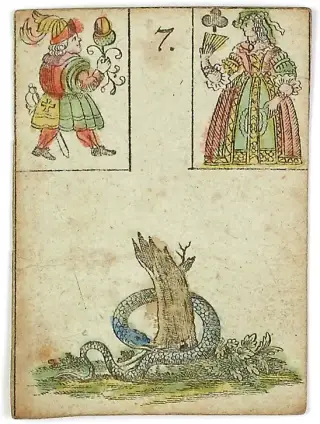
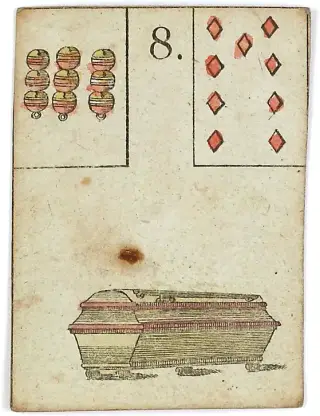
Each card carries its emblem below and two small playing cards above: the same card twice, once in the Bavarian German suits of hearts, bells, leaves and acorns, and once in French suits, so one pack could serve for ordinary games in either system. The emblems themselves, the rider, the clover, the coffin, the mice, closely match the symbols of German and Austrian coffee-ground fortune-telling cards printed a few years earlier, and were probably drawn from them.
Marie Anne Lenormand, the most celebrated fortune teller in Paris, died in 1843 having never seen this game. Within a few years publishers were selling cards under her name, and the small thirty-six card pack they settled on reproduces Hechtel's game square for square; it is still called the Petit Lenormand. This copy, usually cited as the oldest to survive, came to the British Museum with Lady Charlotte Schreiber's collection of playing cards in 1896.
- The Dondorf Lenormandwhat the parlor game became
- The Gypsy Witch Cardsthe American descendant
- The Grand Jeu de Mlle Lenormandthe other deck sold under her name
- Tarot deck box optionsa boxed game, not a fortune pack
- How to market an indie tarot deckhow a game became an oracle