Tarot deck box options: tuck, rigid, magnetic
Your tarot deck box is the cheapest way to make a deck feel expensive, or the fastest way to make a good deck feel cheap. A basic tuck box is included in most quotes and adds almost nothing. A two-piece or rigid box adds roughly $2 to $5 per deck. A magnetic-hinge box, the one collectors covet, is the premium tier and costs the most.
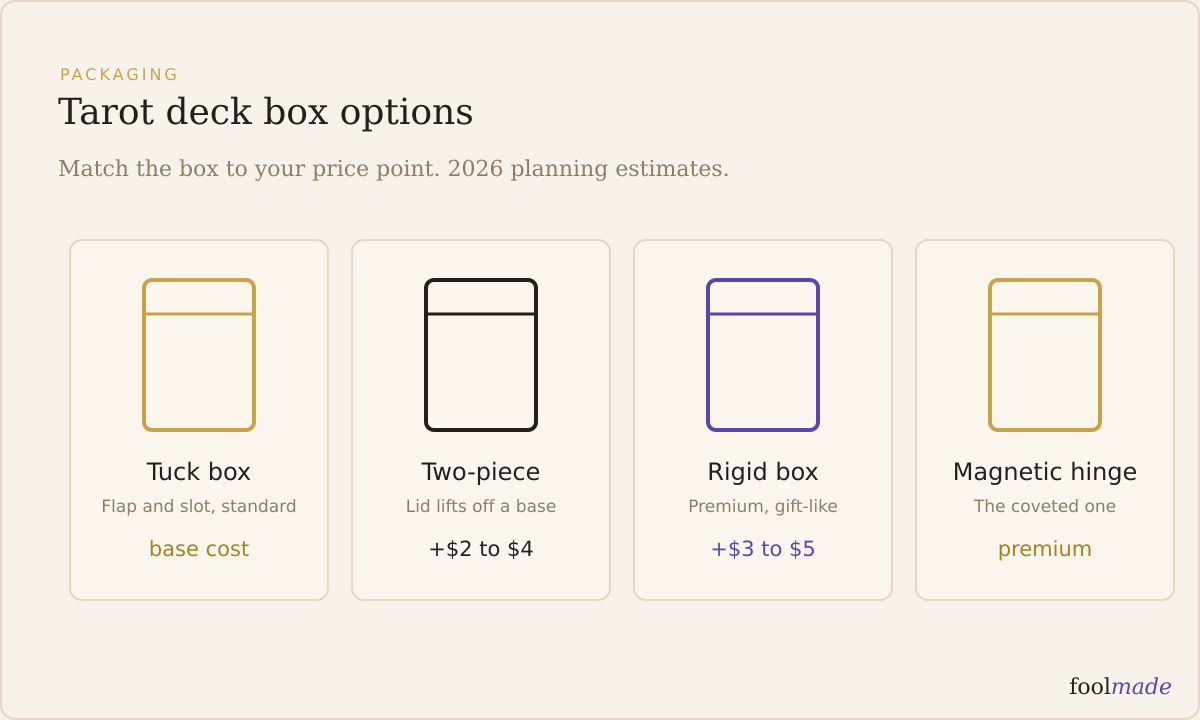
Here is how the four common box types compare, what each one feels like in the hand, and how to pick the one your price point can actually carry.
Which tarot deck box should you choose?
There are four box styles indie creators reach for, in rising order of cost and heft.
A tuck box is the flat cardboard sleeve with a flap that tucks in at one end. It ships with almost every deck by default. A two-piece box has a separate lid and base that slide together, like a shirt box shrunk down. A rigid box is built on thick chipboard, so it holds its shape and feels like a gift. A magnetic box adds a flap that snaps shut with hidden magnets, and the version creators want most has the hinge along the bottom or spine so the lid opens like a book.
The right pick is the least expensive box that still matches the deck inside it. A $20 deck in a magnetic book box confuses buyers. A $55 heirloom deck in a thin tuck box disappoints them.
How much does each tarot deck box add per deck?
These are 2026 planning estimates for a standard 78-card deck at a small to mid run (roughly 100 to 500 copies). The tuck box is treated as the included baseline, and the other figures are the extra cost per deck on top of it. Confirm every number with a live quote, because box pricing swings hard with run size, material, and finishes like foil or spot UV.
| Box type | ~Added cost per deck | Feel | Best for |
|---|---|---|---|
| Tuck box | baseline (usually included) | Thin sleeve, functional, bends easily | First runs, print-on-demand, tight budgets |
| Two-piece box | +$2 to $4 | Sturdier, lid lifts off, mid-tier gift feel | A step up without a big jump in cost |
| Rigid box | +$3 to $5 | Hard chipboard, holds shape, real weight | Collector decks and premium editions |
| Magnetic-hinge box | +$4 to $8 | Snaps shut, opens like a book, flagship feel | Kickstarter special tiers, heirloom decks |
A single sample shows why volume matters. From one no-minimum printer in 2026, a lone custom tuck box runs about $1.15, a plain rigid box about $12.50, and a one-off magnetic tarot book box near $24. Those solo prices collapse with quantity: at 500 or 1,000 copies the setup cost spreads out and the gap between box types shrinks to the per-deck figures above.
What is the magnetic box with a bottom hinge?
On r/TarotDecks, one box style comes up again and again as the dream: a rigid magnetic box that opens on a hinge at the bottom or spine, so the lid swings up like a book cover and snaps closed with magnets. Creators describe being "afraid to shuffle" decks that arrive in one, which is exactly the reaction a premium box is supposed to earn.
It is the most expensive stock option for a reason: rigid chipboard, embedded magnets, and a more complex die and assembly than a plain lid. Not every printer offers it, and some only above a minimum run. If a book-style magnetic box is central to your vision, confirm the printer makes it in tarot size, the added cost per deck at your run count, and whether it needs a custom die fee.
For most first decks it is overkill. It shines on a flagship edition, a Kickstarter special tier, or a deck priced high enough that the box reads as part of the value.
Should you match the box to your price point?
Yes, and it is the single decision that keeps a box from wrecking your margin. Work backward from the price you can realistically charge.
- Selling around $18 to $25? Stay with the tuck box, or step up to a two-piece if the deck is your flagship. A magnetic box here eats the margin you need.
- Selling around $30 to $45? A two-piece or rigid box fits, and it lifts the perceived value enough to help justify the price. This is the sweet spot for most indie decks.
- Selling $50 and up, or running a premium Kickstarter tier? A rigid or magnetic-hinge box belongs here. At this price buyers expect weight and a lid that opens with intent.
The box also has to survive the mail. A tuck box inside a padded mailer arrives fine; a rigid or magnetic box resists crushing better but adds shipping weight and cost. Factor that in before you commit, the same way you would with what a full print run actually costs.
Do custom-printed boxes cost extra?
Usually, yes. Printers separate the box style from the box artwork. A plain white or black stock box in any of these styles is the cheapest. Full-color printing on the outside, and especially on the inside of a rigid or magnetic lid, adds cost, and premium finishes stack on top.
Foil stamping, spot UV, embossing, and a printed interior each raise the per-unit price. They are the same upgrades that push gilded edges on tarot cards into premium territory, and they belong on premium decks. A crisp one-color tuck box often looks sharper than a busy full-color box that fights the card art, so restraint is a feature.
Frequently asked questions
What is the cheapest tarot deck box?
The tuck box. It is included in most printer quotes and adds close to nothing per deck, which is why print-on-demand and first runs default to it. It is thin and creases easily, but it does the job.
Is a rigid box worth it for an indie tarot deck?
For a deck priced around $30 or more, usually yes. A rigid box adds roughly $3 to $5 per deck at a small run and noticeably raises how premium the deck feels, which helps justify a higher price. Below about $25 it tends to eat your margin.
Do all printers offer a magnetic hinge box for tarot cards?
No. The book-style magnetic box is a premium stock option and not every printer carries it in tarot size, and some require a minimum run. Ask specifically before you plan a deck around it, and confirm the added cost per deck at your quantity.
Does a bigger box change my shipping cost?
Yes. Rigid and magnetic boxes weigh more and take more space than a tuck box, which can bump you into a higher shipping bracket. Weigh a sample in its mailer before you set your shipping price so a heavy box does not quietly erase your margin.
Can I add a box later, after a tuck-box first run?
Often yes. Many creators run a cheap tuck-box batch to test demand, then upgrade to a rigid or magnetic box on the reprint once sales prove out. Confirm your printer can swap the box style without re-doing the whole setup.
The honest bottom line
Pick the least expensive box that respects the deck inside it. Tuck for a first run or a budget deck, two-piece or rigid once you charge $30 or more, and save the magnetic-hinge book box for a flagship or Kickstarter tier where the box is part of what people pay for. Every figure here is a 2026 planning estimate, so pull a live quote at your exact run size and finish before you commit, and order a proof before your full print run so you can hold the box before you buy hundreds. Still deciding where to have it all made? Start with where to print your indie tarot deck.
If you want to see how a tuck, rigid, or magnetic box changes the look of your deck before you spend a cent on packaging, Foolmade's deck mockups let you preview your own card art in each box style so you can judge the feel and match it to your price. Foolmade never prints your deck or generates your art. It just helps you picture the finished product clearly enough to choose the box yourself.
- The Game of Hopea boxed game, not a fortune pack
- The Livre du Destinwhat came in the wrapper