The Besançon Tarot
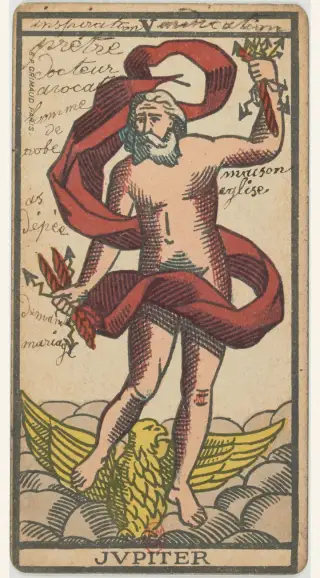
The Marseille tarot with its clergy swapped out: Juno and her peacock for the Popess, Jupiter for the Pope, the pattern the border towns printed for careful markets.
The Renoult workshop, Besançon; blocks signed and dated 1748 · Besançon; at the Bibliothèque nationale de France · blocks dated 1748; this printing nineteenth century
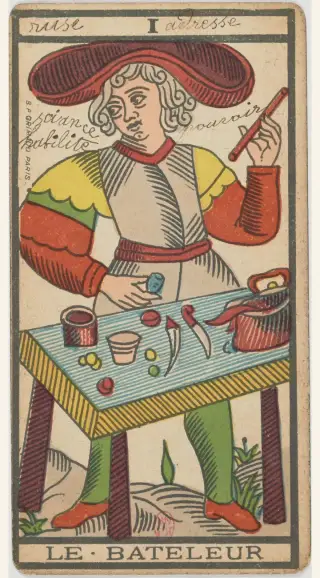
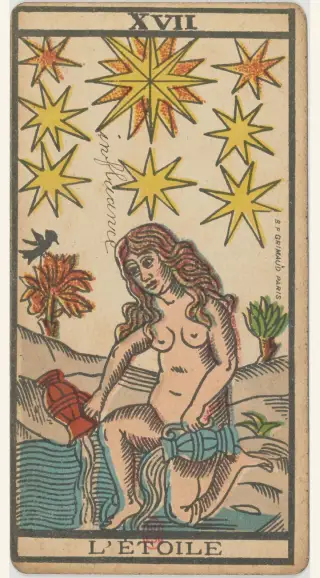
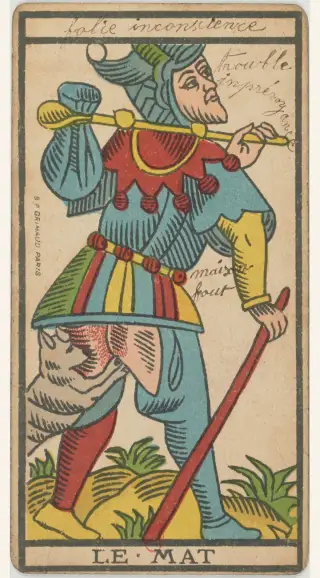
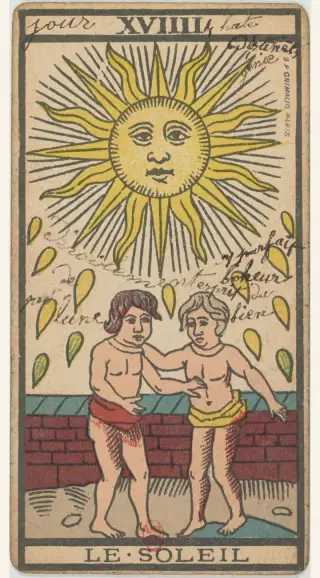
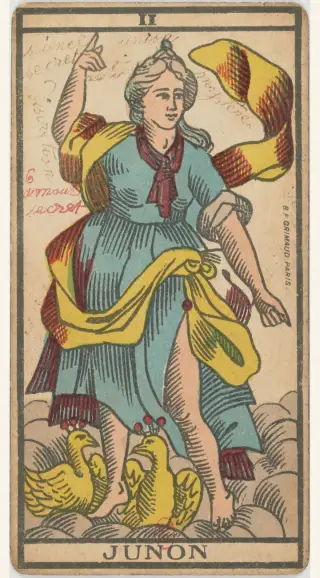
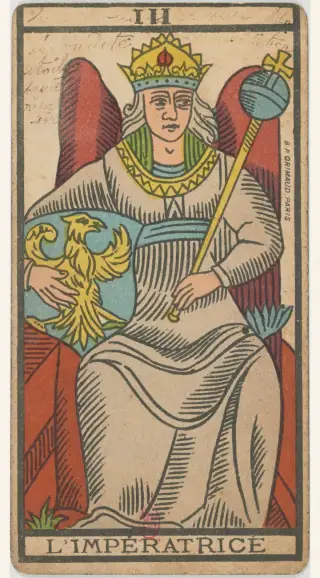
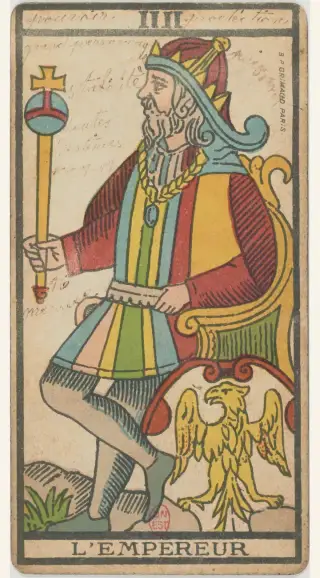
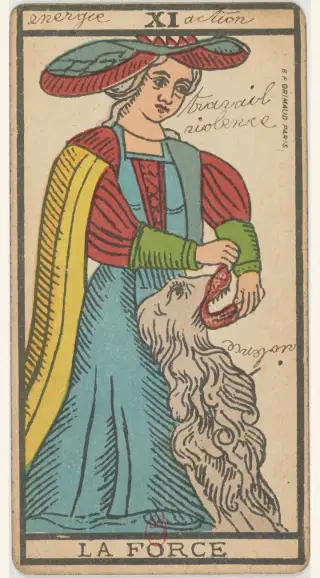
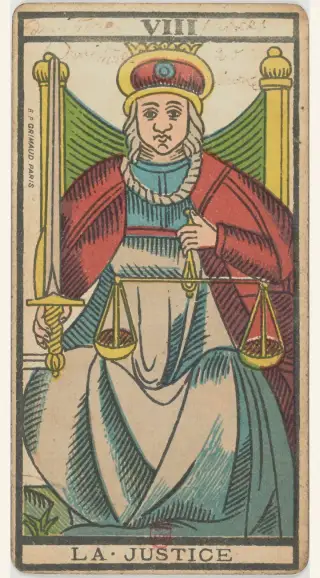
East of Lyon the Marseille tarot ran into a problem: markets where a Popess and a Pope in a card game meant trouble, Protestant buyers across the Rhine and cautious printers at home. The solution, settled by the eighteenth century, is called the Tarot de Besancon after the town that printed it best. Everything else stays Marseille, the same trumps, the same suits, the same order with Justice at VIII and Force at XI, but card II becomes Junon with her peacock and card V Jupiter with his eagle, pagan gods giving no one any grounds for complaint.
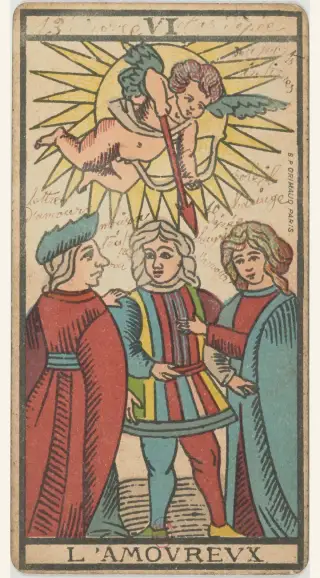
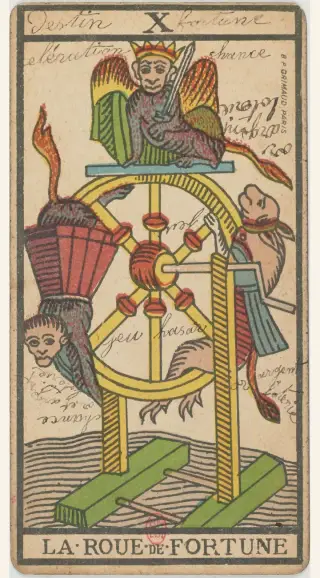
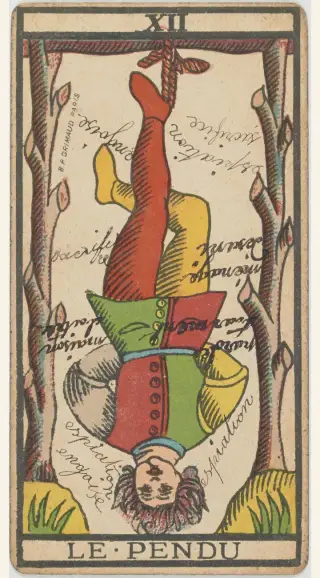
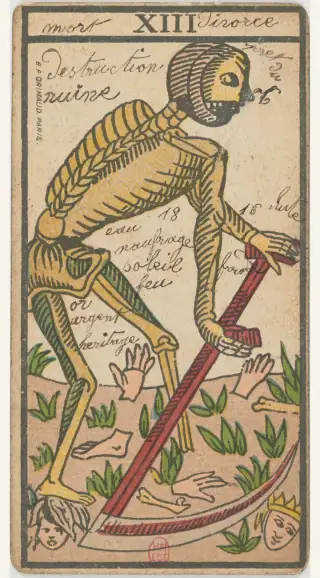
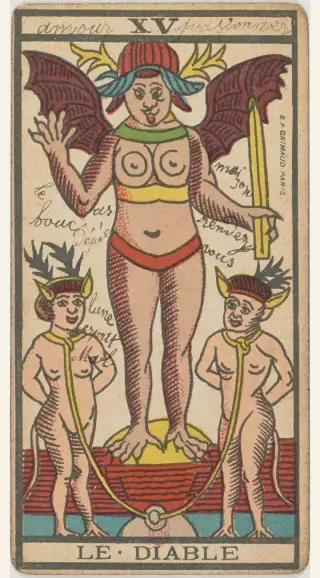
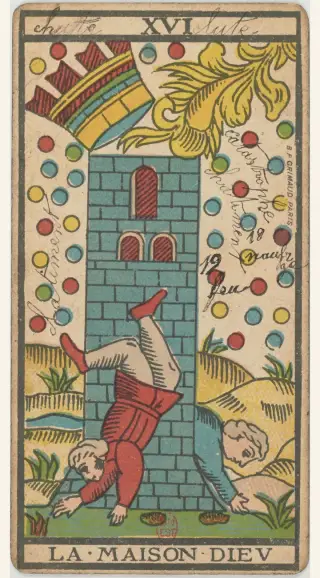
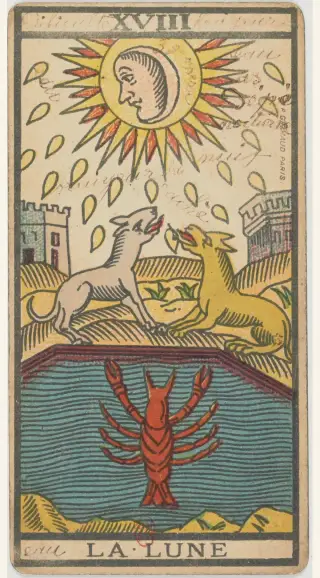
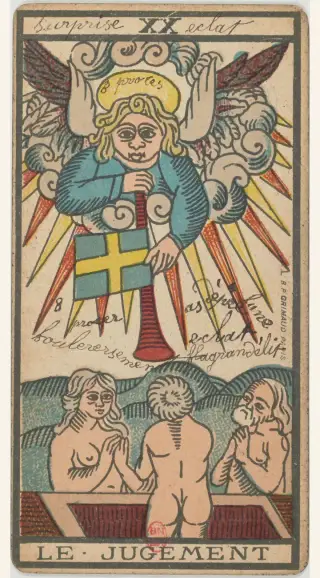
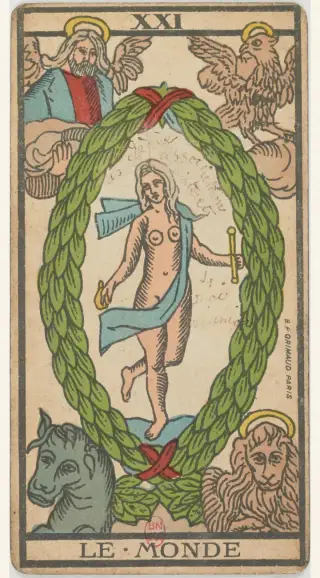
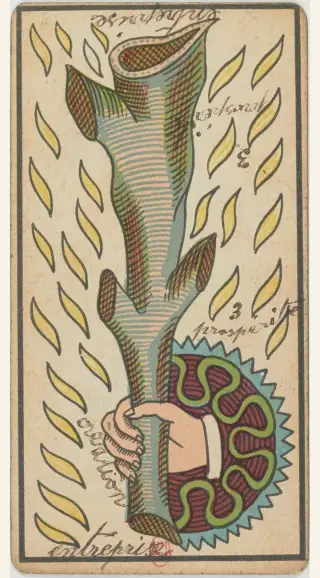
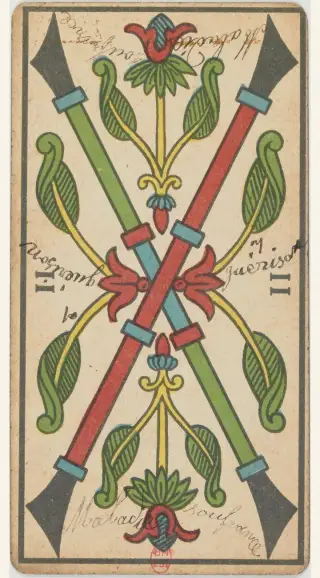
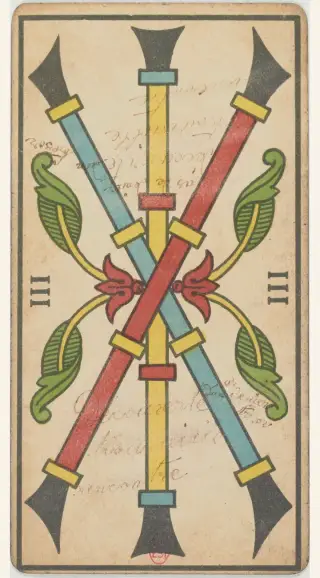
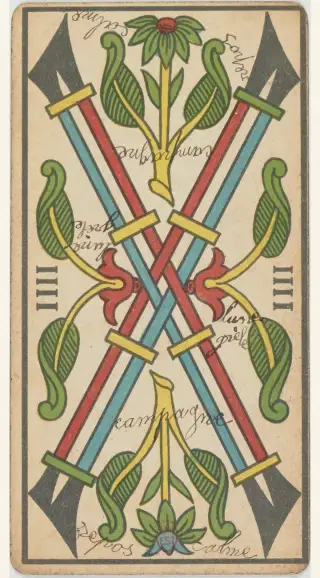
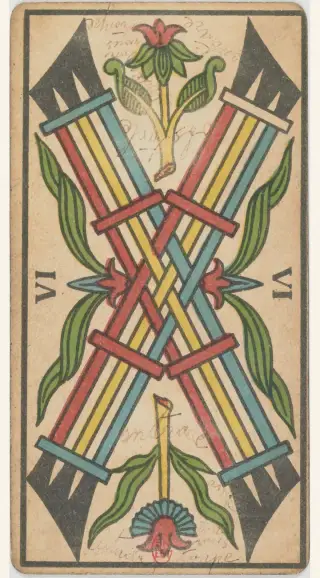
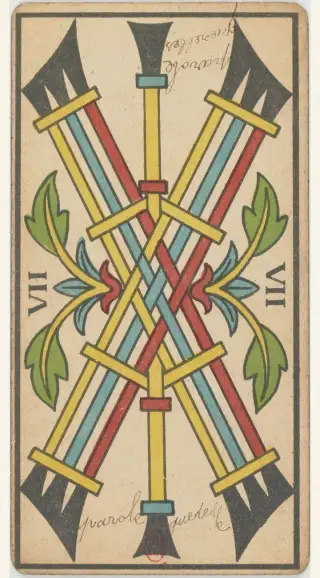
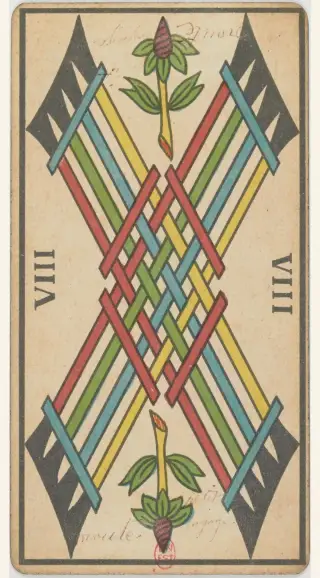
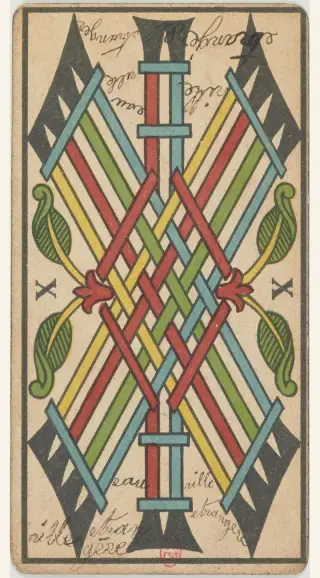
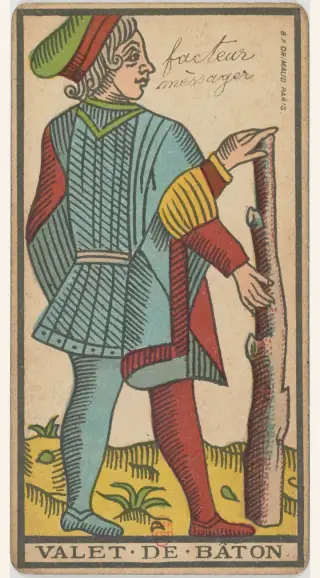
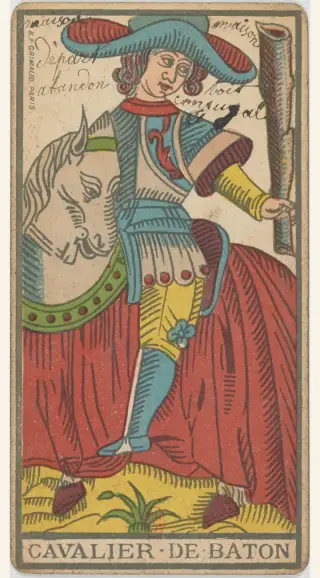
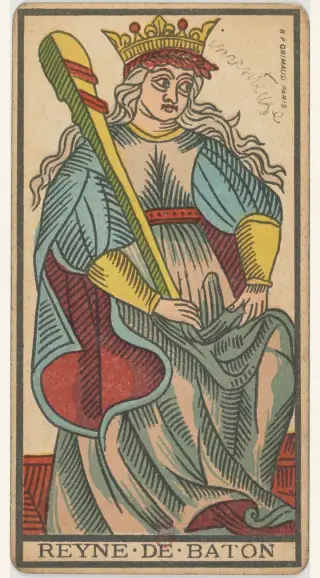
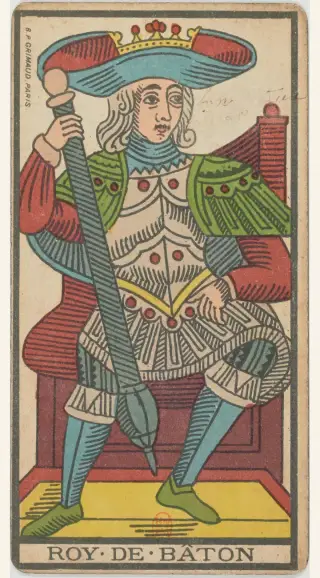
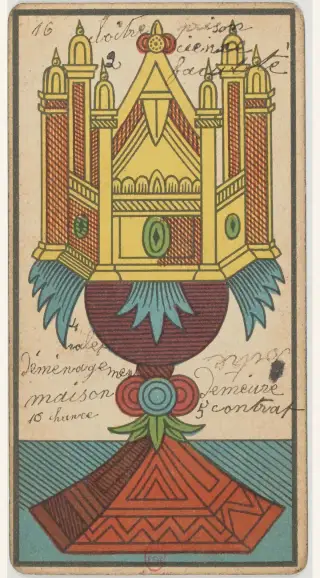
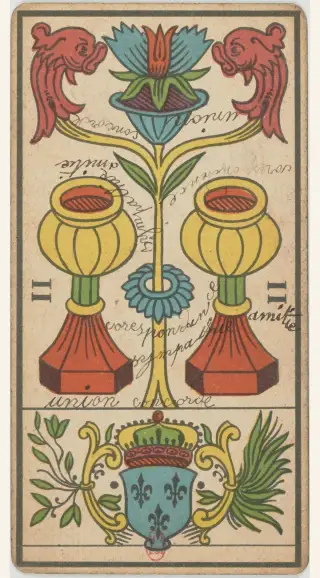
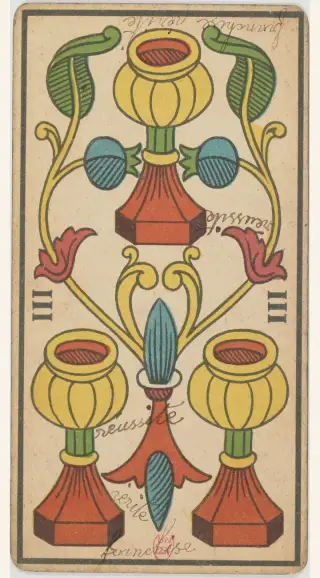
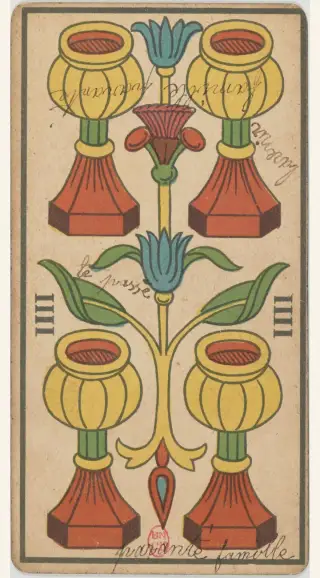
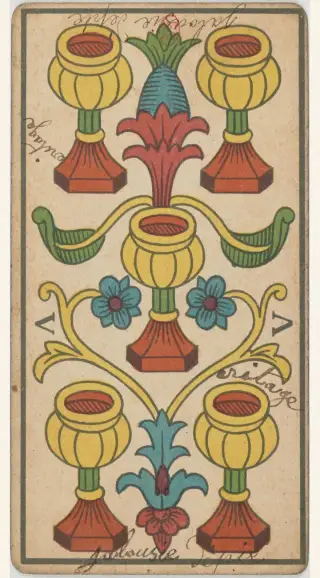
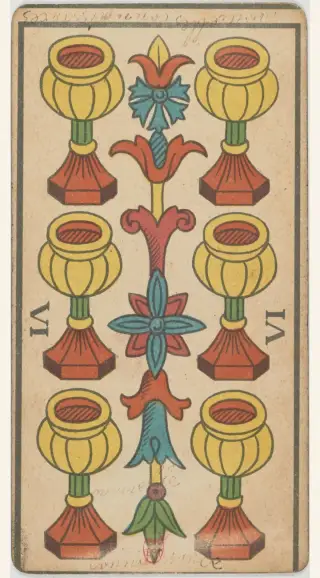
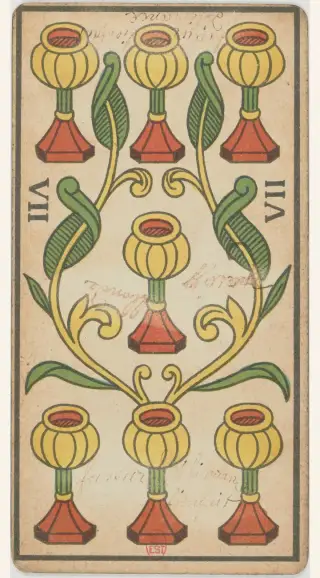
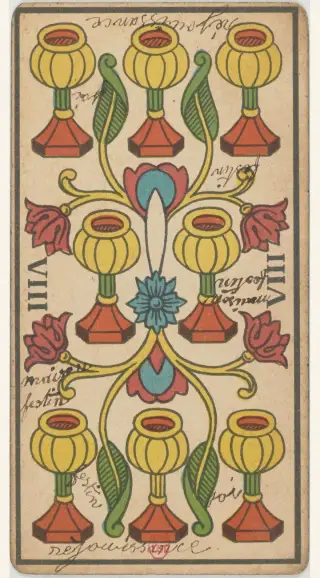
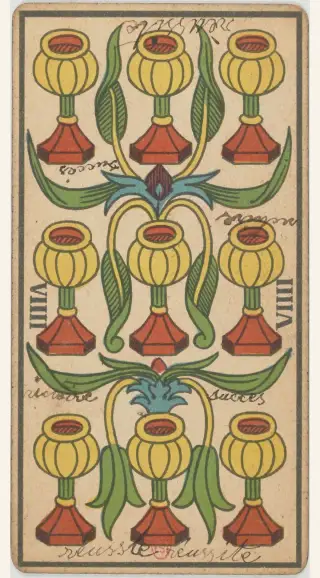
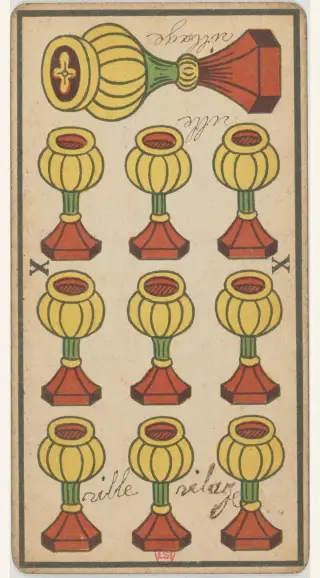
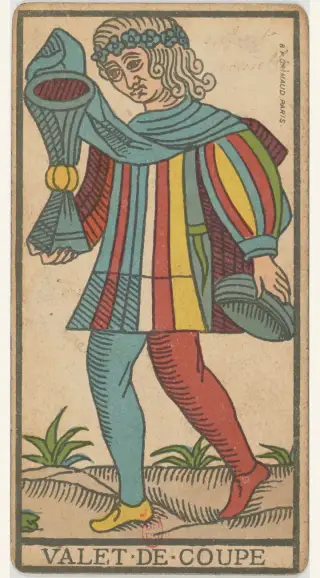
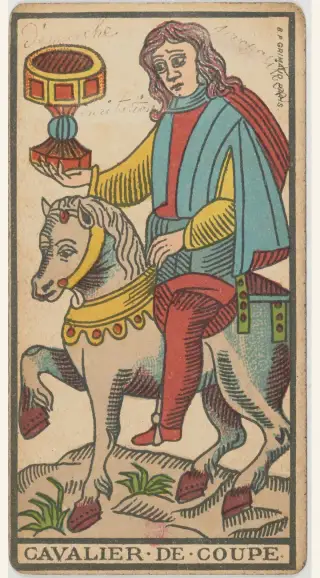
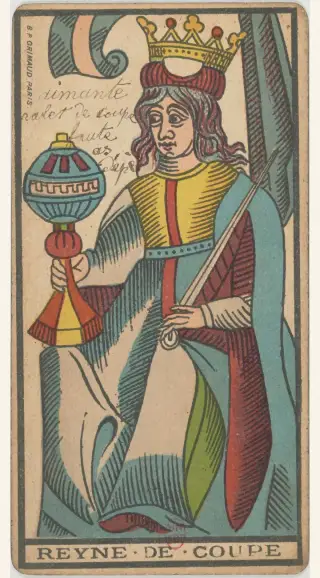
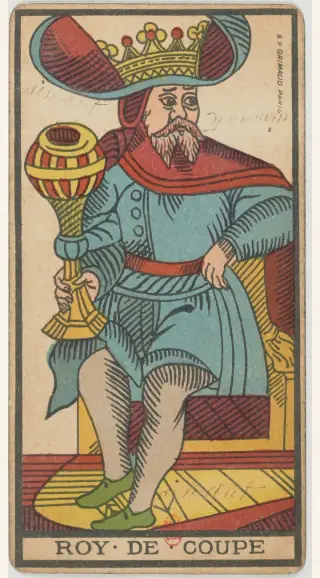
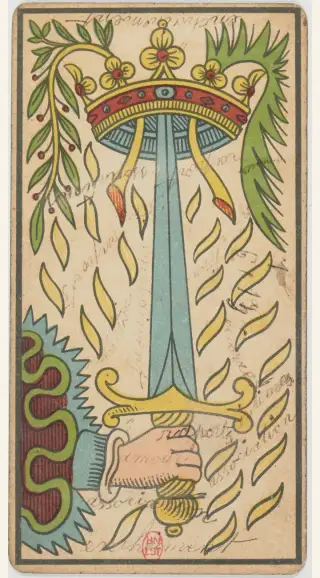
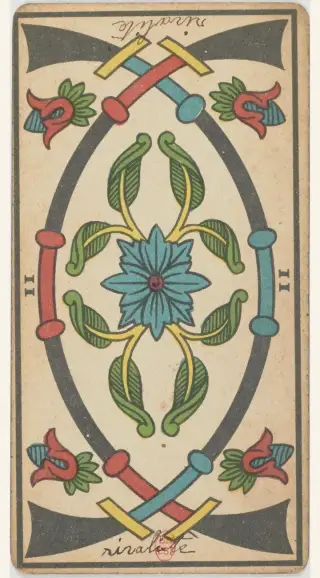
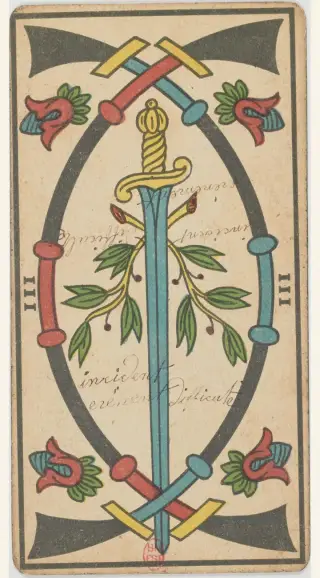
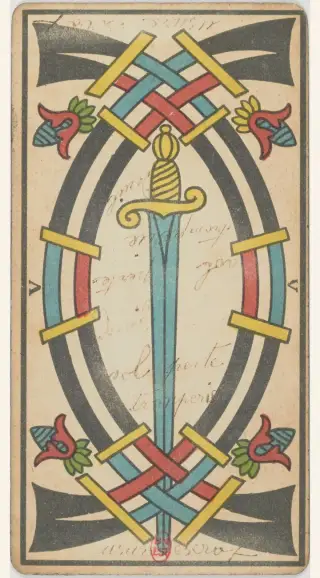
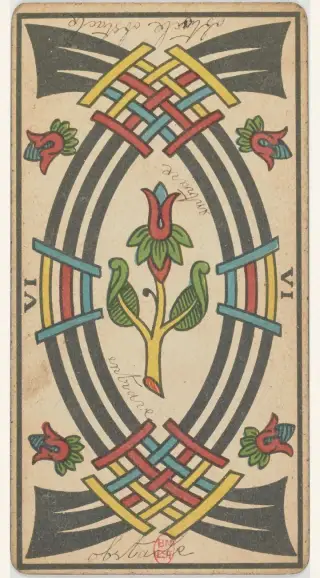
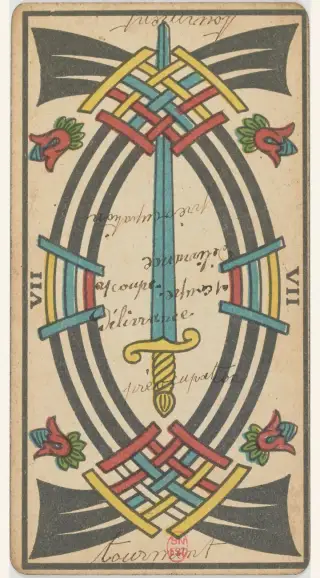
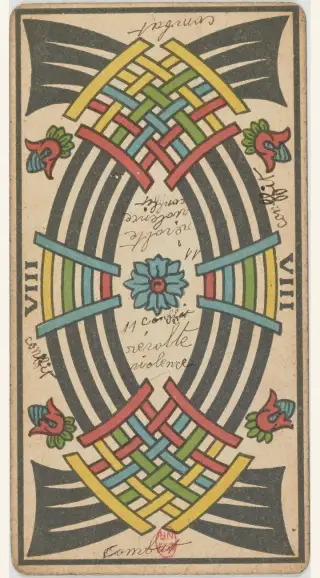
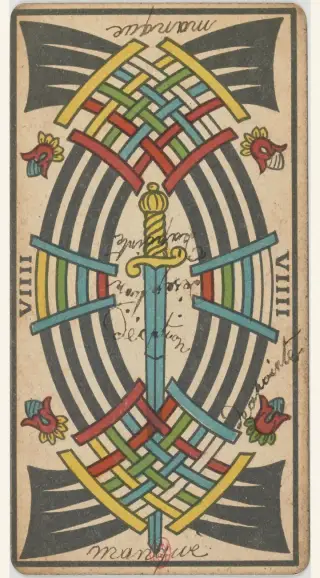
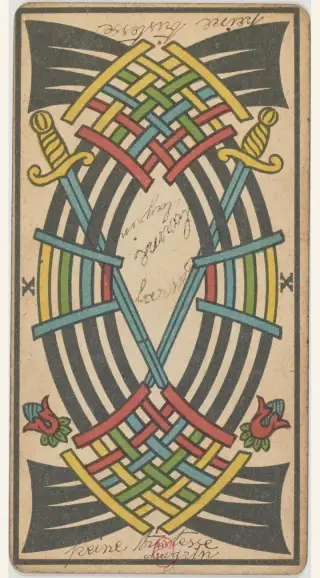
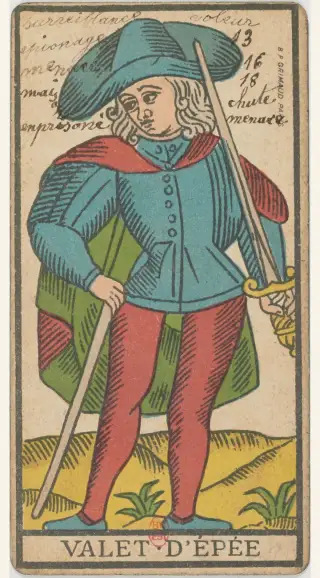
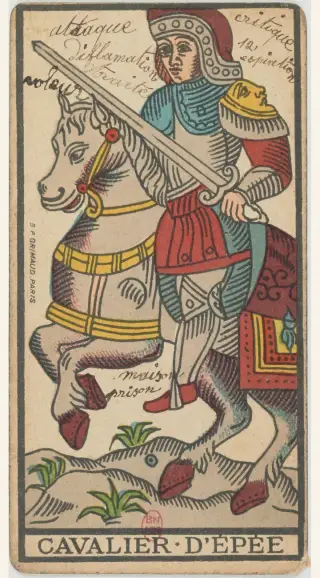
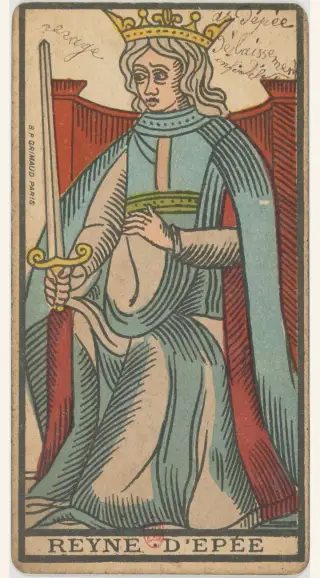
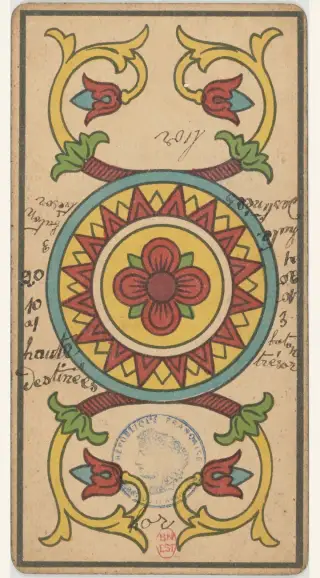
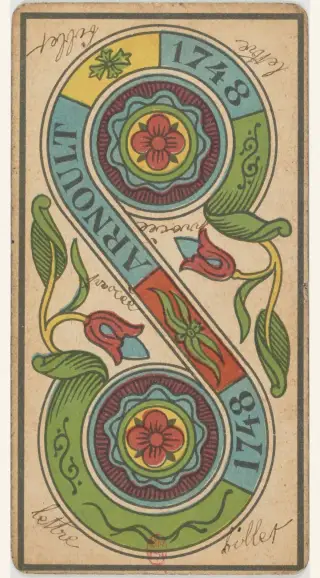
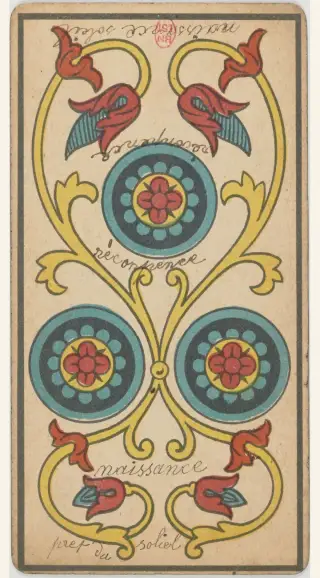
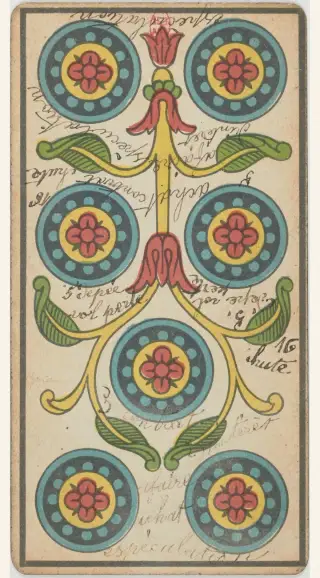
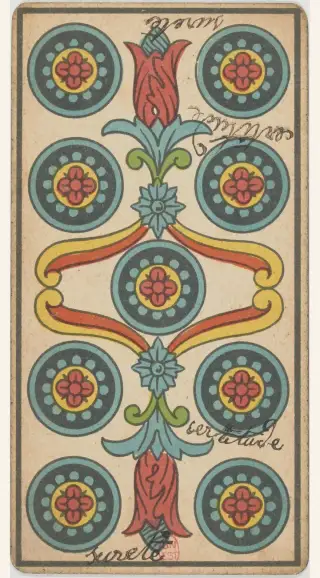
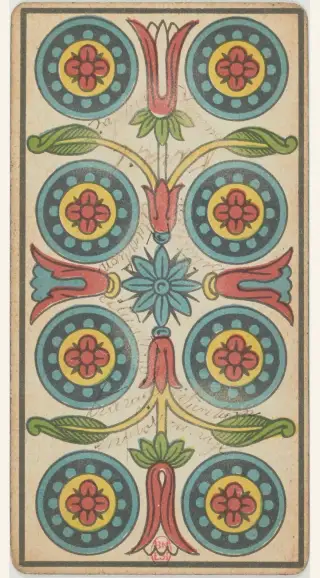
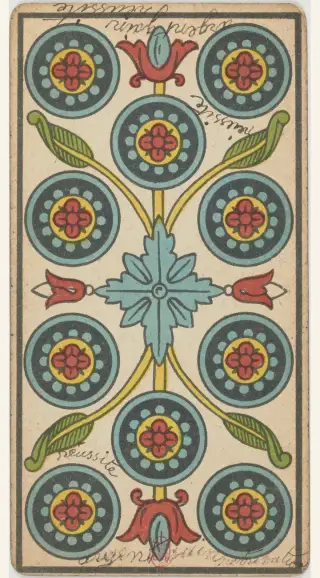
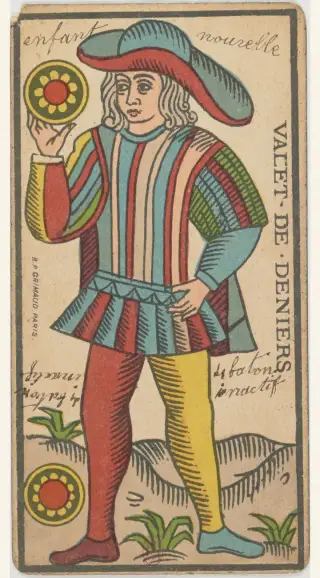
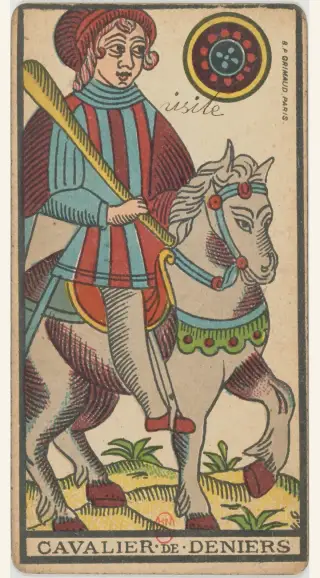
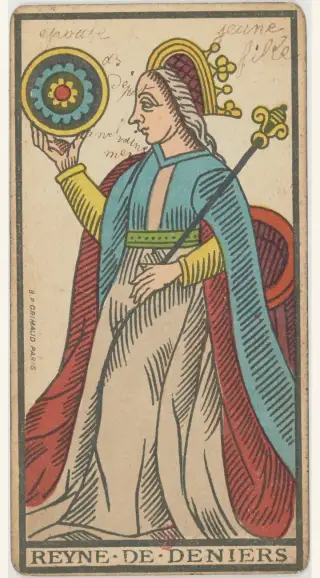
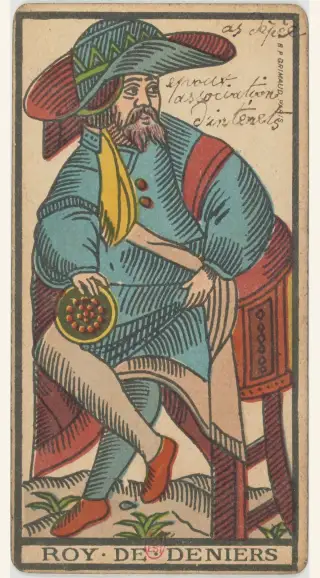
This copy comes from the Renoult workshop of Besancon, whose name and the date 1748 ride the ribbon of the Two of Deniers; the stencil coloring and the wear place the printing itself in the nineteenth century. Seventy-seven cards survive, missing only the Ten of Deniers, and a former owner has annotated many faces in a fine cartomantic hand, meanings inked straight onto the cards, which the scans preserve.
The Besancon pattern mattered beyond its border towns: it is the tarot Swiss and German makers copied, and when the occult revival needed a neutral old pattern to point at, Junon and Jupiter were often what it found. The deck reads here beside its Marseille cousins, the Noblet, the Dodal and the Conver, as the fourth road the same images took.





- The Conver Tarot de Marseillethe pattern it edits
- The Jean Dodal Tarotthe Type I line
- The Jacques Viéville Tarotanother way the same images went
- Designing your tarot card backbacks, and what they signal
- Should you disclose how your deck was madeediting a deck for its market