The Jean Noblet Tarot
The oldest surviving Tarot de Marseille, printed in Paris around 1650: nine centimeters of bold woodcut line, stencil color, and a Fool caught with his breeches down.
Jean Noblet, cardmaker at the faubourg Saint-Germain, Paris · Paris; now at the Bibliothèque nationale de France · c. 1650-1659
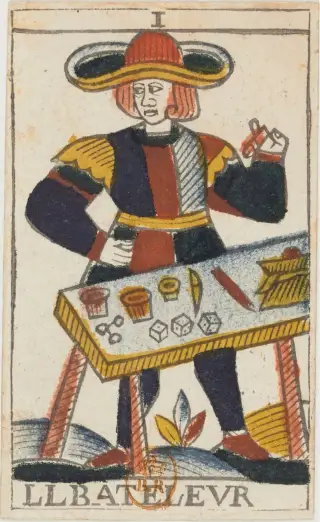
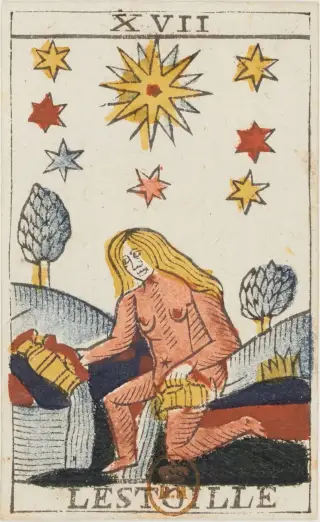
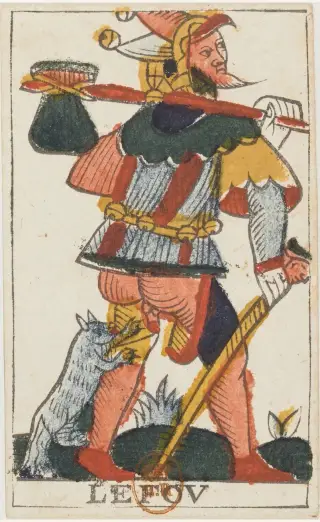
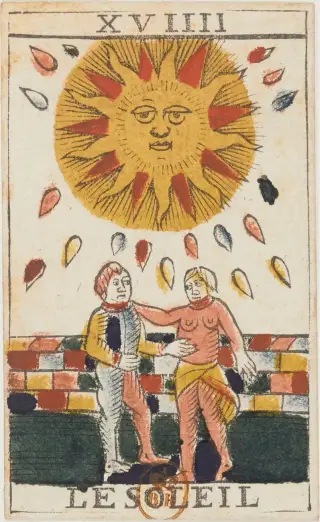
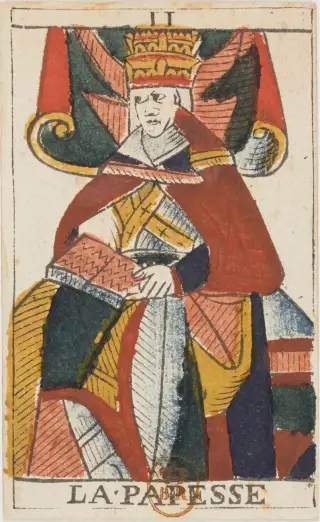
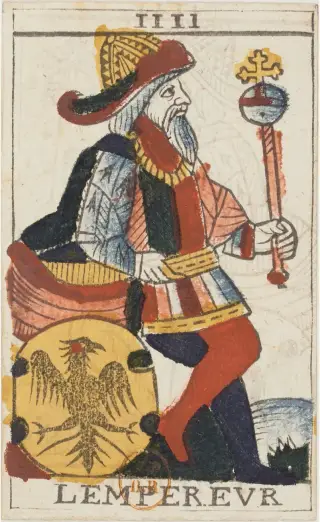
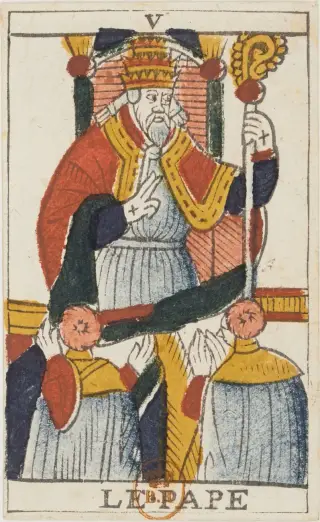
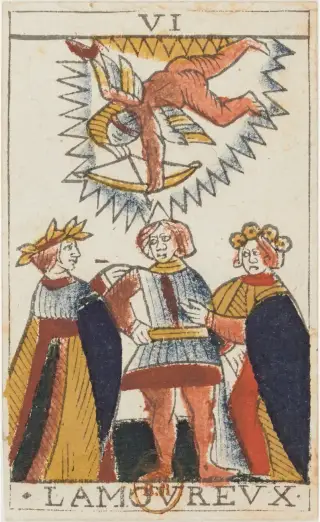
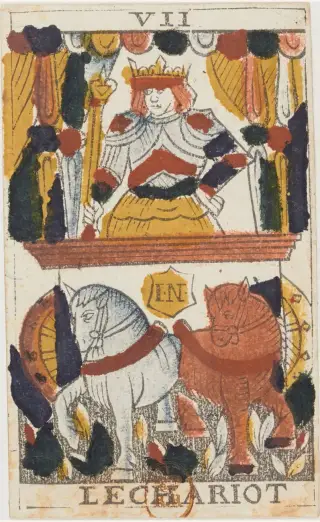
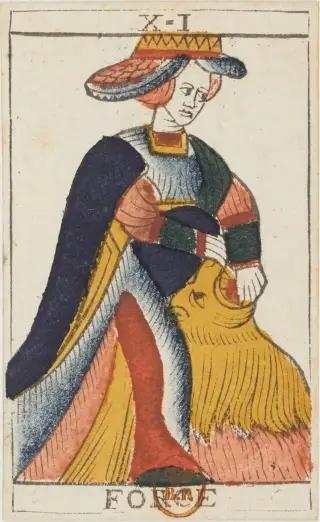
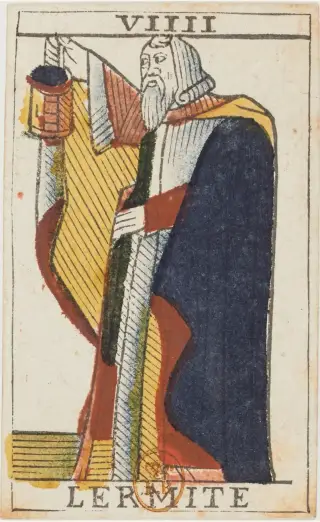
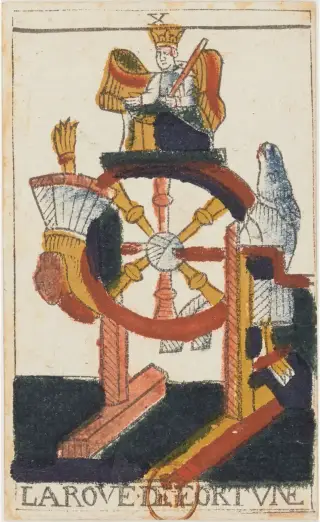
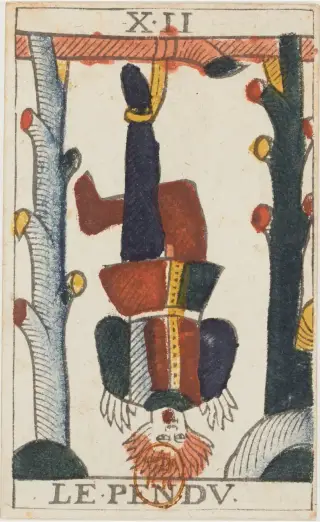
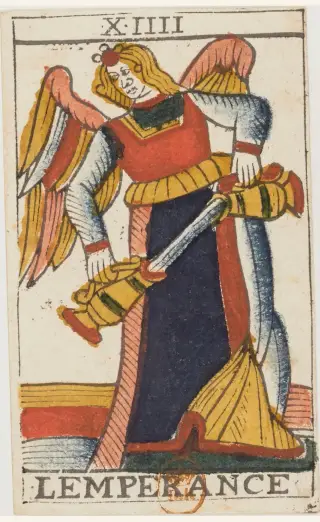
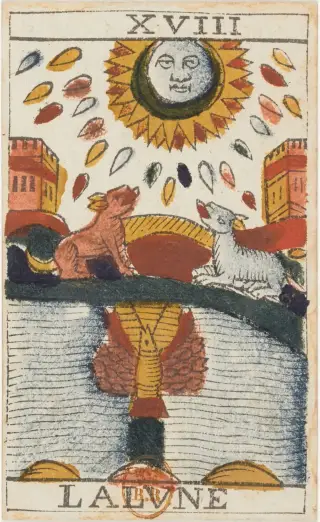
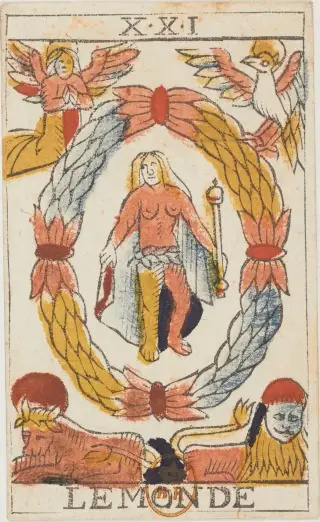
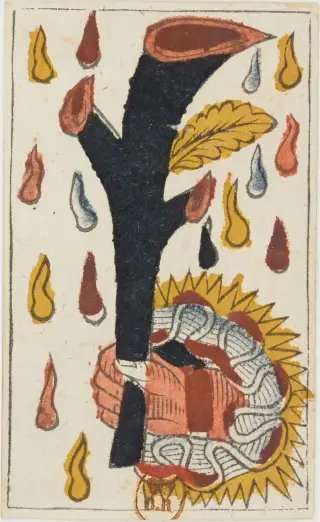
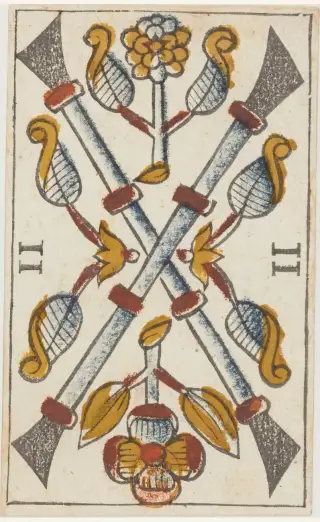
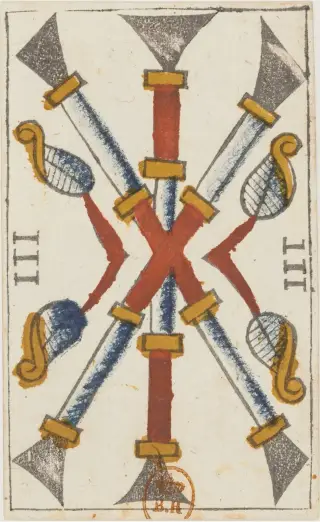
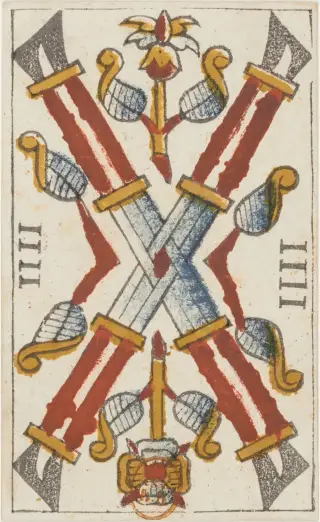
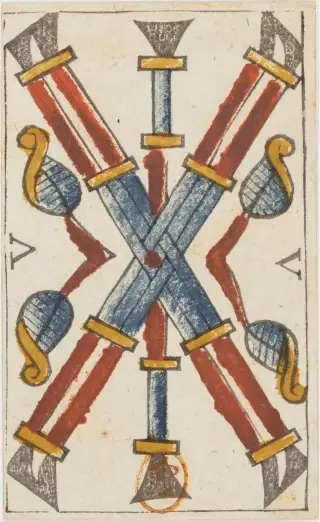
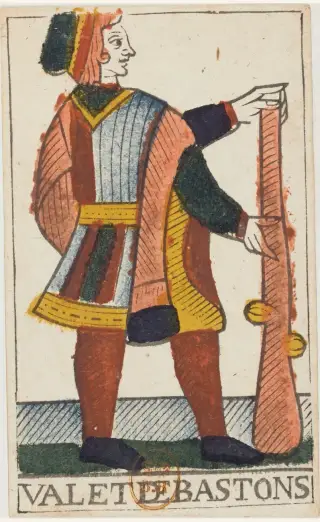
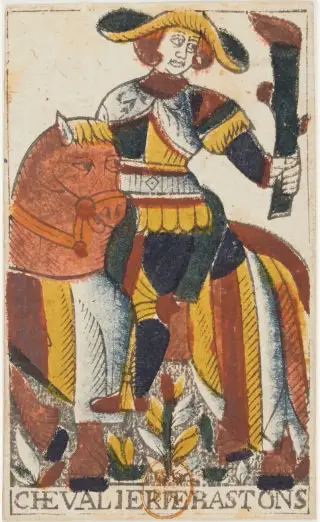
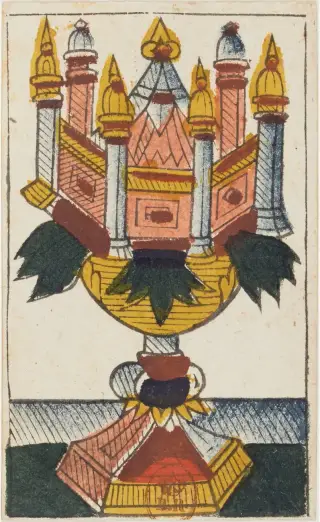
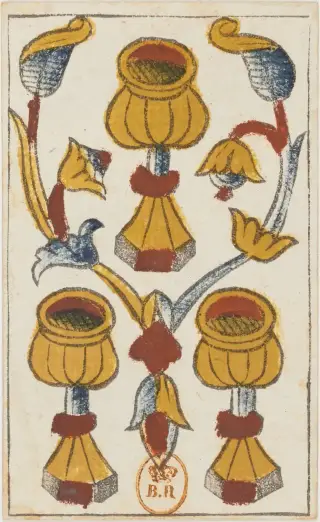
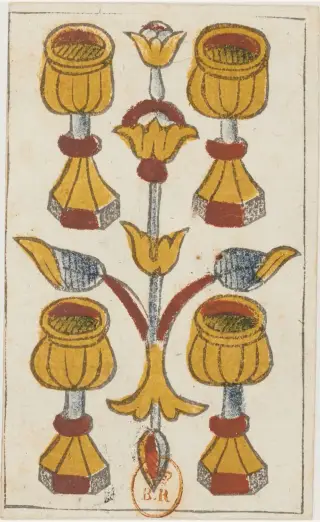
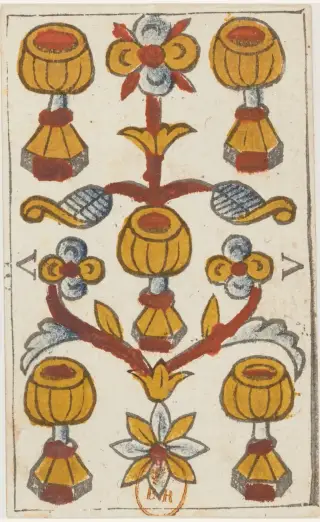
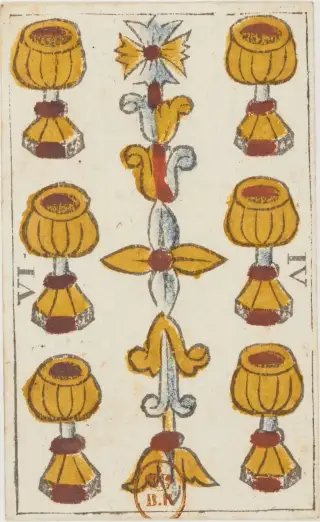
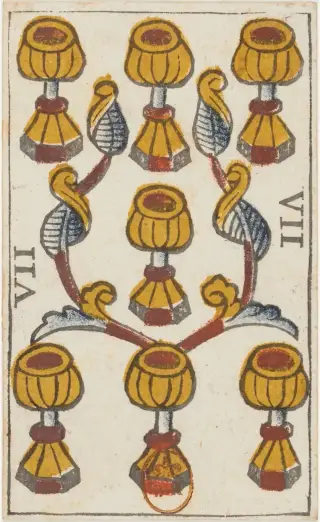
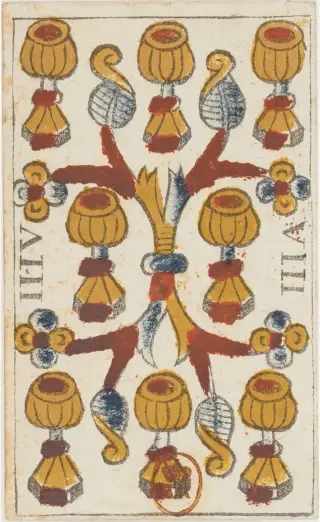
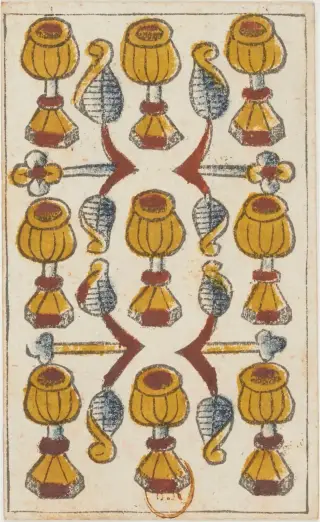
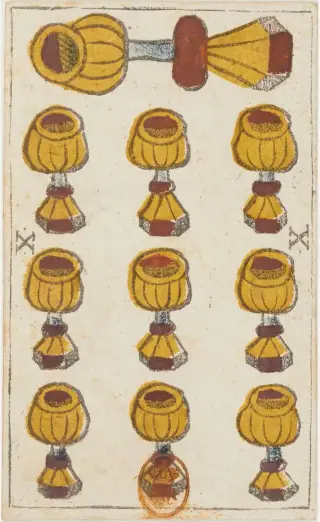
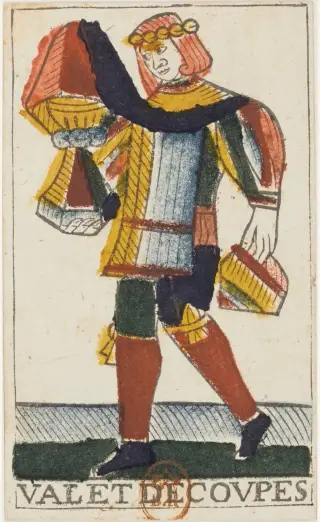
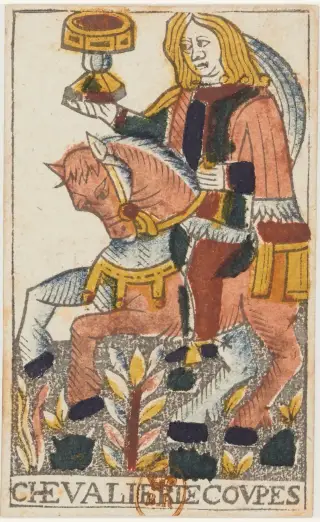
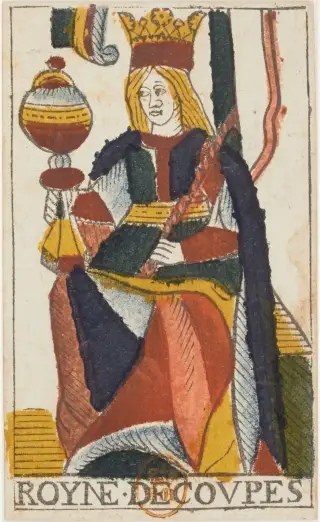
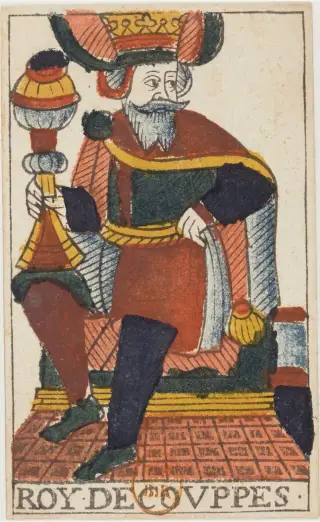
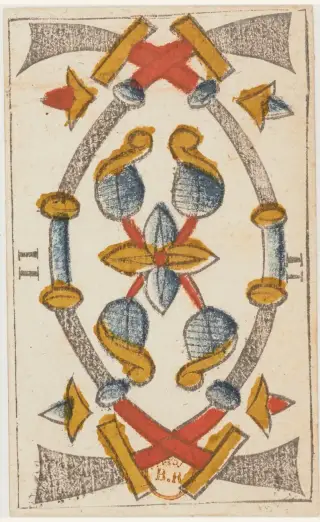
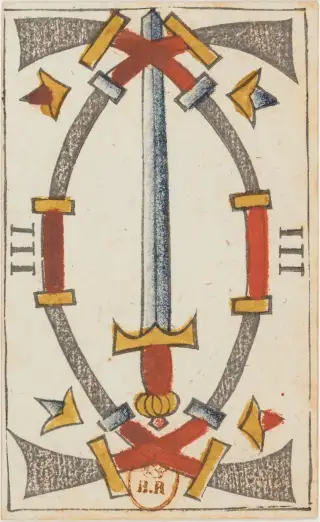
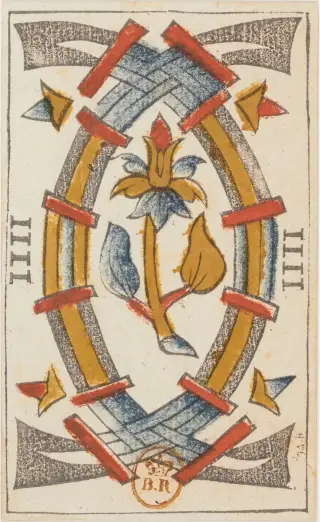
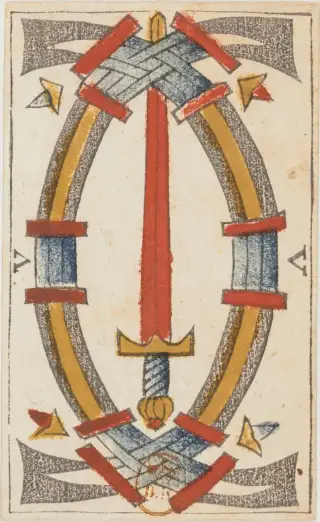
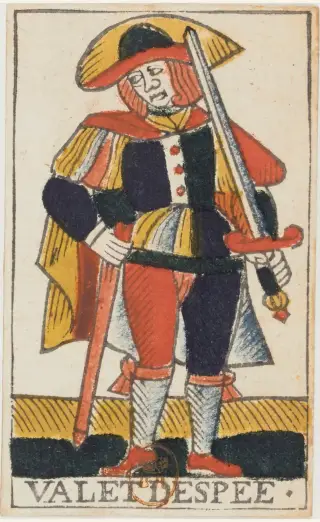
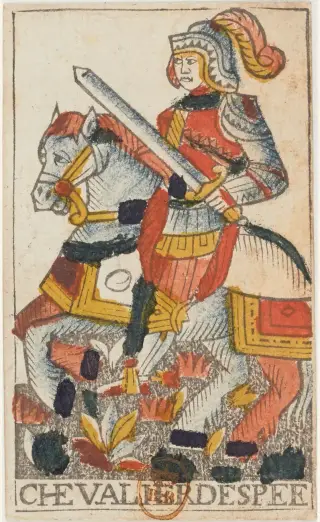
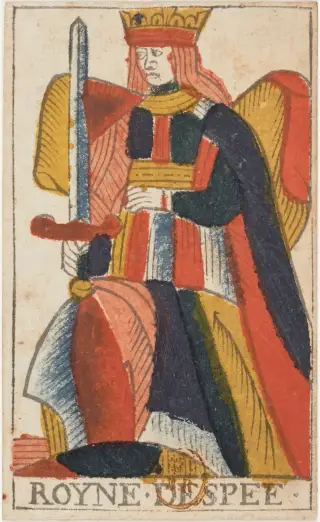
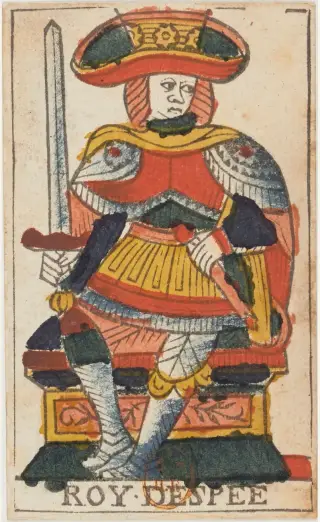
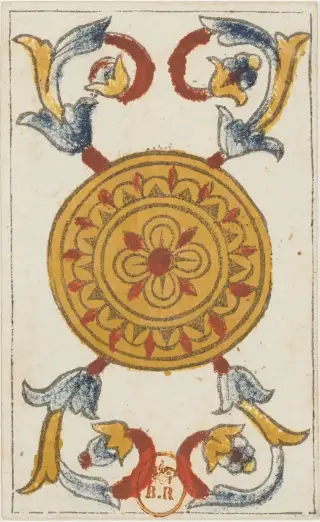
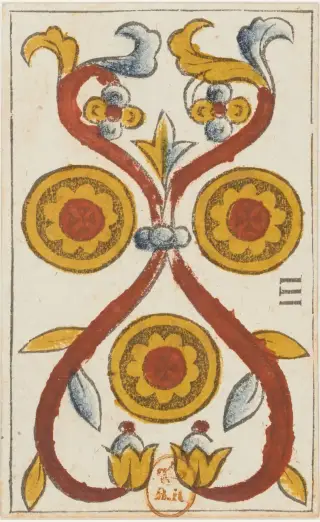
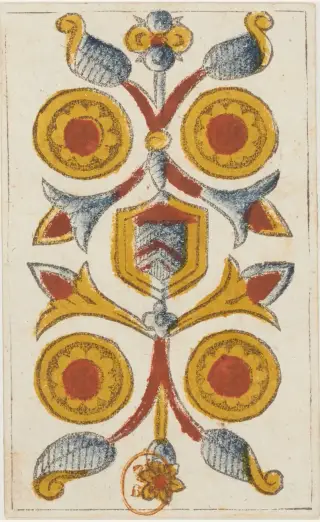
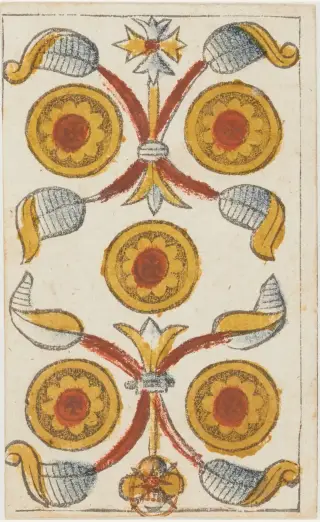
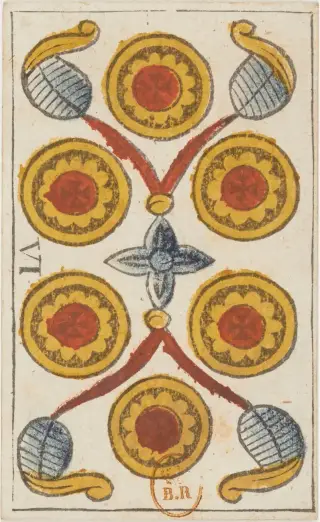
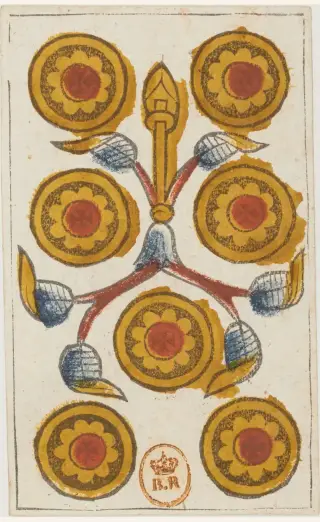
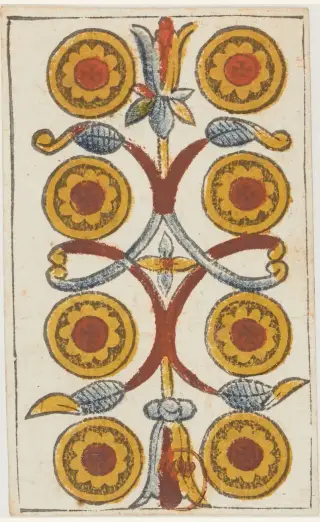
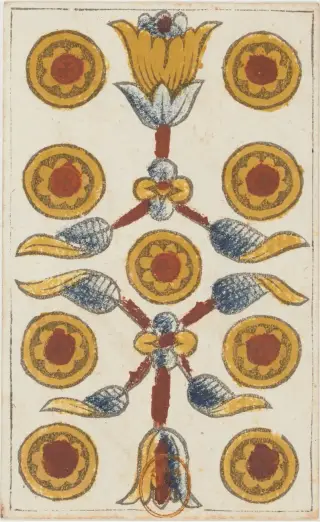
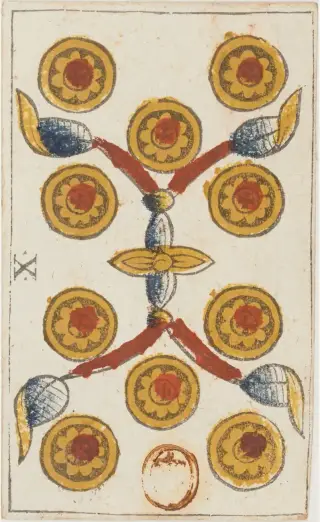
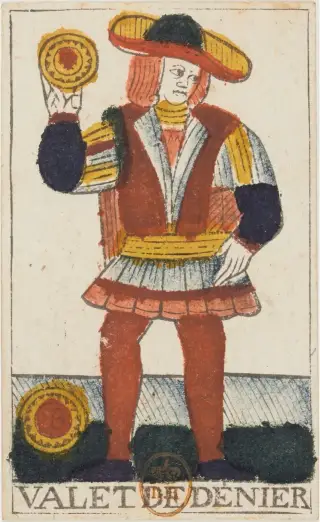
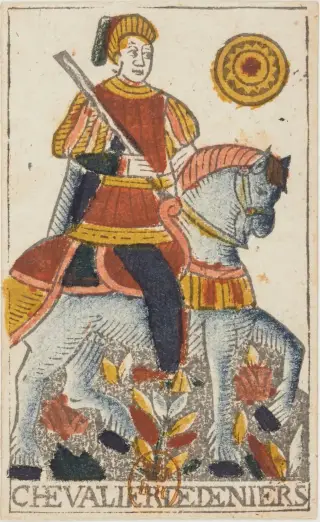
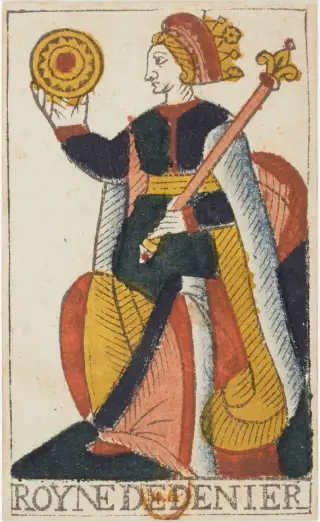
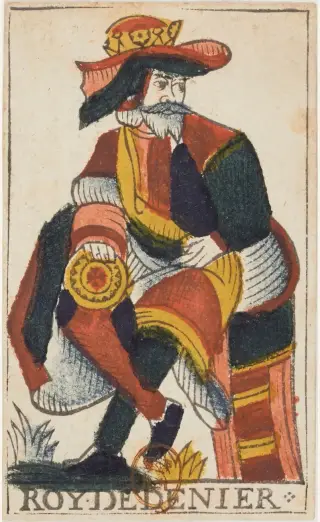
Jean Noblet was a cardmaker working at the faubourg Saint-Germain in Paris, documented between 1659 and 1681, and this is the only pack of his that survives. It is also the oldest surviving deck of the pattern later called the Tarot de Marseille: the trumps, the titles, the suit signs that thousands of decks would repeat for three centuries are already here, cut in bold woodblock line, colored through stencils, on cards barely nine centimeters tall. Tarot was fading in Paris when Noblet printed it, and the game's future lay in Lyon and Marseille, which is how a Paris deck ended up ancestor to a southern name.
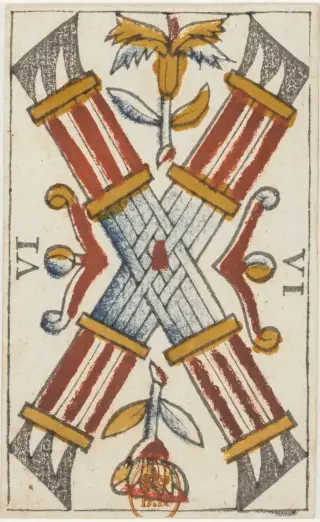
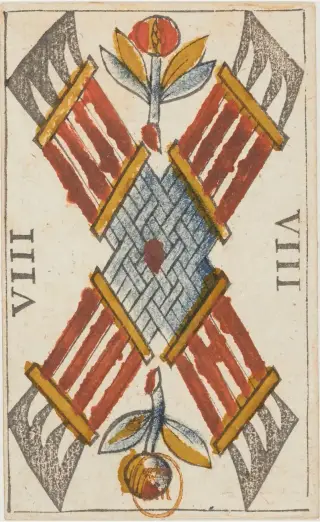
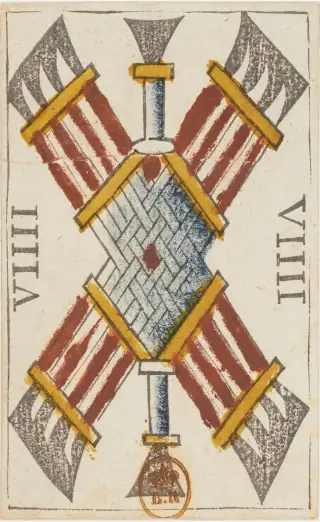
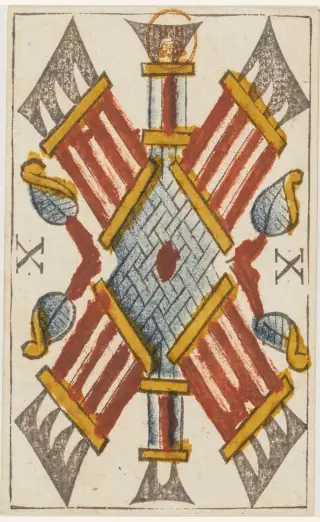
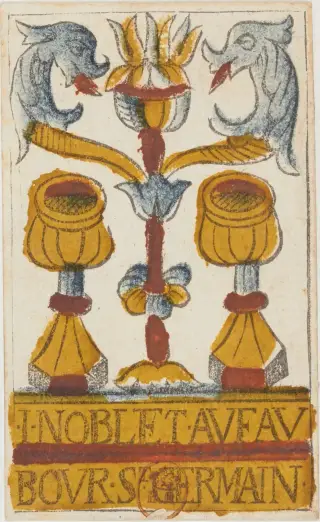
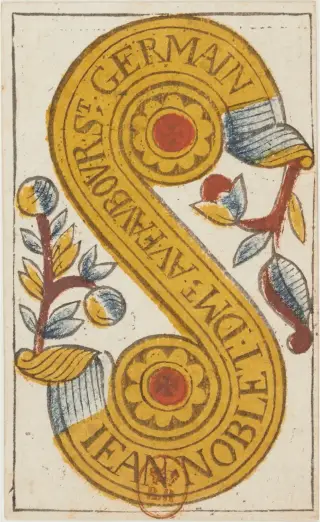
Seventy-three of the seventy-eight cards survive at the Bibliothèque nationale de France. The Six through Ten of Swords are lost, and four of the low Cups turn up twice, stray duplicate impressions kept with the pack, so the Gallica scans actually show seventy-seven cards. Noblet signed wherever the pattern allowed: his name and street run across banners on the Two of Cups and the Two of Coins, and his initials I.N. hang on the shield of the Chariot.
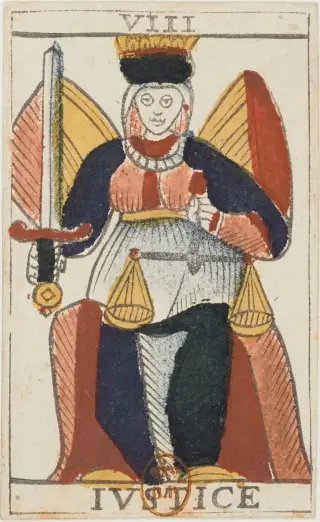
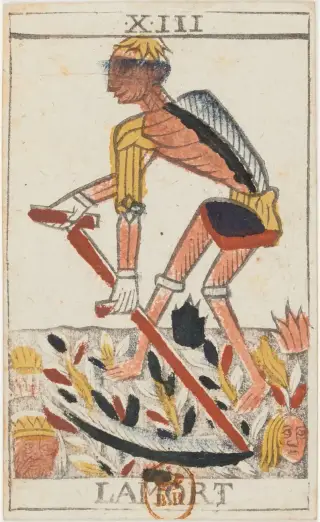
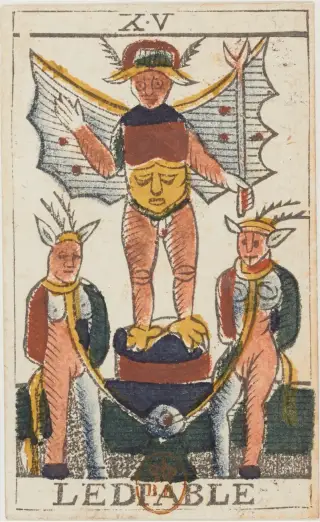
Historians class the Noblet as Type I of the Marseille pattern, the earlier branch it shares with Jean Dodal's Lyon deck of about 1701. The type shows its age in its frankness. The Fool, titled LE FOV, has his breeches down while a small animal claws at him; the Devil wears a second face on his belly and hides nothing either; and card XIII, left nameless in most Marseille decks, is plainly titled LAMORT. Justice sits at VIII and Force at XI, the order the RWS later reversed. In the 2000s the stained-glass artisan turned card historian Jean-Claude Flornoy redrew and republished the deck, reconstructing the five lost Swords, and made this smallest of tarots the best known Type I in the world.







- The Jean Dodal Tarotthe Type I sibling from Lyon
- The Conver Tarot de MarseilleType II, and the deck the world copied
- The Jacques Viéville Tarotthe road not taken, printed streets away
- Tarot card size and dimensionsnine centimeters, and what size does
- Designing your tarot card backthe chevron back and its descendants