The Jacques Viéville Tarot
Noblet's Paris contemporary and his opposite: the same city, the same years, and a wholly different tarot, with an upright Hanged Man and rhymes printed in the pips.
Jacques Viéville, cardmaker, Paris · Paris; the only known copy is at the Bibliothèque nationale de France · c. 1650
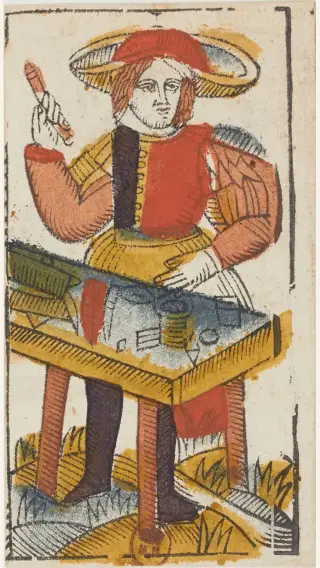
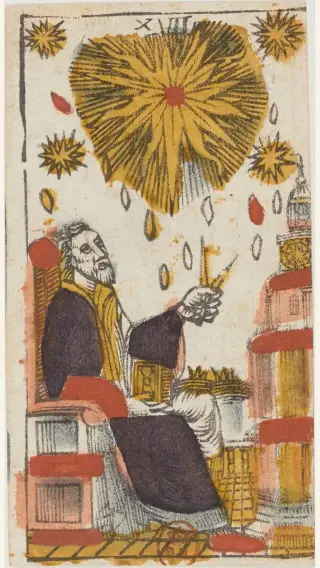
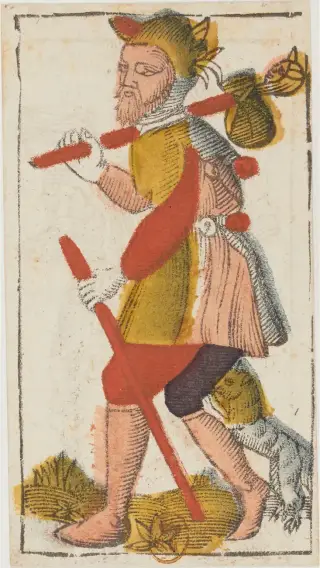
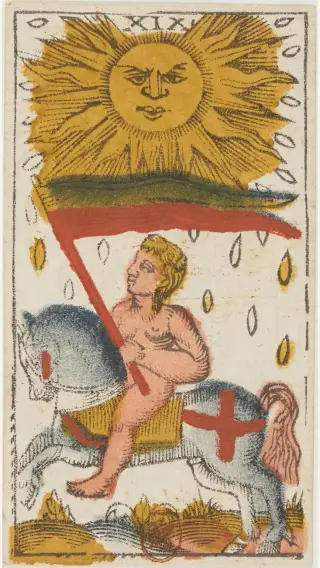
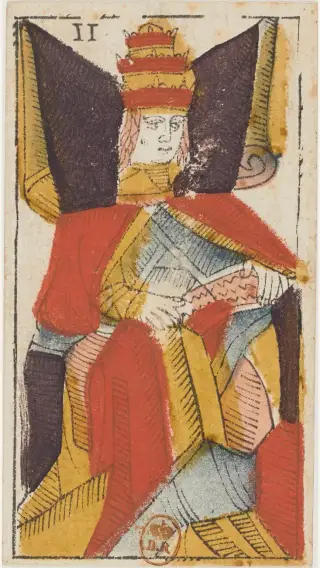
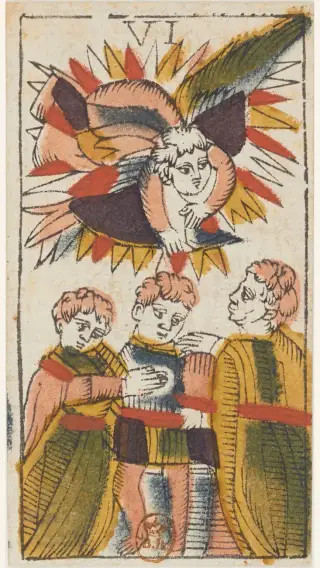
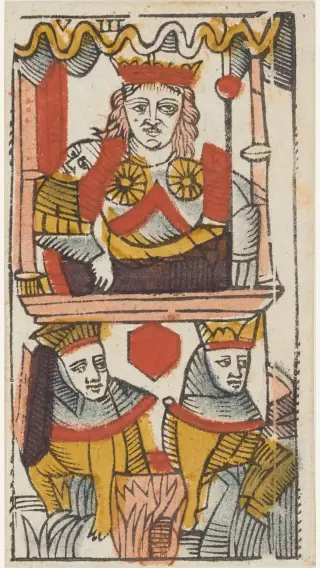
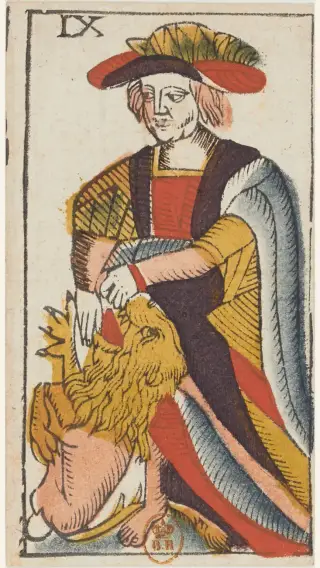
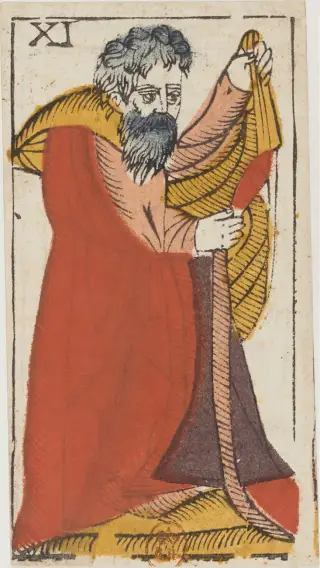
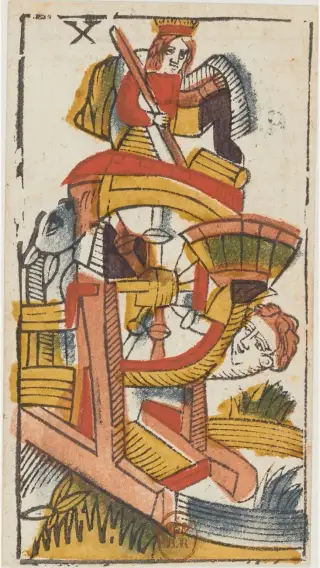
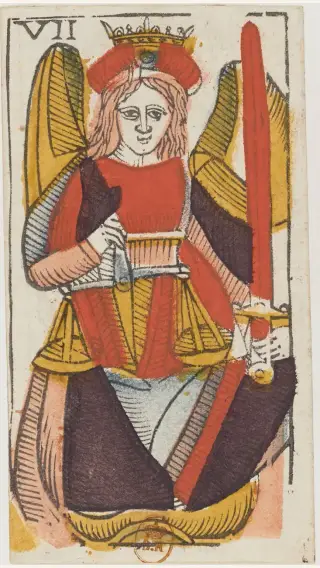
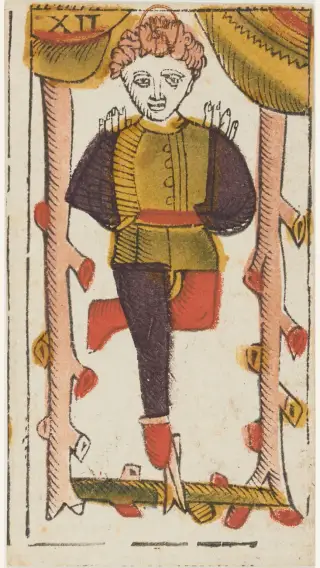
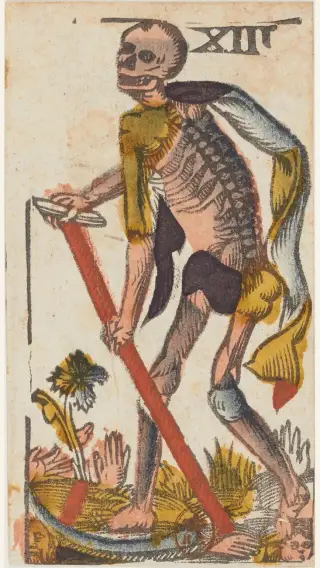
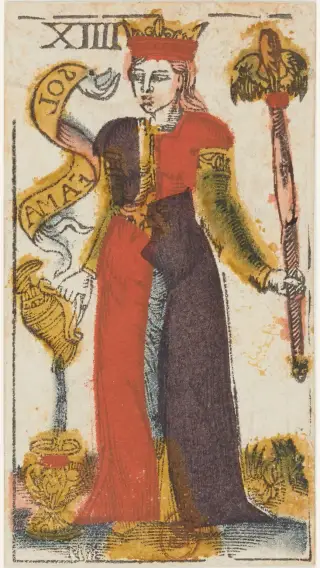
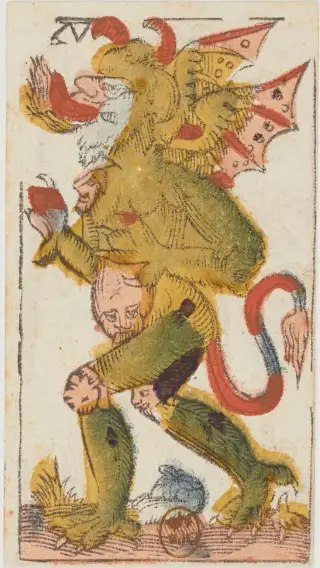
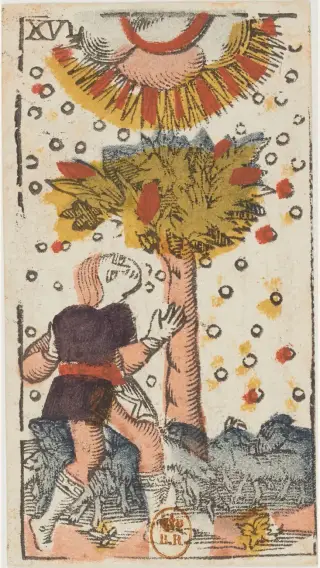
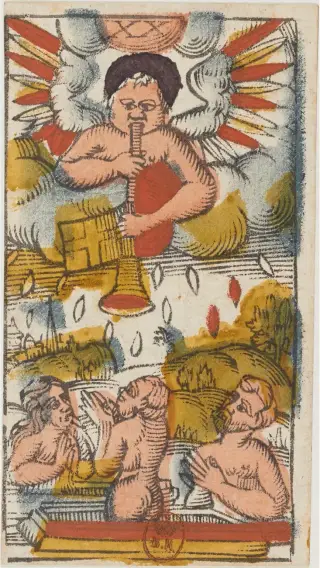
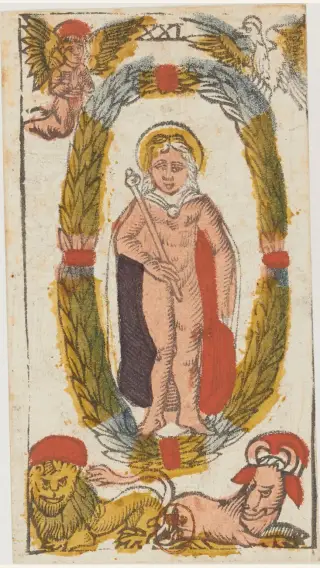
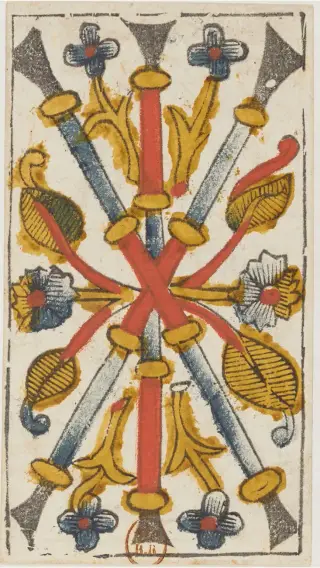
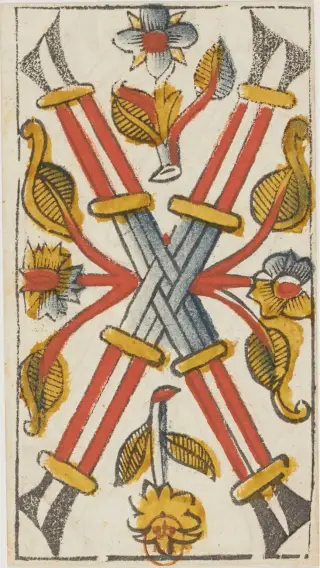
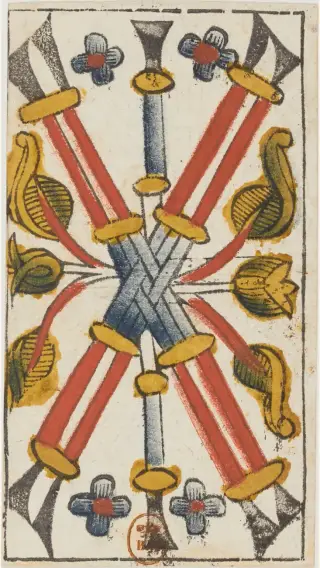
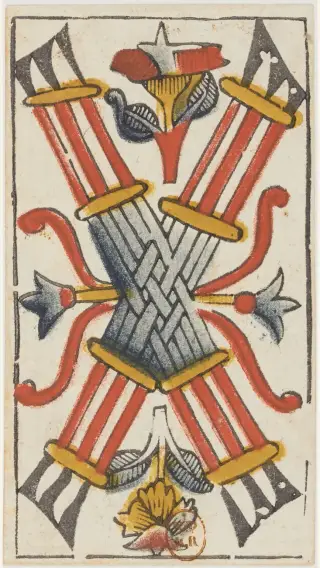
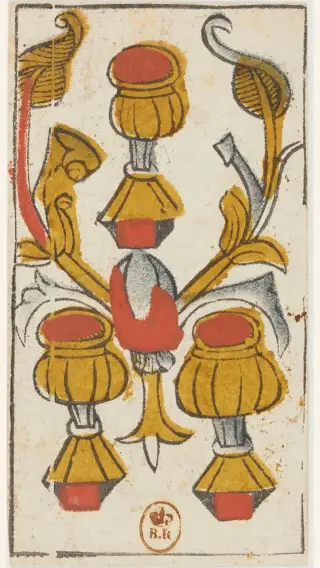
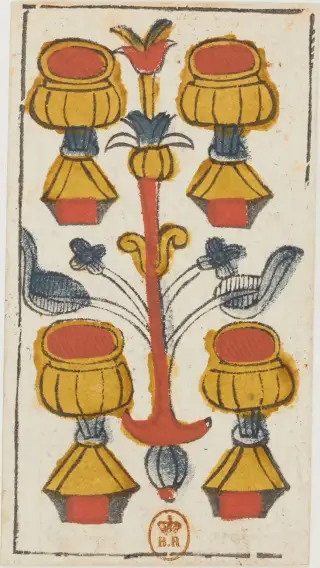
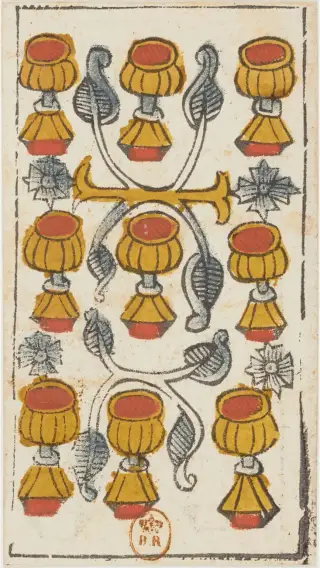
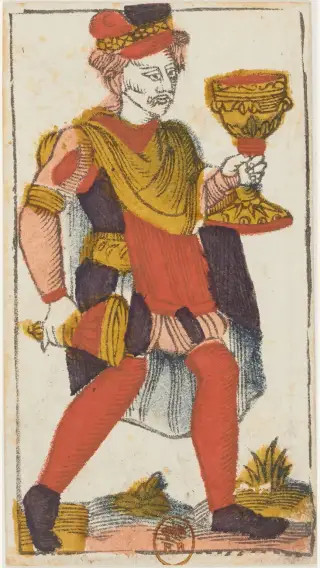
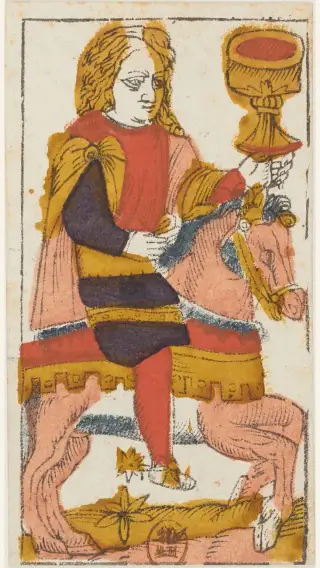
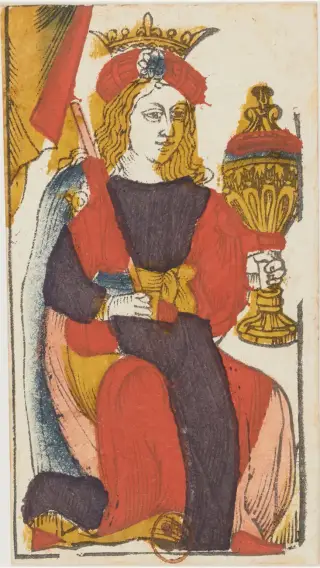
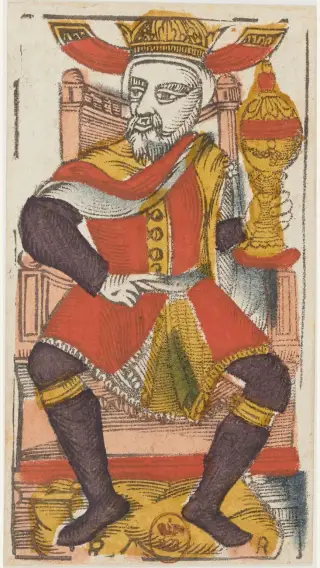
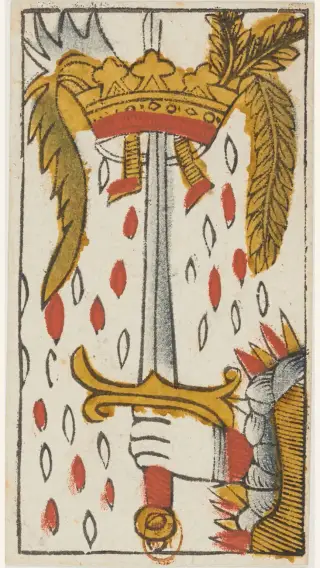
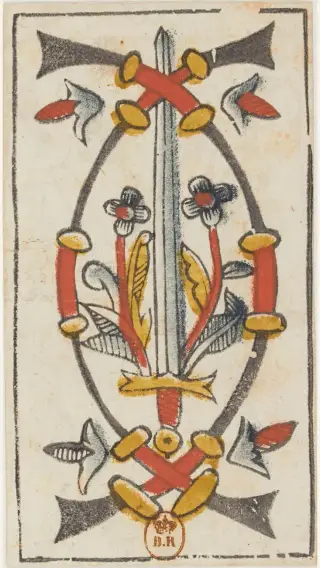
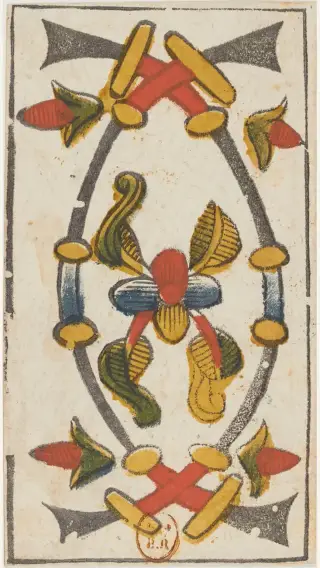
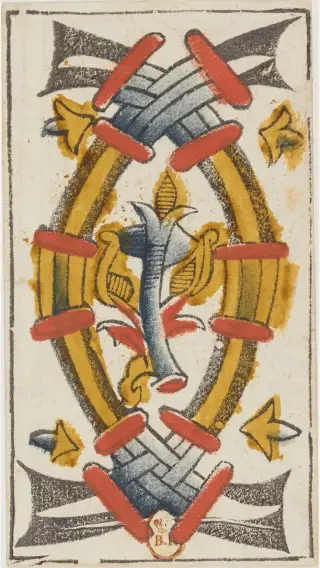
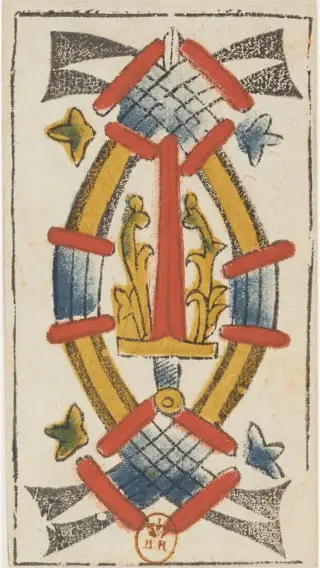
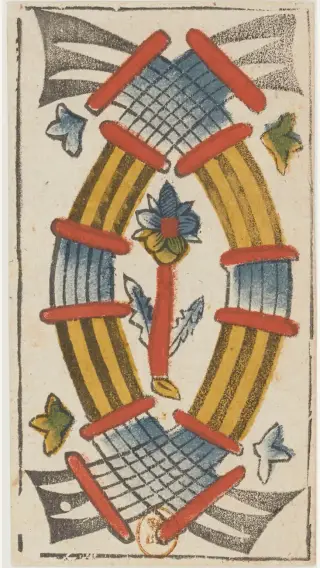
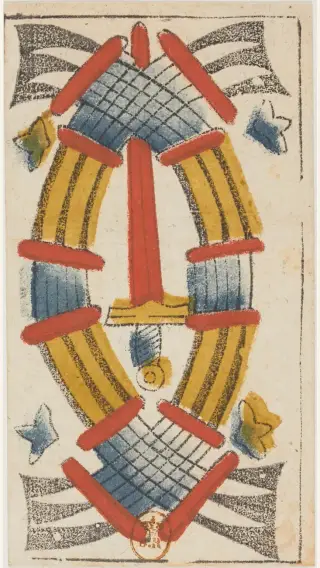
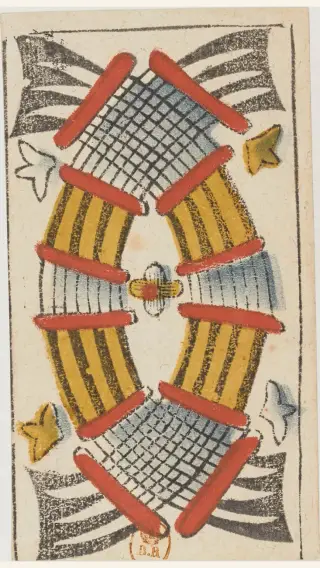
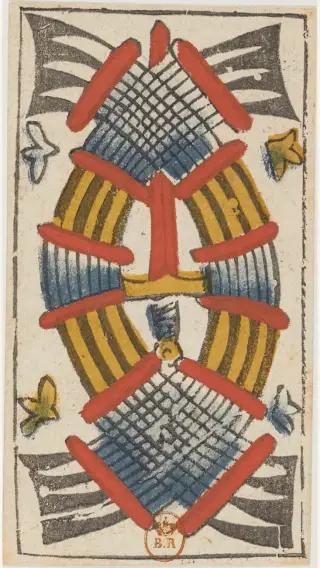
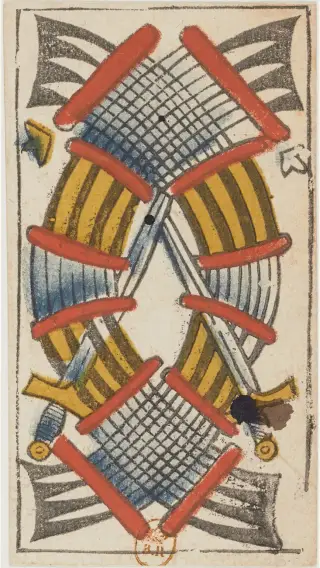
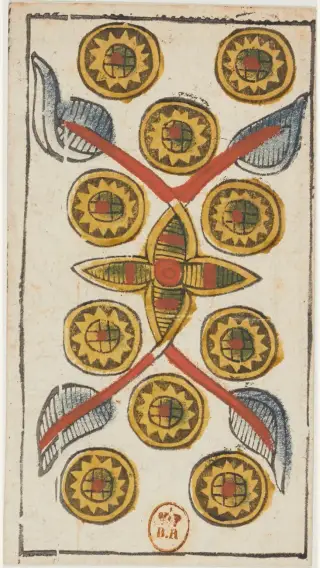
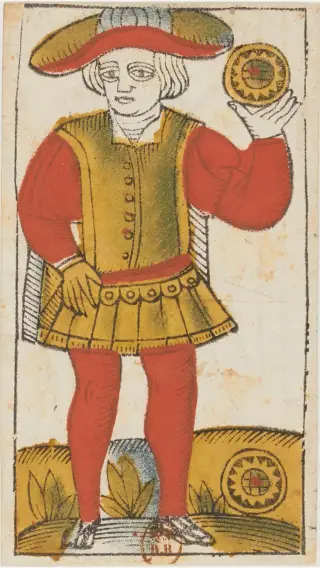
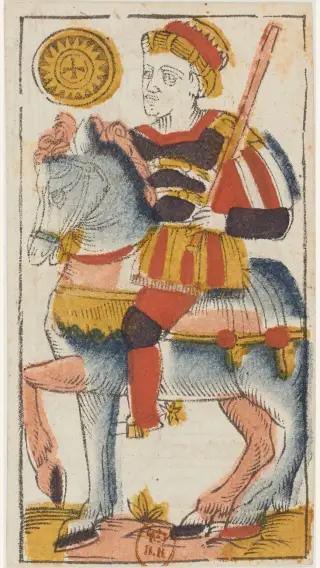
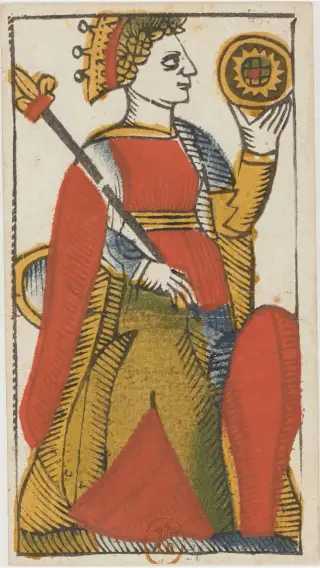
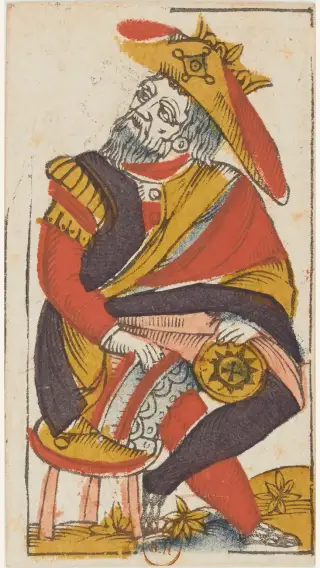
Jacques Viéville and Jean Noblet worked as cardmakers in Paris in the same years, around 1650, and the two decks that survive from them are a controlled experiment history rarely allows. Noblet printed what would become the Tarot de Marseille. Viéville printed everything the pattern would leave behind: Justice at VII with wings, Force at IX, the Hermit at XI stripped of his lantern, a Chariot half hidden behind a parapet, fire from heaven falling on a shepherd where the Marseille decks build their tower. His Hanged Man does not hang; he stands upright on one foot like a dancer, and scholars still argue whether the block cutter blundered or knew something.
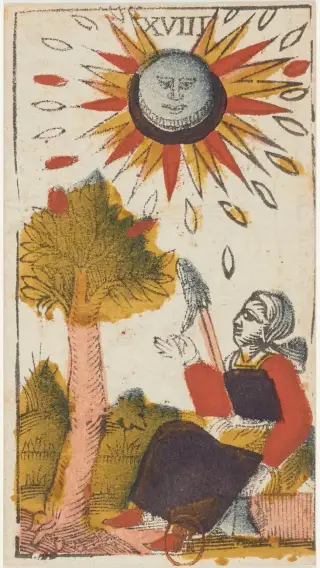
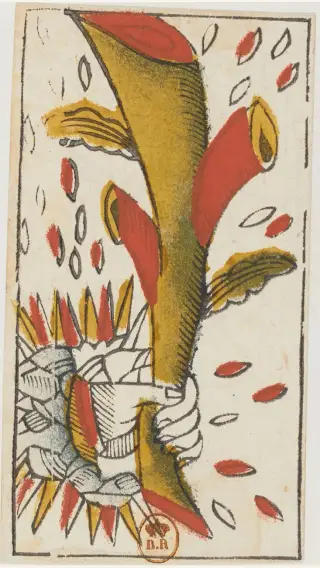
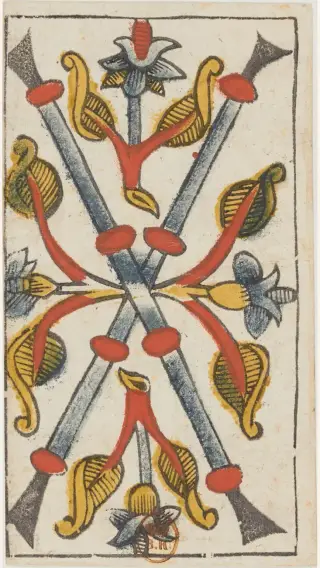
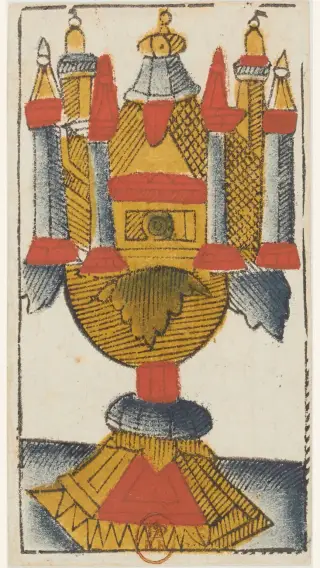
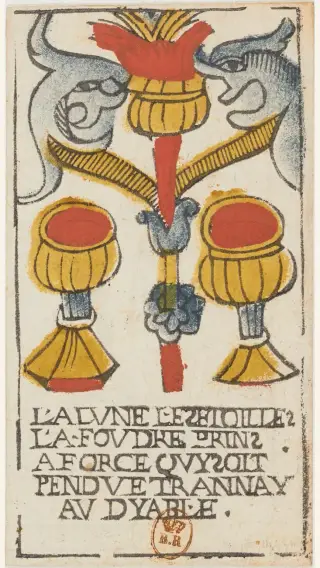
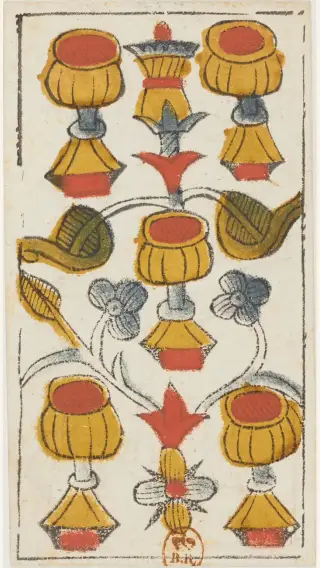
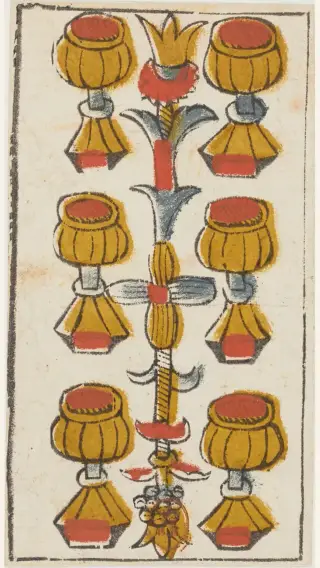
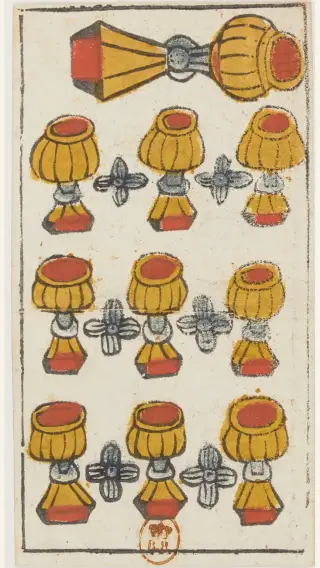
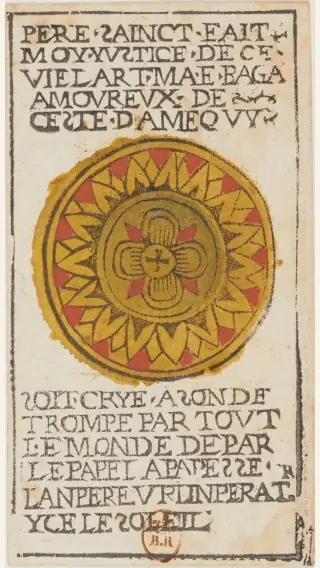
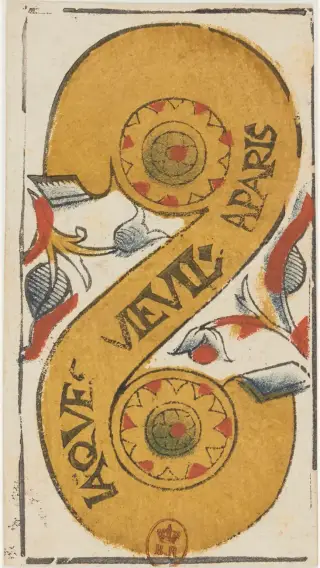
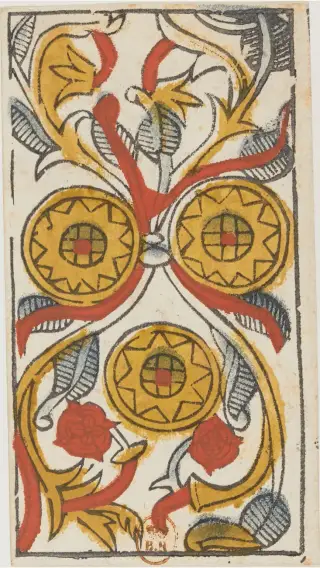
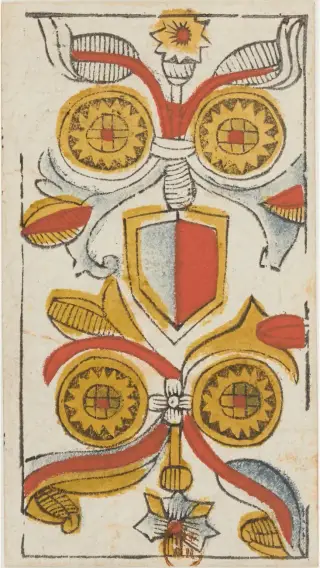
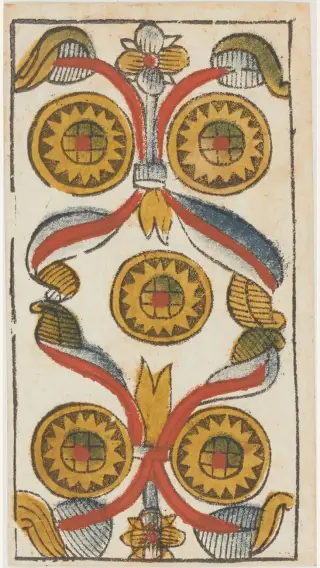
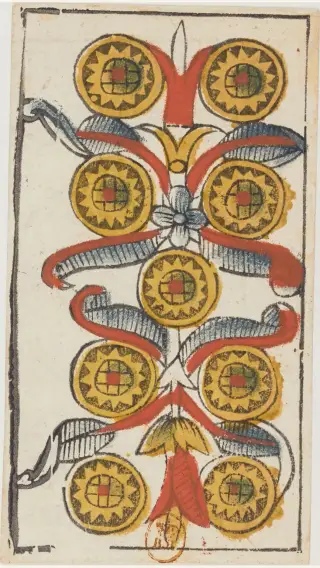
The deck talks. Under the Two of Cups a printed rhyme names the trumps, la Lune, l'Estoille, la Foudre, and packs them off to the Devil; the Ace of Deniers carries two small prayers around its coin; the Two of Deniers signs IAQVE VIEVILLE A PARIS on a ribbon. No other seventeenth-century tarot is this talkative about itself.
Only one copy survives, at the Bibliothèque nationale de France, complete at 78 cards. The images that look eccentric here, the child rider on the Sun, the spinner under the Moon, resurface a century later in the Belgian tarots of the Vandenborre type, which makes this deck the missing parent of a whole northern branch. Beside the Noblet and the Tarot de Paris it completes the triangle: three Paris decks, three different futures, one of which happened.
- The Jean Noblet Tarotsame city, same years, opposite outcome
- The Tarot de Paristhe third witness to Parisian variety
- The Jean Dodal Tarotthe pattern that swallowed them both
- Anatomy of a 78 card tarot deckthe 78 and its variations
- Should you disclose how your deck was madeon signing your own work