The Petit Oracle des Dames
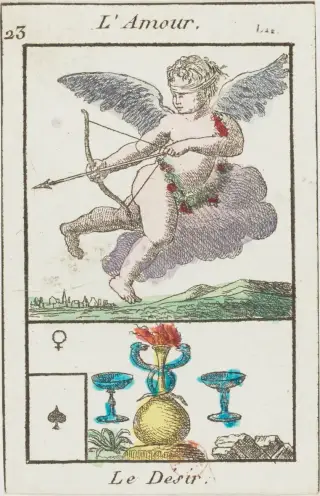
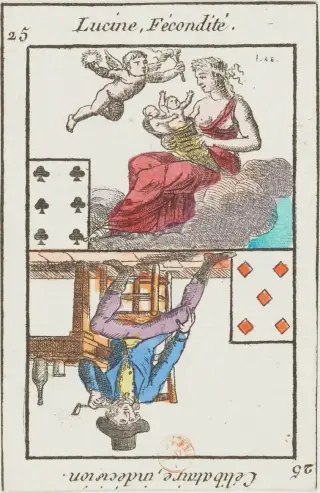
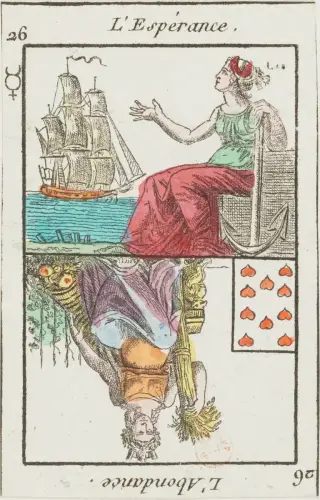
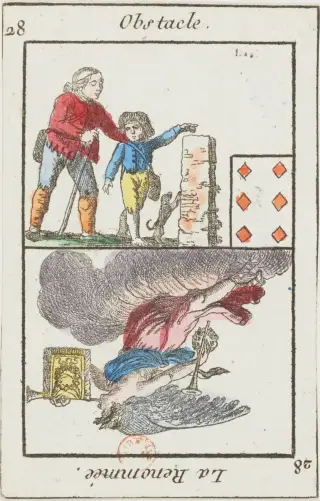
Forty-two double-ended cards from post-Revolution Paris: turn the card and the fortune turns with it, Love one way, Desire the other.
Unknown Paris engravers; this edition by Veuve Gueffier · Paris; the copy at the Bibliothèque nationale de France keeps its instruction booklet · c. 1797-1807
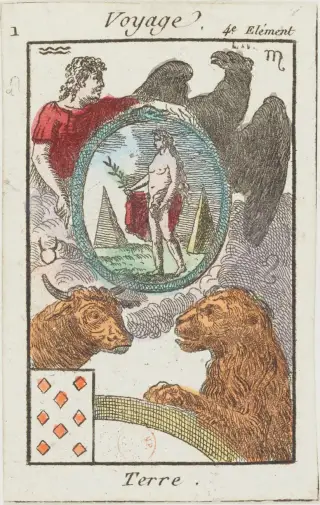
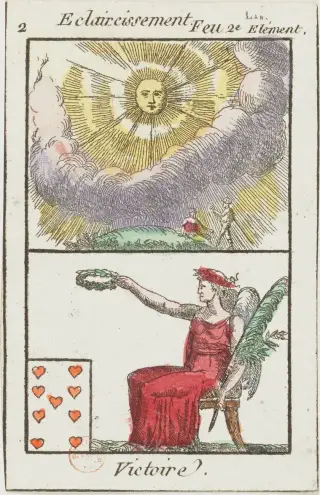
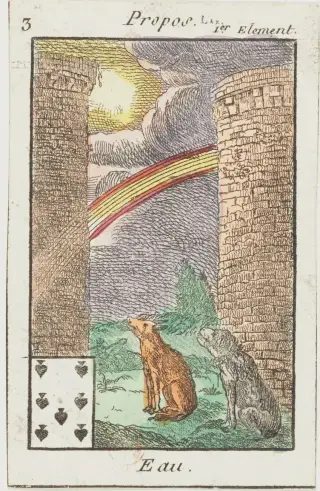
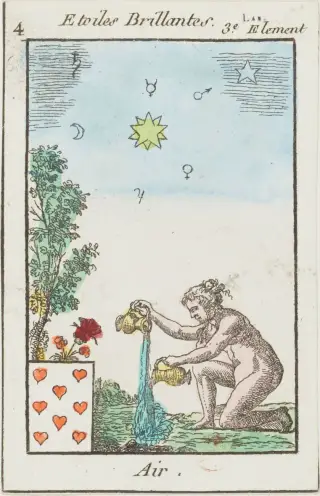
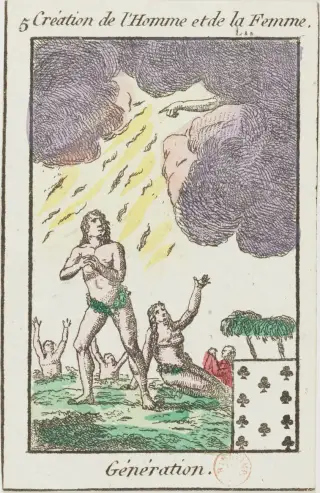
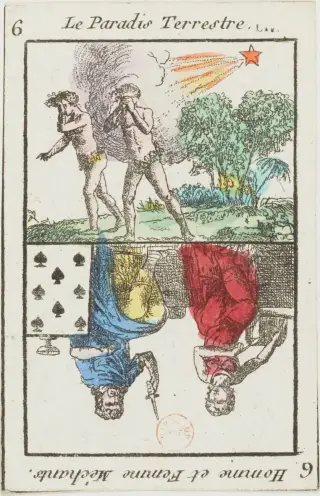
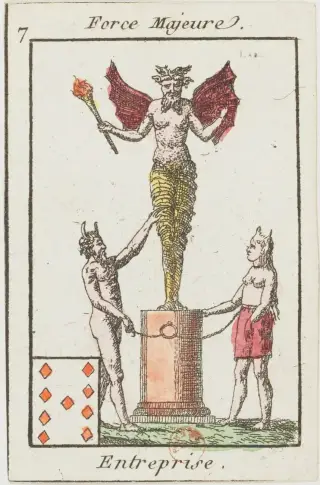
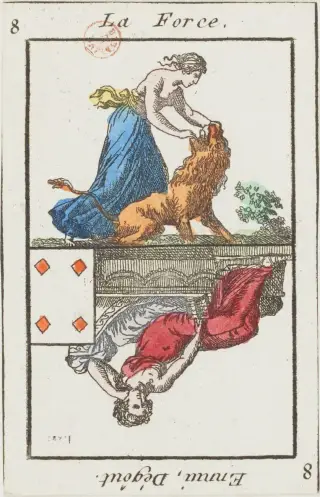
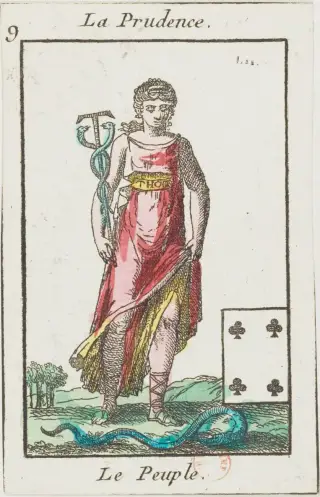
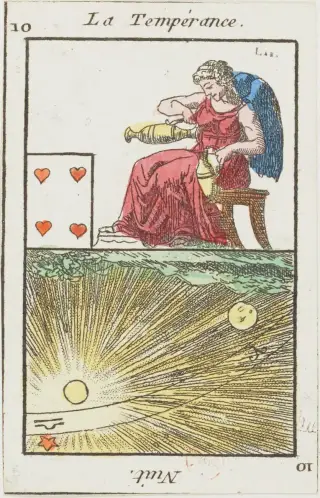
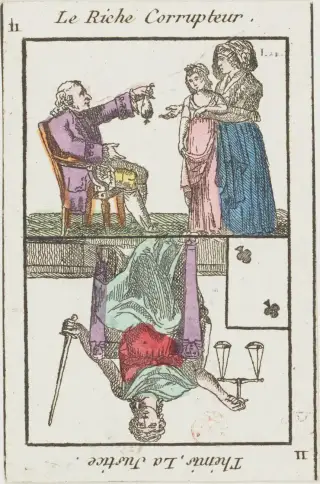
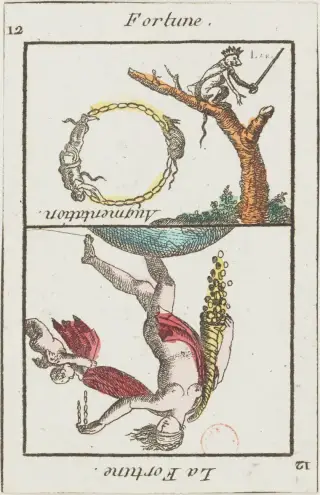
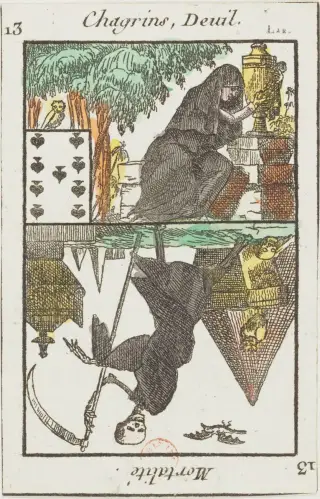
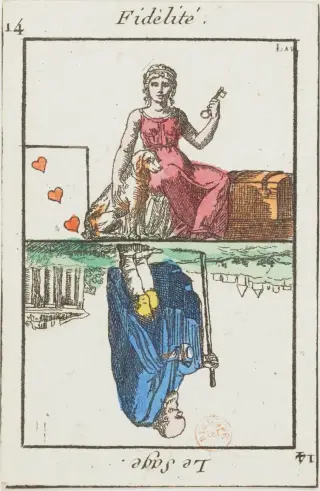
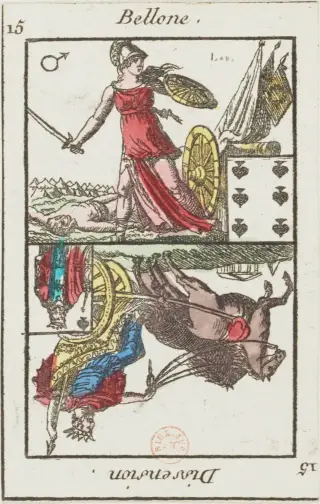
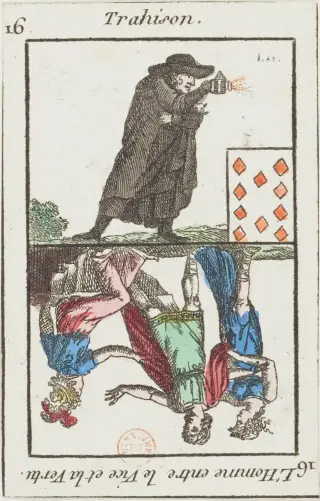
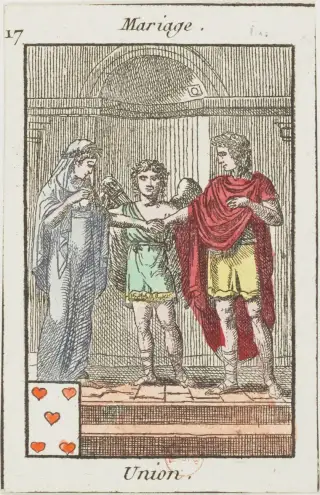
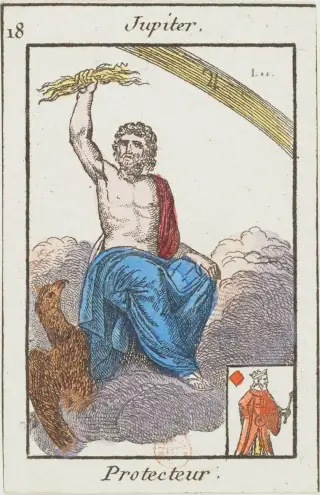
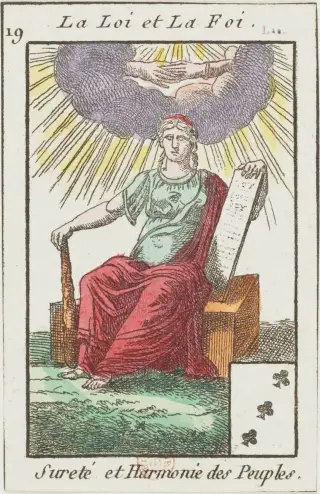
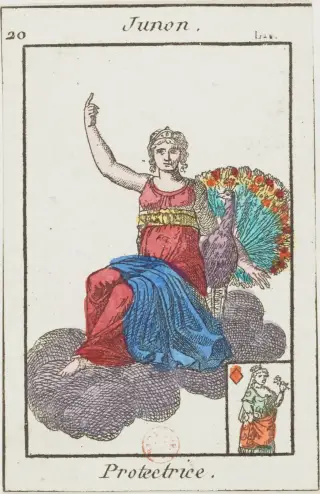
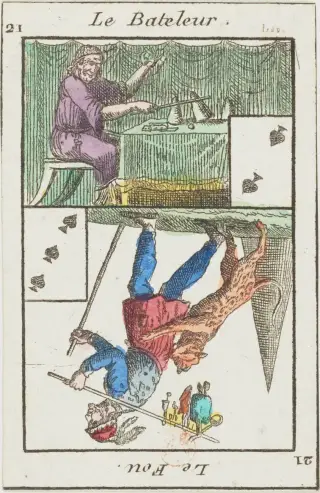
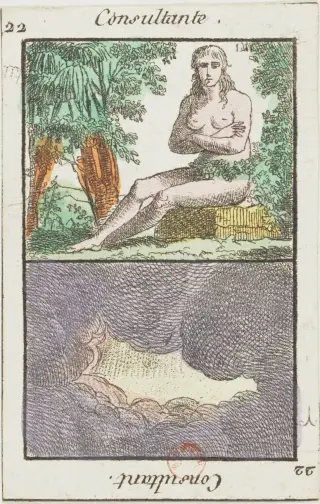
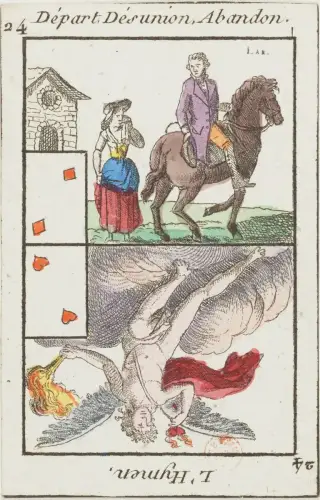
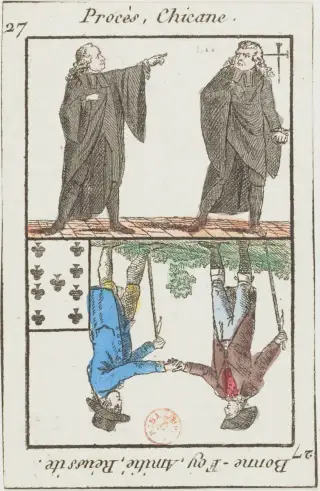
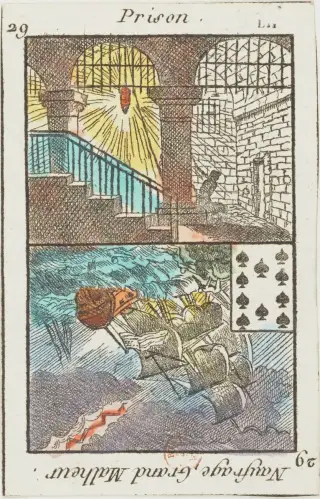
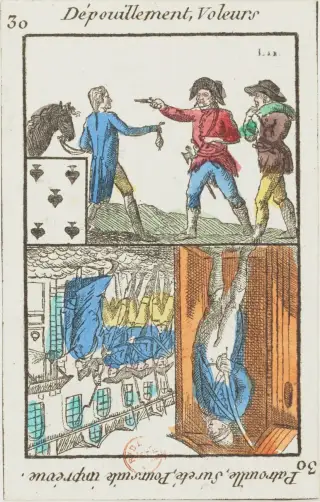
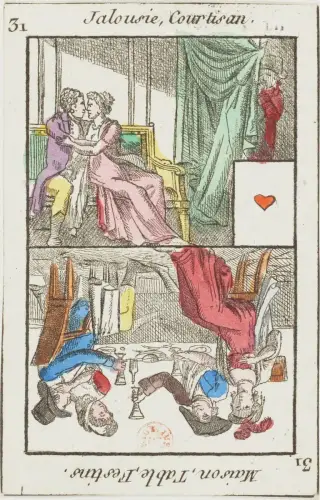
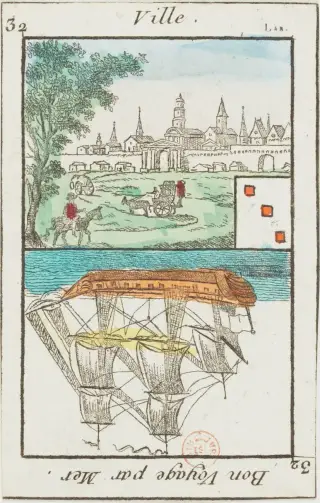
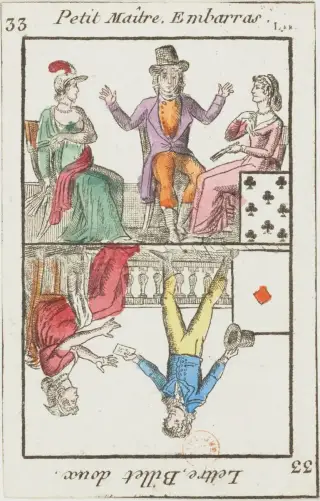
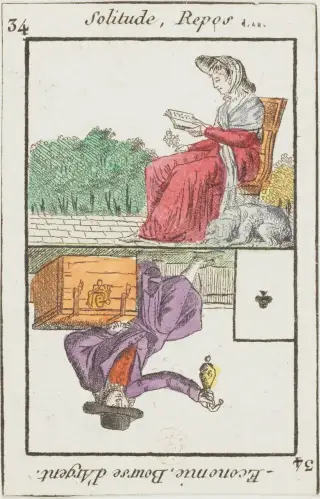
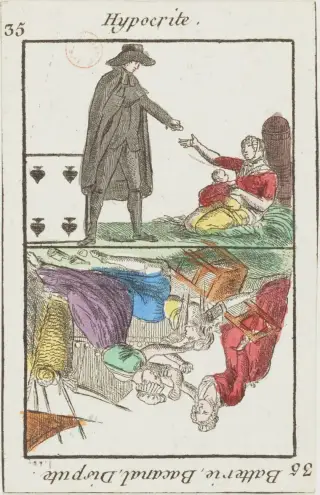
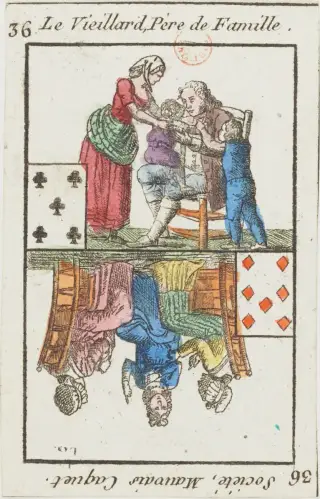
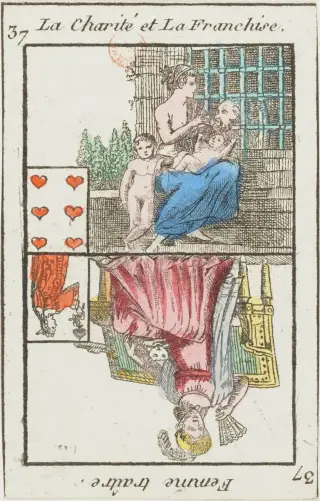
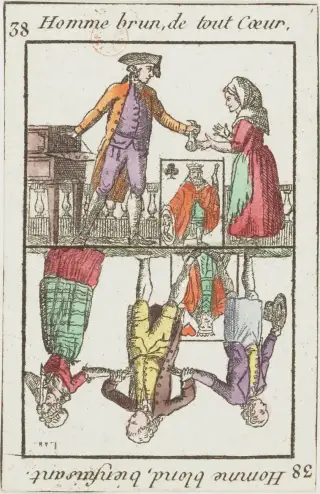
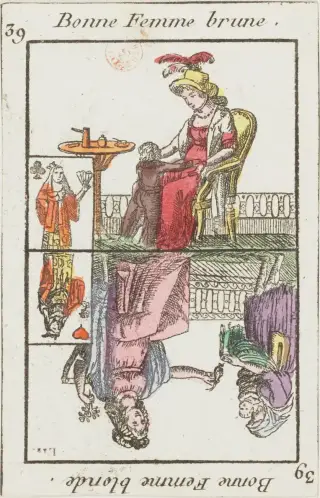
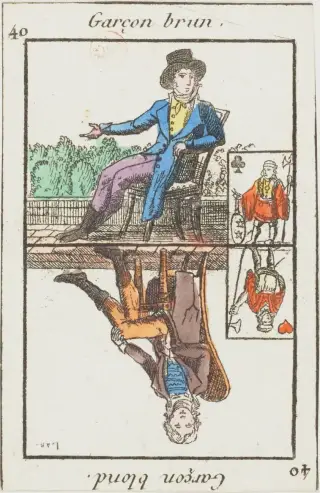
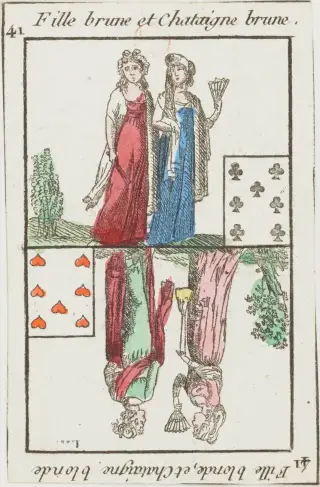
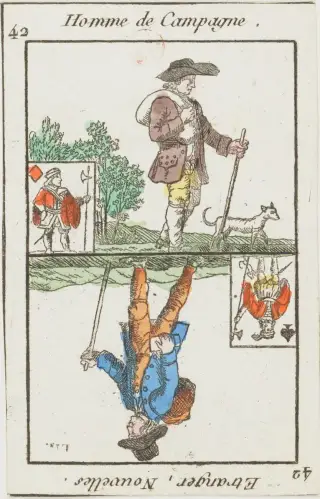
The Petit Oracle des Dames is the missing link between Etteilla's tarot and the sibylle packs of the nineteenth century. Printed in Paris in the years around 1800, it deals the whole apparatus of French cartomancy into forty-two double-ended cards: each carries two scenes head to head, one upright, one reversed, with a caption at either end, so the same pasteboard answers two ways depending on which way it lands. Love shares a card with Desire, Prison with Shipwreck, the lawyer's Procès with the handshake of Bonne foi.
The borrowings are cheerfully open. The four elements that open the pack and several allegories come straight out of Etteilla's system; the Bateleur and the Fou fold the tarot's two oldest characters onto a single card; Jupiter and Junon stand where the Pope and Popess stood in the Besancon tarots; and the blond and brun court figures at the end anticipate every sibylle deck that followed. A miniature playing card in the corner keys each scene to the ordinary deck, and a printed booklet, kept with this copy, explains the layouts.
The pack sold for decades and shaped what came after: the Sibylle des Salons and its cousins are this deck grown up, one scene per card, prettier and tamer. The Bibliothèque nationale's copy, hand-colored and complete with its wrapper and instructions, is the edition of the Veuve Gueffier.
- The Sibylle des Salonsthe tidied-up successor
- The Cartomancie of 1788the handmade version of the same idea
- The Petit Etteillathe system it borrows from
- Anatomy of a 78 card tarot deckwhen a deck is not 78
- Keeping all 78 cards the same sizedouble-ended layout problems