The Petit Etteilla
Etteilla's first invention, older than his tarot: thirty-two ordinary playing cards wrapped in printed meanings, plus the card that bears his name.
After Etteilla's design of the 1770s; this wood-engraved edition, Paris · Paris; at the Bibliothèque nationale de France · designed 1770s; this printing c. 1860
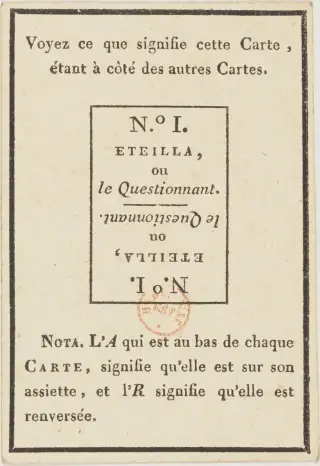
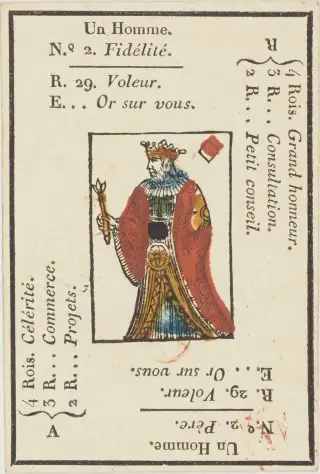
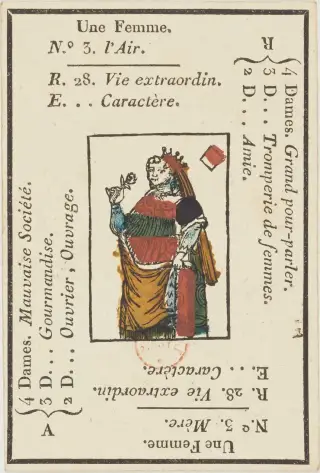
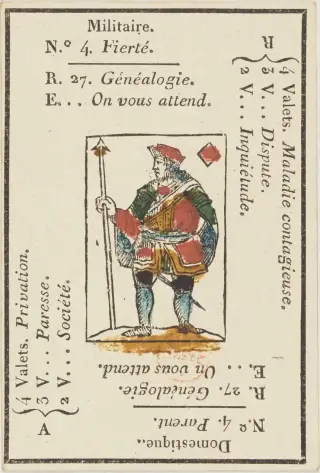
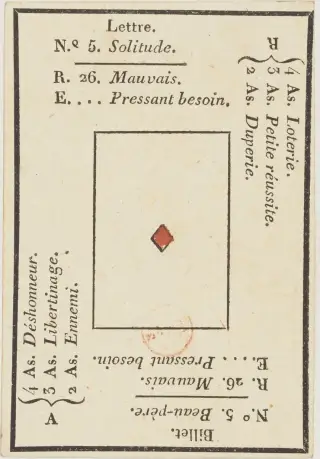
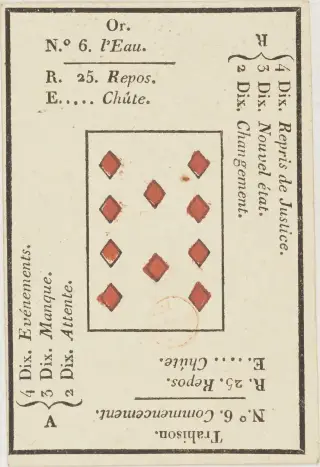
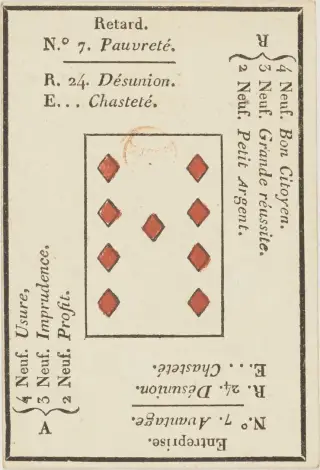
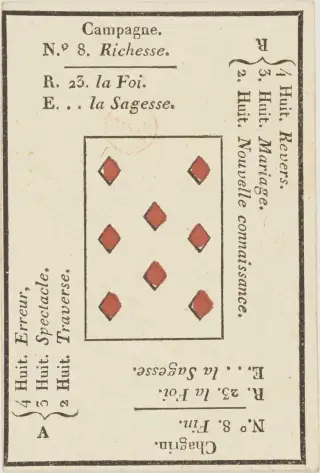
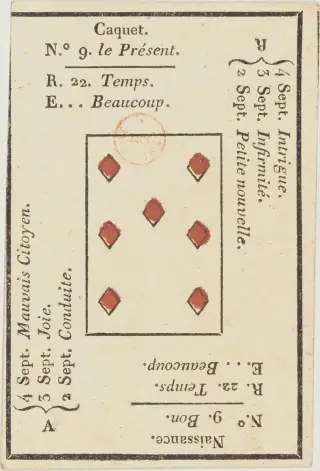
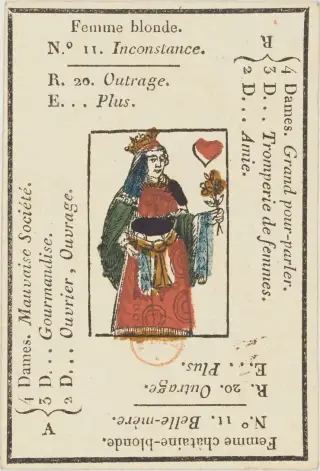
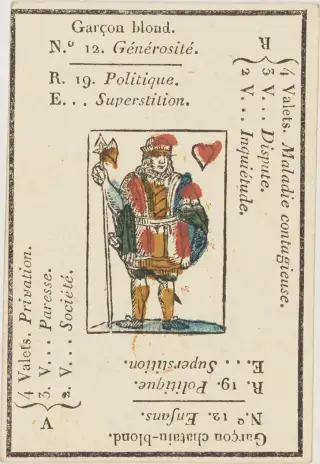
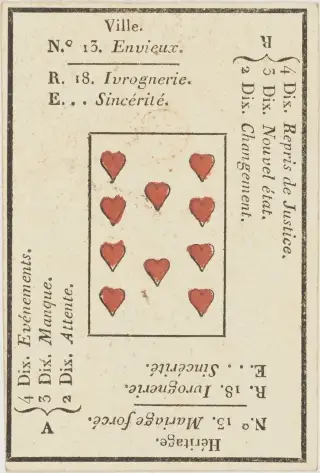
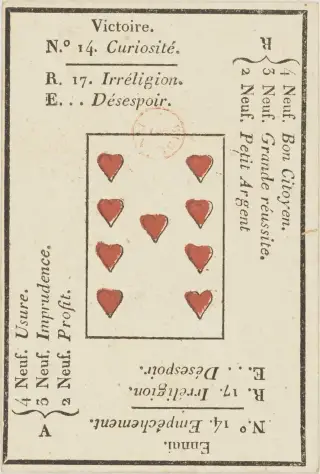
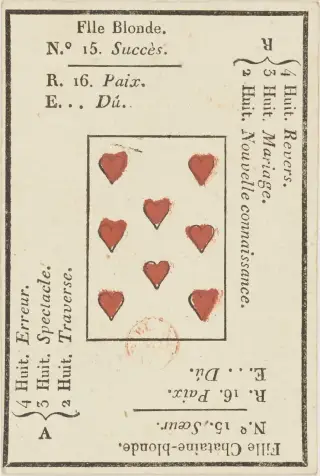
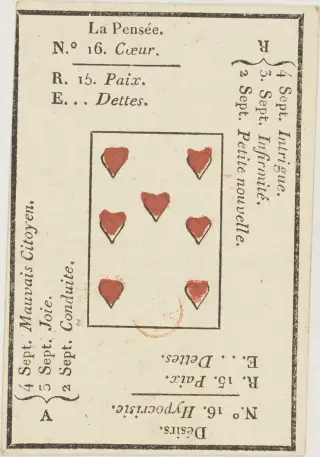
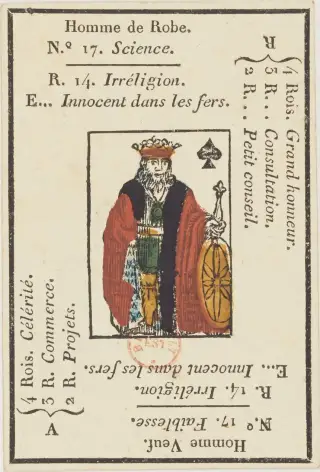
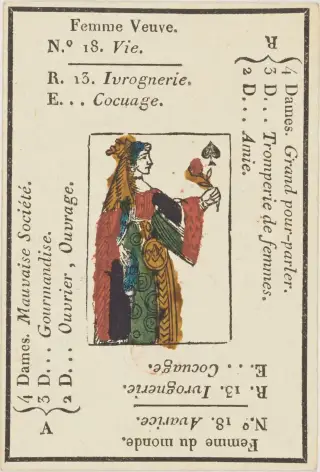
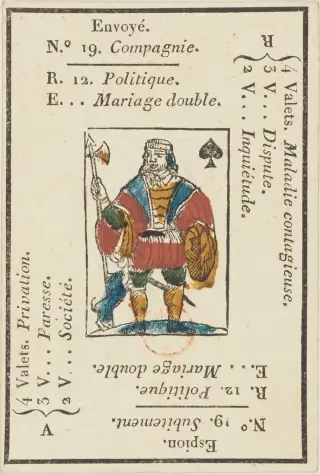
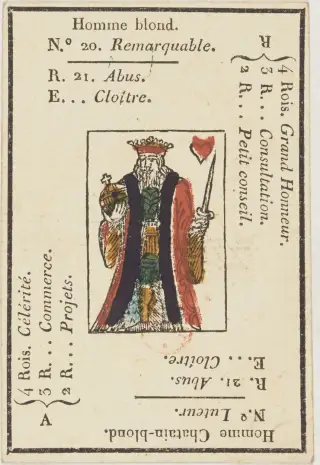
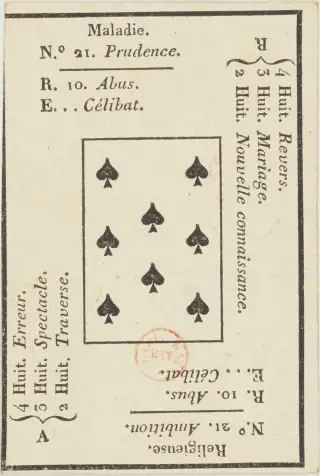
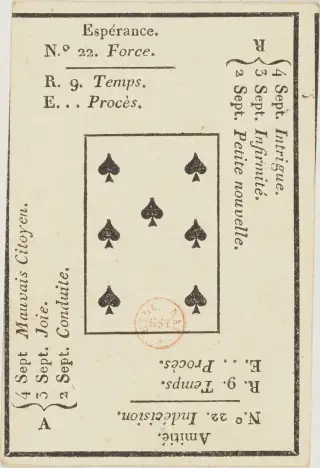
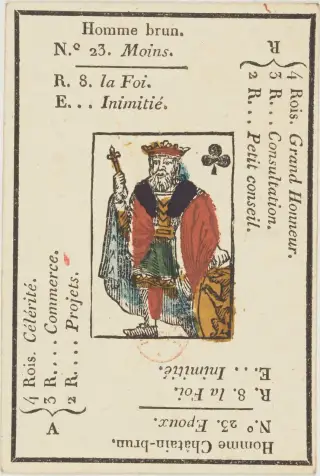
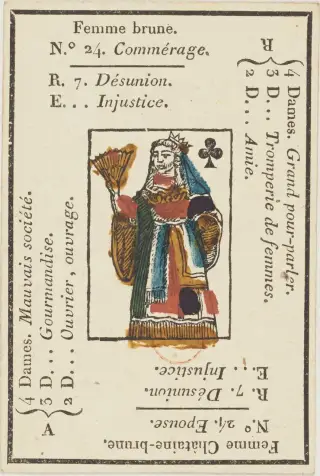
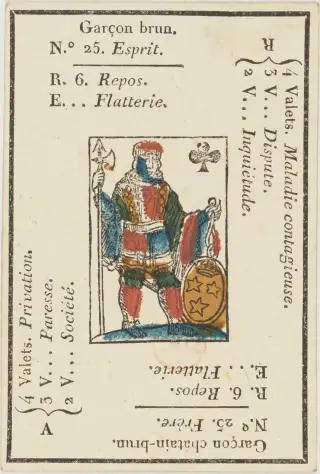
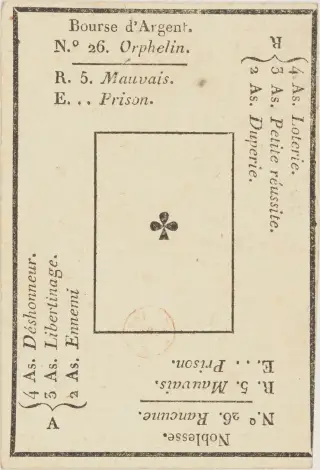
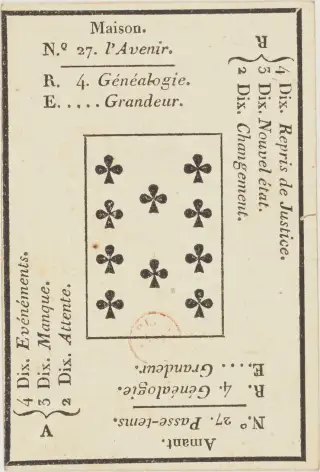
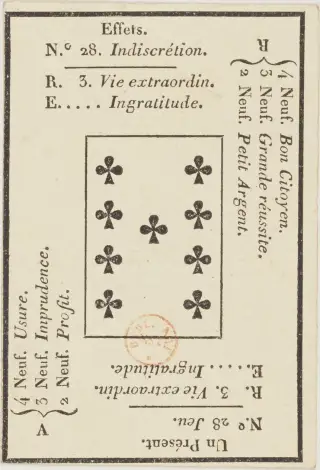
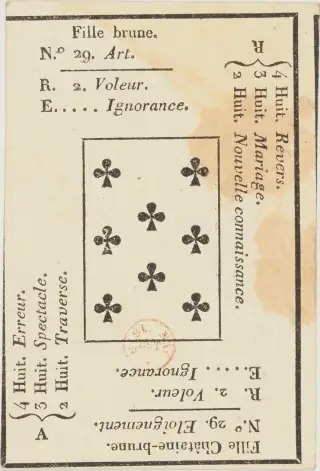
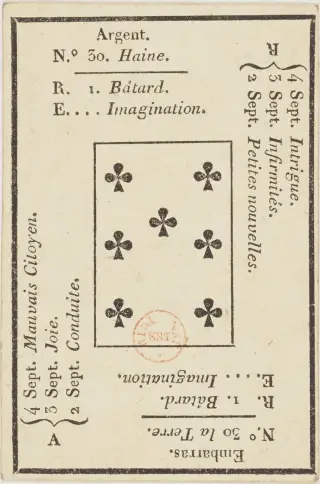
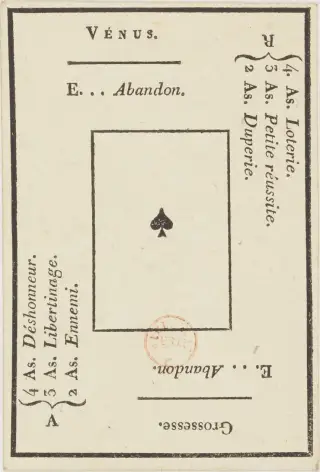
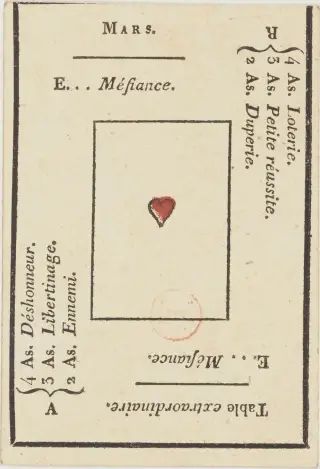
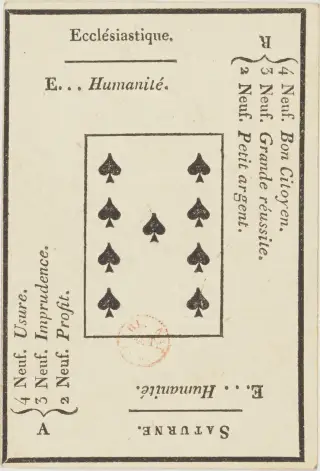
Before Etteilla rebuilt the tarot he taught Paris to read the piquet deck, and the Petit Etteilla is that method turned into a product. Thirty-two ordinary playing cards, seven through ace in the four French suits, each set in a printed frame of instructions: the card's name above, its number and upright meaning, the reversed meaning below, and cross-references to the partner cards that change its sense. A thirty-third card carries no picture at all, only the name ETTEILLA and directions; it stands for the reader, laid down to anchor the spread. The deck teaches its own system, no book required, which is why it stayed in print from the 1770s into the twentieth century.
The system is recognizably the one his Livre de Thot tarot would scale up: numbered cards, upright and reversed readings, a significator, meanings fixed by print instead of tradition. This edition, a wood-engraved Paris printing of about 1860, adds three unnumbered extras, Venus, Mars and the Ecclesiastic, sweetening the pack with a lover, a soldier and a priest.
Blond and brun court cards, the city and the country house, the letter, the money: the vocabulary the Petit Oracle des Dames and the sibylles ran with for a century is already complete here, in the cheapest possible package.

- The Livre de Thot Etteillathe same man’s larger system
- The Grand Etteillathe tarot his method grew into
- The Petit Oracle des Dameswhat the printed-meaning format became
- How to self publish a tarot deckprinting the meanings on the cards
- How to price your tarot deckthe cheapest possible package