The Grand Etteilla
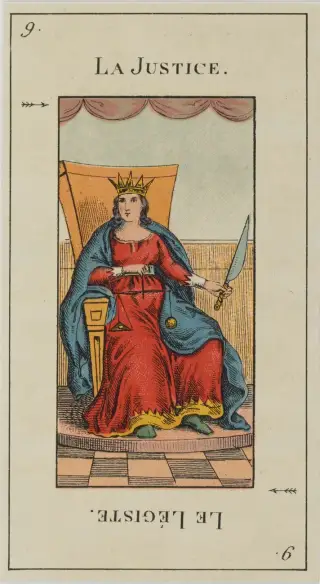
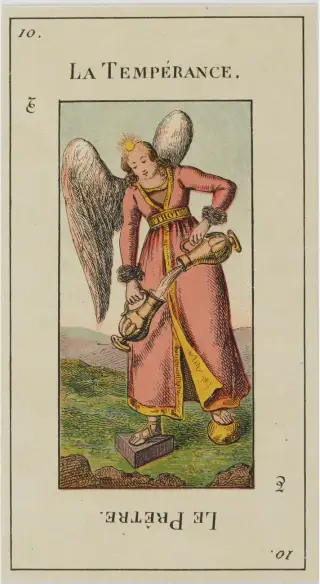
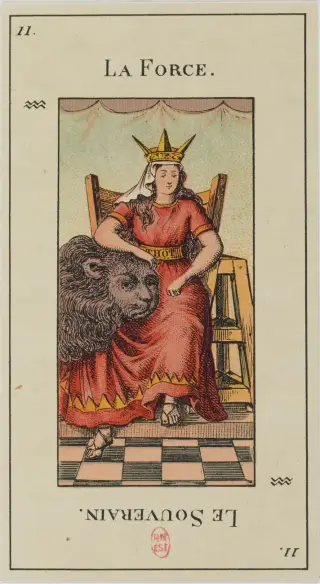
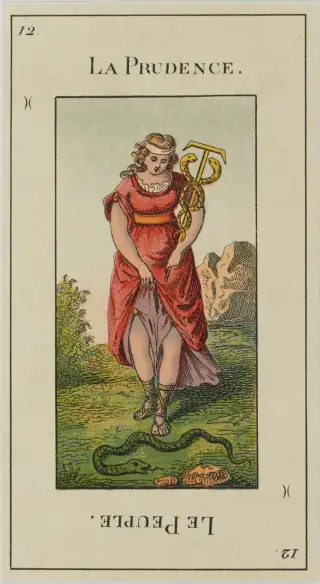
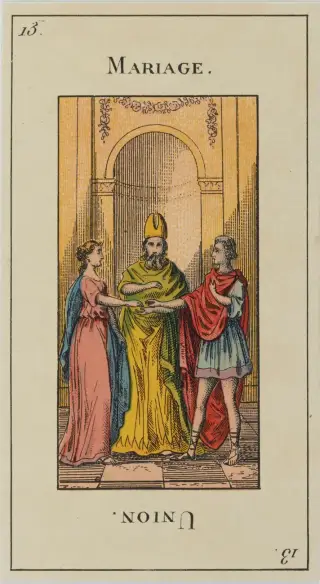
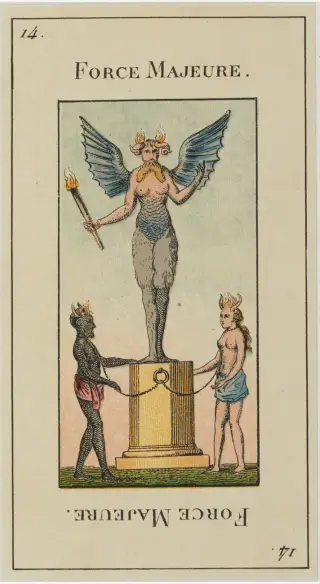
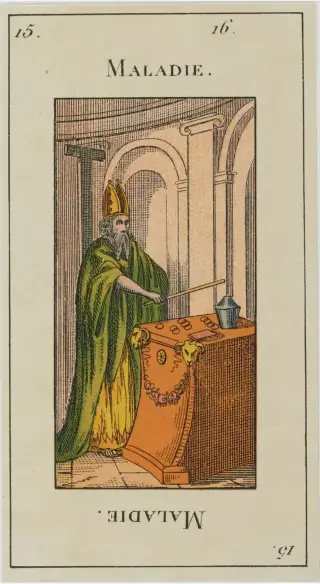
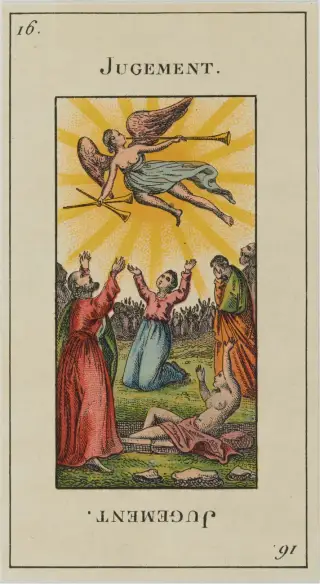
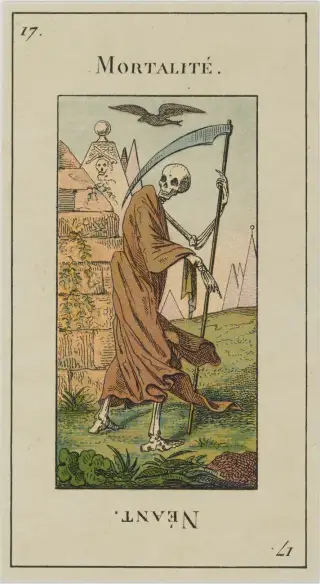
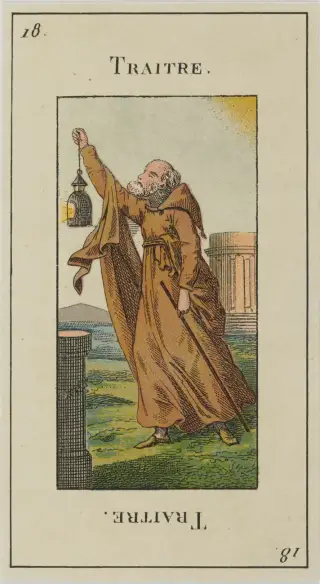
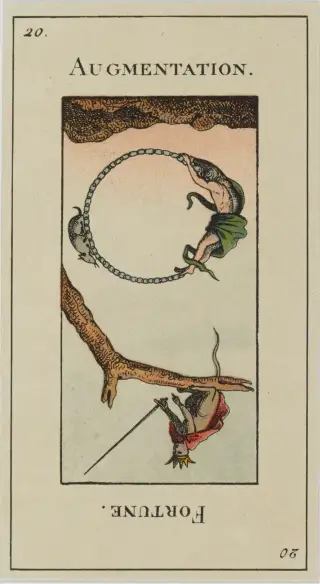
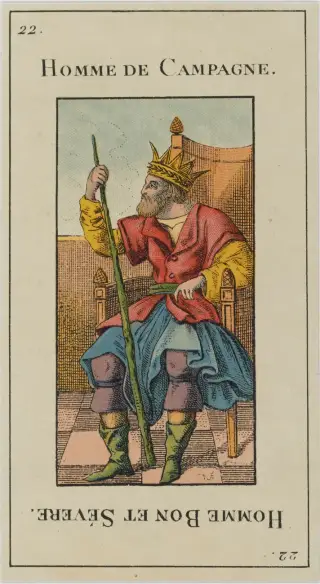
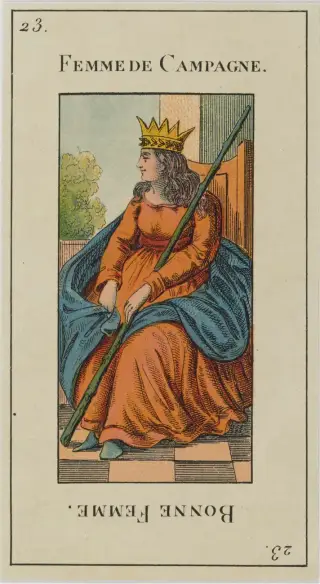
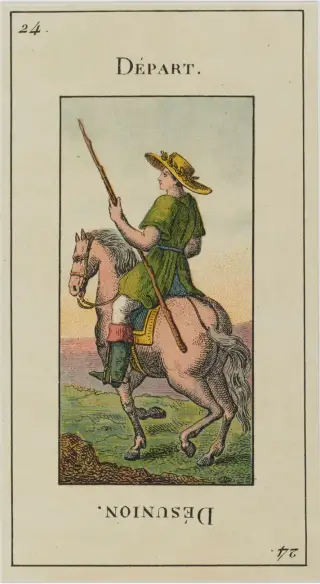
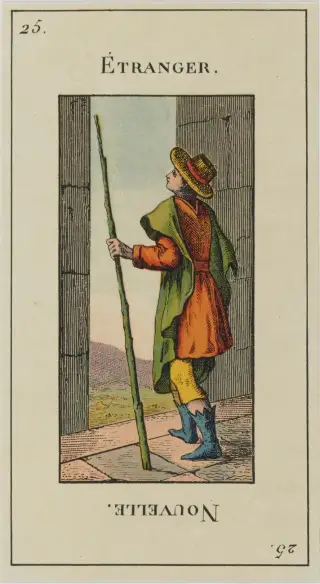
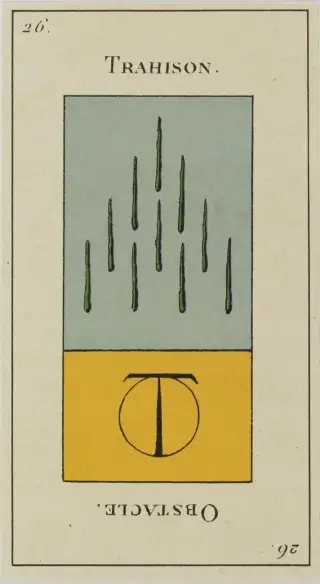
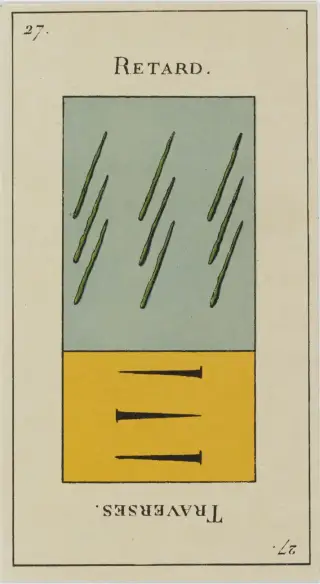
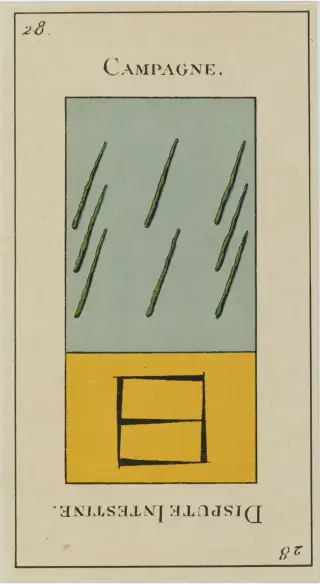
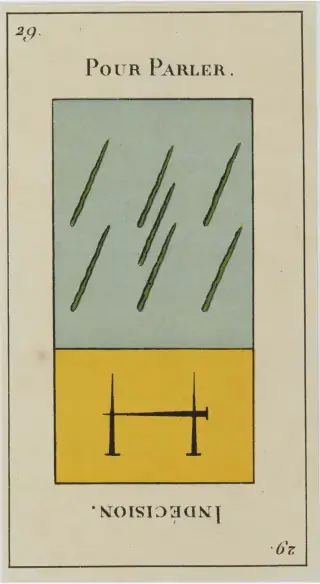
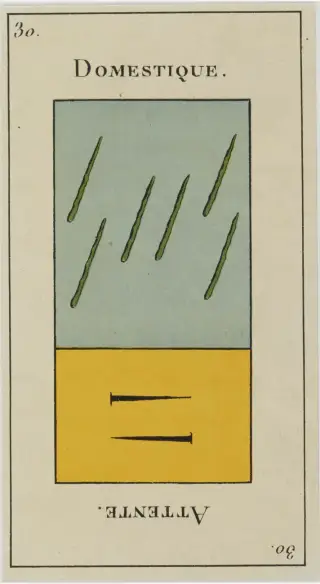
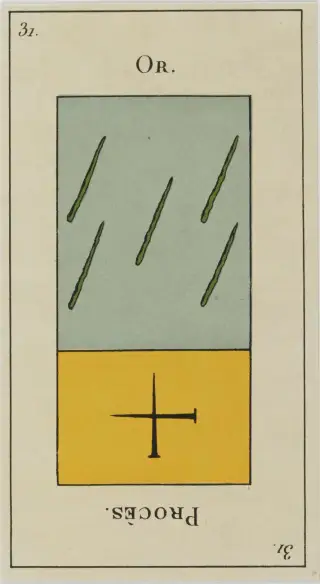
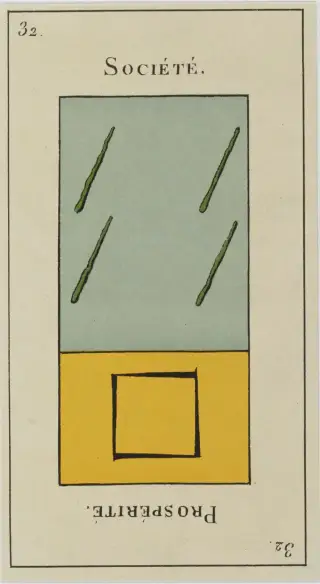
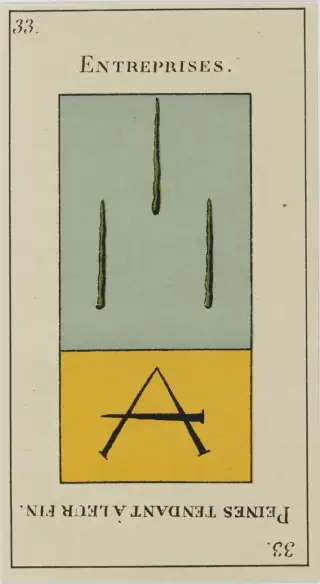
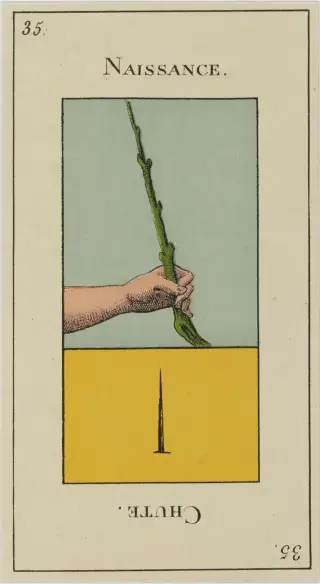
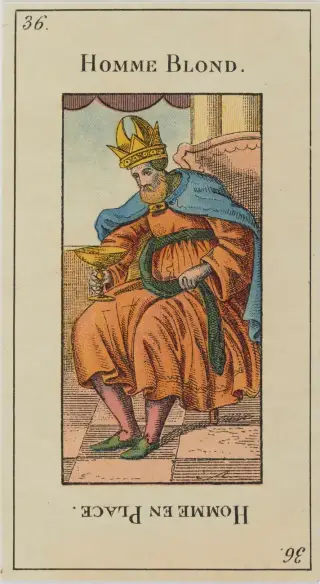
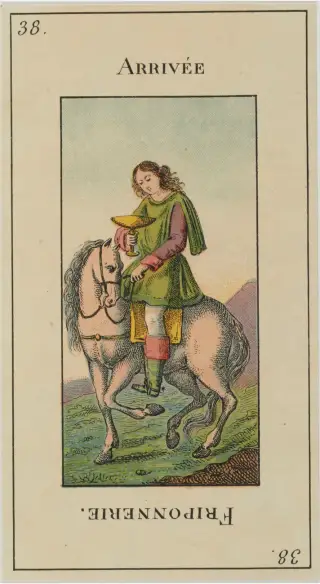
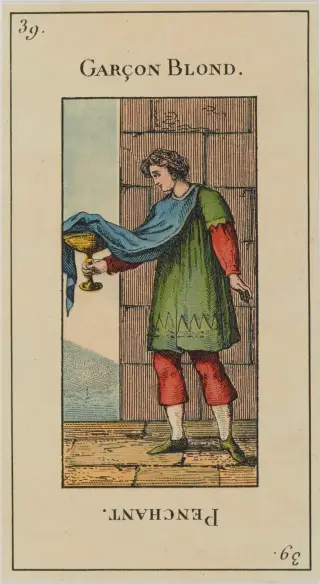
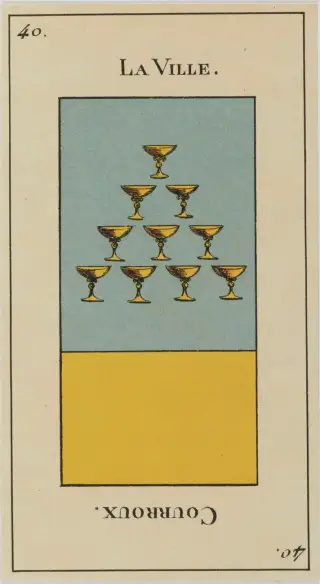
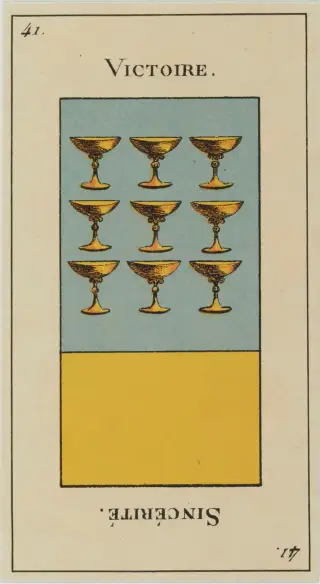
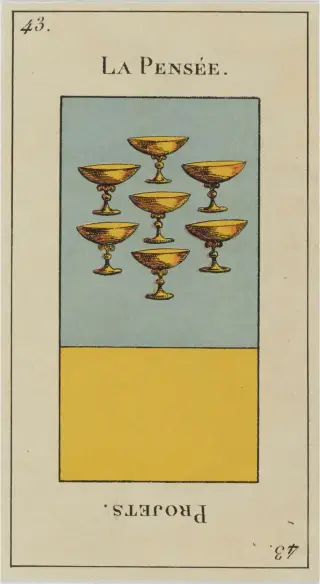
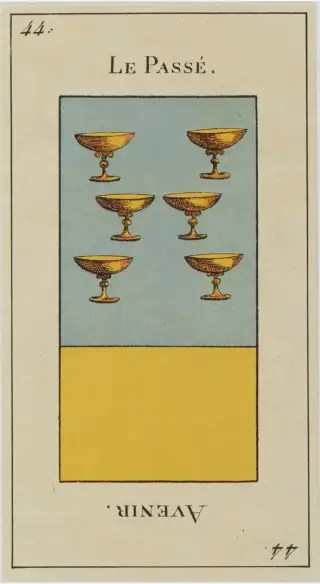
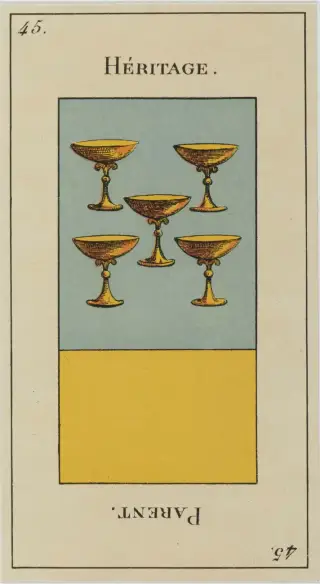
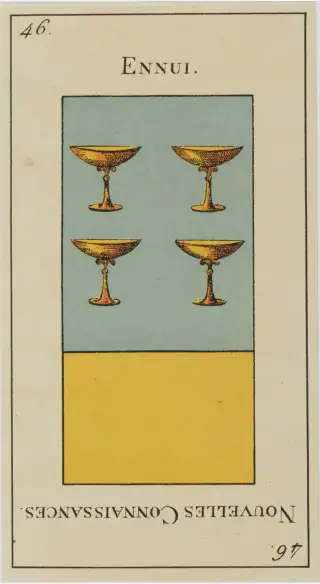
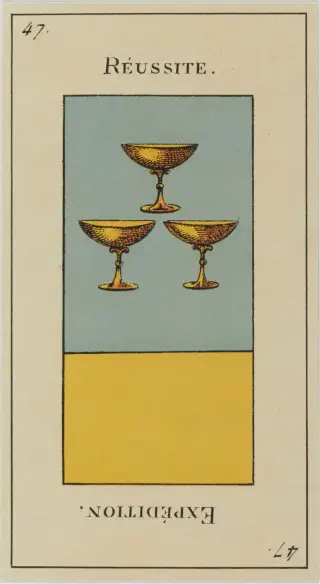
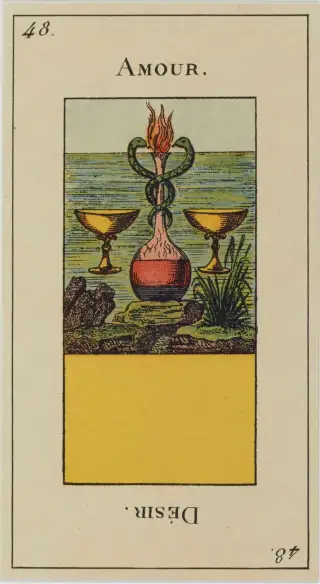
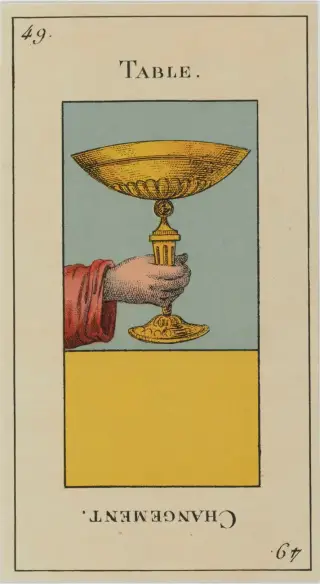
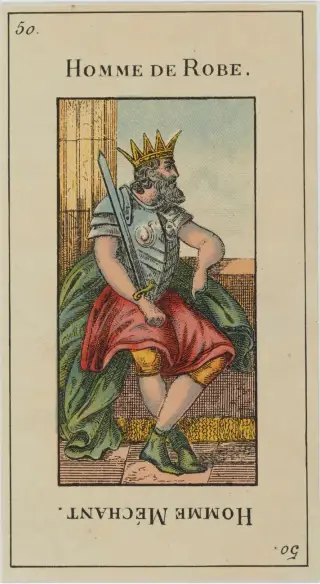
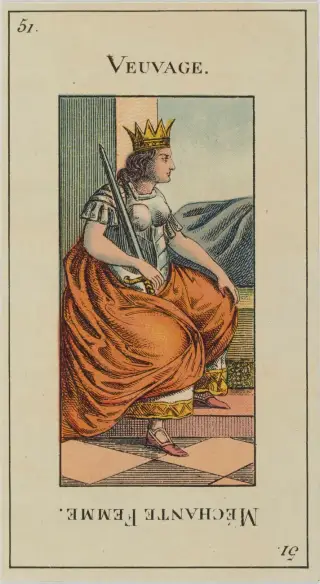
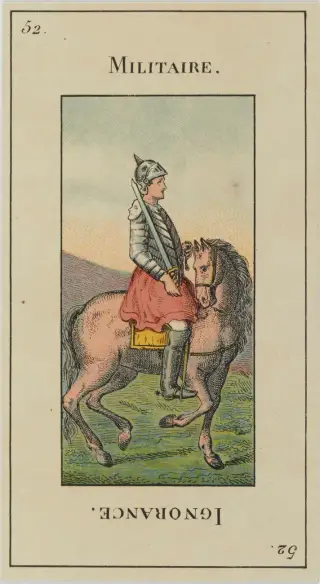
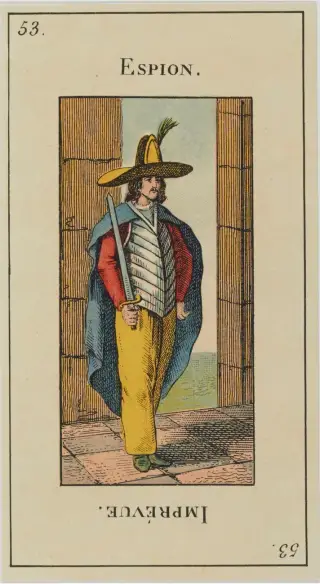
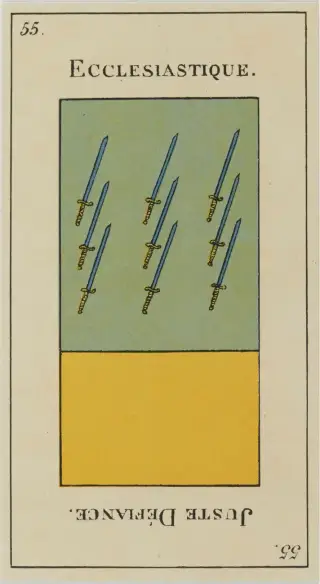
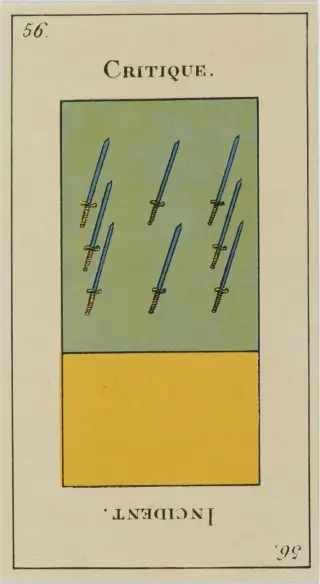
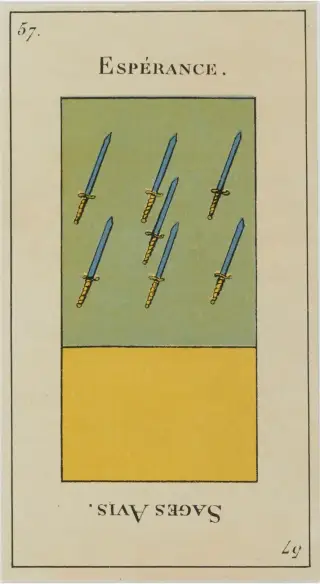
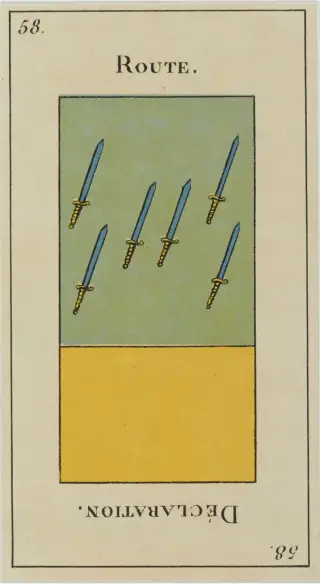
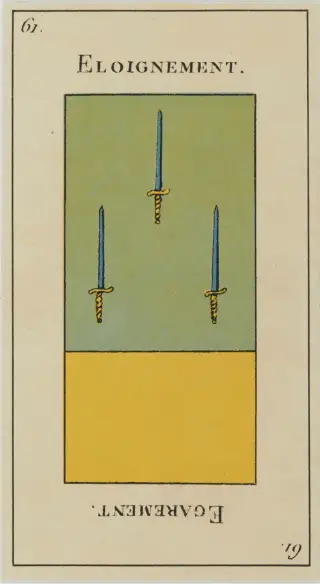
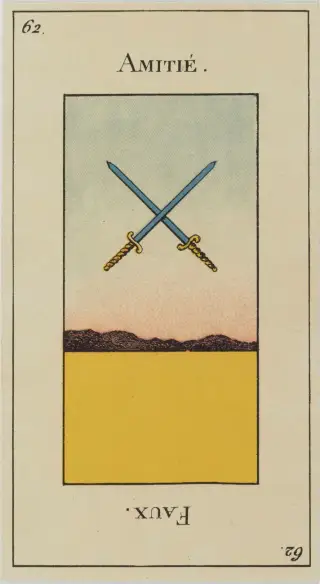
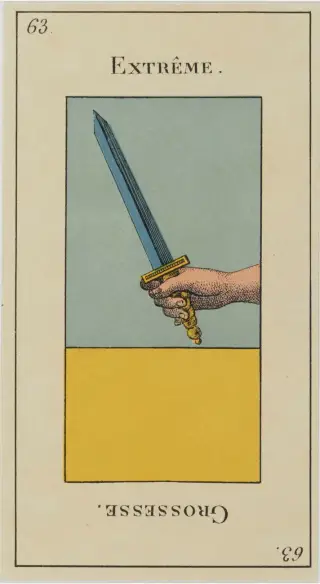
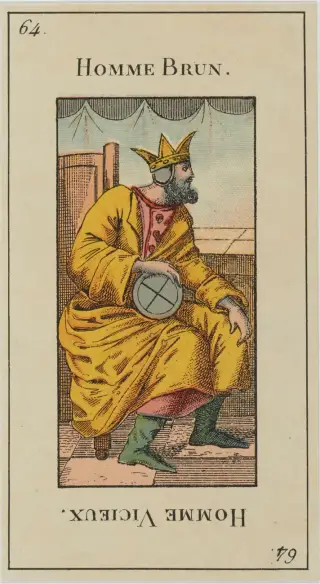
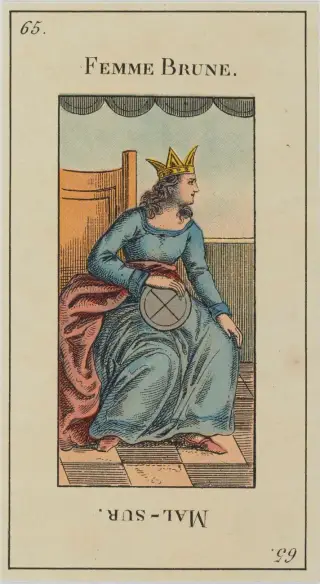
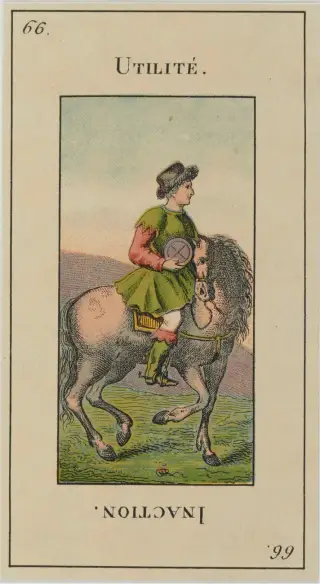
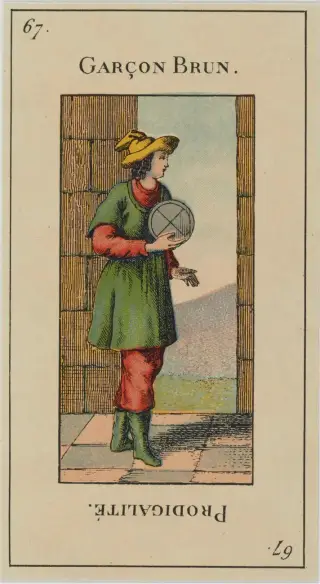
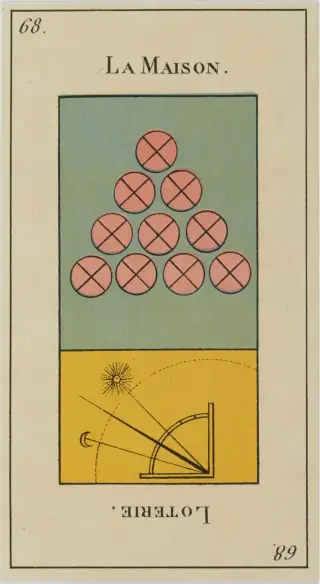
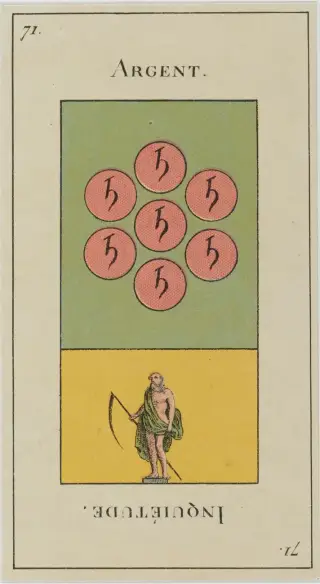
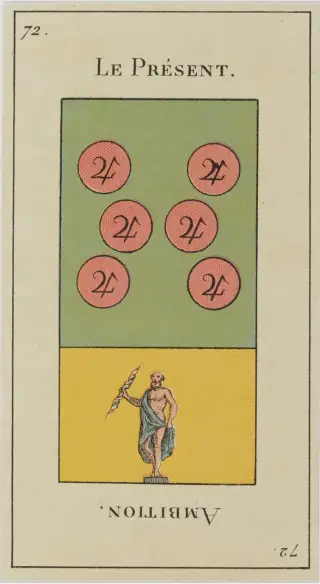
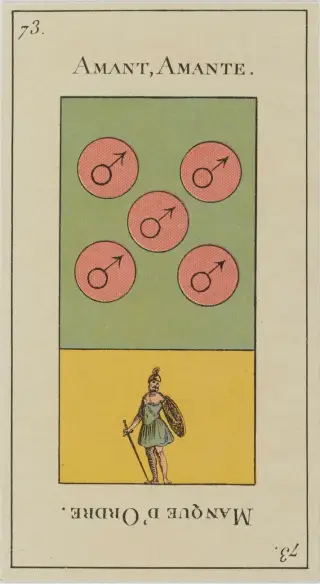
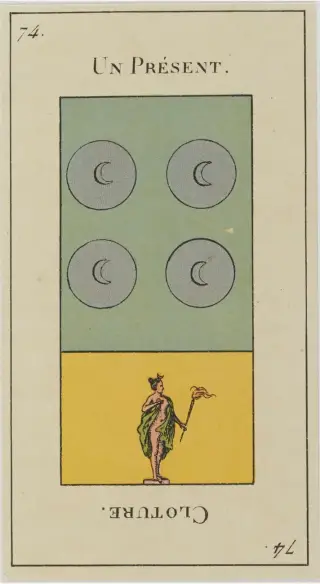
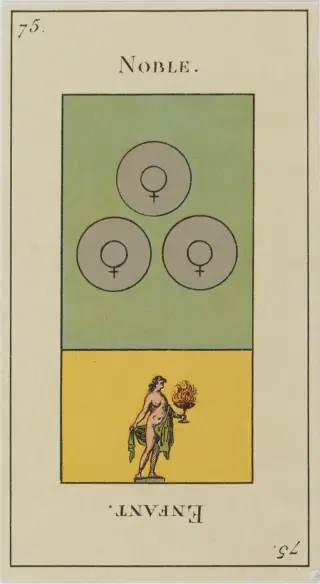
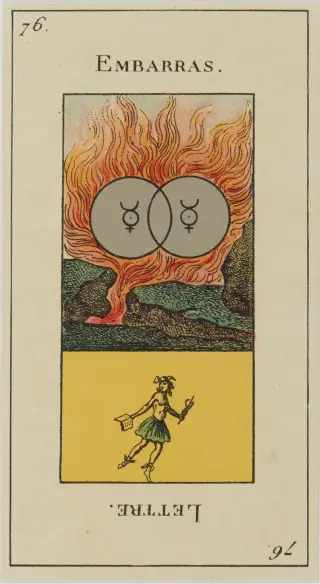
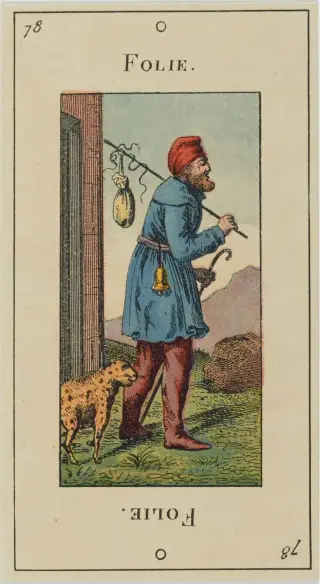
Etteilla's fortune-telling tarot as the shops sold it for a century: his 1788 system in a stencil-colored Grimaud printing, a meaning stamped on each end of every card.
Designed by Etteilla (Jean-Baptiste Alliette); this printing by B. P. Grimaud, Paris · Paris; this copy from the Paul Marteau collection, Bibliothèque nationale de France · printed c. 1875-1899, to Etteilla's design of 1788
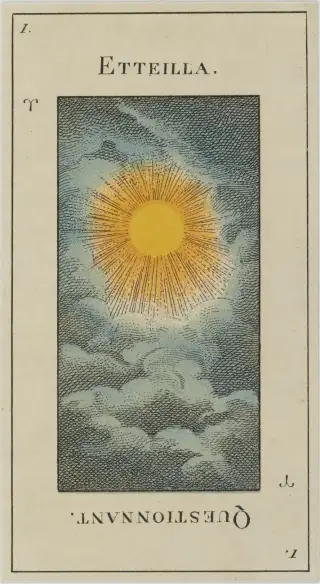
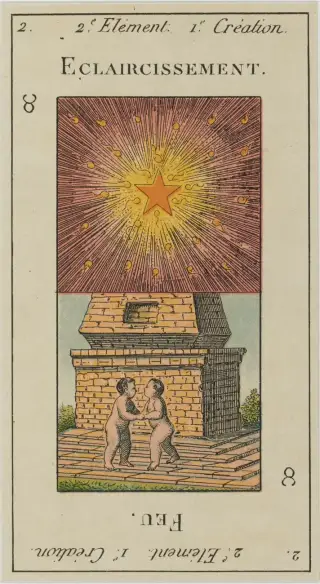
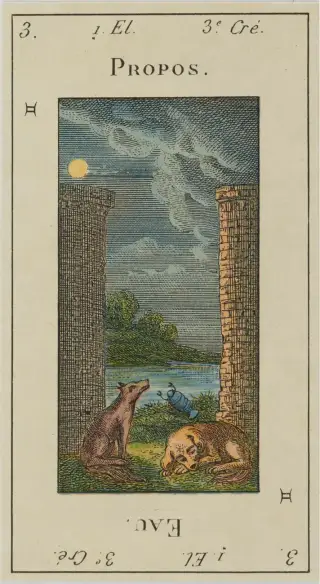
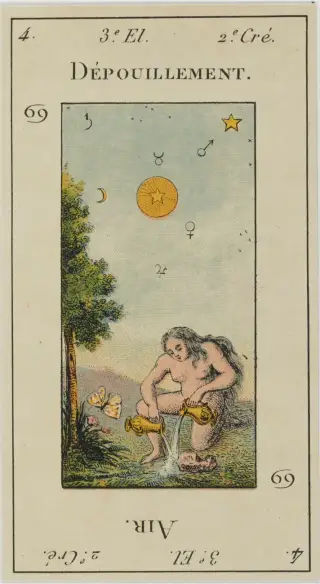
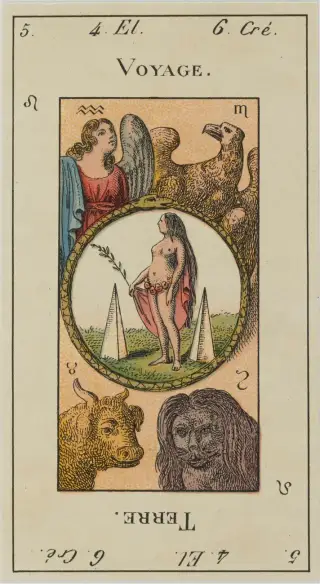
Jean-Baptiste Alliette, a Paris print seller who wrote under his surname reversed, was teaching card reading for money by the 1770s, well before anyone attached mystery to the tarot. When Antoine Court de Gébelin announced in 1781 that the tarot was really the Book of Thoth, a surviving scripture of ancient Egypt, Etteilla adopted the idea wholesale, claimed he had known it for decades, and set about correcting the deck to match. In 1788 he raised subscriptions for the result, and the first edition, the Livre de Thot, reached its buyers the next year: the first tarot ever designed for divination rather than play. The deck on this page is that system as the following century actually knew it, a shop printing that kept his plates in circulation long after the original edition became a rarity.
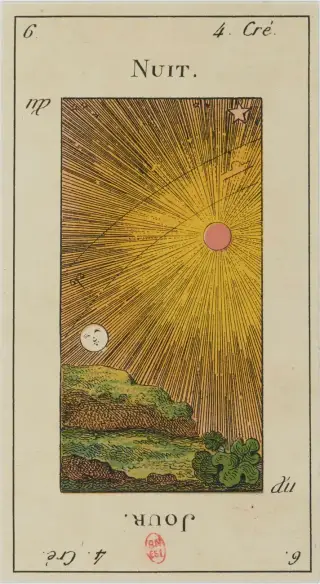
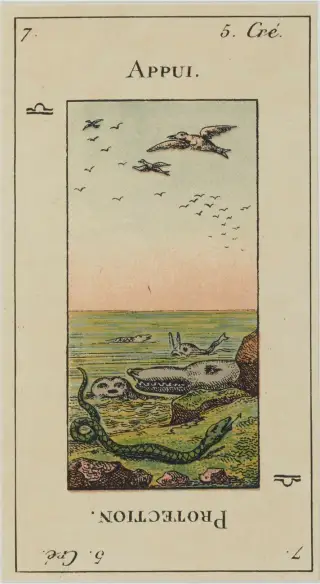
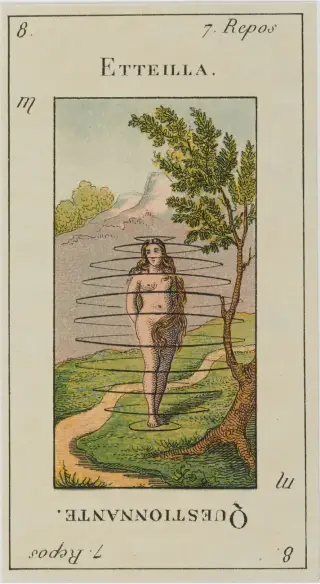
His corrections were not shy. The trumps' old order went entirely. Cards 1 through 8 became days of creation and the two querent cards, one for a man, one for a woman; the four virtues got their own block, with Prudence invented to replace the Hanged Man, which Etteilla judged a card-maker's mistake. Every card carries a number, astrological notes, and a keyword at each end, one for upright, one for reversed, so the deck teaches itself. The suits run from king down to ace inside his single sequence of 78, and the Fool comes last. He died in 1791, two years into the system; his students kept it alive, and French makers kept the deck in print for a century under the name Grand Etteilla, long after his books had gone unread.
Etteilla was the first person known to have made a living reading tarot, and the machinery of modern cartomancy, upright and reversed meanings, significator cards, printed keywords, is largely his. The cards here are a stencil-colored Grimaud printing from late nineteenth century Paris, faithful to the 1788 plates, scanned by the Bibliothèque nationale de France from the collection of Paul Marteau.











- The Livre de Thot Etteillathe 1789 original
- The Petit Etteillathe piquet system underneath it
- The Tarot of Papusthe occultists who inherited the idea
- How to price your tarot decka century in print
- Can you copyright a tarot deckwhose deck is it after the designer dies