The Tarot of Papus
The 78-card Egyptian tarot Papus commissioned for his 1909 book, drawn by a young painter who went on to run the restoration studio of France's national museums, with five alphabets, the zodiac, and Etteilla's keywords packed into the margins.
Jean-Gabriel Goulinat, drawing under the direction of Papus (Gérard Encausse) · Paris; published in Le Tarot divinatoire, Librairie Hermétique, 1909 · 1909
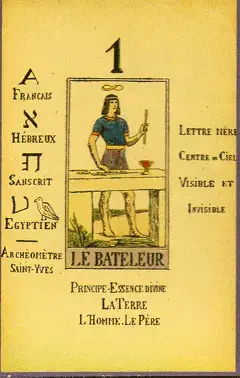
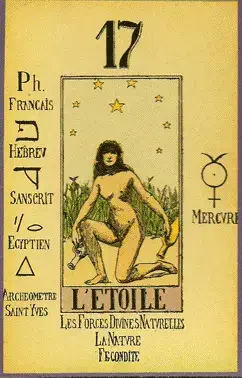
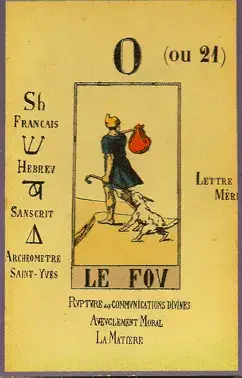
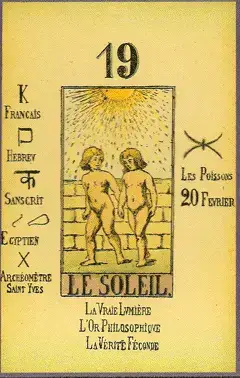
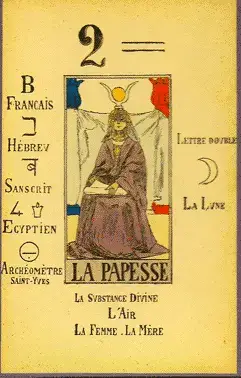
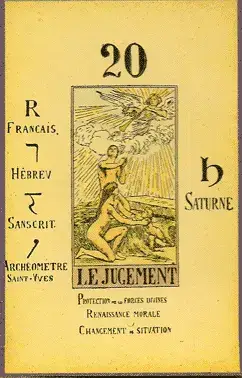
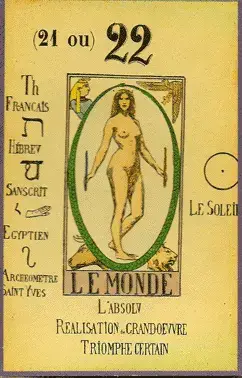
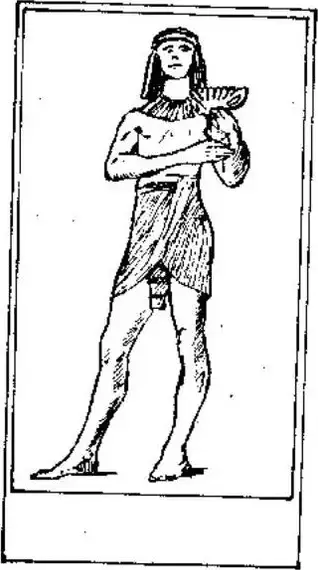
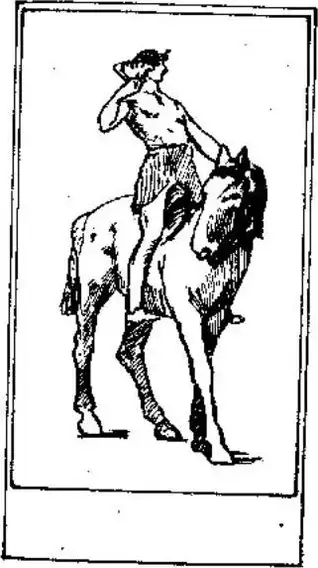
By 1909 Gérard Encausse, the Paris physician who wrote as Papus, had spent twenty years arguing that the tarot was the oldest book in the world. His Tarot des Bohémiens of 1889 had analyzed the deck; Le Tarot divinatoire finally supplied one. All seventy-eight cards were drawn under his direction by Jean-Gabriel Goulinat, an academy-trained painter of twenty-six who later ran the paintings restoration workshop of France's national museums. The plates were printed inside the book itself, and the publisher promised a volume containing the seventy-eight cards ready to detach, cut out, and mount.
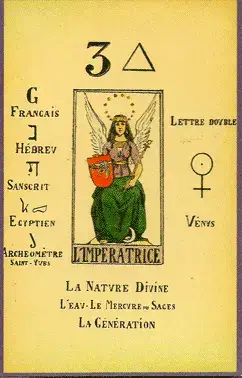
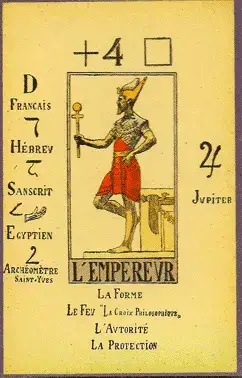
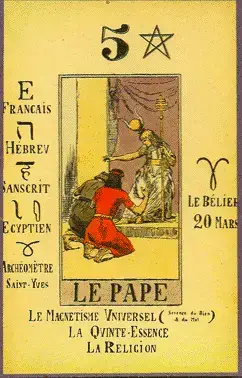
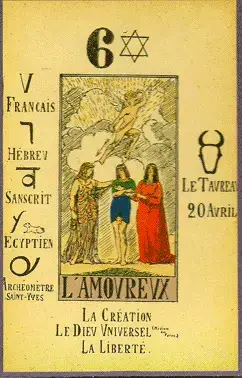
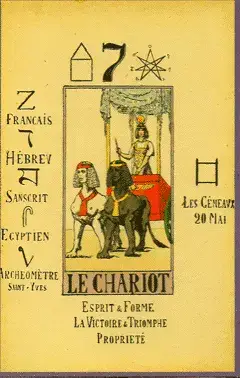
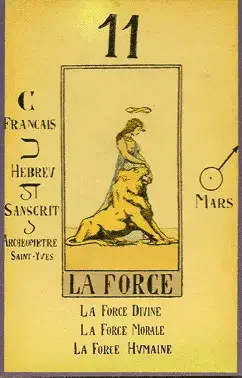
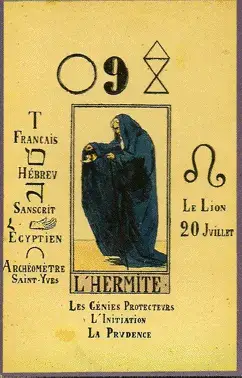
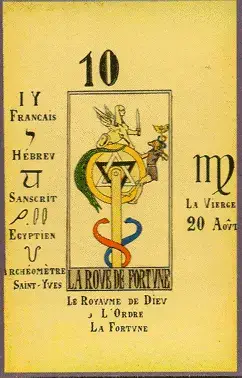
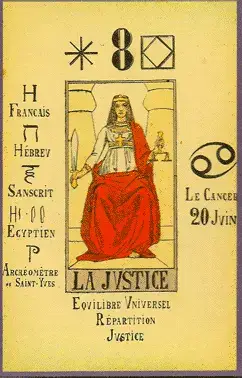
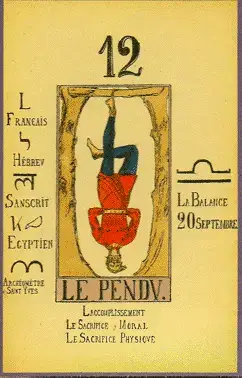
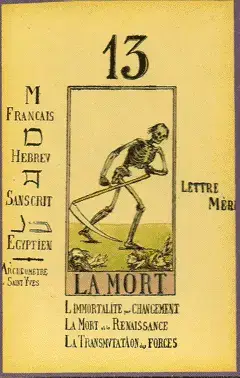
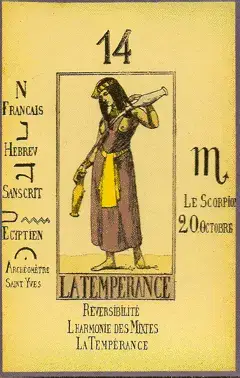
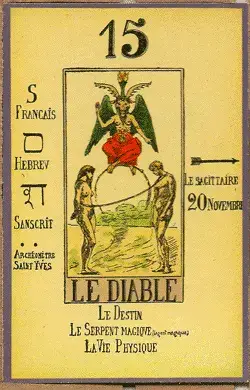
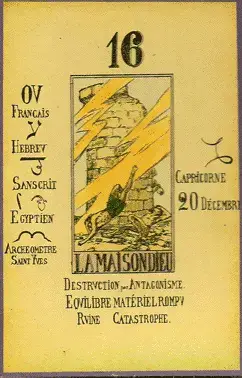
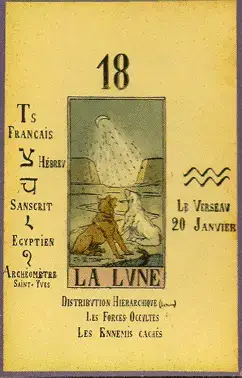
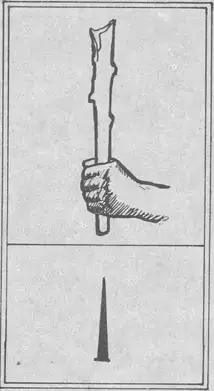
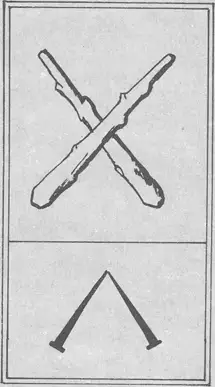
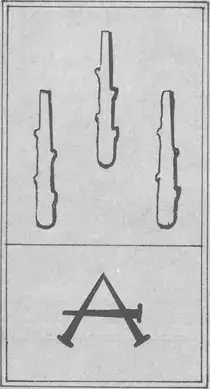
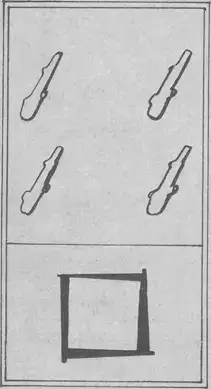
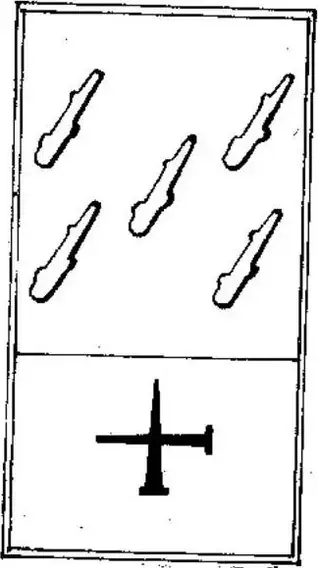
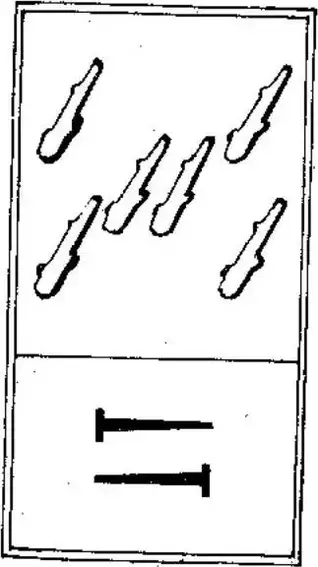
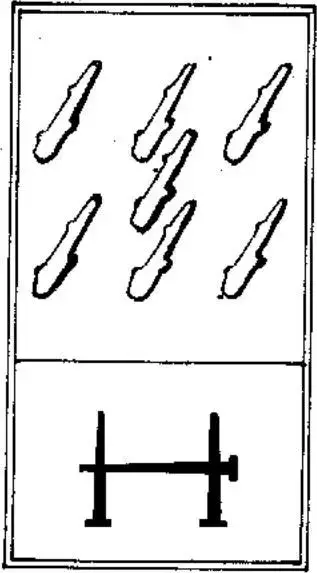
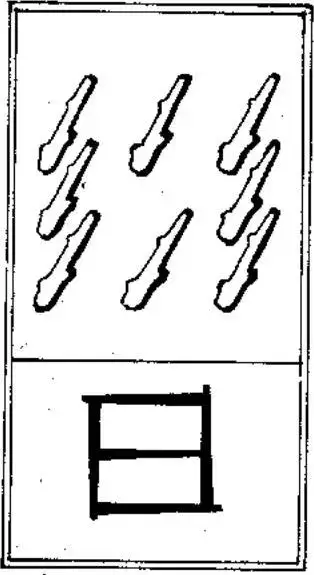
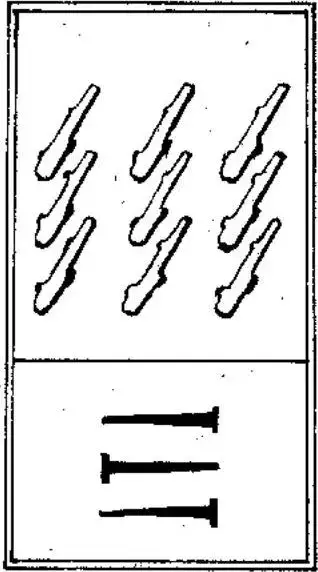
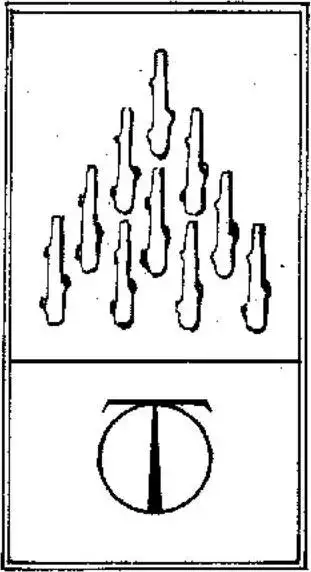
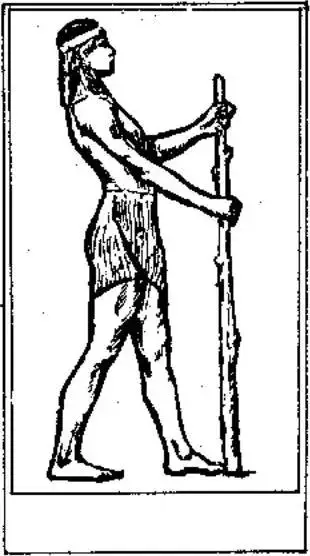
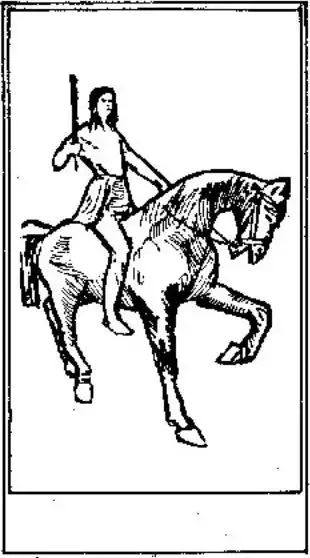
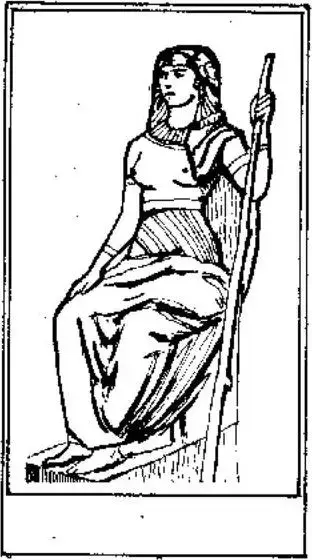
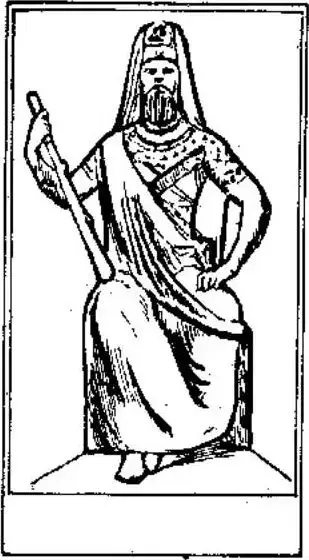
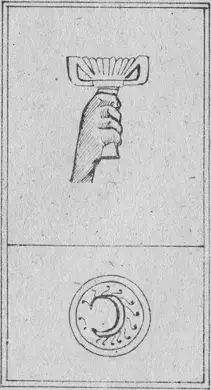
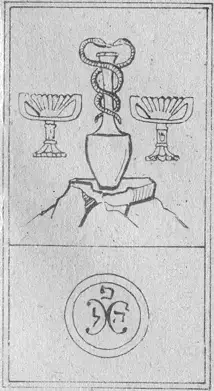
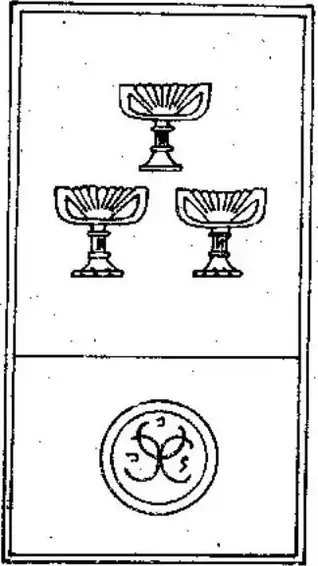
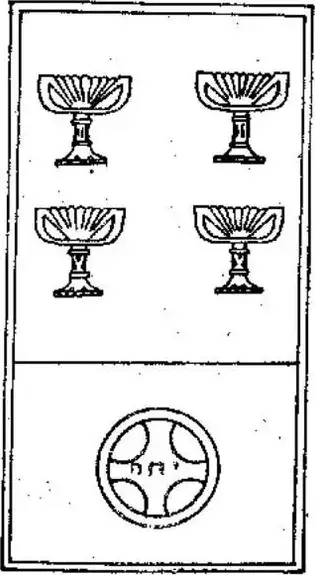
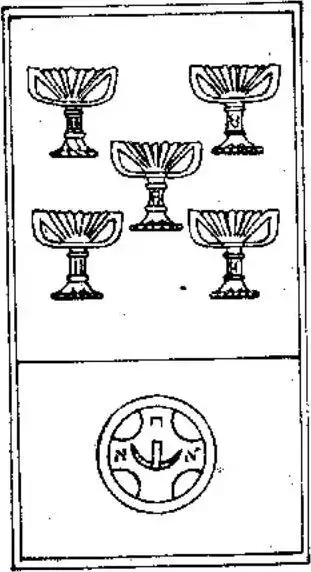
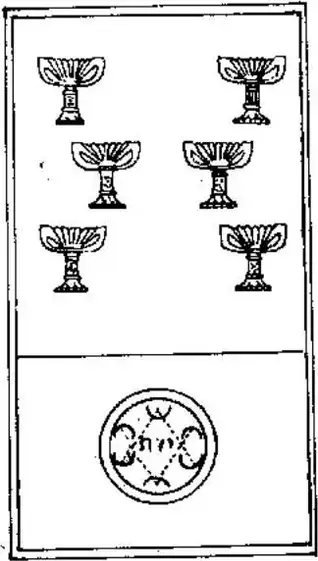
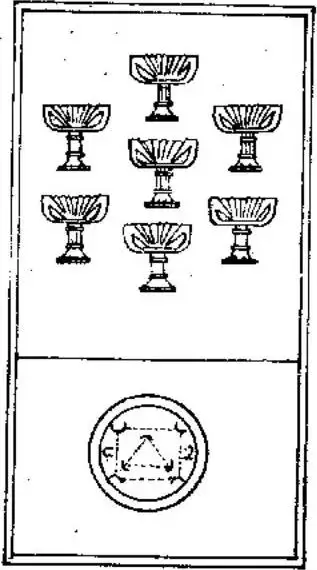
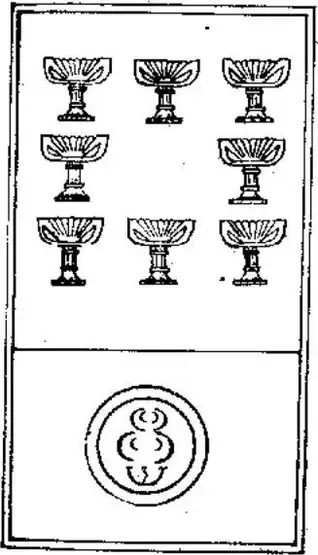
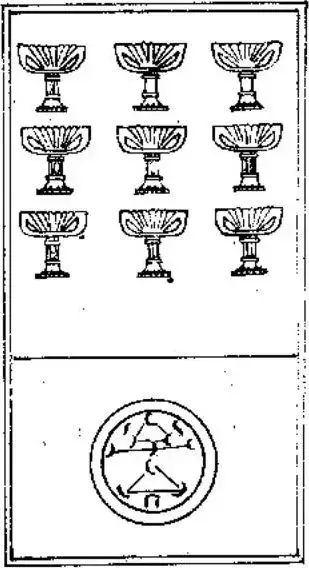
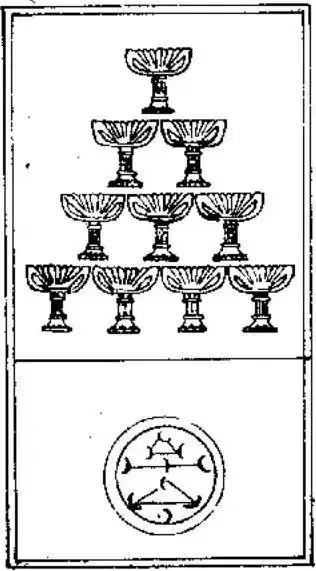
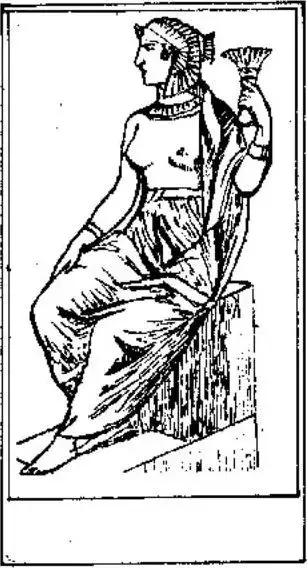
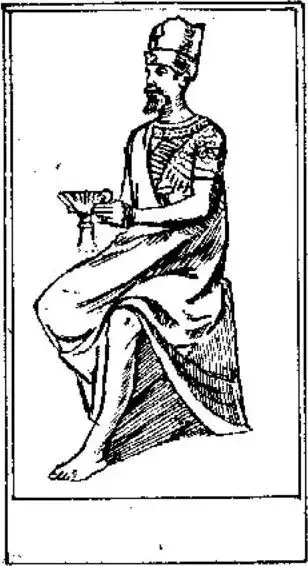
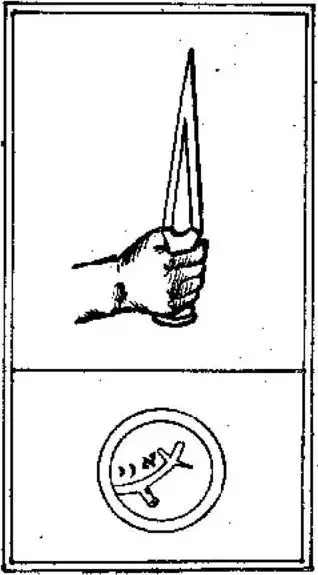
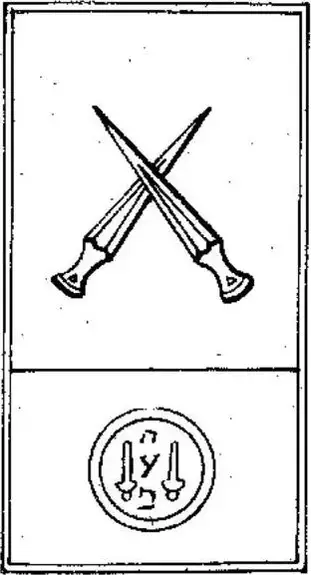
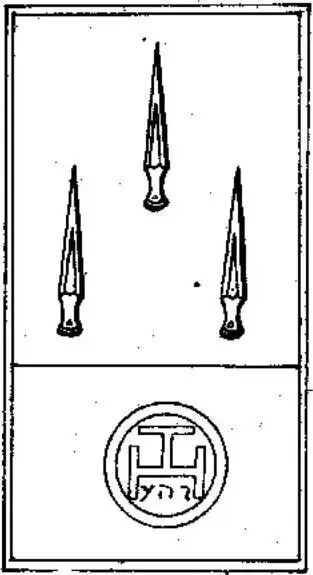
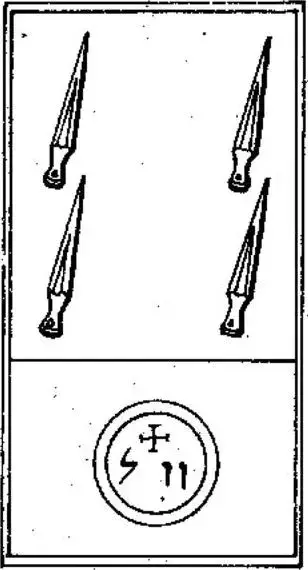
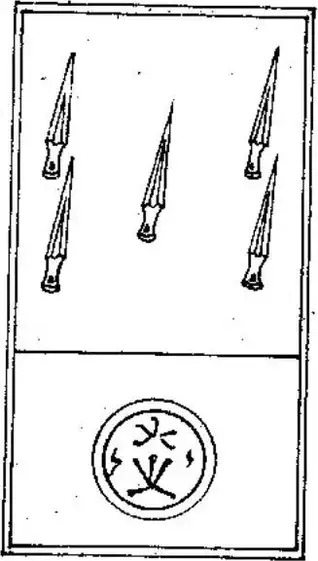
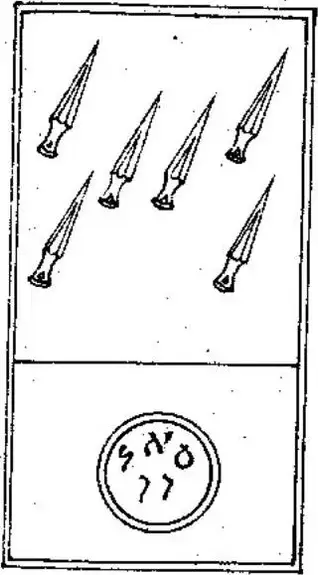
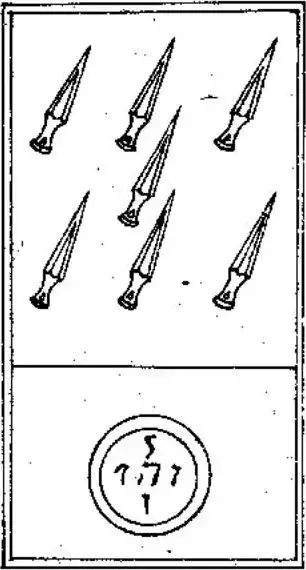
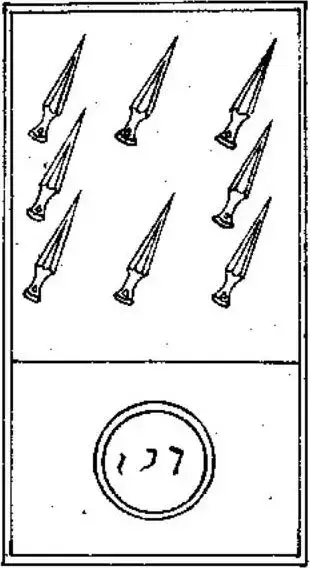
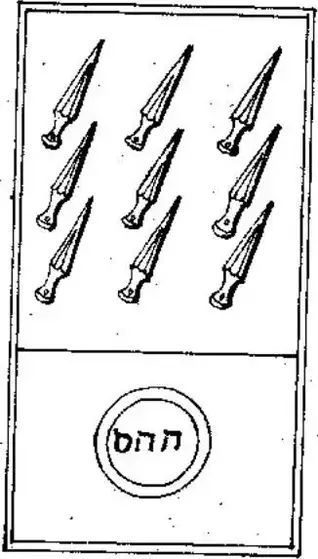
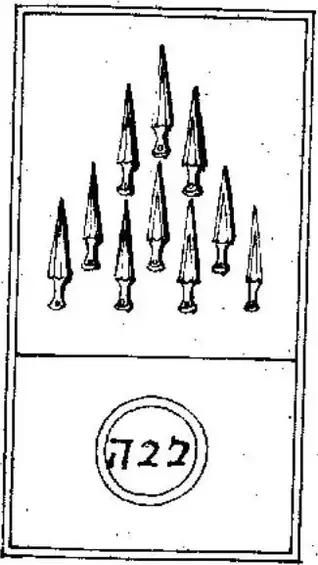
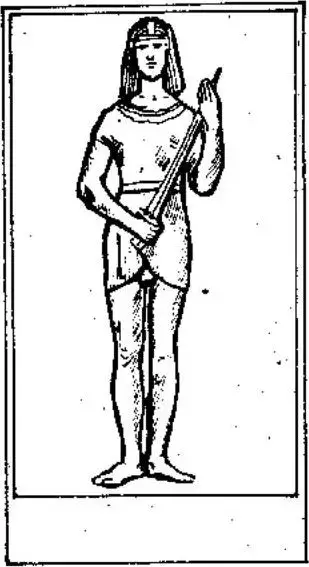
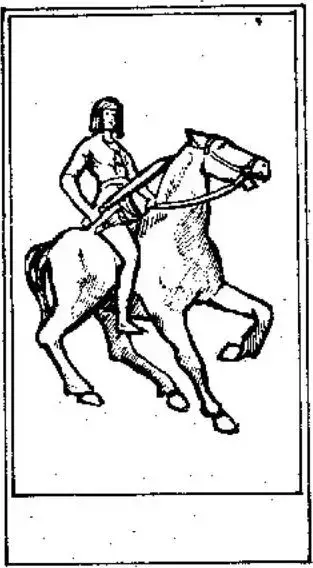
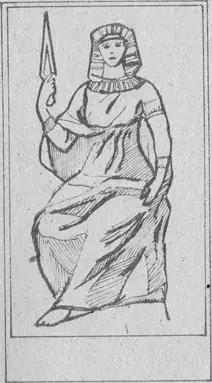
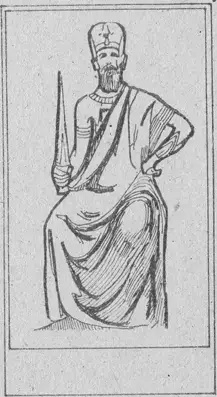
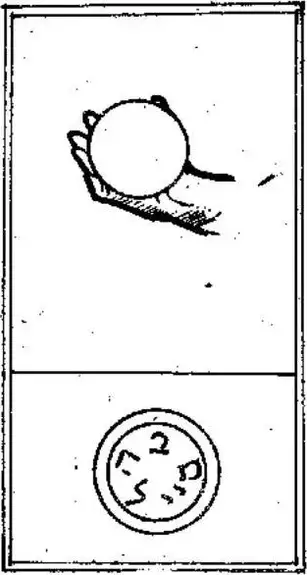
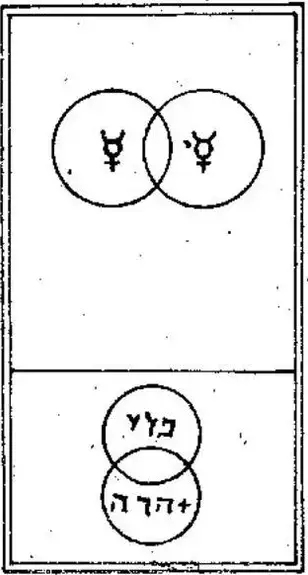
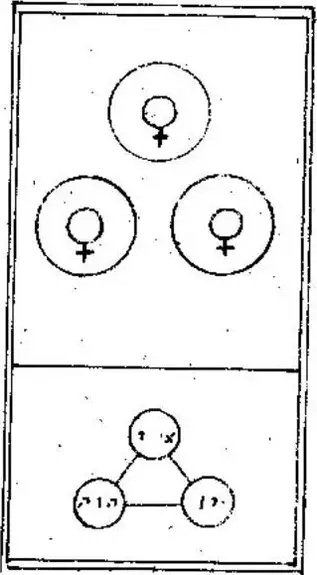
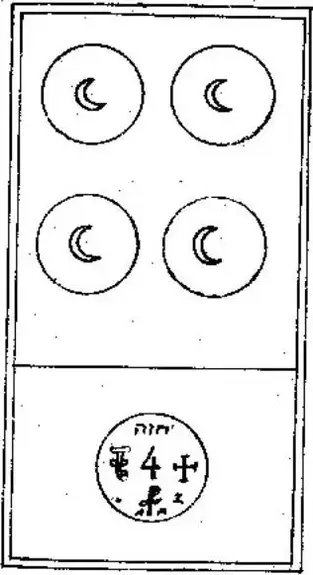
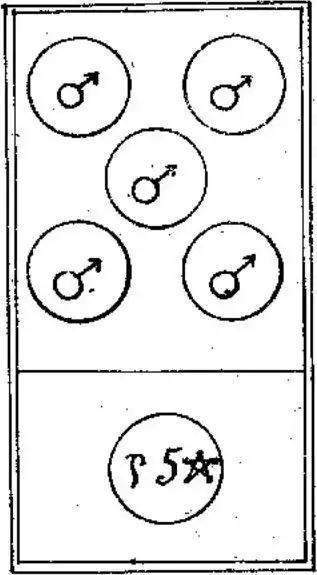
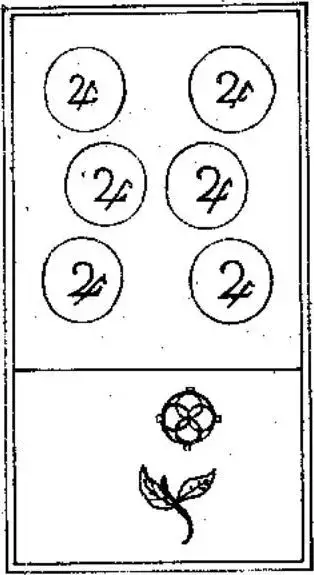
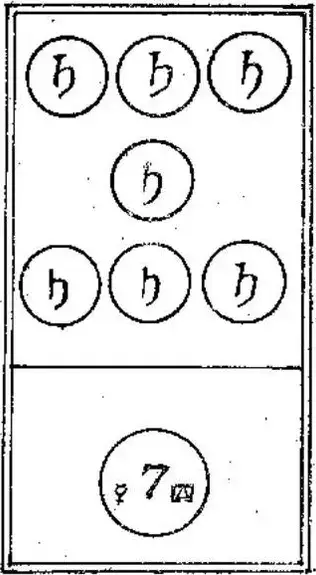
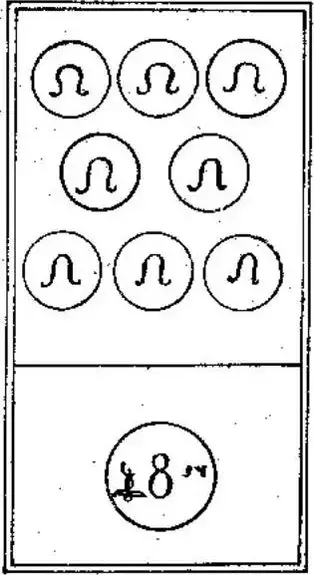
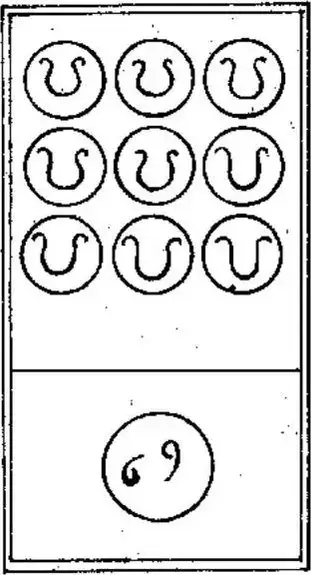
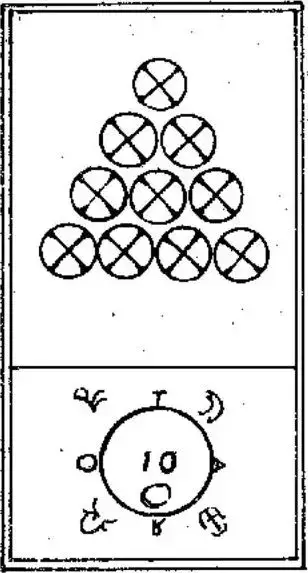
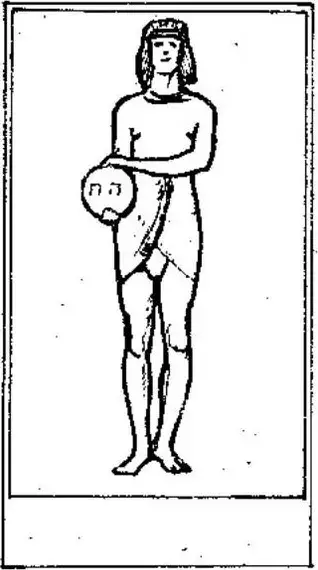
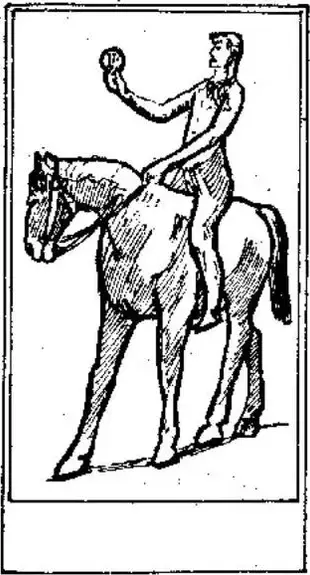
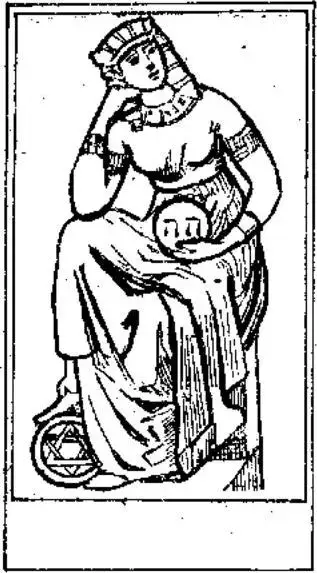
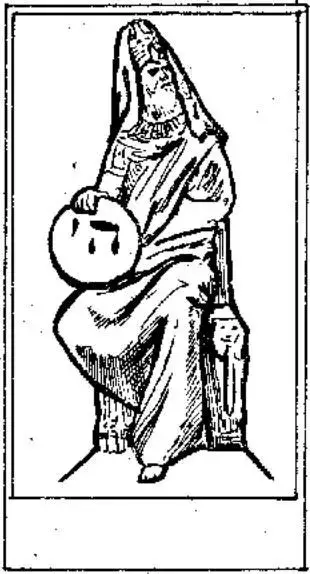
Every card is a small table of correspondences. Down one margin of each trump run five scripts: French, Hebrew, Sanskrit, Egyptian, and the Archéomètre alphabet of Saint-Yves d'Alveydre. Twelve trumps carry zodiac signs complete with calendar dates, seven carry planets, three carry the Hebrew mother letters, and the lower margin spells divinatory meanings descended from Etteilla's school. The figures wear Egyptian dress because Papus, following Court de Gébelin and Eliphas Lévi, believed the tarot preserved the Book of Thoth. Even the old quarrel over where the Fool belongs is typeset onto the cards: the Fool is numbered 0 (ou 21) and the World (21 ou) 22. The minors are quieter, rough batons, lotus-lipped cups, bronze daggers, and planet-stamped coins, each with a sealed emblem in its lower compartment.
The trumps here are scans of a colored copy of the 1909 plates. No complete French scan of the minors seems to have surfaced online, so the fifty-six small cards come from the Russian edition of the book, published in 1912 in a translation edited by A. V. Troyanovsky, which reproduced Goulinat's drawings in black and white; a few of those survive only as rougher gray scans. Goulinat spent his later career restoring other people's paintings. This deck is the strangest thing he ever drew.
- The Falconnier Egyptian Tarotwhose plates it reused
- The Oswald Wirth Tarotthe same Paris circle
- The Livre de Thot Etteillathe system all of it rests on
- How to self publish a tarot deckcommissioning art for your own book
- Should you disclose how your deck was madecrediting the hand that drew it