The Falconnier Egyptian Tarot
The tarot rebuilt as ancient Egypt in 1896: an actor and an illustrator turned Paul Christian's imagined temple arcana into printed plates, and every Egyptian deck since has copied them.
René Falconnier, of the Comédie-Française; plates drawn by Maurice Otto Wegener · Paris; published as Les XXII Lames Hermétiques du Tarot Divinatoire · 1896
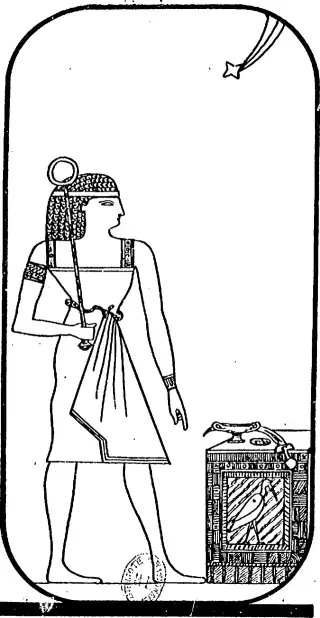
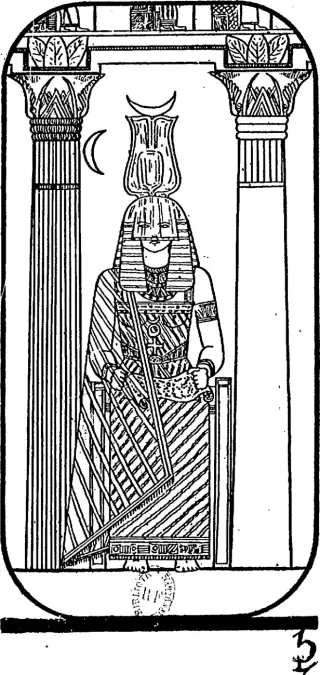
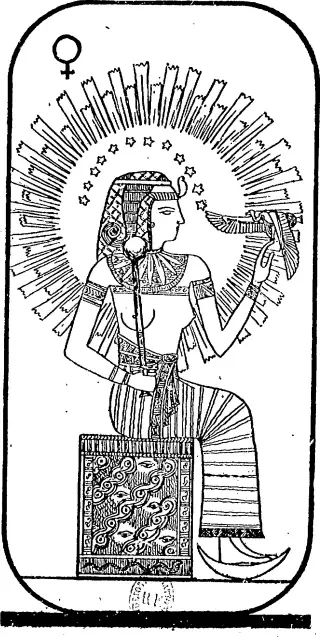
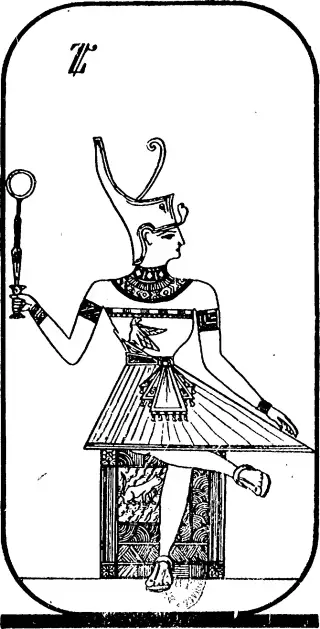
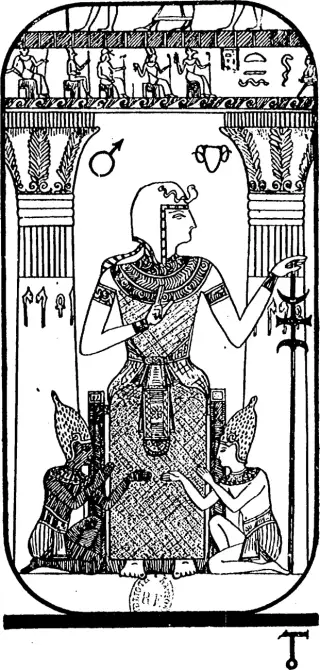
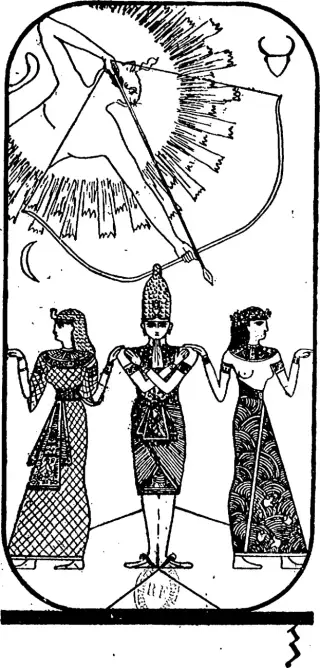
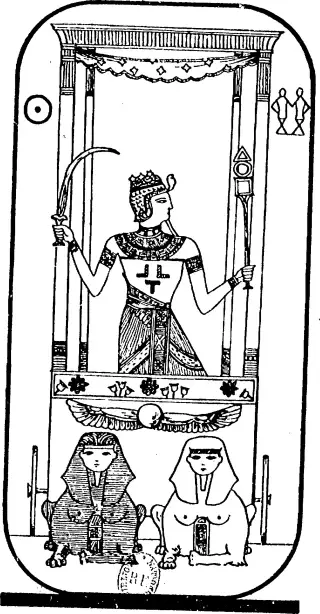
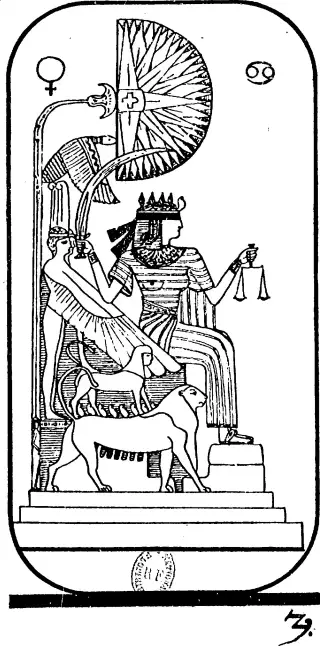
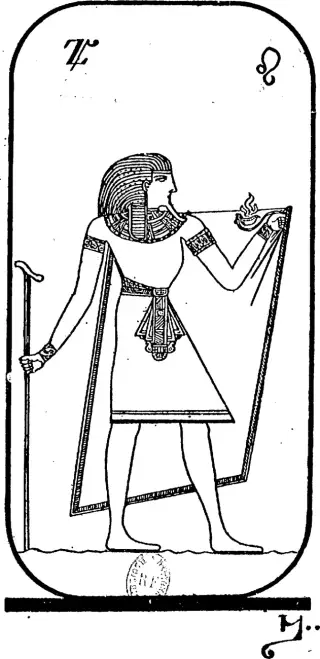
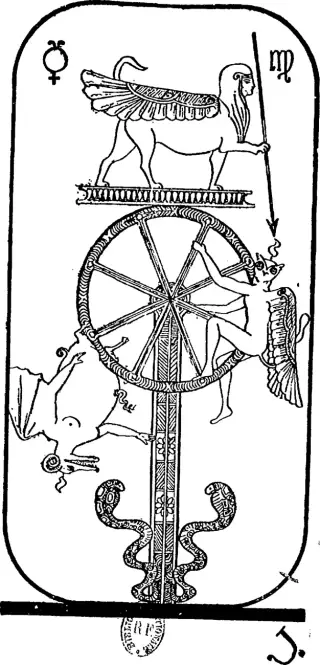
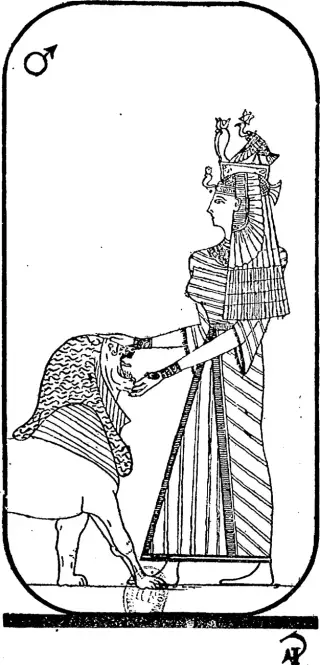
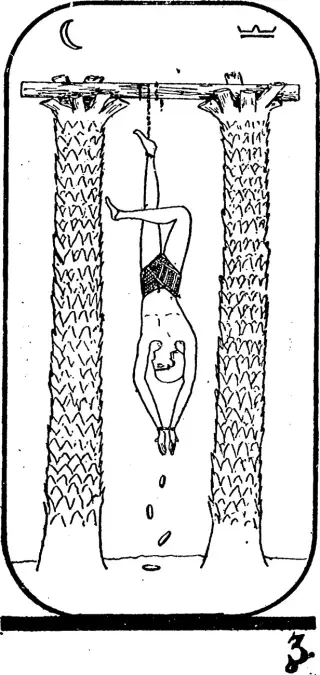
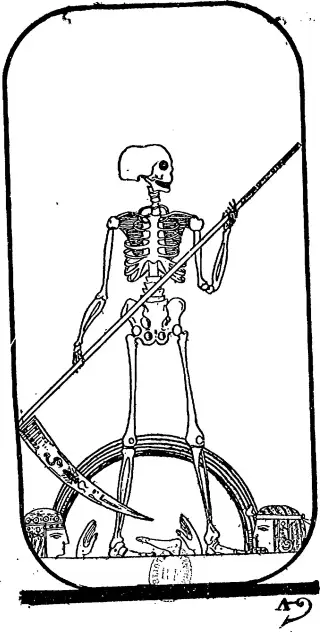
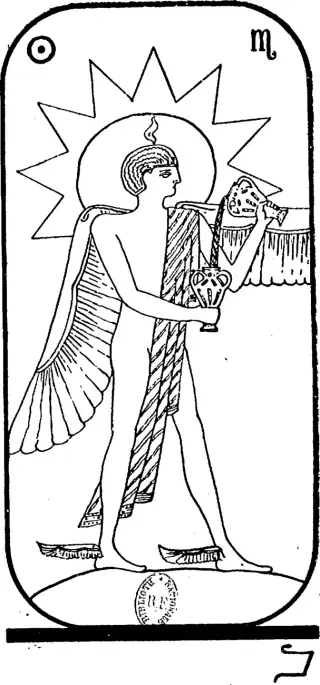
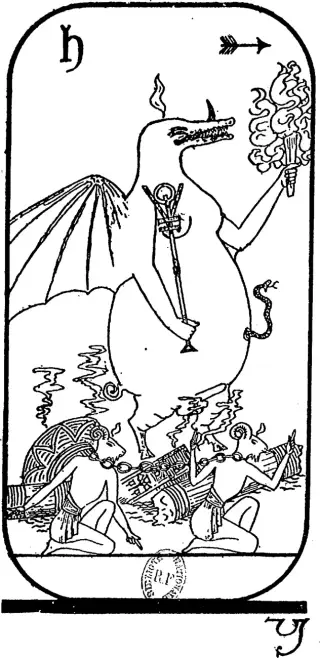
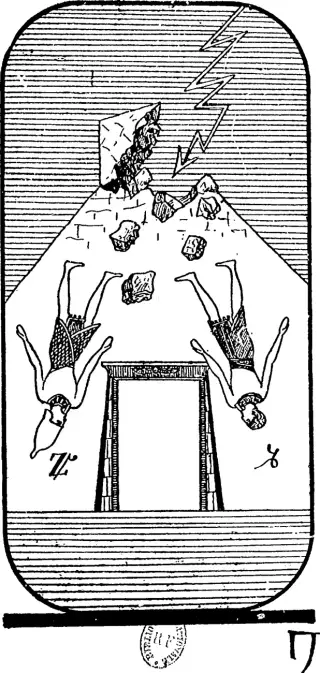
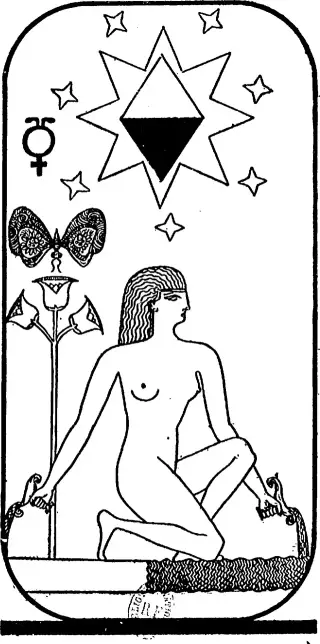
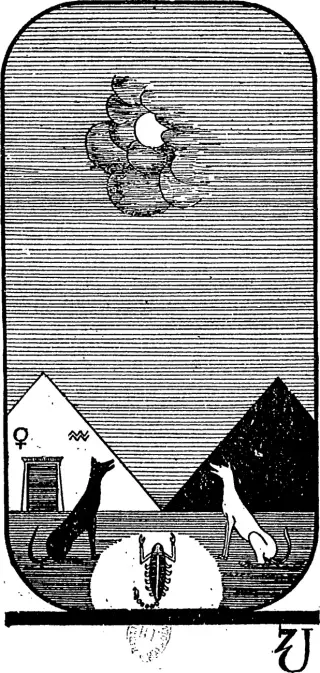
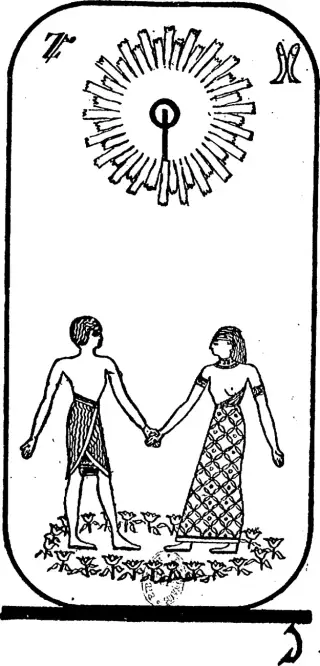
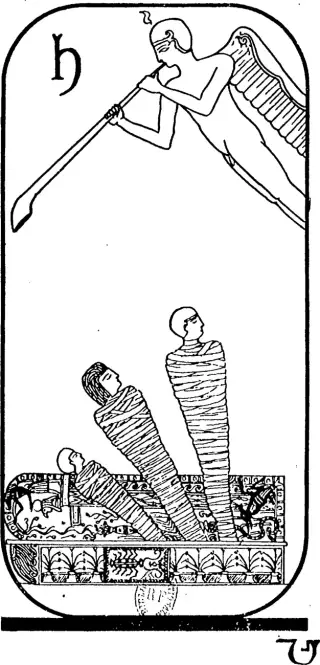
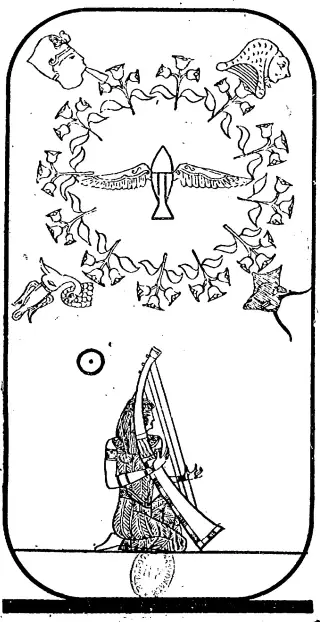
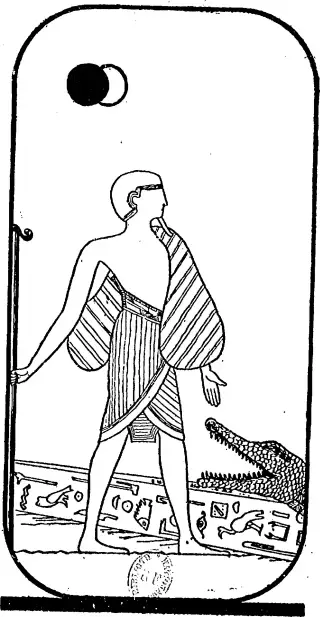
In 1870 the occult historian Paul Christian described, as if he had seen it, a gallery of twenty-two symbolic paintings hidden beneath the pyramids, through which initiates of the Egyptian mysteries were led. The paintings never existed. In 1896 Rene Falconnier, an actor of the Comedie-Francaise with a sideline in the occult, decided they should, and hired the illustrator Maurice Otto Wegener to draw all twenty-two to Christian's text. The result, Les XXII Lames Hermetiques du Tarot Divinatoire, is the tarot with its French clothes taken off and Egyptian ones painted on: the Chariot drawn by sphinxes, the Devil turned into Typhon, the Fool walking blind toward a crocodile.
The plates were printed as a thin folio for readers to cut out and use, line art in cartouche frames with sigils in the corners and no printed titles. Justice keeps the eighth place and Strength the eleventh, the old continental order, and the Crocodile stands at zero, placed at the road's end.
What began as stage scenery for a book became the most copied design in esoteric tarot. The Egyptian decks of the twentieth century, from the American Practical Astrology plates of 1901 to the Brotherhood of Light cards and their descendants, redraw Wegener with small changes, usually without naming him. The Tarot of Papus reproduced the designs outright in its later editions.
- The Practical Astrology Tarotthe deck that finished the job with 56 minors
- The Tarot of Papuswhich reprinted these designs
- The Oswald Wirth Tarotthe other occult redraw of the trumps
- How to self publish a tarot deckplates printed for readers to cut out
- Should you disclose how your deck was madethe illustrator nobody credits