The Mantegna Tarocchi
Fifty engravings from Ferrara around 1465 that are not by Mantegna and were never a tarot: a printed ladder from the beggar to God, with the Muses, the liberal arts, the virtues and the planets in between.
Unknown Ferrarese engraver, known as the Master of the E-Series Tarocchi (not Andrea Mantegna) · Ferrara; this set now at the Cleveland Museum of Art · c. 1465
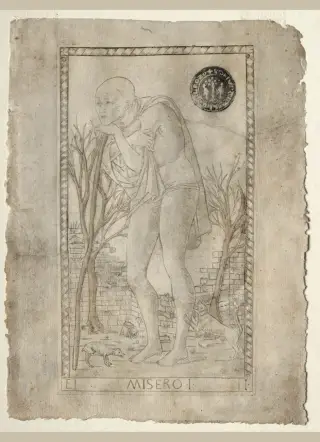
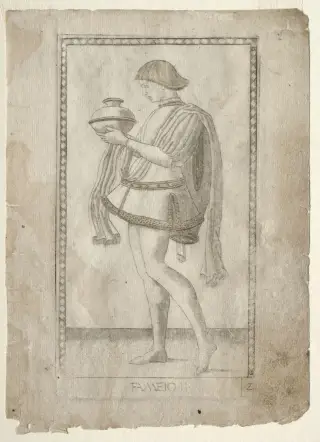
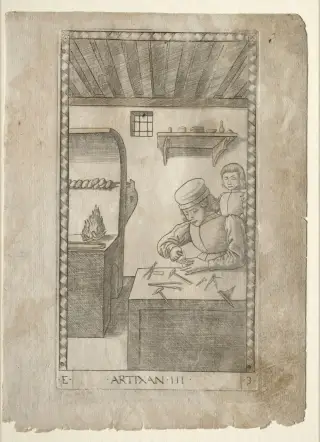
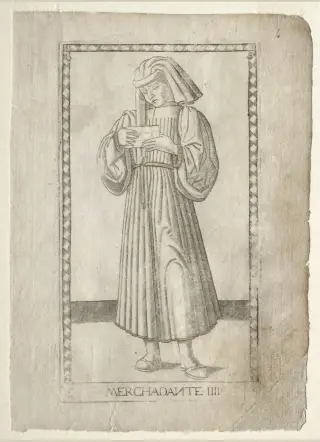
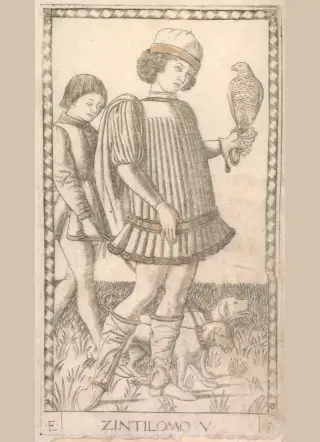
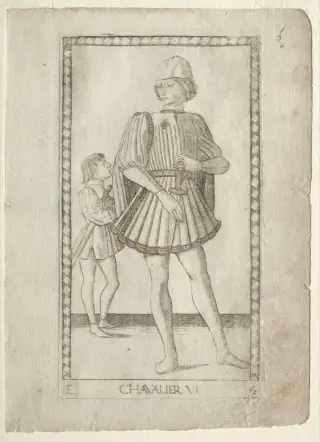
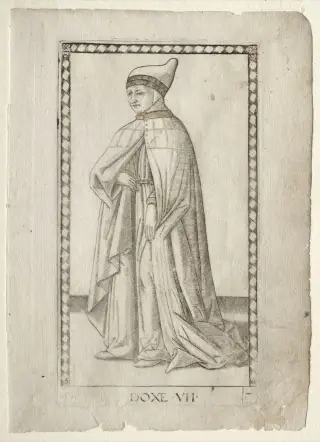
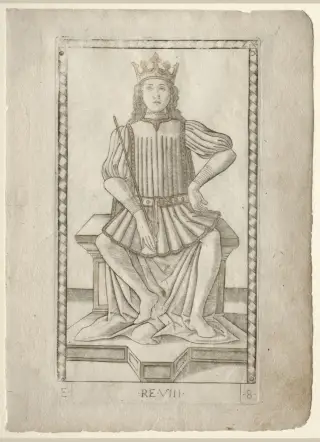
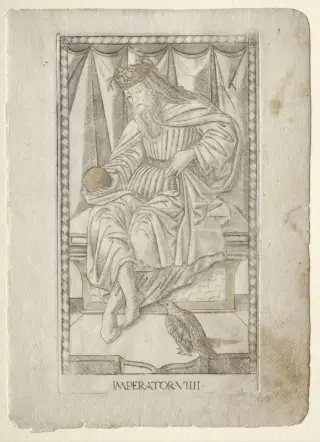
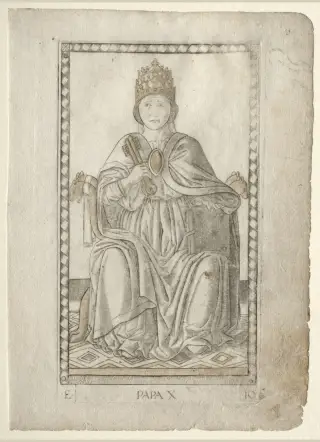
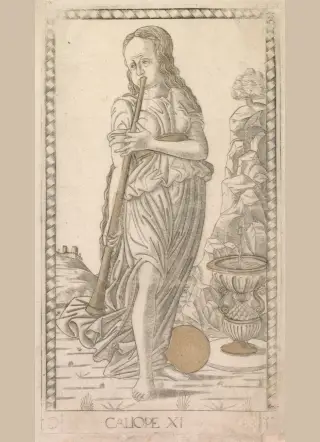
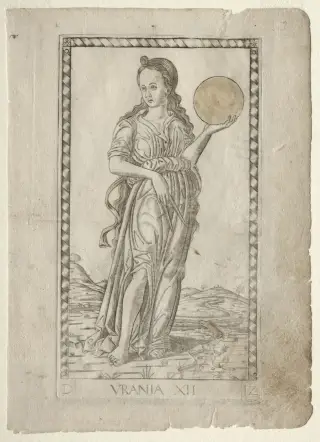
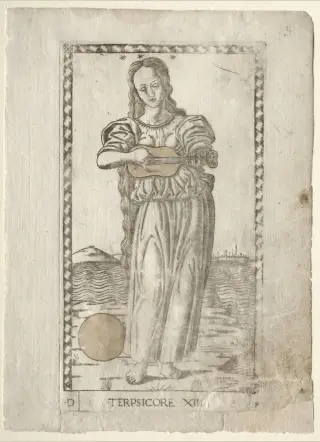
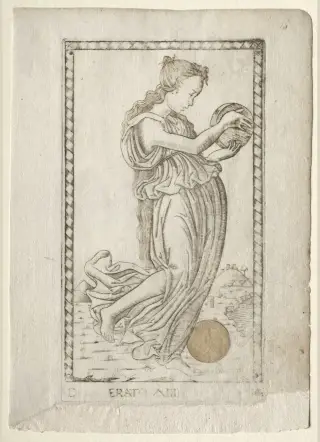
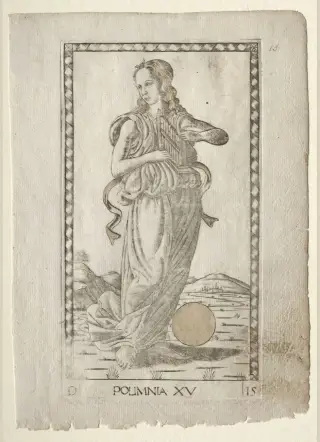
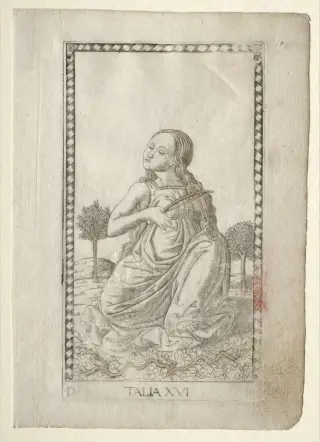
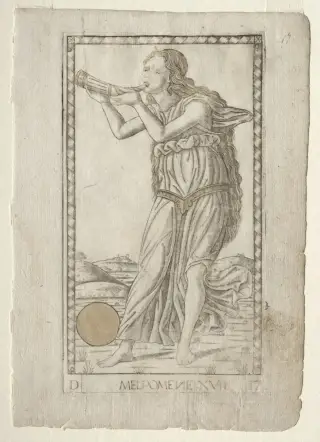
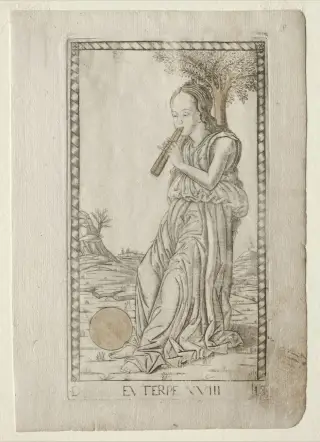
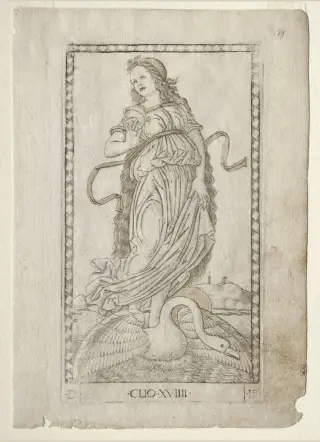
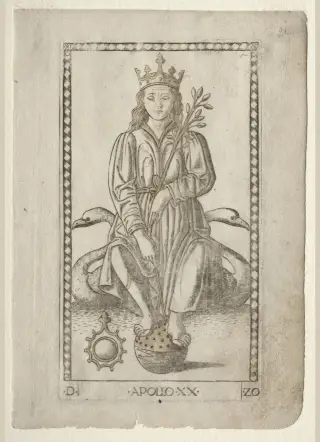
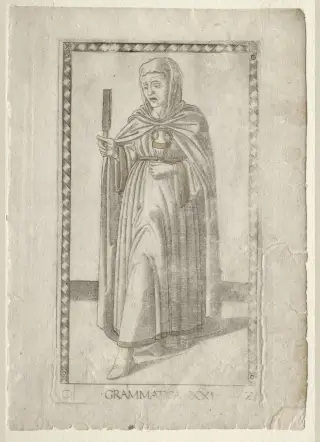
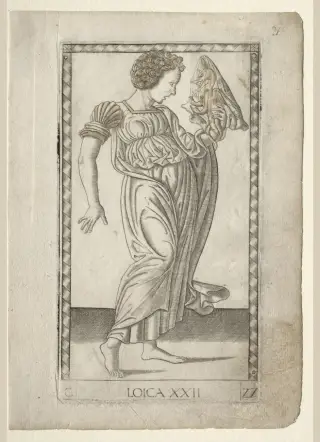
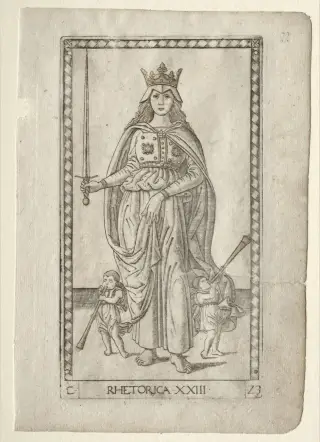
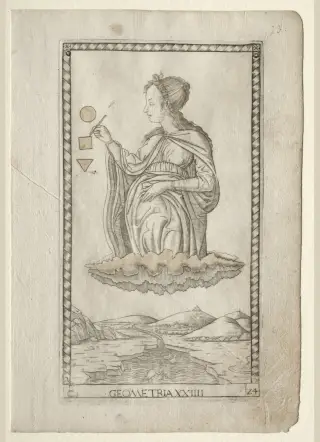
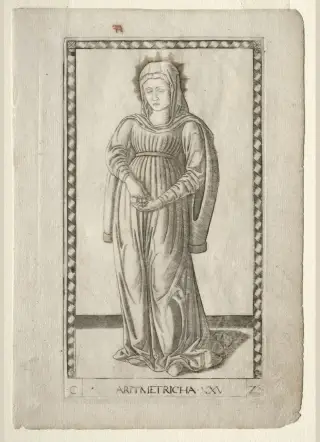
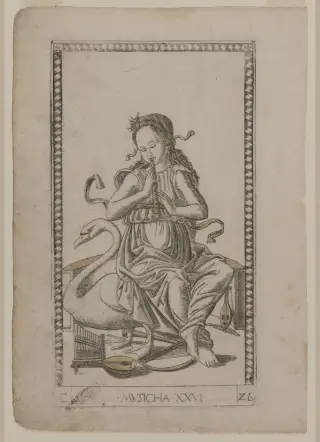
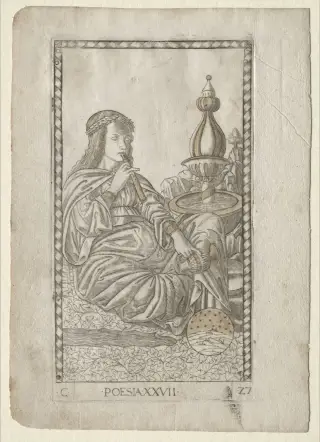
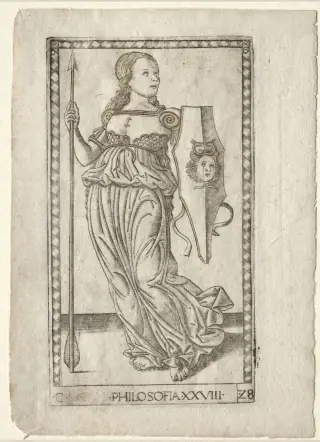
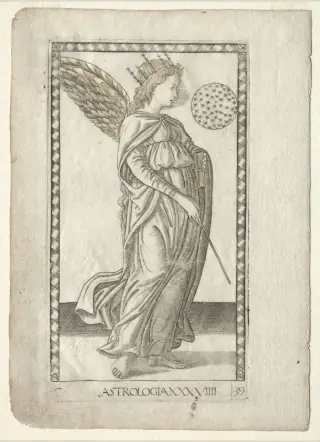
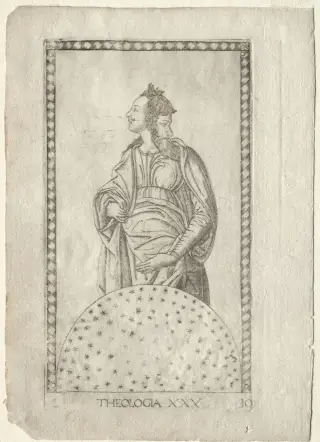
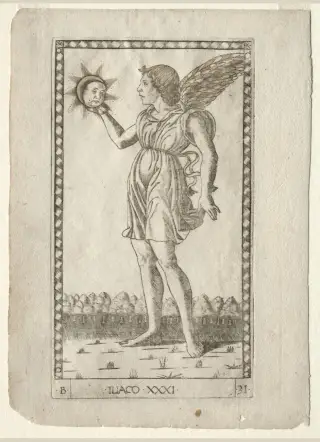
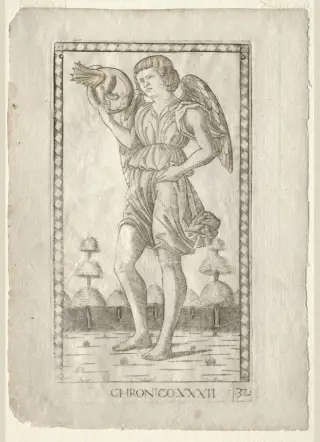
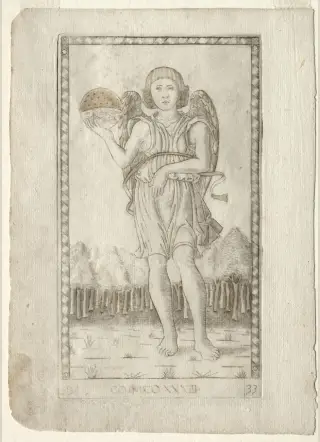
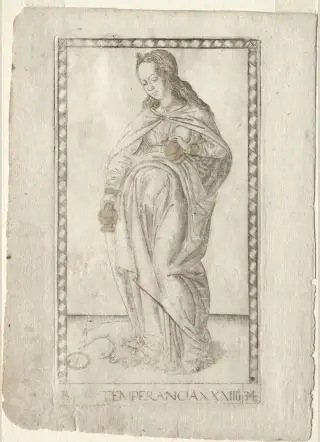
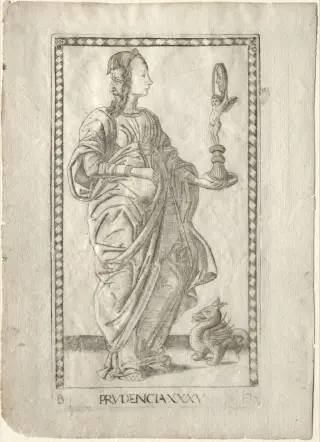
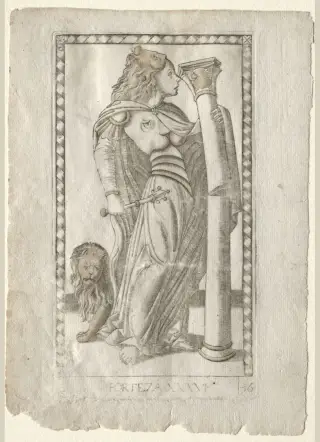
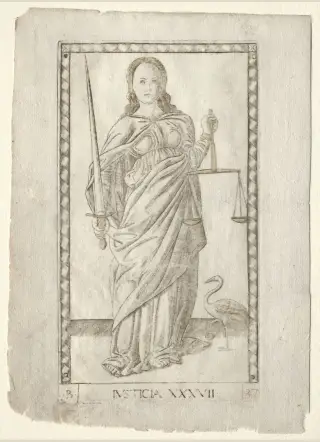
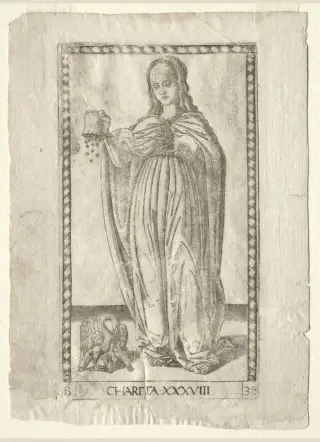
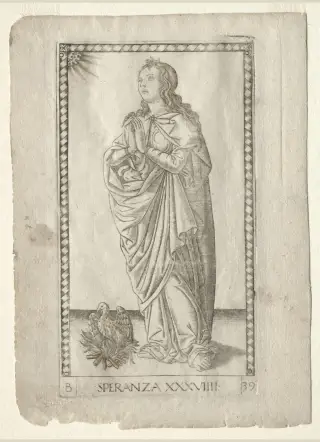
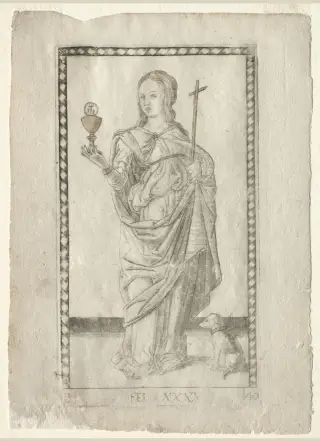
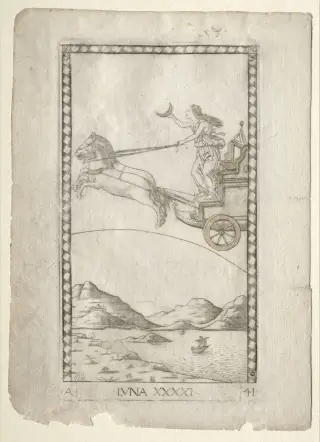
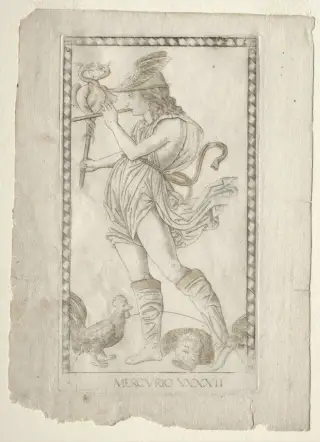
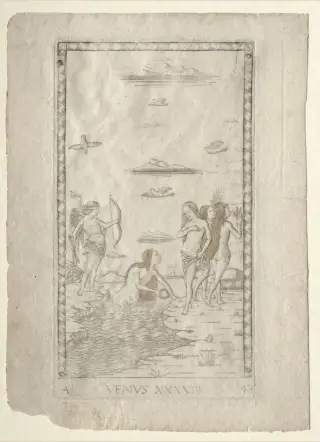
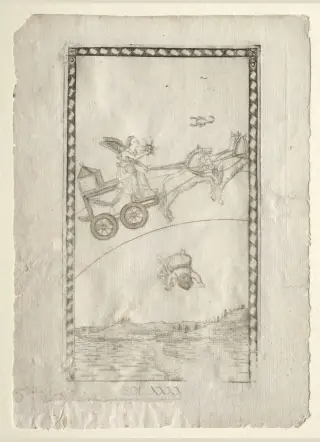
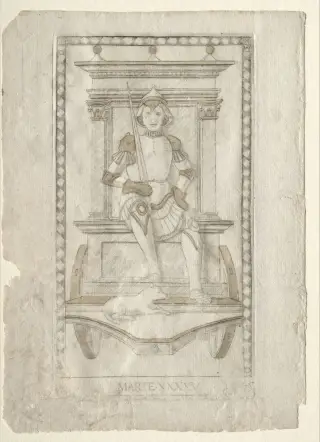
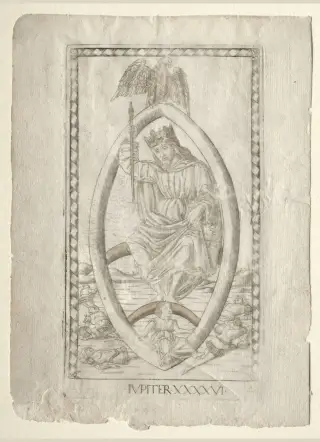
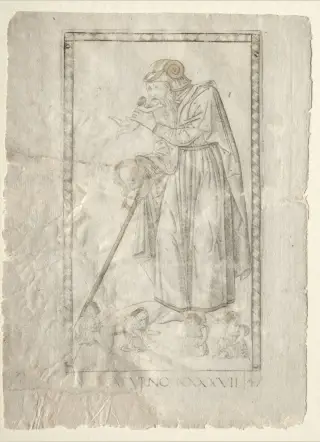
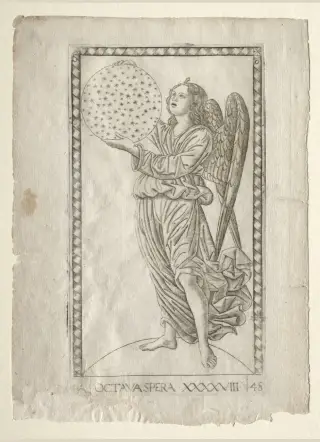
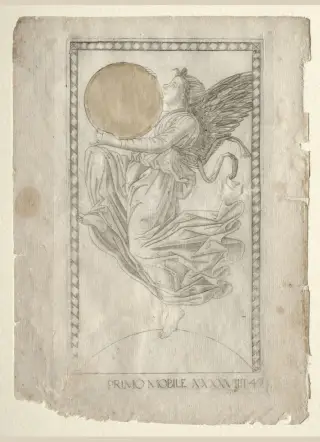
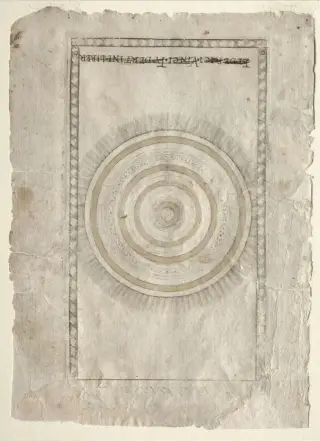
Fifty copperplate engravings, each about eighteen by ten centimetres, made in Ferrara around 1465 by an engraver whose name nobody knows. They are divided into five groups of ten, lettered from E to A in the corner of every card and numbered one to fifty in both Roman and Arabic numerals. E is the conditions of man, from the beggar to the Pope. D is Apollo and the nine Muses. C is the seven liberal arts with Poetry, Philosophy and Theology added to make ten. B is three cosmic spirits and the seven virtues. A is the heavens, from the Moon out through the planets to the sphere of the fixed stars, the Primum Mobile and the First Cause. Read from one to fifty it is a picture of the whole medieval universe, climbing from the dust to God.
The name is a double mistake. Eighteenth century collectors attributed the prints to Andrea Mantegna, which no one believes now, and called them tarocchi because they were numbered cards from the right place and time. They have no suits, no trumps and no Fool, and nothing suggests they were ever shuffled or played; most scholars see them as an instructive or memory series, perhaps made for the court of the Este in Ferrara, though whose idea it was remains argued over. Two versions of the plates exist. The E-series, shown here, is the earlier and finer; the S-series is a slightly later copy in reverse. The young Albrecht Dürer copied twenty of these designs in pen and ink in the 1490s, and Ludovico Lazzarelli pasted impressions into a manuscript poem on the gods.
The Cleveland Museum of Art bought this complete E-series set in 1924. Most of its sheets come from one printing with touches of gold added to discs, orbs and halos; two cards, Zintilomo and Caliope, are different impressions trimmed to the plate, and the lower third of Misero was lost and redrawn by hand long ago. We show the sheets as scanned, paper margins and all, with the plate and its lettering intact on every card.
- The Sola Busca Tarotthe century’s other great engraved pack
- The Minchiate Fiorentinethe other deck filed as tarot that never was one
- The Este TarotFerrara’s cards on the other side of the workshop door
- Anatomy of a 78 card tarot deckthe count this deck ignores
- Keeping all 78 cards the same sizeseries in fixed formats