The Sola Busca Tarot
The oldest complete tarot deck in the world, and the first with a picture on every card. Its trumps are Roman soldiers with names, its minors are scenes, and one of them became the most copied card in tarot.
Unknown Ferrarese or Venetian engraver; hand-colored around 1500 · Ferrara or Venice; now at the Pinacoteca di Brera, Milan · c. 1491
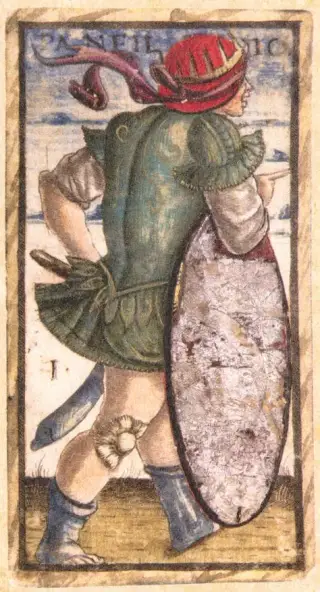
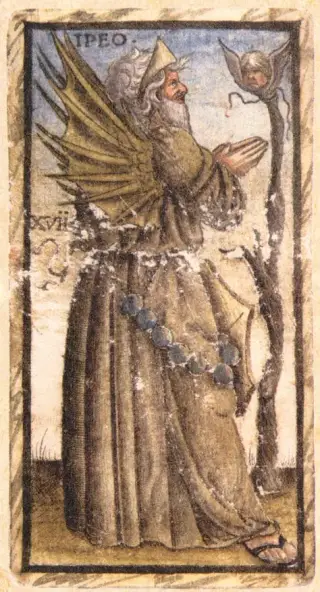
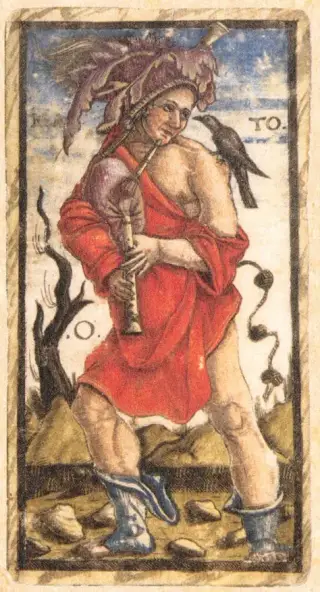
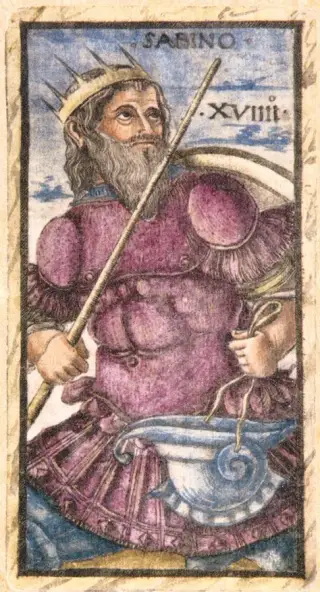
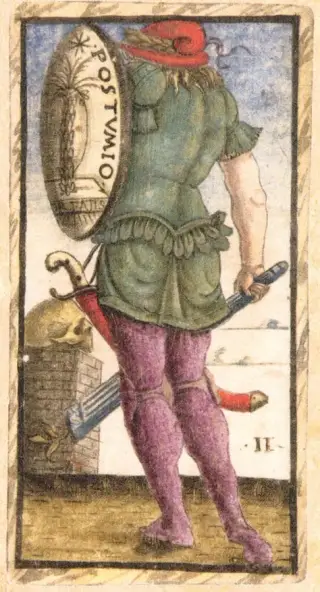
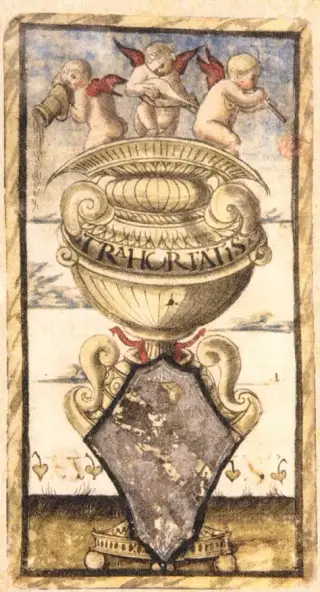
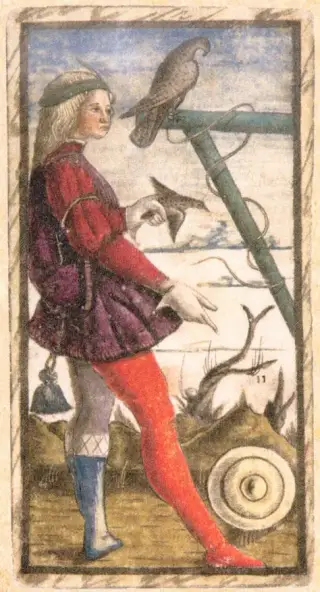
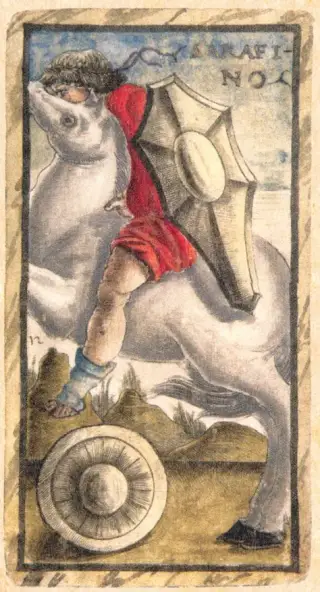
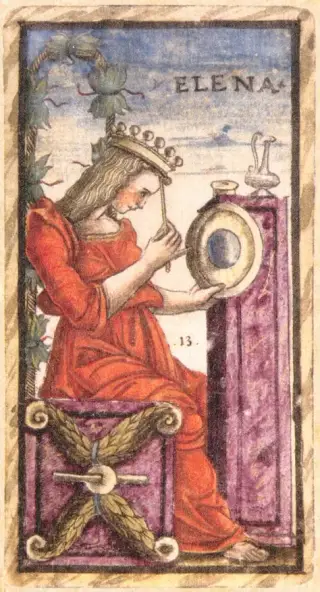
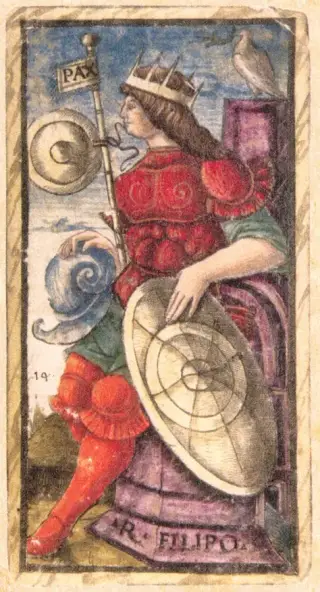
Seventy-eight copperplate engravings, made in northern Italy around 1491 and colored by hand about a decade later, probably in Venice for a patron whose coat of arms appears on two of the cards. No other fifteenth century tarot survives complete. For centuries the deck belonged to two Milanese families, the Sola and the Busca, whose names it still carries; in 2009 the Italian state bought it for the Pinacoteca di Brera in Milan, where it lives now.
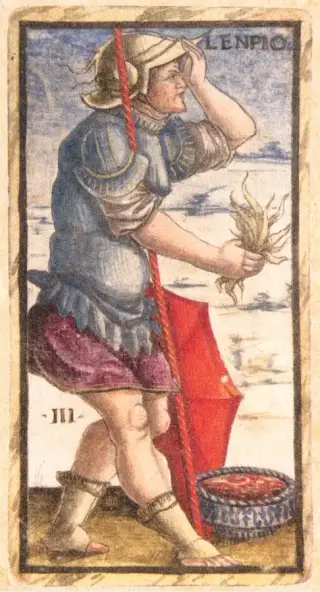
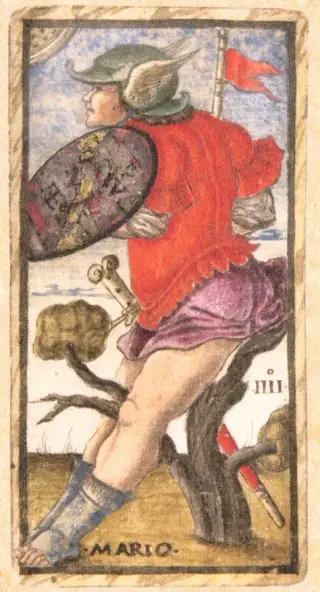
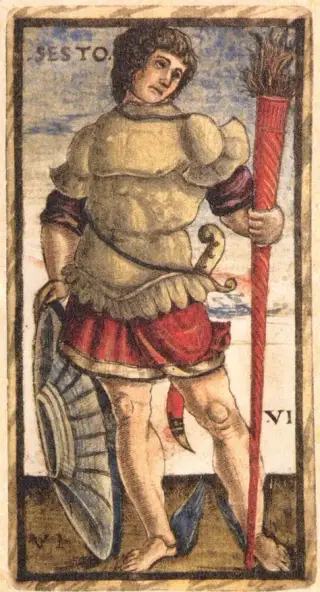
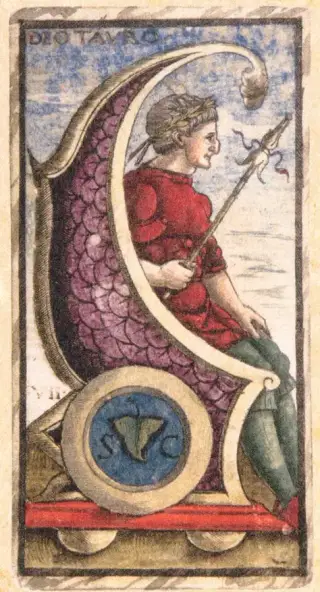
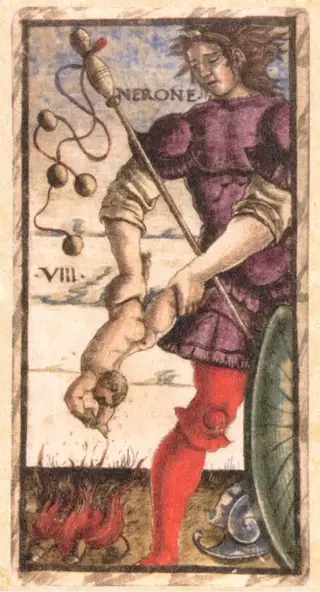
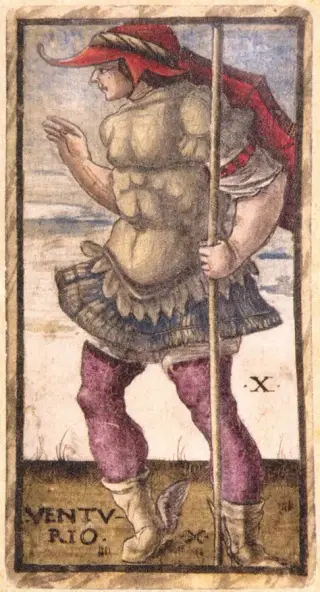
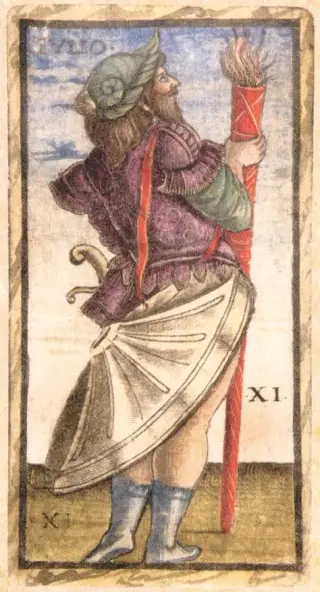
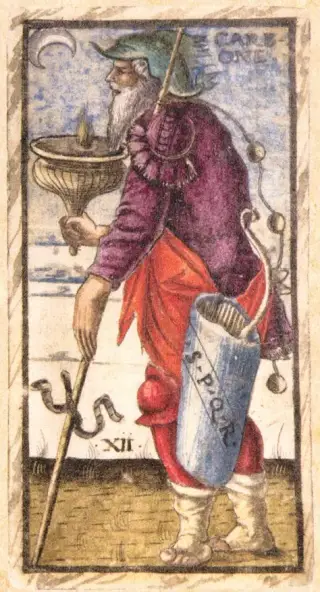
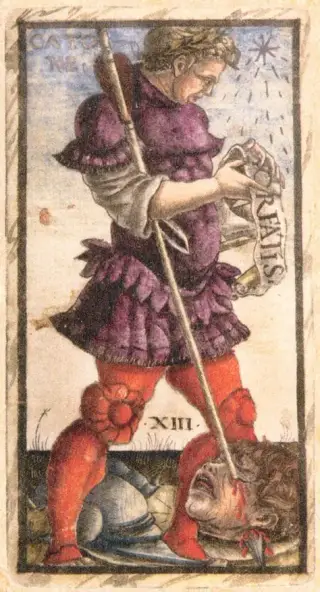
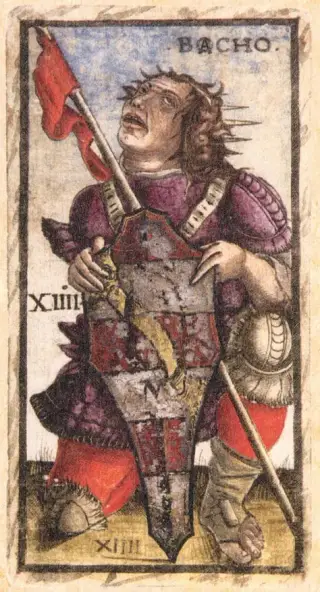
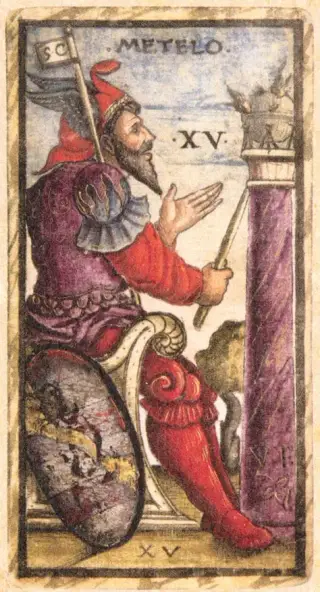
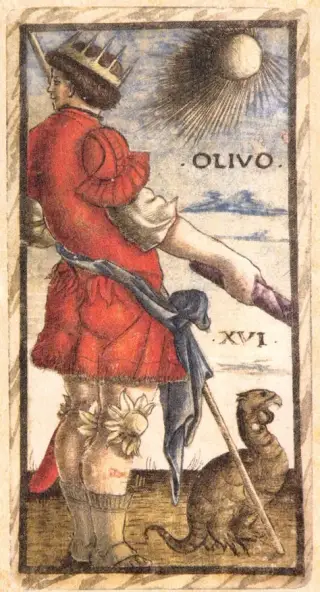
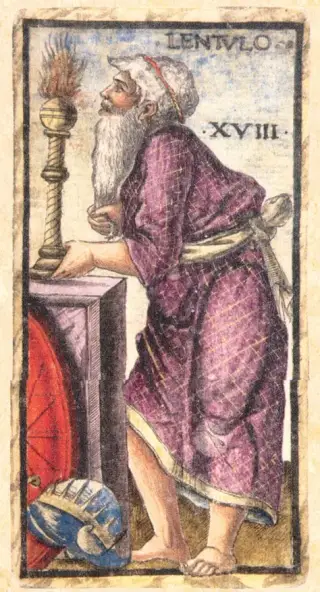
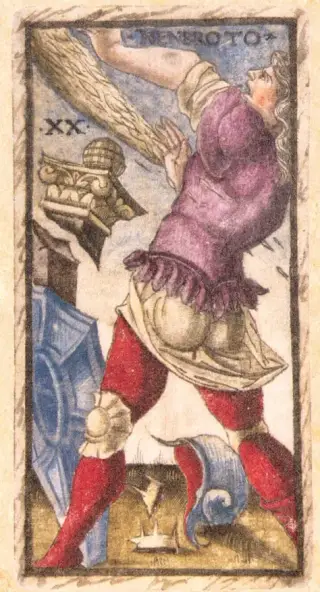
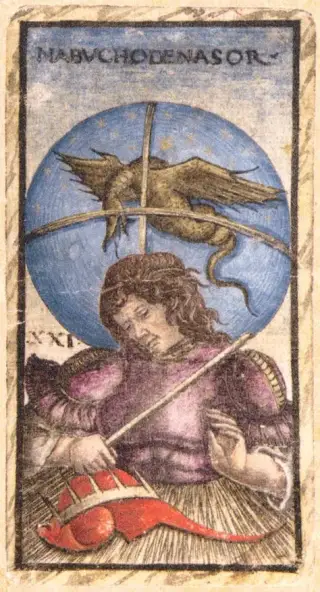
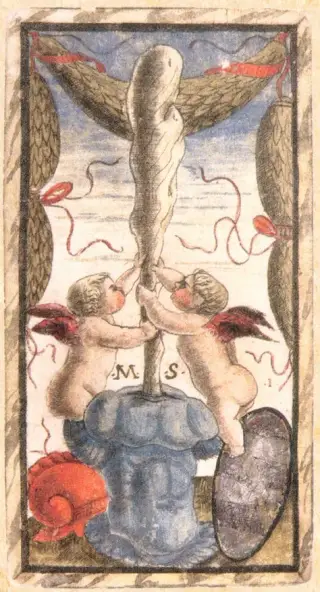
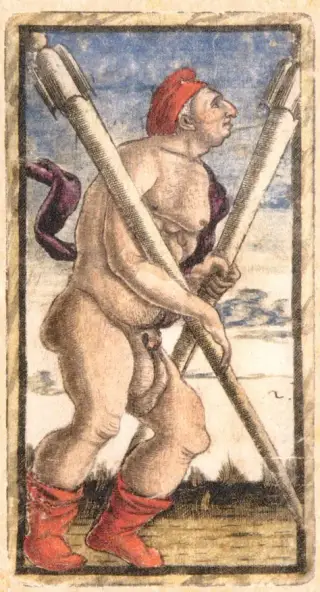
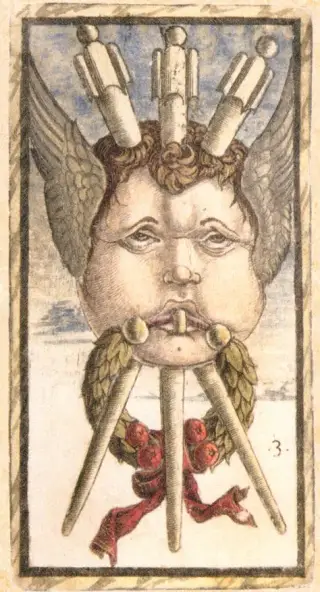
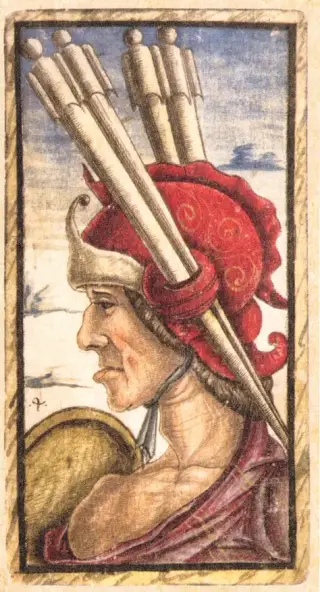
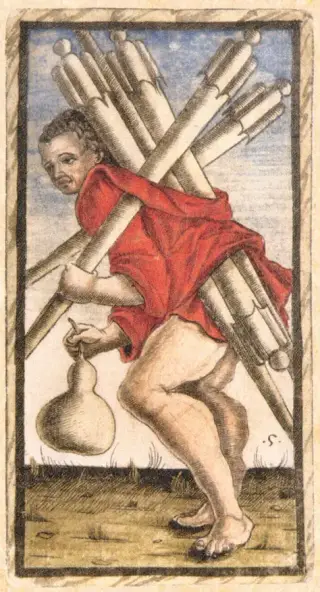
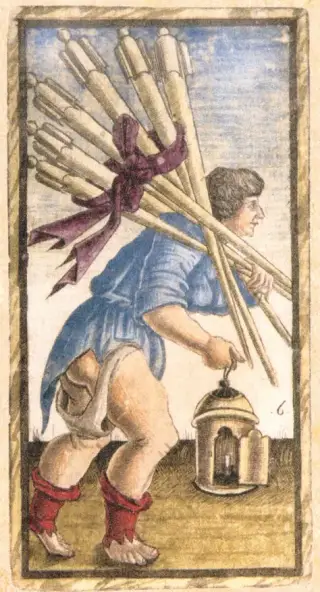
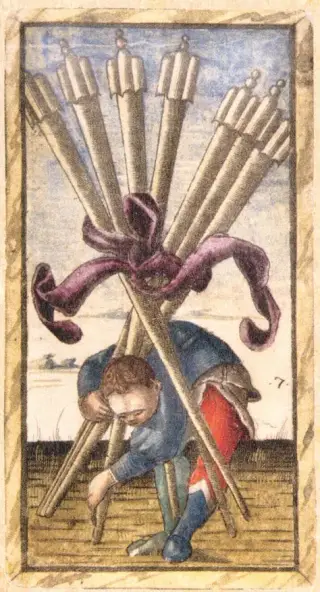
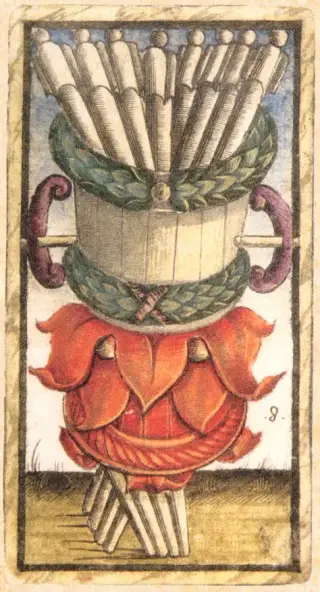
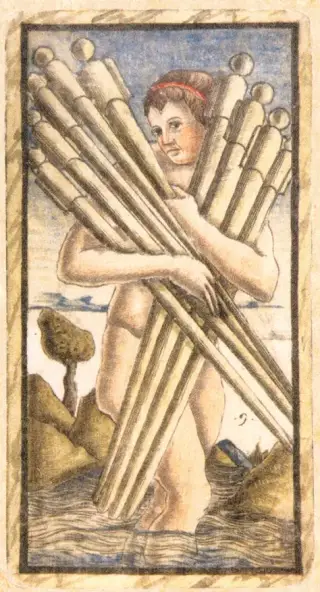
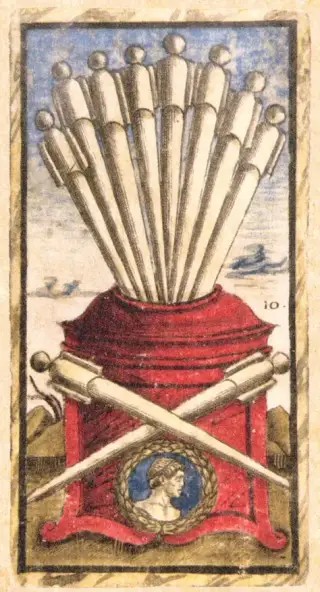
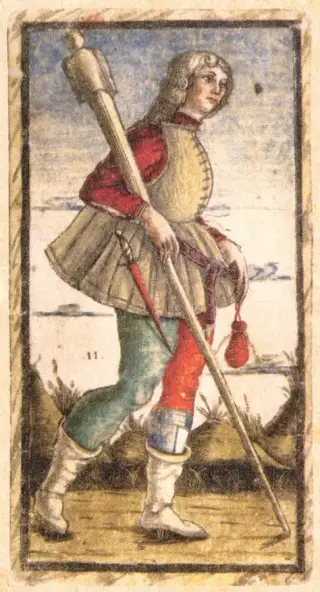
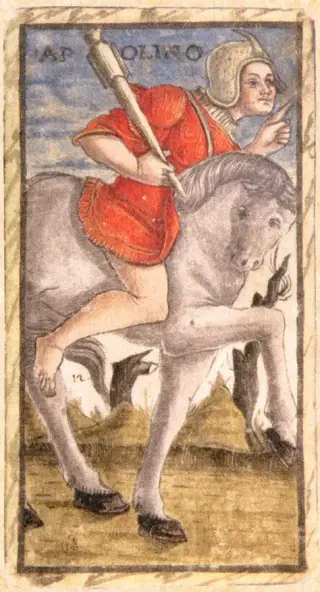
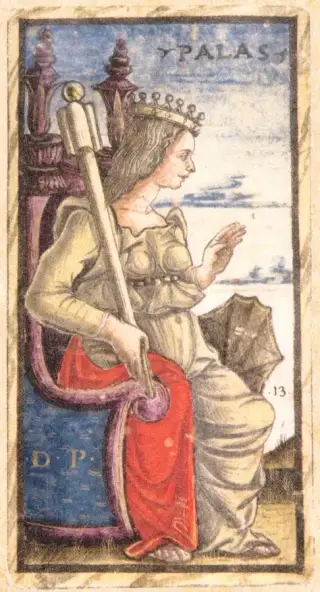
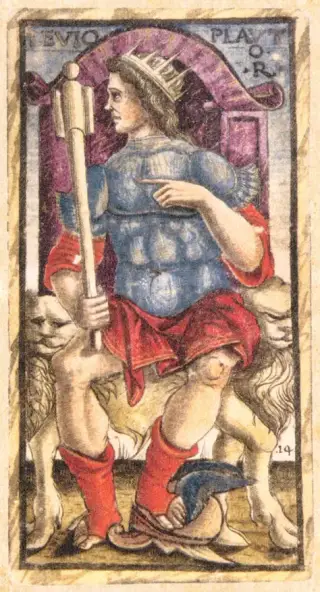
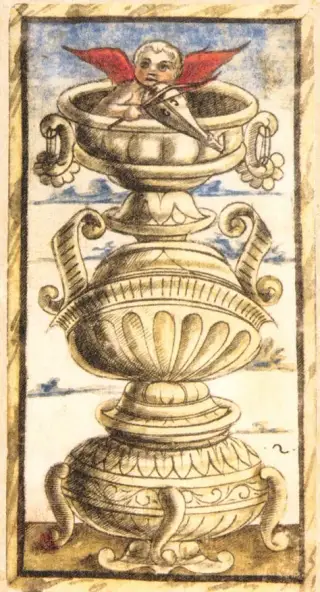
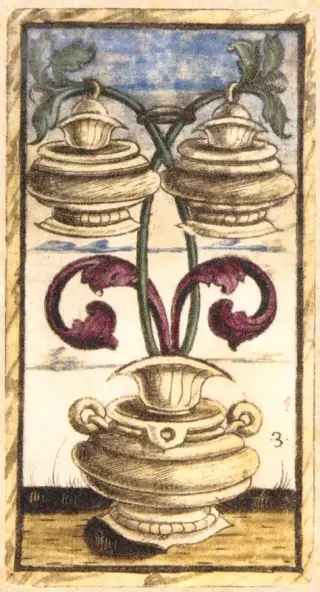
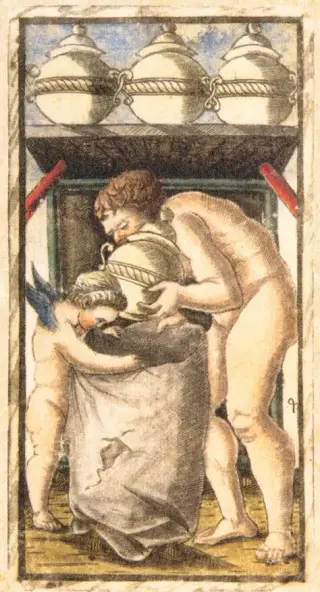
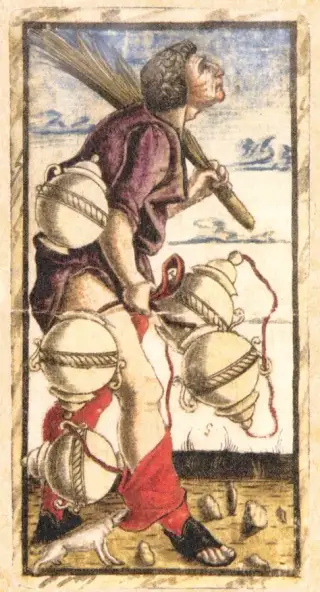
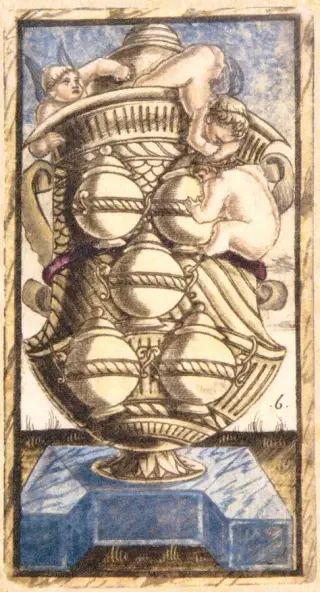
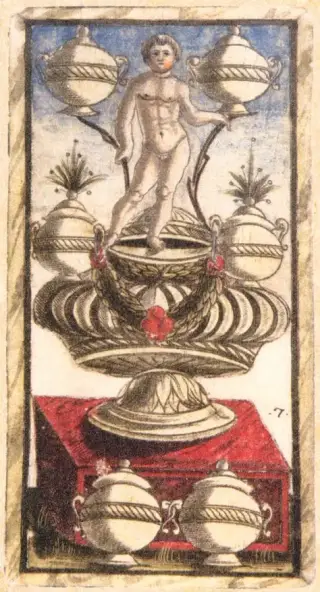
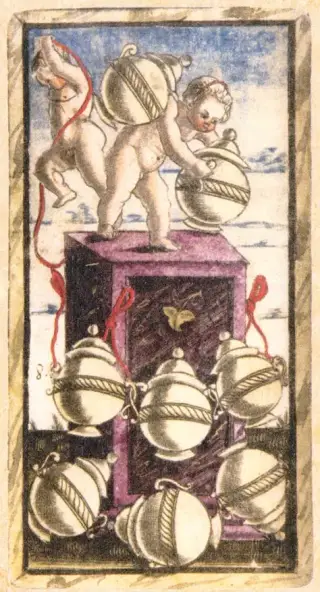
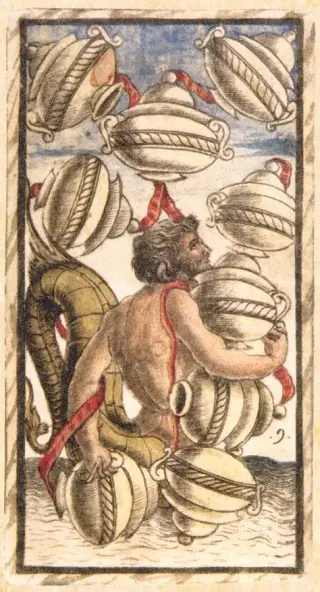
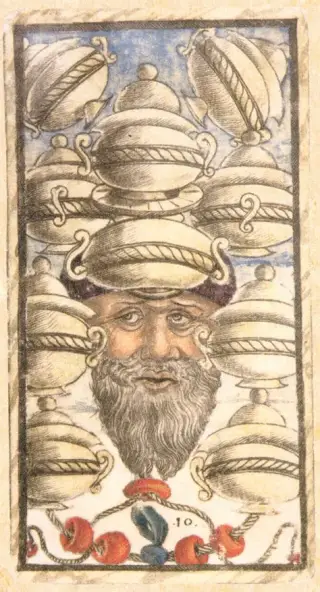
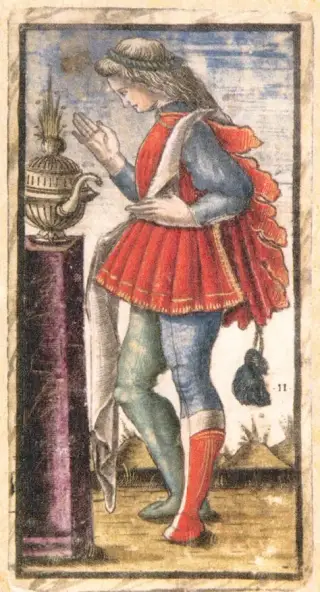
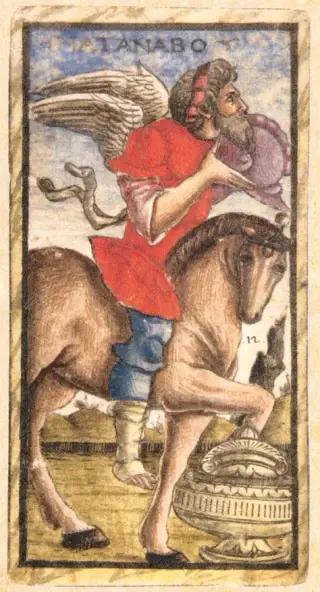
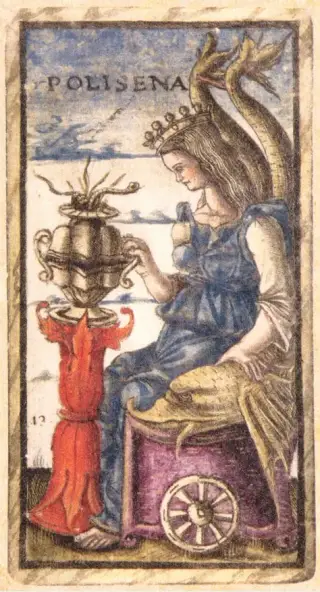
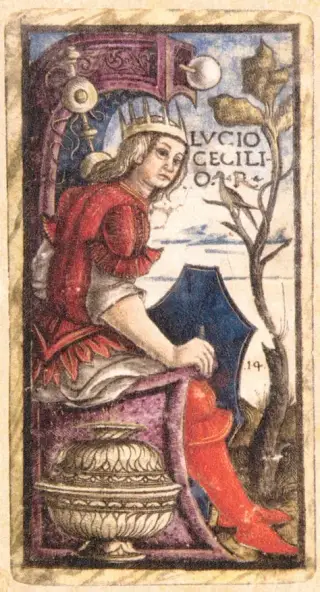
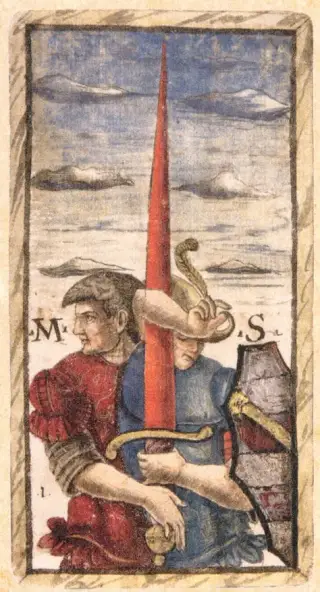
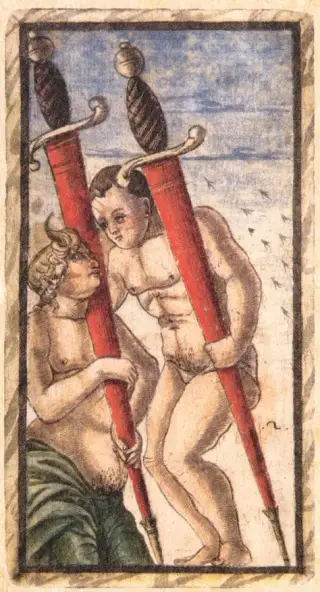
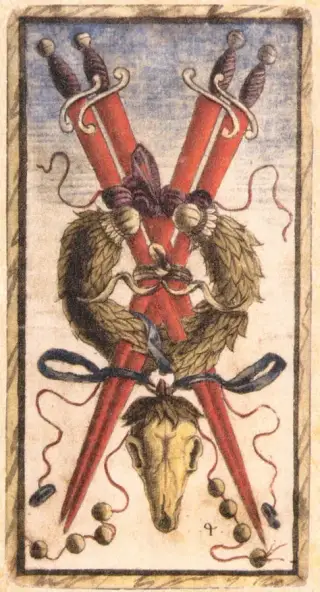
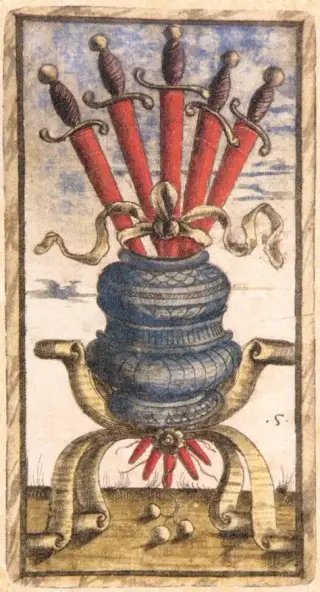
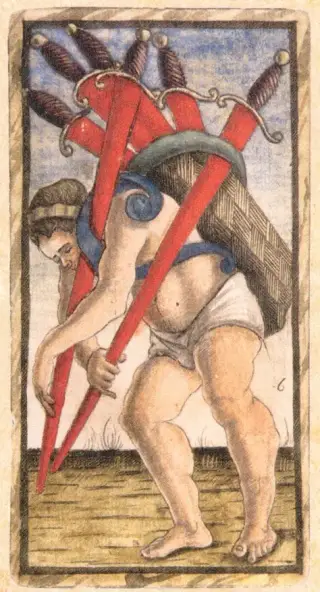
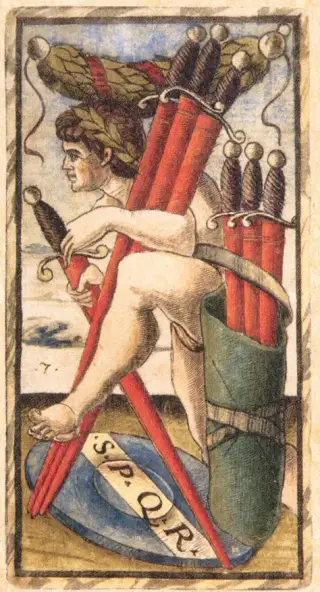
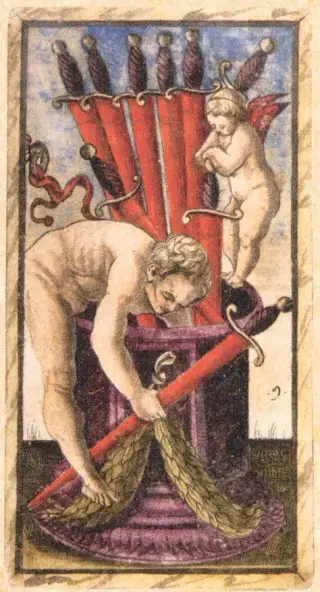
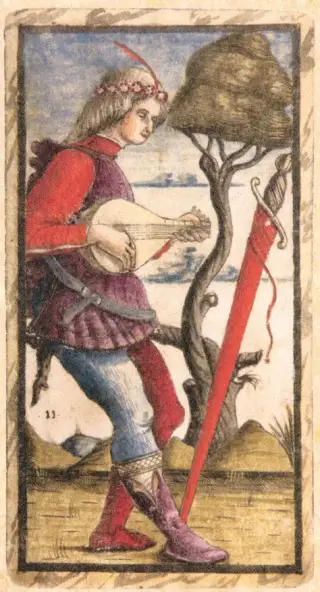
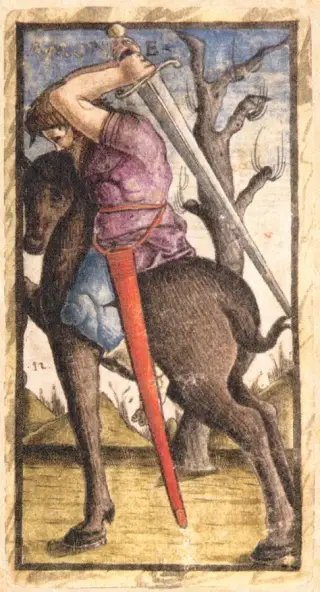
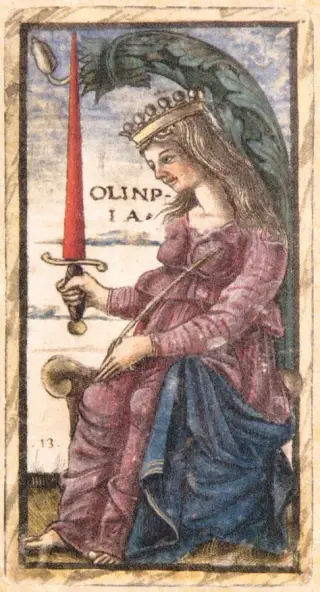
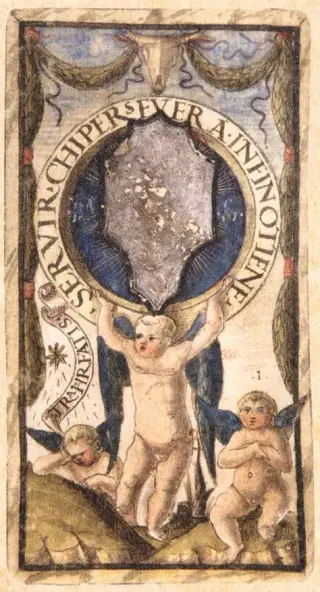
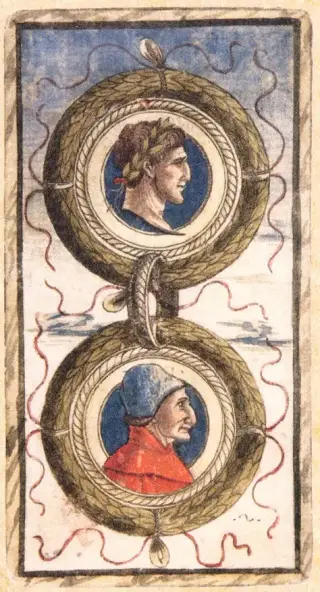
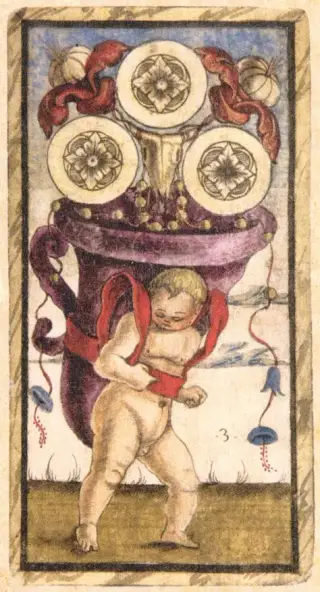
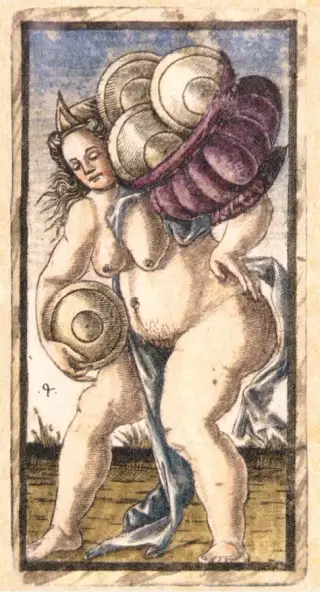
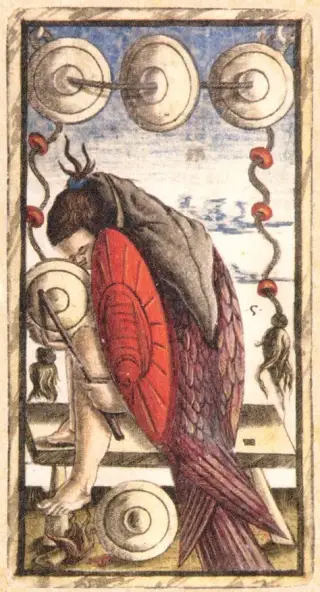
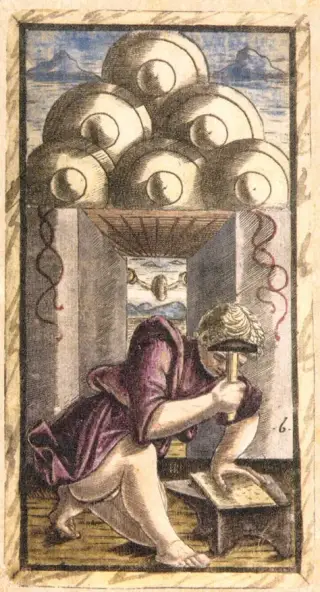
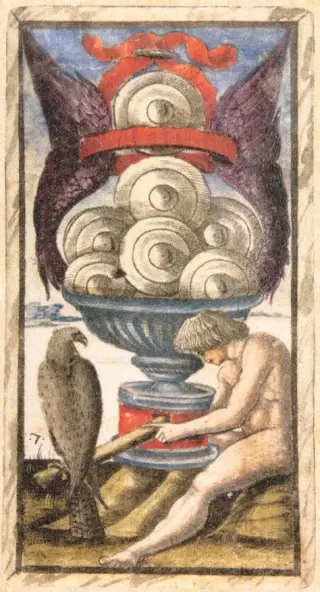
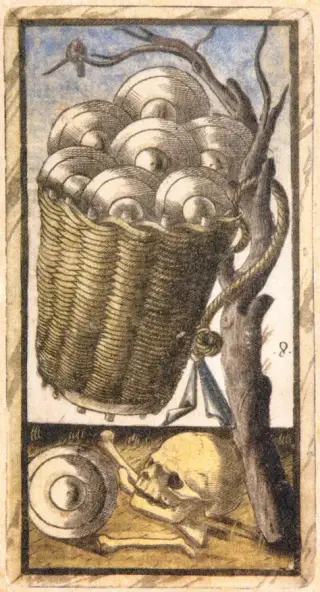
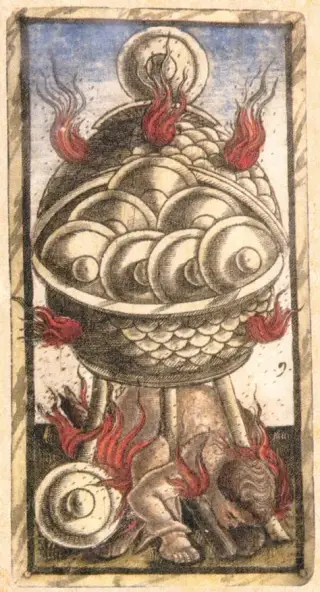
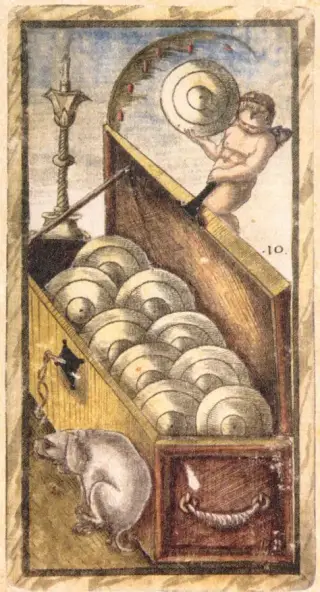
It is a strange deck. The twenty-two trumps are not the Pope, the Lovers, the Wheel; they are twenty-two men, mostly soldiers in Roman armor, each with a name lettered on the card: Mario, Catone, Nerone, Nabuchodenasor. Some are plainly historical, some biblical, several are nobody anyone has identified, and the whole series has been read as a Republican civics lesson, an alchemical allegory, and a private joke for a humanist circle in Ferrara. The four suits are cups, coins, batons, and swords, and instead of counting pips the engraver built a scene for every number: children climbing a tower of cups, a skull in a basket of coins, a man bent under ten swords. The court cards of swords tell a single story, Alexander the Great with his mother Olympias, his god Ammon, his legendary father Nectanebo, and his official one Philip.
In 1907 the British Museum put photographs of the deck on display. Pamela Colman Smith and A. E. Waite saw them, and when Smith drew the Rider-Waite deck two years later she gave its Three of Swords the heart pierced by three blades that this deck had engraved four hundred years earlier. Several of her other minors answer Sola Busca scenes more quietly. The scans here are of the colored Brera cards, compressed for the web; the originals are about ten by five centimeters.






- The Mantegna Tarocchiengraving in the same years
- The Visconti-Sforza Tarotthe painted tradition it broke with
- The Rider-Waite-Smith Tarotwhich borrowed its scene-painted minors four centuries later
- Anatomy of a 78 card tarot deckthe minors this deck invented
- Should you disclose how your deck was madeon borrowing and crediting