The Este Tarot
Sixteen gilded survivors of a Ferrarese court tarot from about 1473: eight trumps and eight courts on punched gold, with the century's cruelest Fool.
Unknown Ferrarese workshop, for the court of Ercole I d'Este · Ferrara; now in the Cary Collection, Yale University · c. 1473
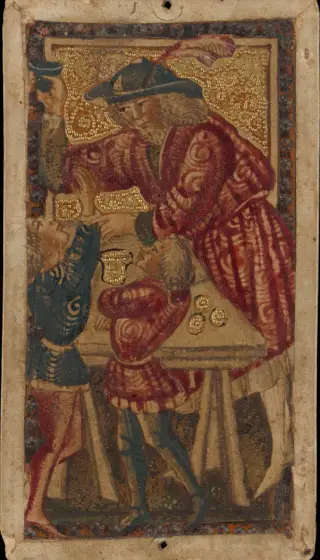
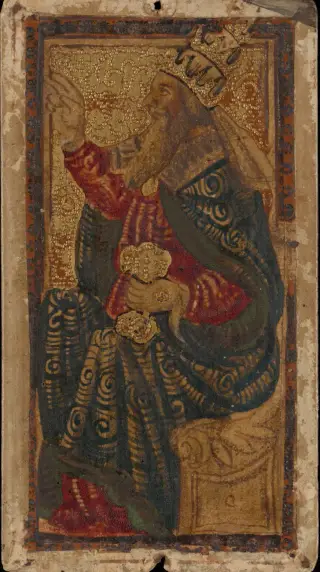
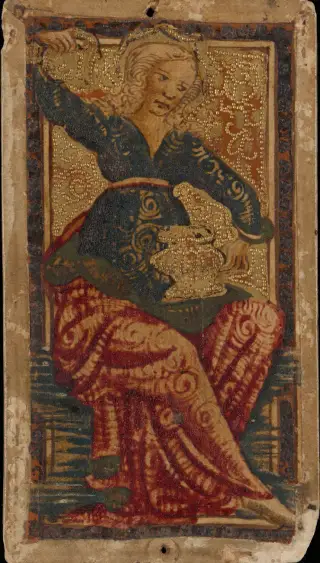
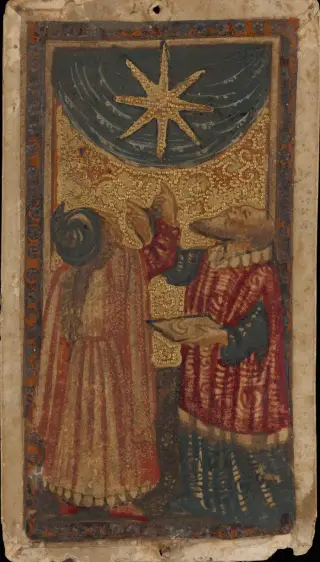
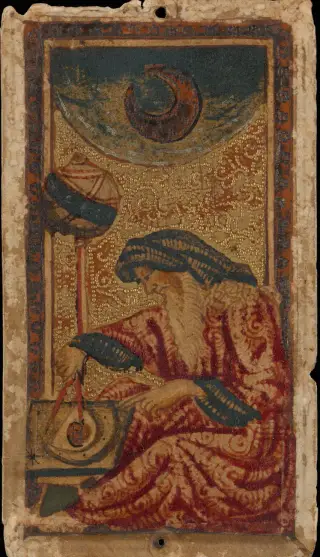
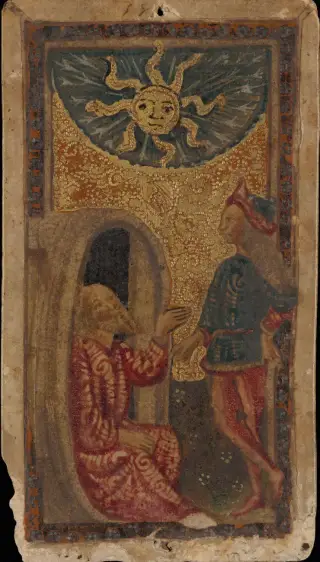
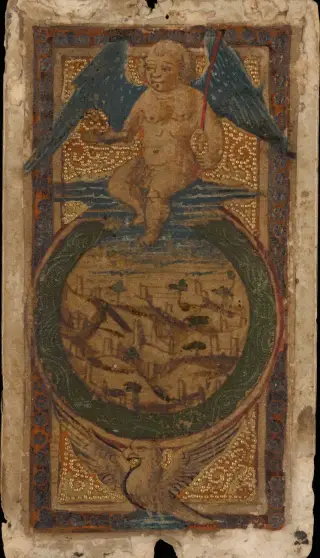
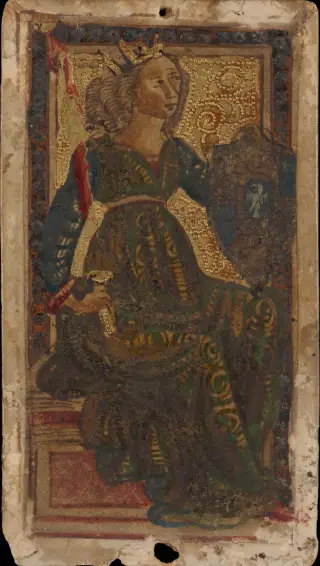
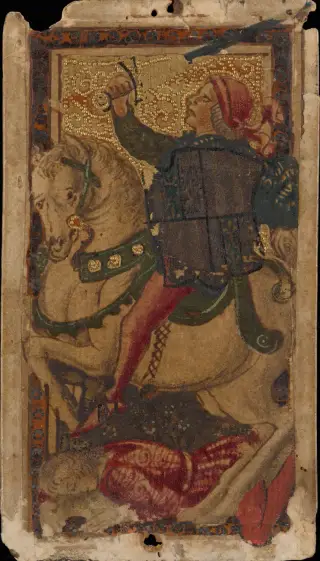
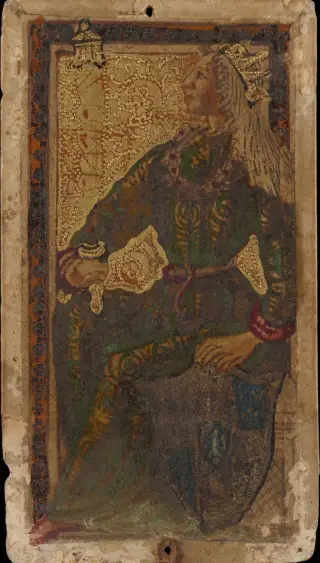
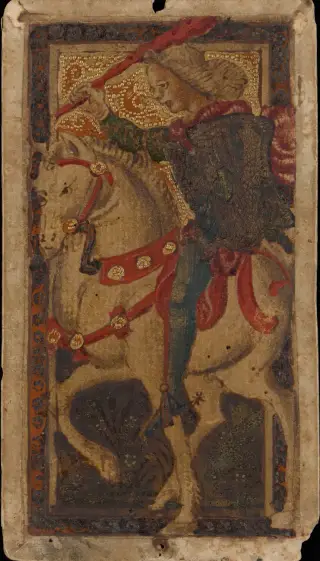
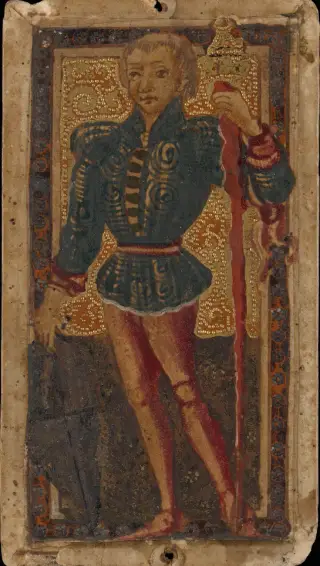
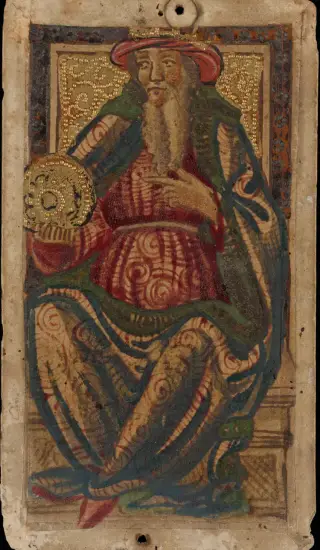
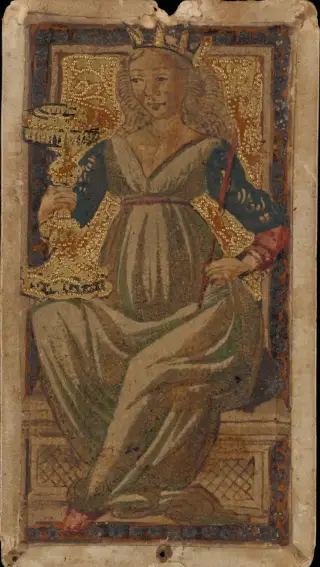
Ferrara under the Este dukes was one of the two courts where tarot began, and this is what remains of one of its painted decks: sixteen cards, eight trumps and eight courts, attributed to the years around 1473 and often tied to Ercole I d'Este, whose marriage to Eleonora of Aragon that year gave the court reason for splendid gifts. Every card stands on a ground of gold leaf worked with punches, the same luxury finish as the hand-painted Milanese decks, but the drawing is Ferrara's own: astronomers measure the Moon with dividers, a boy holds up the Sun, and the World is a walled city floating in a globe.
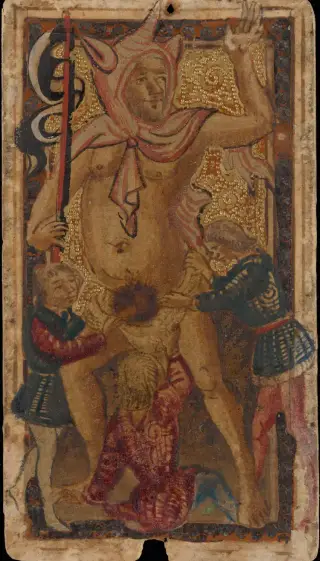
The Fool is the card people remember. Nearly naked, hooded in rags, he is mobbed by three boys who pull at his clothes and raise fists, an image of village cruelty painted for a duke's table. Nothing else surviving from the century treats the card with that much unkindness, and it makes the polite Fools of later decks look like a mercy.
The cards reached the Cary Collection of playing cards and are kept at Yale, which has opened its scans. Sixty-two cards are gone; what survives is enough to show that Ferrara's tarot was neither the Visconti-Sforza pattern nor the printed pattern that conquered later, but a third thing the court kept to itself.

- The Charles VI Tarotthe same decade, the same astronomers on the Moon
- The Cary-Yale Visconti TarotMilan’s version of the same commission
- The Mantegna TarocchiFerrara’s other card project
- Gilded edges on tarot cardspunched gold, and its modern equivalent
- Best cardstock for a tarot deckwhat a card is actually made of