The Charles VI Tarot
Seventeen gilded cards once sold to history as the first tarot ever painted, for a mad king in 1392; the truth is later, Italian, and no less splendid.
Unknown Italian workshop, long misattributed to Jacquemin Gringonneur · Northern Italy; at the Bibliothèque nationale de France since the royal library · c. 1460
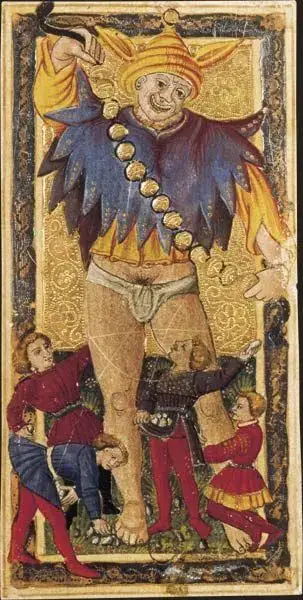
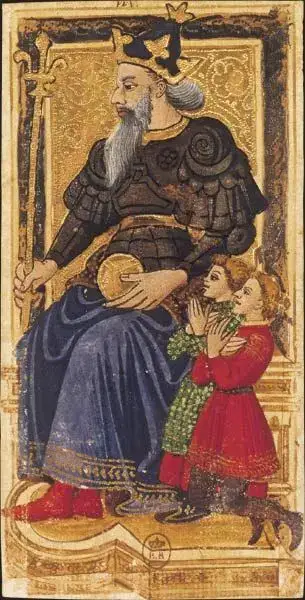
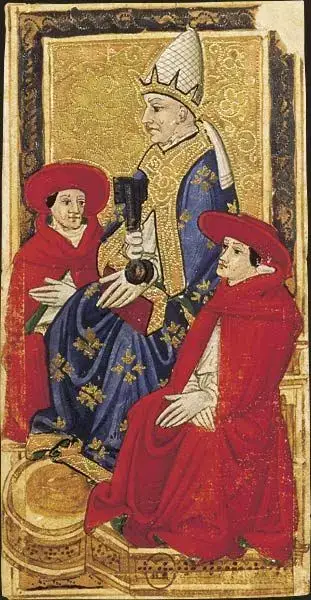
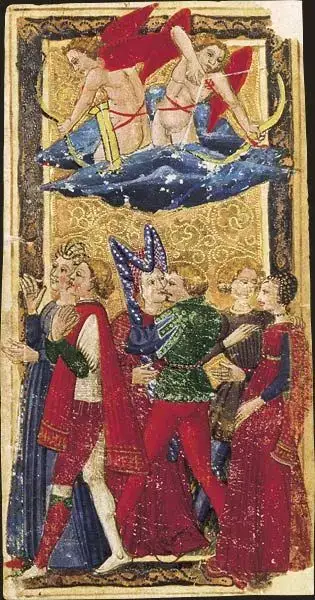
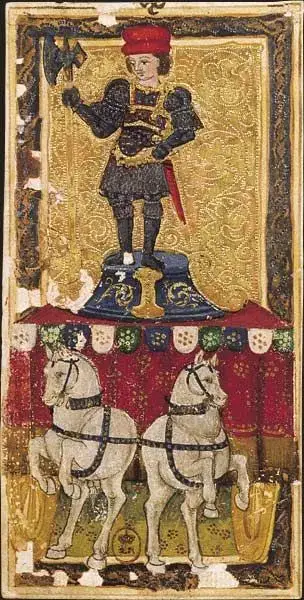
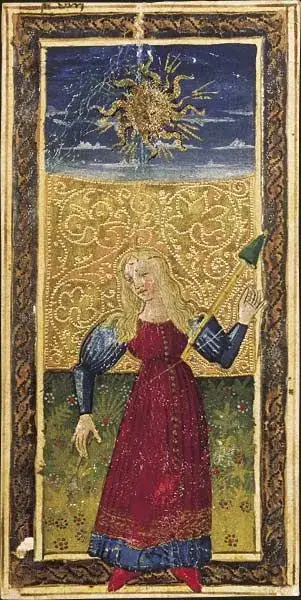
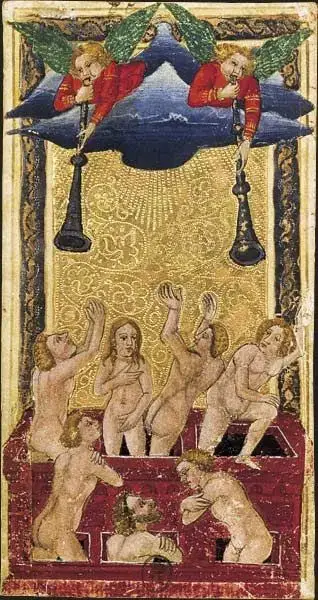
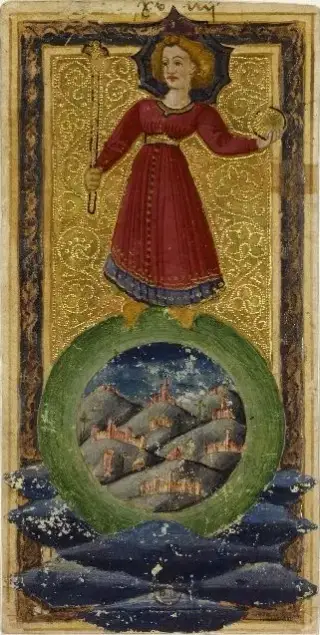
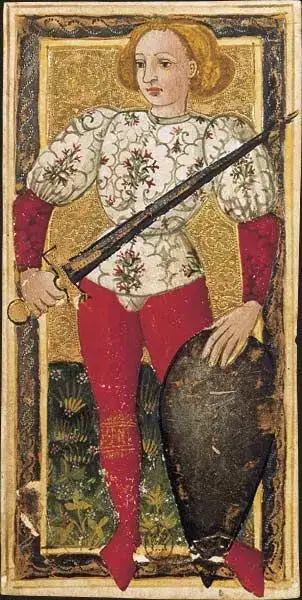
For two centuries these were the most famous tarot cards in the world for a reason that turned out to be false. A 1392 entry in the French royal accounts records payment to the painter Jacquemin Gringonneur for three packs of cards for King Charles VI, and when this gilded set surfaced in the royal library it was assumed to be one of them: tarot, therefore, invented at the French court in 1392. The attribution decorated the deck until scholarship caught up. The costumes, the punchwork, the painting style are northern Italian and half a century too late, around 1460; the Gringonneur cards, whatever they were, are lost.
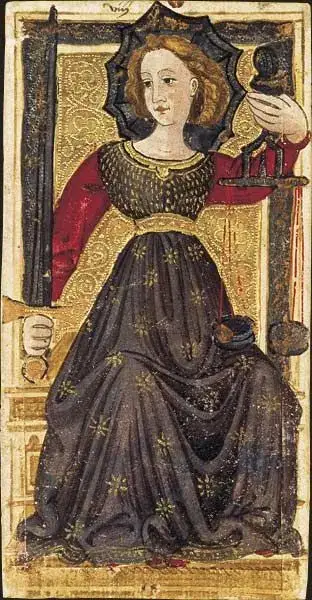
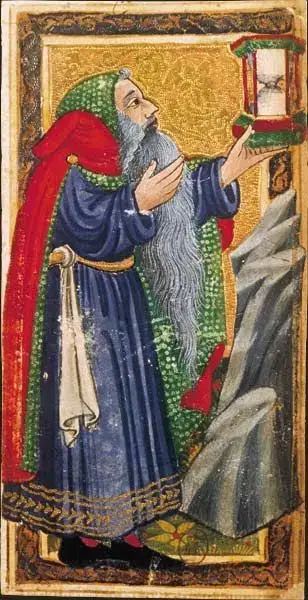
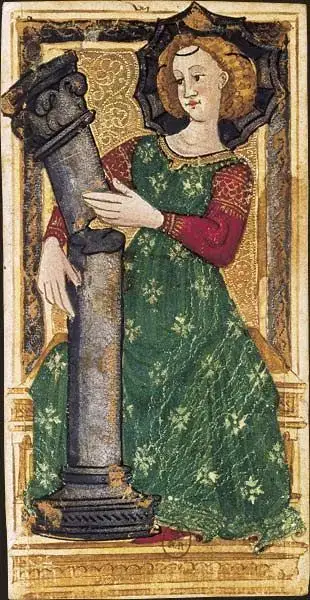
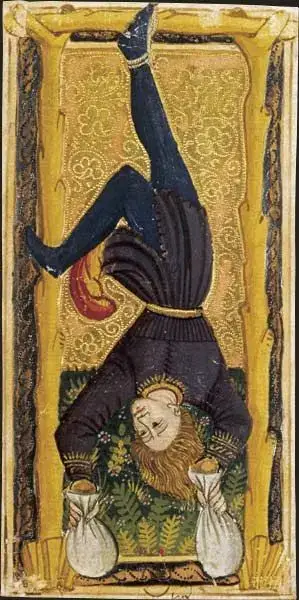
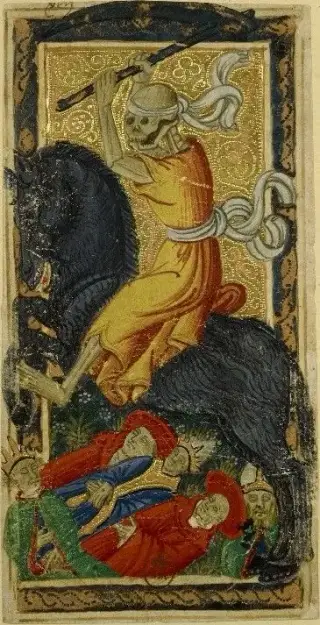
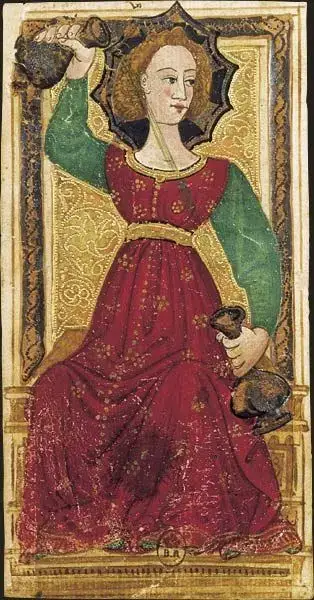
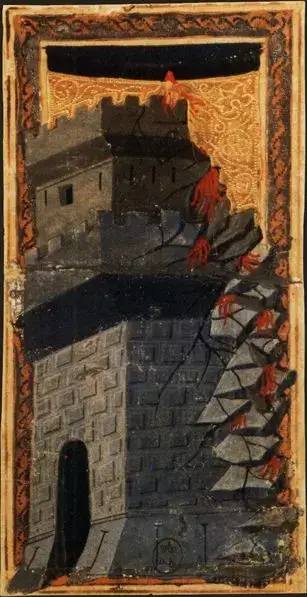
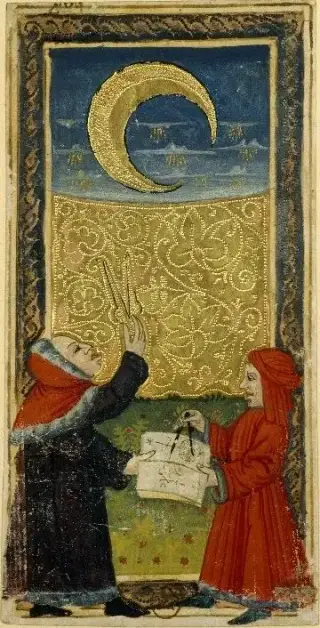
What remains is still one of the great early tarots. Sixteen trumps and a single Page of Swords survive, close cousins of the Este cards of Ferrara: the same learned Moon with its astronomers, a Fool mobbed by children, a Death riding down kings. Some scholars place the deck in Ferrara or Venice; nobody places it in Paris.
The cards live at the Bibliothèque nationale de France, and their scans circulate openly. They are the bridge between the hand-painted Milanese decks and the pattern the printers took over: still gold, still courtly, but already the standard trump subjects in nearly the standard order.
- The Este Tarotthe same decade and the same learned Moon
- The Visconti-Sforza Tarotthe Milanese luxury line
- The Cary-Yale Visconti Tarotthe oldest of the painted decks
- Gilded edges on tarot cardsgold grounds and gilt edges
- Can you copyright a tarot deckon decks credited to the wrong maker